

Physiotherapy Treatments
Menopause Physiotherapy in Mayfair, London
Are you going through perimenopause or menopause and finding that your body aches in ways it never used to? Perhaps nothing has changed in your routine, yet your hip throbs when you lie on your side at night, your elbow complains when you lift the kettle, and you wake up stiff in joints you never used to think about. When you mention it, someone tells you it is your age.
You may have pain on the outside of your hip that started as an ache after long walks and now wakes you at night. You may have several niggles at once: a stiff shoulder, a sore elbow, aching knees, fingers that feel puffy in the morning. Or you may feel reasonably well, but know you should be strength training to protect your bones and muscles, and have no idea where to start. Perhaps you have been told to rest, or that it is just menopause, and nothing has really changed.
If so, we can help you understand what is happening, ease your pain and build the strength to keep doing everything you love.
How We Can Help
-
Lateral hip pain
Pain on the outside of the hip, often called gluteal tendinopathy or greater trochanteric pain syndrome, is the condition we see most often in women in their early fifties, frequently four to six times a week. It is typically worse lying on your side, climbing stairs or standing on one leg. It responds very well to a specific loading programme combined with practical advice on the positions that aggravate it.
-
Frozen shoulder
Gradual, painful stiffening of the shoulder with severe night pain. Women are far more likely than men to develop it, with peak incidence in the menopausal years. Early, appropriate treatment makes a real difference to how quickly movement returns.
-
Rotator cuff tendinopathy
Aching at the outside of the shoulder, worse reaching overhead or lying on that side. As oestrogen falls, the rotator cuff tendons become less tolerant of load, and they need progressive strengthening rather than rest to recover.
-
Tennis elbow and golfer's elbow
Pain on the outside or inside of the elbow with gripping and lifting, which often appears with no obvious cause at this stage of life. Like other tendon problems, it responds best to a carefully graded strengthening programme.
-
Carpal tunnel syndrome and trigger finger
Numbness, tingling or catching in the fingers, both more common around menopause. We will assess what is driving your symptoms and build a plan to settle them.
-
Achilles and other tendon pain
Tendons throughout the body become less tolerant of load as oestrogen falls, so Achilles, hamstring and other tendon problems often appear in these years too.
-
Pelvic girdle pain
Pain around the joints at the back and front of the pelvis, assessed and treated from a musculoskeletal perspective.
-
Widespread joint aches and stiffness
Sometimes there is no single diagnosis, just a body that feels stiffer and sorer than it should. A structured strength programme often helps more than women expect.
Why Menopause Affects Your Joints, Tendons and Muscles
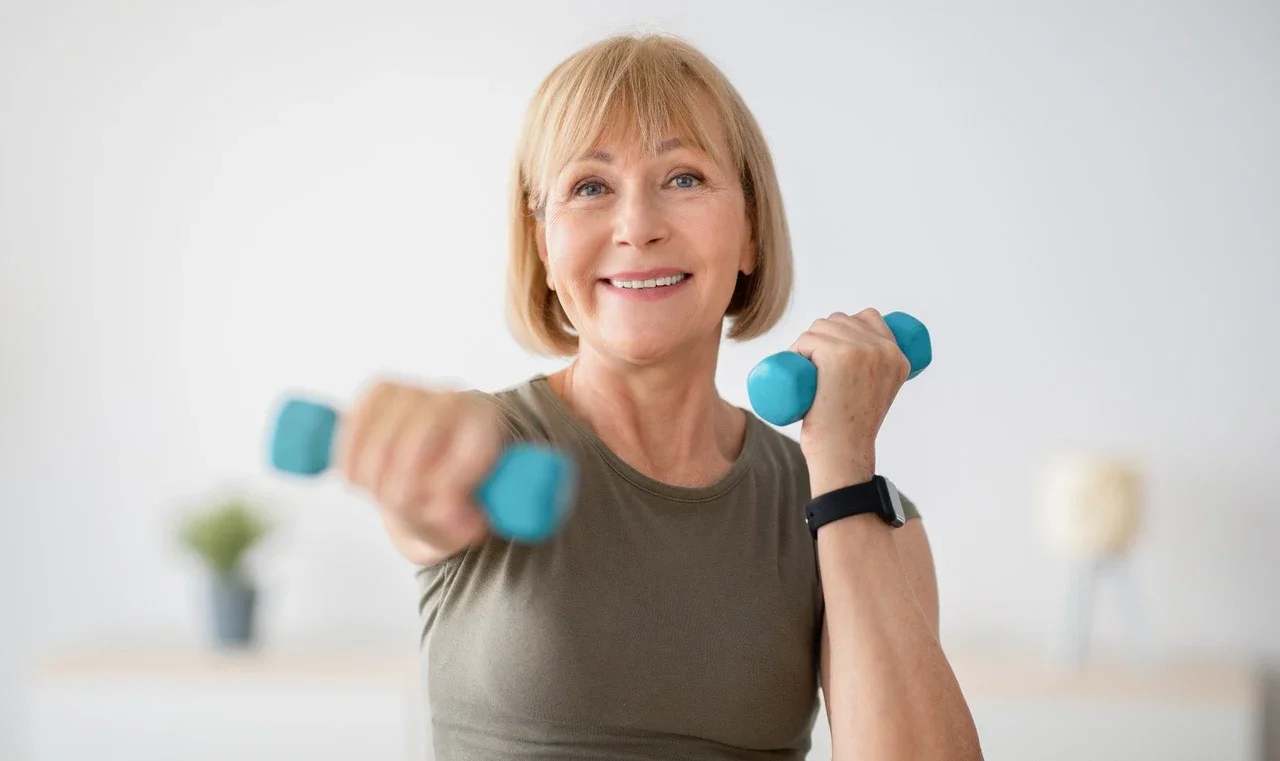
Oestrogen does far more than regulate your cycle. It helps maintain the collagen in your tendons, ligaments and joint capsules, supports muscle mass, protects bone density and has a calming effect on inflammation. As oestrogen levels fluctuate and then fall through perimenopause and menopause, all of those tissues lose some of that protection.
The result is a recognisable pattern. Tendons become less tolerant of load, joint capsules can stiffen, and muscle mass and bone density decline more quickly. Researchers have recently proposed the term "musculoskeletal syndrome of menopause" to describe this cluster of symptoms, and we find the name helpful. It confirms what many women already sense: these problems are connected, and they deserve to be taken seriously.
The encouraging part is that tendon, muscle and bone all respond to the same thing. They adapt to load. That is where physiotherapy makes a genuine difference.
Why It Hasn't Got Better
Many of the women we see have been told, kindly and with the best of intentions, that their pain is just menopause, or just their age. That leaves you with nowhere to go. Menopause explains why these problems appear. It does not mean they cannot be treated.
Others have been told to rest. Rest feels sensible when something hurts, and it can settle pain in the short term. But tendons that are already losing capacity lose even more when they are rested, and the pain returns the moment you go back to normal activity.
The most common reason we see is exercise that is not challenging enough. Many women move between walking, a spin class and mat Pilates, and feel they are doing plenty. All of those have real benefits, but none of them provides enough load to maintain bone density or rebuild a struggling tendon. Your body needs something heavier.
If you came of age in the era of aerobics classes and light hand weights, you were probably never shown how to strength train properly. That is not your fault, but it does mean starting now can feel daunting.
Finally, each problem is often treated in isolation. The hip gets treated one year, the shoulder the next, the elbow after that. Nobody has stepped back to look at the pattern, or at what your body needs as a whole.
Your Treatment Journey
Your first appointment lasts an hour. We will take time to understand what hurts, what you have already tried, what your days look like and what you want to get back to. We will assess the specific problem that brought you in, look more broadly at your strength and movement, explain clearly what we find, and agree a plan with you. Treatment begins in that first session.
From there, we build a programme around your life rather than expecting your life to fit around it. Most of the women we treat are juggling demanding work, family and everything else, so the plan has to be realistic. That might mean two focused strength sessions a week rather than five. It will always mean exercises with a clear purpose, progressed steadily so that your tendons, muscles and bones are genuinely challenged.
You do not need to lift your body weight or chase personal bests. My aim is to open the door to strength training, teach you to do it safely and confidently, and help you discover how good it feels to get stronger. Physio Remedies is based within the Lansdowne Club, which gives us a well-equipped gym in a calm, private setting, ideal if you would like to carry on training independently afterwards.
My treatment sits alongside whatever medical plan you are following. Whether you take HRT, have chosen not to, or cannot take it, the programme works with your situation, and we am happy to liaise with your GP or menopause doctor where it would help.
Bone Health and Strength Training
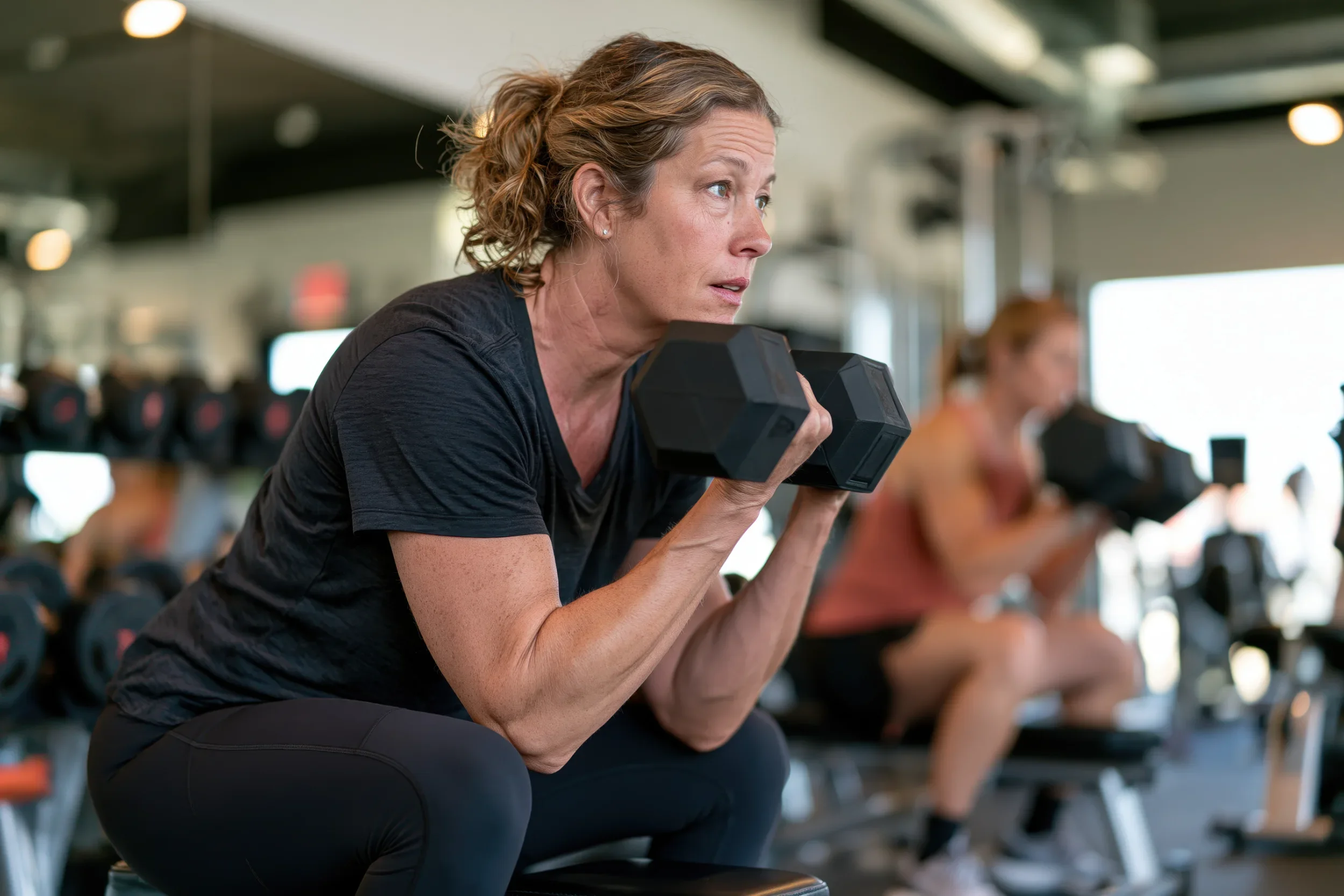
More women are asking me about bone health, and we am delighted that they are. Bone density declines more quickly in the years around menopause, and osteoporosis is often silent until a fracture occurs. Bone responds to load and impact. Walking and swimming are excellent for your heart and your wellbeing, but on their own they do not provide enough stimulus to maintain bone density.
Research has shown that carefully supervised, progressive resistance and impact training is both safe and effective, even for women who already have low bone density. If you have had a DEXA scan showing osteopenia or osteoporosis, bring your results to your appointment and we will build a programme that is appropriate for your bones. If you have not had a scan and we think one would be useful, we will suggest you discuss it with your GP. We often say "use it or lose it", and it applies to muscle and bone alike. It is never too late to start.
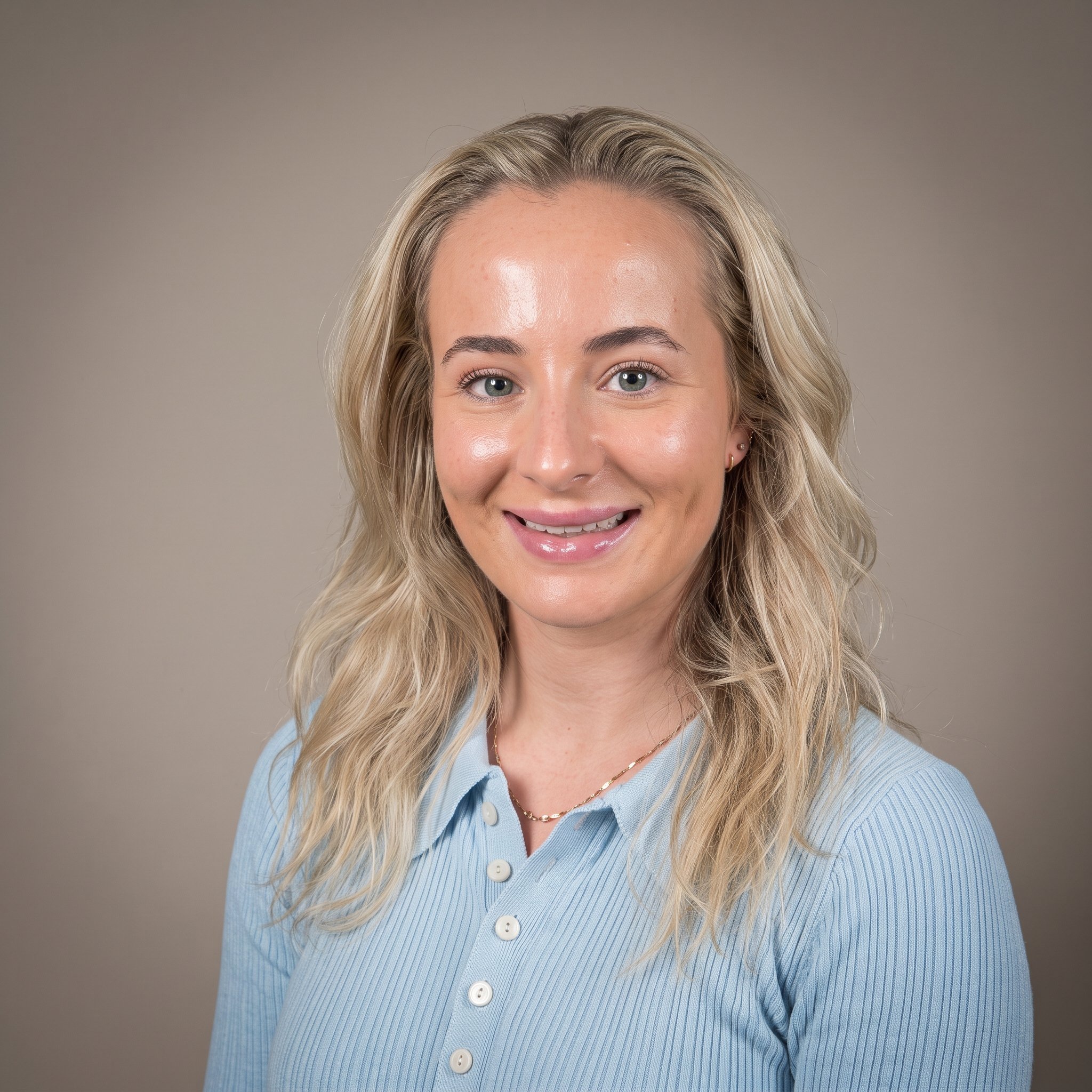
Lucy Metcalfe
Menopause Physiotherapy Specialist
Lucy is passionate about women's health. Perimenopause and menopause can bring joint pain, tendon trouble, stiffness and changes in bone health, and these too often get brushed aside. She helps women make sense of it all and stay strong and active. She brings the same approach to people rebuilding strength during and after cancer treatment, including those dealing with menopause brought on by treatment.
Frequently Asked Questions
-
Yes. Menopause makes joints and tendons more vulnerable, but they still respond well to the right treatment. Most of the problems I see, including hip, shoulder and elbow tendon pain, improve significantly with a structured, progressive exercise programme alongside hands-on treatment and practical advice.
-
Yes, provided you start at the right level and progress sensibly. I will teach you the technique, choose the right starting weights and increase the challenge as you get stronger. Many women find strength training transforms not only their pain but also their energy and confidence.
-
No. Physiotherapy helps whether or not you take HRT. Some women find HRT improves their joint symptoms, and that is a conversation to have with your GP or menopause doctor. My programme works alongside whatever you decide.
-
Yes, where it is needed and with your permission.
-
No. My work is musculoskeletal: joints, tendons, muscles and bones. If pelvic floor or bladder symptoms are your main concern, I will point you towards a specialist pelvic health physiotherapist.
-
No, you can book directly. Some insurers ask for a GP referral before authorising treatment, so it is worth checking your policy.
-
We accept AXA Health, AXA Global, BUPA and BUPA Global insurance. For self-funding patients an initial assessment is one hour and £190; AXA and BUPA patients please contact us for further details.
Book Your Menopause Physiotherapy Assessment
If joint, tendon or muscle pain is affecting your sleep, your work or the activities you love, or you want to get stronger through menopause but do not know where to start, I can help. Book an appointment with me at the Lansdowne Club in Mayfair, a short walk from Green Park and Berkeley Square.
If you prefer to reach us directly:
References
Wright VJ, Schwartzman JD, Itinoche R, Wittstein J. The musculoskeletal syndrome of menopause. Climacteric. 2024;27(5):466-472.
Watson SL, Weeks BK, Weis LJ, et al. High-intensity resistance and impact training improves bone mineral density and physical function in postmenopausal women with osteopenia and osteoporosis: the LIFTMOR randomized controlled trial. J Bone Miner Res. 2018;33(2):211-220.
Mellor R, Bennell K, Grimaldi A, et al. Education plus exercise versus corticosteroid injection use versus a wait and see approach on global outcome and pain from gluteal tendinopathy: prospective, single blinded, randomised clinical trial. BMJ. 2018;361:k1662.
Royal Osteoporosis Society. Strong, Steady and Straight: An Expert Consensus Statement on Physical Activity and Exercise for Osteoporosis. 2019.