
Foot & Ankle Conditions
Achilles Tendinopathy Treatment in Mayfair London
Specialist Achilles tendon pain treatment in Mayfair, combining focused shockwave therapy with progressive loading protocols. If your Achilles pain hasn't resolved with rest, stretching, or previous physiotherapy, we can help you get back to running, sport, and daily activities without pain.
Why Your Achilles Tendon Pain Hasn't Got Better
After 24 years treating Achilles problems in London and Mayfair, I see the same failures repeatedly. At any given time, I'm treating three to four Achilles rupture rehabilitations alongside numerous chronic Achilles tendinopathy cases. The Achilles is one of the most commonly injured tendons, yet it's also one of the most poorly managed.
Under-Loading
The Achilles can handle forces up to 12 times your body weight when running. Calf raises on the floor aren't enough. Your Achilles needs progressive, heavy, slow resistance training to rebuild capacity.
Still Stretching
Stop stretching your Achilles. Stretching a painful, degenerative tendon doesn't help it heal. In fact, it can irritate it further. Achilles tendinopathy needs load, not stretch.
Excessive Load
Jumping back to running too quickly without proper progression leads to major setbacks. The Achilles is unforgiving and requires careful monitoring throughout rehabilitation.
Common Treatment Failures
Poor Assessment of Contributing Factors
Why did your Achilles become painful in the first place? Most practitioners never answer this question properly. They look at the painful Achilles and ignore everything else.
We assess and address all contributing factors:
Foot and ankle control
Calf strength deficits
Hip stability
Training load
Footwear
Running technique if you're a runner
No Objective Measures
How do you know when your Achilles is ready for running? Most places rely on "well, it feels a bit better now." That's not good enough. We use VALD dynamometry to measure your calf strength between sides. You need to be at 90% of your non-injured side before you're safe to return to sport.
What Makes Our Achilles Treatment Different
-
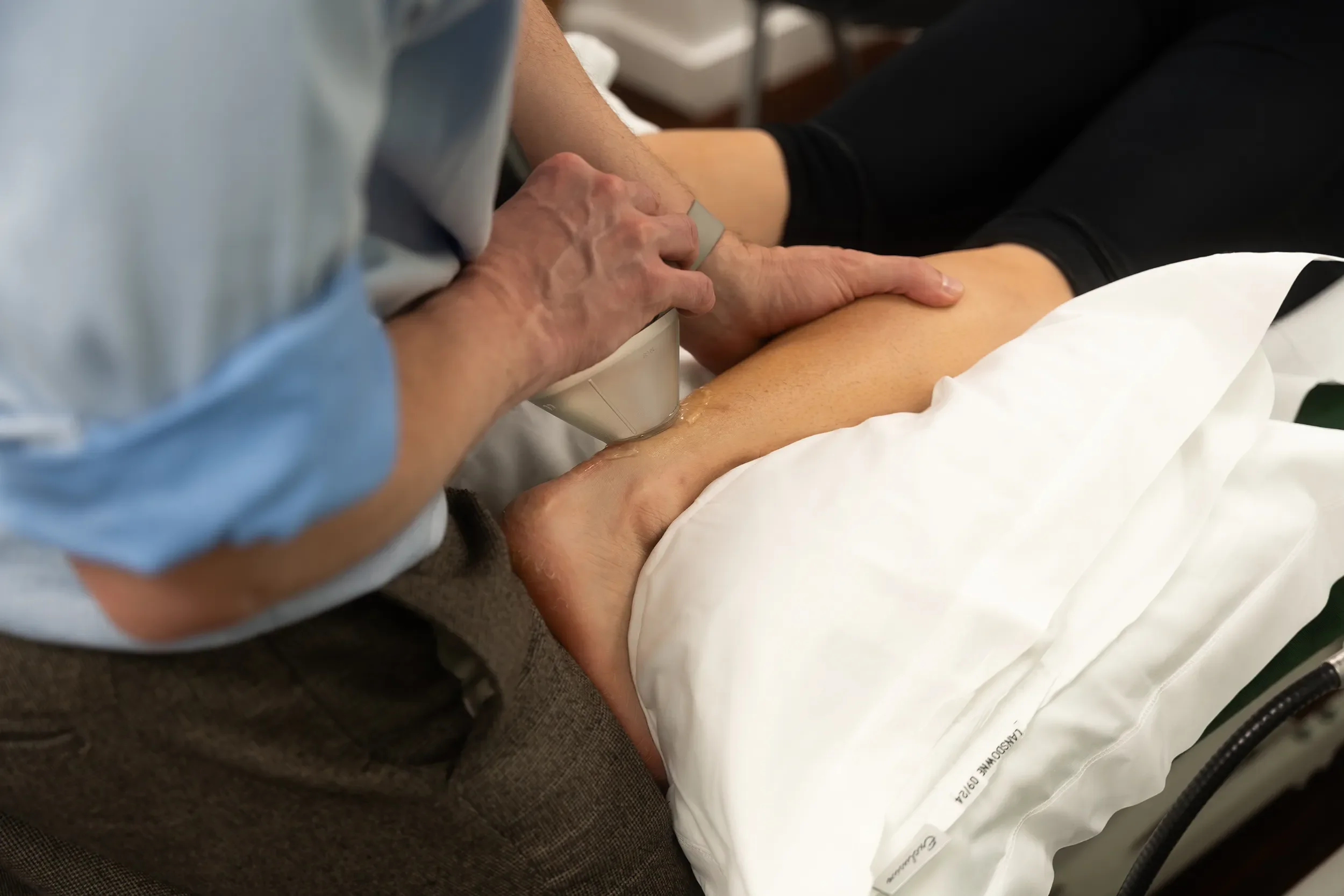
Expertise with Achilles Problems
I've been treating Achilles tendinopathy and ruptures since 2000. At our Mayfair clinic, we're currently managing three to four Achilles rupture rehabilitations at any given time, plus numerous chronic cases. This isn't something we see occasionally—it's a core part of what we do.
-
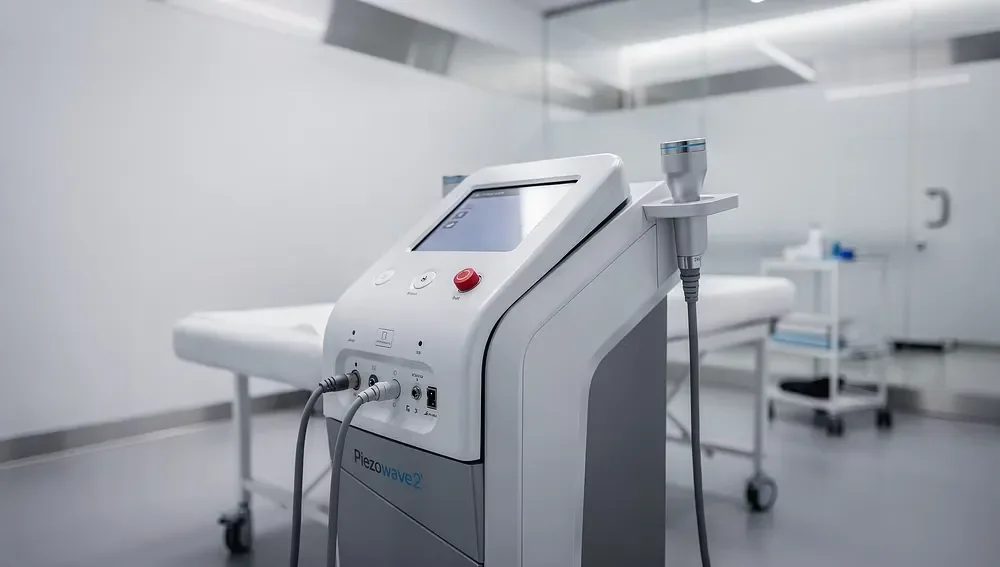
Focused Shockwave Therapy
Our Mayfair clinic uses Piezowave2 focused shockwave therapy, one of very few focused systems in central London. The Achilles tendon is deep and requires the precision and depth penetration that only focused shockwave can provide. We're getting excellent results with our combination approach.
-
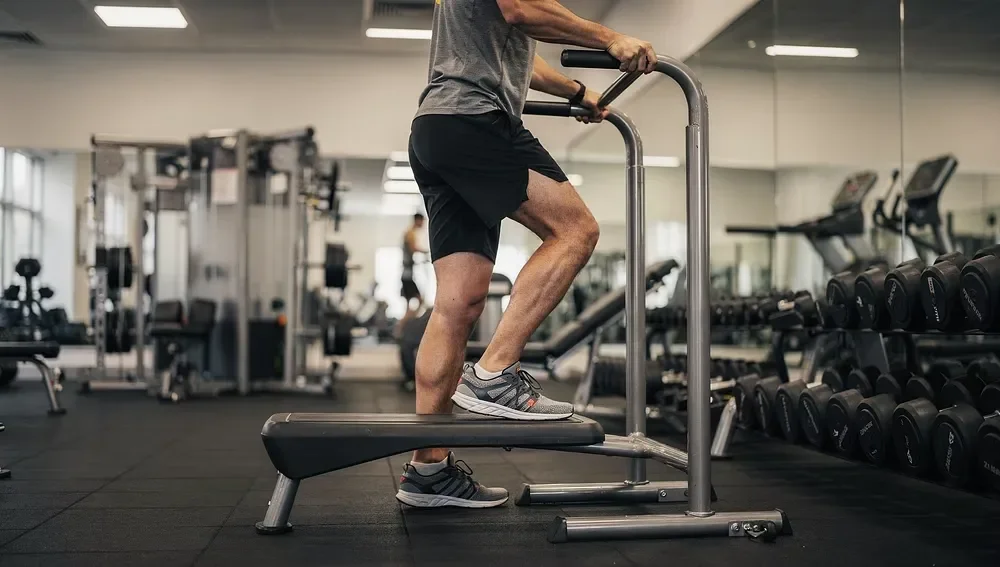
Evidence-Based Loading Protocols
We base our Achilles rehabilitation programmes on the protocols of Peter Malliaras and other world-leading researchers. This isn't guesswork—it's evidence-based, structured progression that rebuilds your Achilles capacity systematically.
-
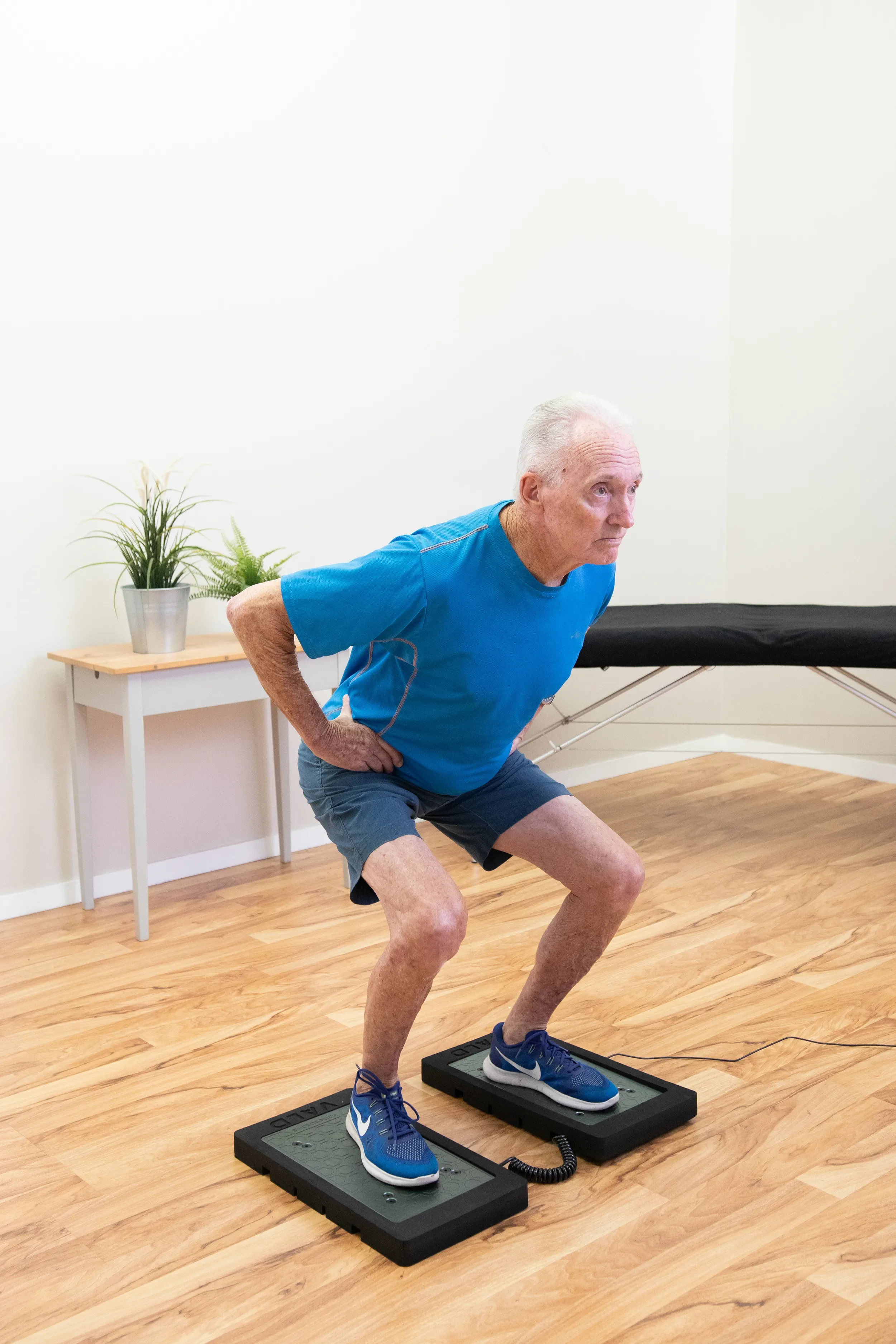
Objective Testing Throughout
We use VALD Dynamo dynamometry to measure your calf strength output between sides. This gives us objective data on your progress. You must achieve 90% of your non-injured side before you're safe to return to running or sport.
Types of Achilles Problems We Treat
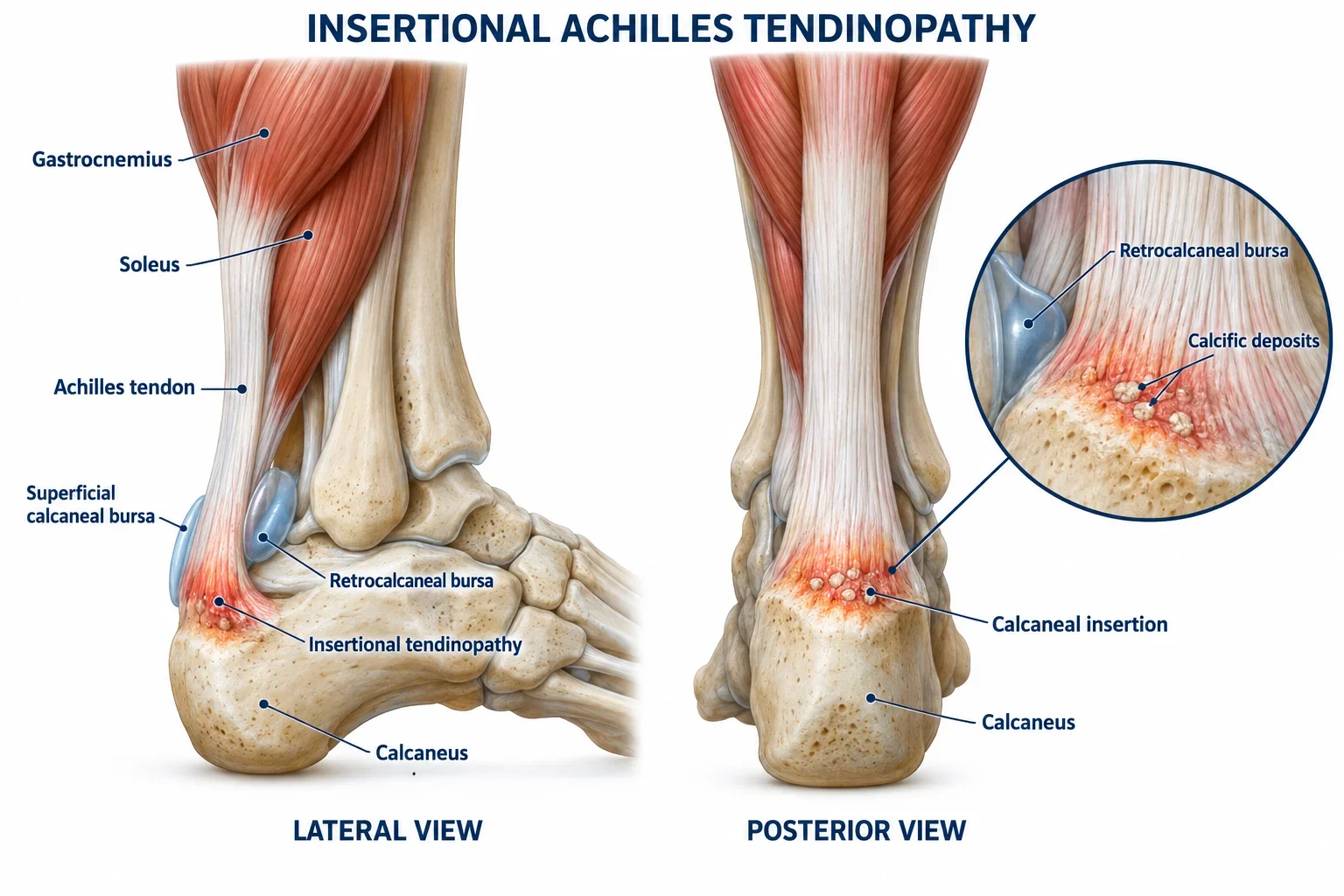
Insertional Achilles Tendinopathy
Pain at the back of the heel where the Achilles tendon attaches to the calcaneus. Often accompanied by a bony prominence or bump. Can be associated with heel spurs or calcification. Worse with pushing off or going up on your toes.
Insertional Achilles tendinopathy requires slightly different loading strategies than mid-portion cases, particularly in the early stages. We adapt your programme accordingly.
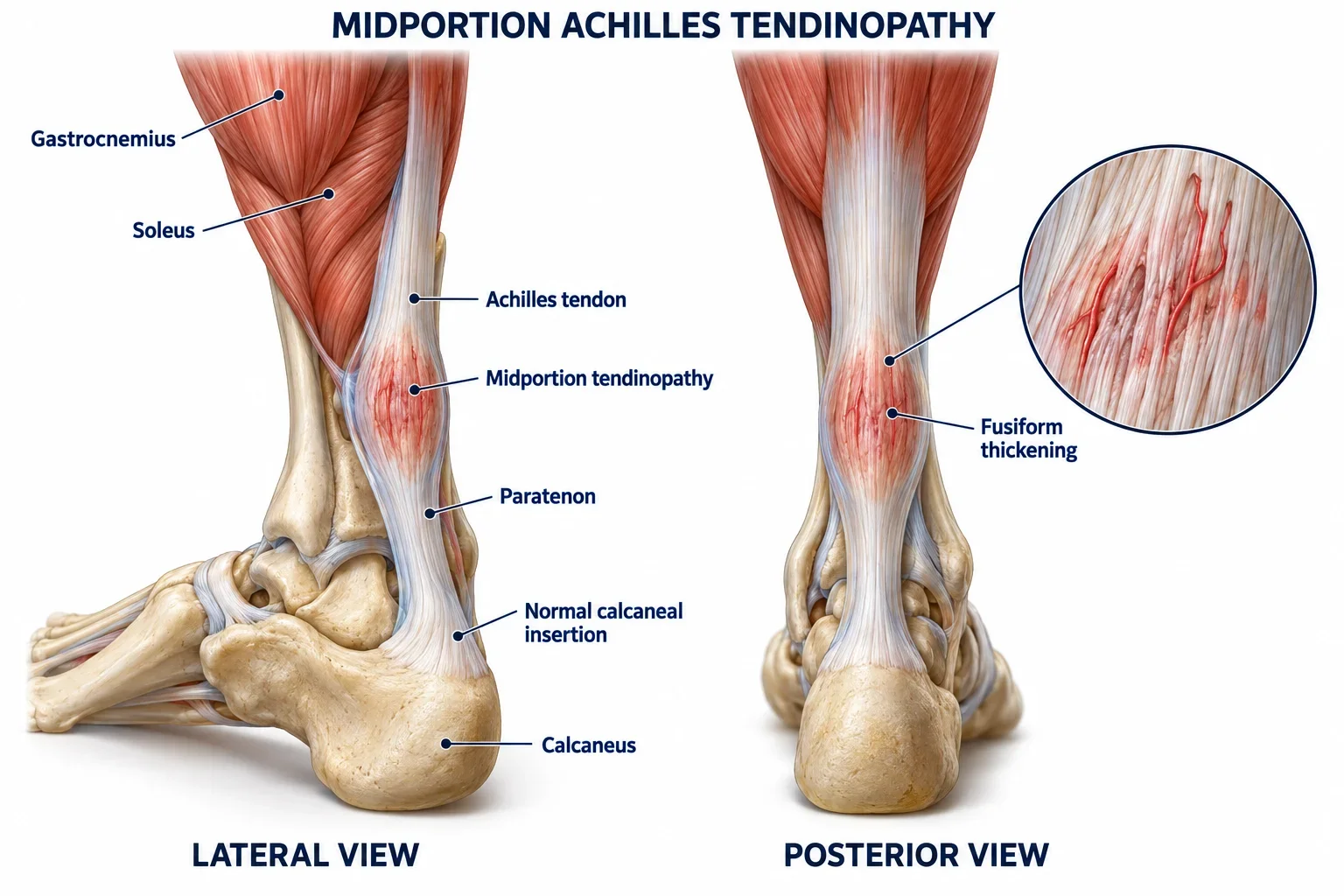
Mid-Portion Achilles Tendinopathy
Pain in the middle section of your Achilles tendon, typically 2-6cm above the heel. Often feels stiff first thing in the morning or after sitting. Warms up with activity but can become painful later in the day or the next day after running or sport.
Mid-portion Achilles tendinopathy typically responds very well to our combination of focused shockwave therapy and progressive heavy slow resistance training.
Achilles Rupture Rehabilitation
Complete or partial rupture of the Achilles tendon, whether managed surgically or conservatively. At any given time, I'm managing three to four Achilles rupture rehabilitations at our Mayfair clinic.
Achilles rupture rehabilitation requires expert guidance through the critical phases of healing. Load it too early and you risk re-rupture. Load it too cautiously and you end up with a weak, non-functional Achilles.
Post-Surgical Achilles Problems
Persistent pain or dysfunction after Achilles surgery. This might be due to inadequate rehabilitation post-surgery, scar tissue complications, strength deficits that were never properly addressed, or biomechanical issues that weren't resolved.
We can help get you back on track after surgery, addressing the underlying problems that are preventing full recovery.
Your Achilles Rehabilitation Journey
Phase 1: Pain Reduction & Tissue Healing
Weeks 1-6
Early phase focuses on reducing pain and inflammation, beginning appropriate loading to stimulate healing, focused shockwave therapy sessions (typically 3 sessions in this phase), and modified activity guidance.
You should see significant improvement in pain levels during this phase. If you haven't seen meaningful progress by 6 weeks, we reassess and adjust the approach.
Phase 2:
Strength Building
Weeks 6-16
Progressive loading phase focuses on heavy slow resistance training for the Achilles, building both gastrocnemius and soleus strength, progressive increase in training load, VALD strength testing to measure your progress objectively, and gradual reintroduction of impact activities.
Target: Achieve 80-90% strength compared to your non-injured side before progressing to sport-specific loading.
Phase 3:
Return to Activity
Weeks 16-26
Sport-specific phase focuses on plyometric and explosive loading if returning to sport, running progression if you're a runner, sport-specific movement patterns, final VALD testing to confirm readiness, and strategies to maintain Achilles capacity long-term.
You must achieve 90% strength before being cleared for full return to sport. This is non-negotiable for your safety.
Typical Achilles Loading Programme
Practical, Measurable Targets
Instead of vague instructions, I give you specific, measurable targets you can understand:
"You weigh 70kg. We're working at 50% of body weight to start, so that's 35kg. That's what you want to be lifting on your single leg calf raises in the gym this week."
"Can you do 25 single leg calf raises on your injured side, controlled down, full range? If not, that's where we're heading."
"Your VALD strength testing shows you're currently at 68% of your other side. We need to get you to 90% before you're safe to return to running."
Real-world targets you can measure and track yourself.
Frequently Asked Questions
Here are answers to some of the common questions we receive regarding Achilles tendinopathy treatment at Physio Remedies.
-
How long does Achilles tendinopathy take to heal?
For acute Achilles tendinopathy (symptoms less than 3 months), you should see significant improvement within 6-8 weeks with appropriate treatment. Full resolution typically takes 3-6 months.
For chronic Achilles tendinopathy (symptoms 6+ months), you're looking at 6-9 months for full recovery. The longer you've had the problem, the longer it typically takes to resolve.
Can I continue running with Achilles tendinopathy?
This depends on your pain levels and how your Achilles responds to running. Pain during running that doesn't exceed 3/10 is usually safe to continue with reduced volume. Pain exceeding 5/10 means you need to stop running temporarily.
For many people, a temporary break from running (4-8 weeks) followed by a structured return-to-running progression gives better outcomes than trying to "run through" the pain.
Should I stretch my Achilles?
Stop stretching your Achilles. This is one of the most common mistakes I see. Achilles tendinopathy is a degenerative condition, not a tightness problem. Stretching a painful, degenerative tendon doesn't help it heal—it can irritate it further.
What your Achilles needs is progressive loading, not stretching.
When can I return to running after Achilles tendinopathy?
You can return to running when you have minimal pain during daily activities, can perform 25 single leg calf raises on your injured side with good control, have achieved 80-90% calf strength compared to your other side on VALD testing, and can hop on your injured leg without significant pain.
This typically takes 12-20 weeks from starting appropriate treatment for chronic Achilles tendinopathy.
When can I return to sport after Achilles rupture?
For Achilles rupture, return to sport typically takes 6-9 months for recreational sport, 9-12 months for competitive sport, and 12+ months for elite-level sport.
You must achieve 90% calf strength compared to your other side on VALD testing before being cleared for return to sport. This is non-negotiable.
What if physiotherapy and shockwave aren't enough?
If conservative treatment isn't working as expected, I have direct access to orthopaedic surgeons with specialist interest in Achilles problems. I can arrange appointments within days, not weeks.
Our established pathways include diagnostic ultrasound or MRI if needed, consultation with Achilles specialists, guided injection procedures (PRP, high-volume injections), and surgical consultation if required.
-
This depends on your pain levels and how your Achilles responds to running. Pain during running that doesn't exceed 3/10 is usually safe to continue with reduced volume. Pain exceeding 5/10 means you need to stop running temporarily.
For many people, a temporary break from running (4-8 weeks) followed by a structured return-to-running progression gives better outcomes than trying to "run through" the pain.
-
Stop stretching your Achilles. This is one of the most common mistakes I see. Achilles tendinopathy is a degenerative condition, not a tightness problem. Stretching a painful, degenerative tendon doesn't help it heal—it can irritate it further.
What your Achilles needs is progressive loading, not stretching.
-
You can return to running when you have minimal pain during daily activities, can perform 25 single leg calf raises on your injured side with good control, have achieved 80-90% calf strength compared to your other side on VALD testing, and can hop on your injured leg without significant pain.
This typically takes 12-20 weeks from starting appropriate treatment for chronic Achilles tendinopathy.
-
For Achilles rupture, return to sport typically takes 6-9 months for recreational sport, 9-12 months for competitive sport, and 12+ months for elite-level sport.
You must achieve 90% calf strength compared to your other side on VALD testing before being cleared for return to sport. This is non-negotiable.
-
If conservative treatment isn't working as expected, I have direct access to orthopaedic surgeons with specialist interest in Achilles problems. I can arrange appointments within days, not weeks.
Our established pathways include diagnostic ultrasound or MRI if needed, consultation with Achilles specialists, guided injection procedures (PRP, high-volume injections), and surgical consultation if required.
Book Your Achilles Assessment in Mayfair Today
Ready to finally resolve your Achilles tendon pain? Booking your assessment at our Mayfair clinic is simple.
If you prefer to reach us directly: