

Physiotherapy Treatments in Mayfair, London
Men’s Health Physiotherapy in Mayfair, London
Specialist physiotherapy for male pelvic pain, pelvic floor dysfunction, and post-prostatectomy rehabilitation
Pelvic health problems affect far more men than is commonly recognised, yet many are reluctant to seek help or simply do not know that effective, specialist treatment exists. If you are experiencing chronic pelvic pain, urinary incontinence, erectile dysfunction, or difficulties following prostate surgery, men’s health physiotherapy can make a significant difference to your quality of life.
Based at Physio Remedies in Mayfair, central London, we offer specialist men’s health physiotherapy to patients across the West End, City of London, and wider London. You should not have to manage these problems alone.

What is men’s health physiotherapy?
Men’s health physiotherapy, sometimes called male pelvic health physiotherapy or pelvic floor physiotherapy for men, is a specialist branch of physiotherapy focused on the assessment and treatment of conditions affecting the male pelvic region.
The pelvic floor is a group of muscles at the base of the pelvis. In men, these muscles support the bladder and bowel, play an important role in sexual function, and work in close coordination with the deep abdominal muscles and the diaphragm. When the pelvic floor becomes tight, overactive, or weak, through injury, surgery, sport, or chronic strain, it can cause a wide range of symptoms that are often poorly understood and under-treated.
Specialist assessment and treatment can address the underlying drivers of these problems, not just the symptoms.
Conditions we treat
-
Chronic pelvic pain and chronic pelvic pain syndrome (CPPS)
Persistent pain in the pelvis, perineum, lower abdomen, or genitals, often described as aching, burning, or pressure, is more common than most men realise. It may be diagnosed as chronic pelvic pain syndrome (CPPS), and it can develop gradually through sport and overtraining, particularly cycling and heavy weightlifting, or arise without an obvious cause.
The underlying driver is frequently a hypertonic pelvic floor: muscles that are chronically tight and overactive rather than weak. When the pelvic floor cannot release and relax normally, it generates and perpetuates pain, often with effects that radiate into the hips, lower back, and thighs. Physiotherapy works to release this tension, address the myofascial connections involved, reduce pain, and restore normal movement and function.
-
Pudendal neuralgia
Pudendal neuralgia is a specific type of pelvic pain caused by irritation or compression of the pudendal nerve, which runs through the pelvis and supplies sensation to the genitals, perineum, and rectum. Symptoms include burning or shooting pain in the pelvic region, pain that is worse when sitting, and sensitivity in the perineum or genitals. It is a condition that is frequently misdiagnosed or unrecognised for years. Physiotherapy plays an important role in management, addressing the musculoskeletal and myofascial factors that contribute to nerve irritation.
-
Male urinary incontinence and overactive bladder
Leaking urine when lifting, coughing, sneezing, or exercising is not a normal or inevitable part of life for men. Neither is a persistent sense of urgency, frequency, or an overactive bladder that disrupts daily life. These are signs that the pelvic floor is not functioning as it should, and they are highly treatable with the right specialist input.
Many men, including athletes who train to a high level, experience leakage during heavy lifting and are unaware that targeted pelvic floor rehabilitation can resolve it. Post void dribbling, the loss of a small amount of urine after finishing at the toilet, is another common and under-reported symptom that physiotherapy can help address.
-
Prostatitis
Prostatitis, inflammation or pain around the prostate, frequently has a significant musculoskeletal component. Tightness and trigger points in the pelvic floor muscles can drive or perpetuate symptoms, and physiotherapy plays an important role in management alongside medical care. If you have been diagnosed with prostatitis and found that antibiotics or medication alone have not resolved your symptoms, pelvic floor dysfunction may be a contributing factor worth assessing.
-
Post-prostatectomy rehabilitation
As more men undergo surgery for prostate cancer and live longer, active lives afterwards, the need for specialist rehabilitation has grown significantly. Urinary incontinence and erectile dysfunction are common concerns following prostatectomy, and the degree of functional change varies depending on the type and extent of surgery.
Physiotherapy after prostate surgery helps restore pelvic floor strength and coordination, supports recovery of bladder control, and provides a structured, progressive pathway back to as full a functional life as possible. Regaining control and confidence after surgery matters both physically and psychologically, and specialist prostate surgery rehabilitation gives you the best foundation for doing so.
-
Erectile dysfunction
The pelvic floor muscles play a direct role in erectile function. In men with pelvic floor dysfunction, particularly a hypertonic, overactive pelvic floor, physical factors can contribute significantly to erectile difficulties. Physiotherapy for erectile dysfunction addresses the underlying musculoskeletal and neuromuscular drivers, and is often an important part of a wider treatment approach alongside medical management.
-
Pelvic floor dysfunction in active men and athletes
Pelvic floor dysfunction is not limited to older men or those recovering from illness. Athletes across many disciplines, particularly cyclists, rowers, and those who train regularly with heavy loads, can develop pelvic floor problems through overuse, repetitive strain, or high intra-abdominal pressure. Learning to engage the pelvic floor correctly and functionally, rather than simply strengthening it in isolation, is central to resolving and preventing these issues.
From a performance perspective, leaking when lifting heavy weights is not normal. It is a sign the pelvic floor is not responding as it should, and it is addressable with the right rehabilitation approach.
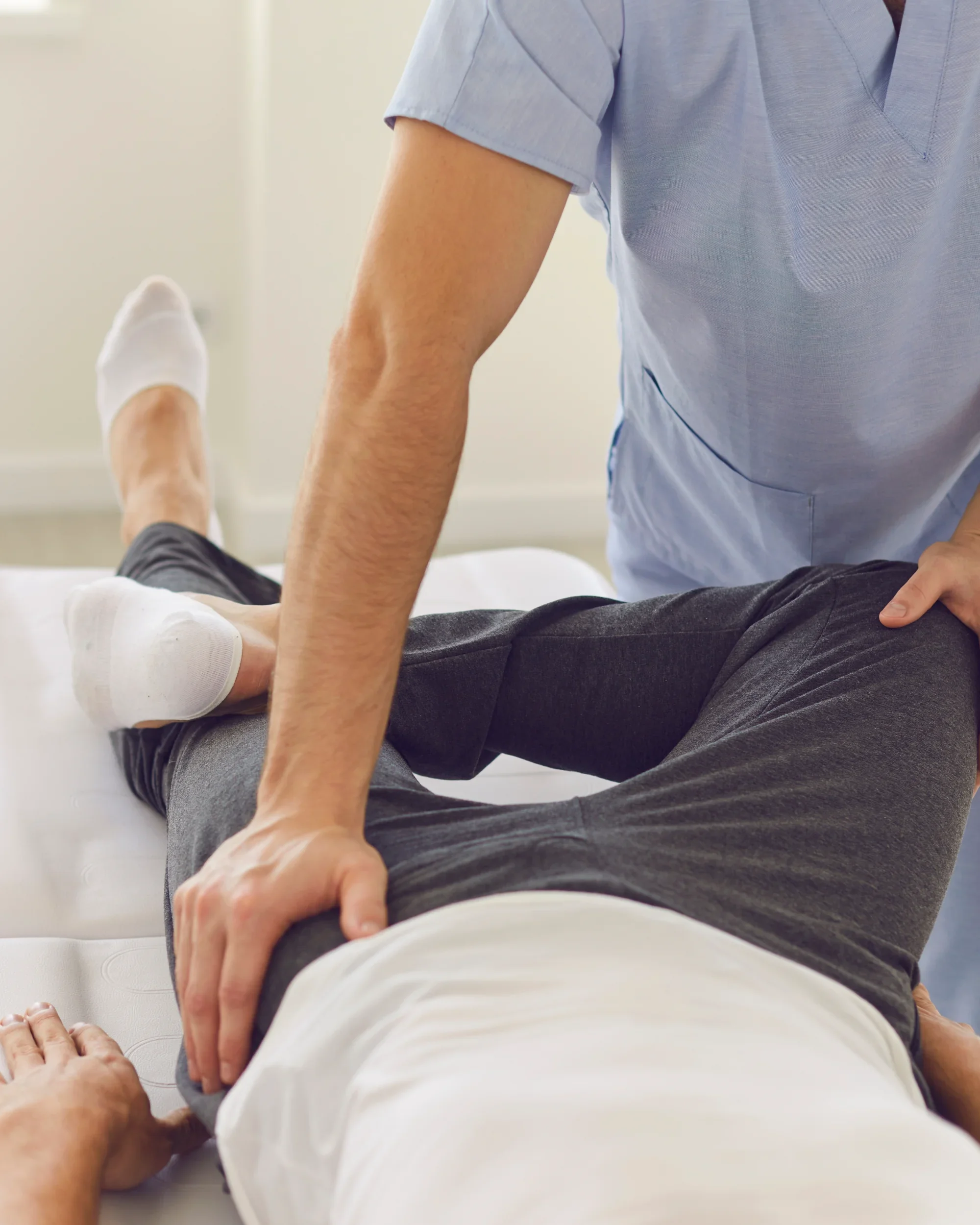
What does treatment involve?
Every patient is different, and assessment always comes first. A detailed initial men’s health assessment at my Mayfair clinic provides a thorough understanding of your symptoms, history, and goals before any treatment plan is agreed.
Specialist assessment
A careful clinical assessment to understand the nature and drivers of your symptoms, including pelvic floor function, breathing patterns, movement, and any relevant musculoskeletal factors.
Pelvic floor rehabilitation
Personalised exercises to improve pelvic floor function, build coordination and strength where needed, and reduce pain. For many men with pelvic pain, the priority is learning to release and relax the pelvic floor rather than strengthen it. Rehabilitation is progressed gradually and designed around your lifestyle and activity level.
Manual therapy
Hands-on treatment to address muscle tightness, trigger points, and the deep myofascial connections between the pelvic floor and the wider musculoskeletal system, including the hips, lower back, and abdominal wall.
Breathwork
Breathing pattern dysfunction and pelvic floor problems are closely linked, anatomically and functionally. Specific breathwork techniques are integrated into treatment where indicated, both to support pelvic floor rehabilitation and to address pain, tension, and nervous system regulation more broadly.
Pain management and education
Advice and practical strategies to help you understand your symptoms, manage flare-ups, make informed lifestyle choices, and maintain long-term progress.
A holistic, whole-body approach
The pelvic floor does not work in isolation. It is part of a deep muscular system, anatomically connected to the diaphragm, the deep abdominal muscles, and the structures of the hip and lower back. Problems in one area frequently affect others, and treating the pelvic floor without considering the wider picture often produces limited results.
With a background in musculoskeletal physiotherapy alongside specialist men’s health and pelvic health training, I am well placed to assess the full picture. Treatment integrates musculoskeletal therapy, pelvic floor rehabilitation, functional breathing, and pain management into a coherent, personalised plan, addressing the body as the connected system it is.

Who is this service for?
Men’s health physiotherapy at my Mayfair clinic can help if you are experiencing any of the following:
Chronic pelvic pain or chronic pelvic pain syndrome (CPPS)
Pudendal neuralgia or nerve-related pelvic pain
Male urinary incontinence, including stress incontinence or post void dribbling
Overactive bladder, including urgency, frequency, or urgency incontinence
Prostatitis, particularly where musculoskeletal factors are involved
Urinary incontinence or erectile dysfunction following prostatectomy
Pelvic floor dysfunction affecting sexual function
Pelvic floor problems related to sport, cycling, or high-load training
If you are unsure whether your symptoms fall within this service, get in touch and I can advise you.

Philip Harris
Men’s Health Specialist Physiotherapist
Since graduating in 1999, Philip has worked in both public and private sectors. He now specialises in knee, shoulder, spinal, sports injuries as well as being an Oxygen Advantage Breath-work Practitioner.
Frequently Asked Questions
Here are answers to some of the common questions we receive regarding men’s health physiotherapy at Physio Remedies.
-
Yes. While pelvic floor problems are more widely discussed in women, men have a pelvic floor too and are just as likely to experience dysfunction. Chronic pelvic pain, urinary incontinence, and post-prostatectomy problems are all well-established indications for men’s health physiotherapy, and the evidence base for treatment is strong.
-
If you have persistent pain in the pelvis, perineum, lower abdomen, or genitals that has lasted more than three months, or pain that affects your ability to exercise, sit comfortably, or function normally, it is worth seeking a specialist assessment. Many men with CPPS or pudendal neuralgia spend years without the correct diagnosis. A thorough clinical assessment can identify whether a musculoskeletal or pelvic floor component is involved and whether physiotherapy is the right next step.
-
The first appointment is a detailed assessment. I will take a full history of your symptoms, ask about your general health, lifestyle, and any previous investigations or treatment, and carry out a clinical examination to assess pelvic floor function, movement, and any relevant musculoskeletal factors. By the end of the session you will have a clear explanation of what I think is contributing to your symptoms and a proposed treatment plan.
-
Not necessarily. Many conditions can be thoroughly assessed and treated without an internal examination. Where an internal assessment would provide clinically useful information, this will always be discussed and explained fully beforehand, and it is always your choice whether to proceed. Nothing will be done without your informed consent.
-
This varies depending on the nature and duration of your symptoms. Some men see significant improvement within four to six sessions. Others with more complex or long-standing conditions may benefit from a longer course of treatment. I will give you a realistic indication at your first appointment and keep the treatment plan under review as we progress.
-
In cases where pelvic floor dysfunction is a contributing factor, yes. The pelvic floor muscles play a direct role in erectile function, and rehabilitation can make a meaningful difference, particularly when combined with appropriate medical management. An assessment will help clarify whether a physiotherapy approach is likely to be beneficial in your case.
-
No. You can self-refer directly to the clinic. However, if you have a relevant diagnosis such as prostate cancer, prostatitis, or pudendal neuralgia, it is helpful to bring any letters or investigation results to your first appointment so I have the full clinical picture.
-
Yes. The clinic is based at the Lansdowne Club in Mayfair, which is easily accessible from across central London, the West End, and the City. Green Park and Hyde Park Corner underground stations are both a short walk away.
Book a men’s health physiotherapy appointment in Mayfair, London
Physio Remedies, Lansdowne Club, 9 Fitzmaurice Place, Mayfair, central London, convenient for patients across the West End, City of London, and wider London. Whether you are seeking help for pelvic pain, incontinence, post-prostatectomy recovery, or another men’s health concern, I am here to help.
If you prefer to reach us directly: