
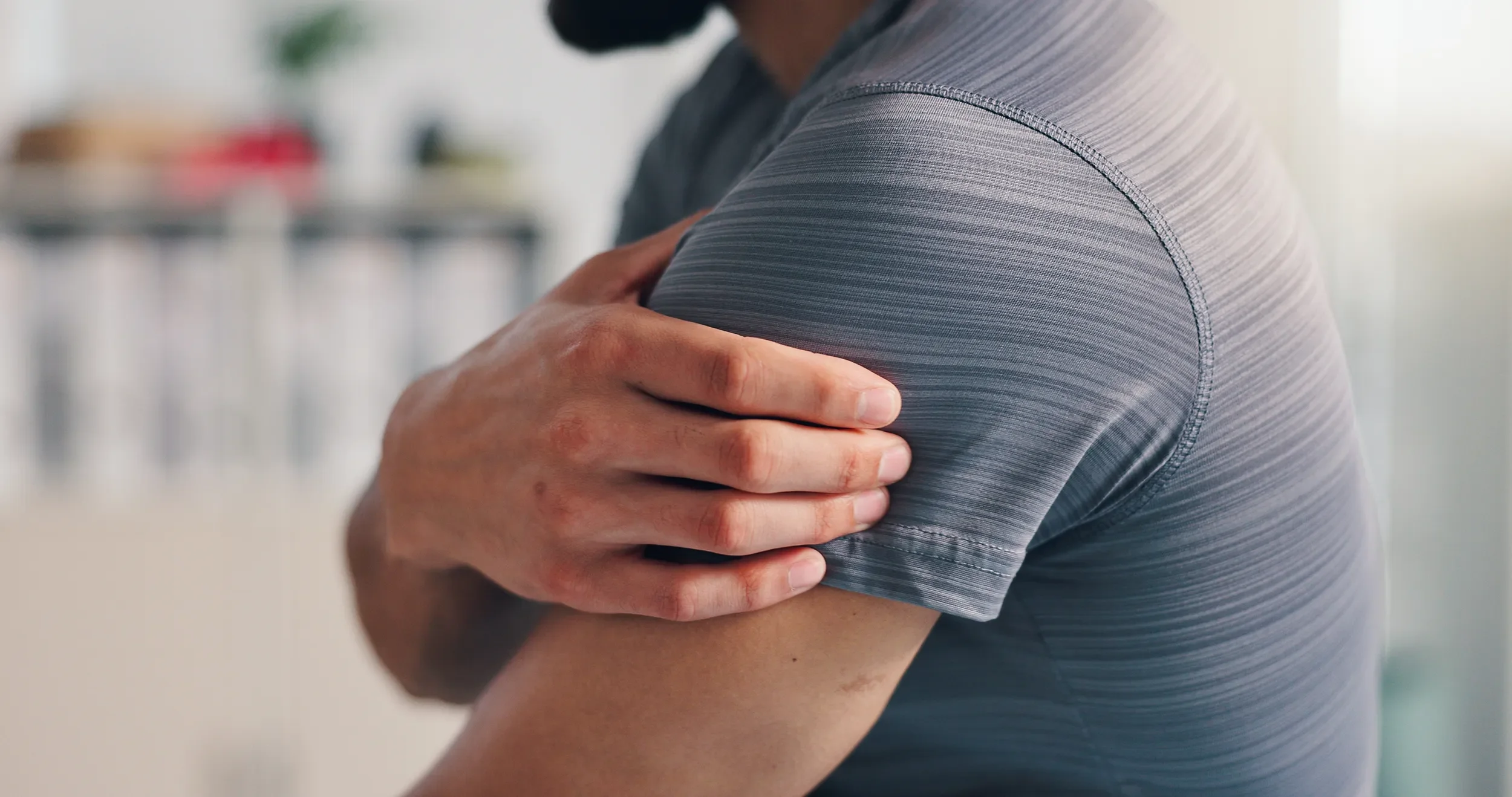
Shoulder Conditions
Shoulder Instability Physiotherapy in Mayfair, London
Who needs specialist shoulder instability treatment?
After traumatic shoulder dislocation. Whether you dislocated your shoulder during contact sport such as rugby, judo, jujitsu or wrestling or came off your bike in London traffic you may require either a stabilisation or physiotherapy.
The decision and timing of this will be guided by your specialist. However, what you need to do now isn't just about strengthening it's about preceptive training progressive loading and sports specific training, to rebuild your confidence and ensure your shoulder can meet the challenges you need to place on it.
The Post-Recovery Plateau
Maybe you've had a stabilisation surgery or reached the end of some conservative management. Your initial phase of physiotherapy would have restored movement and basic strength and daily tasks are fine. But you are finding you still can't return to sport.
Often questions I hear ' I can't serve overhead. ' 'I I've always certain positions because I'm scared it might slip. ' ' I'm back playing but compensating in everyone else can see it. ' .
This is my speciality bridging the gap from function to performance from managing daily life to trust in your shoulder under sports specific demands at competitive intensity.
Why generic shoulder instability rehabilitation fails.
Most physiotherapist restore movement and build strength very effectively what's often missing is the neuromuscular control and retraining and sports specific integration you need to actually perform.
The exercise exercises you've been given may well be correct, but if you don't retrain perception deficit, challenge end of range stability under, rebuild confidence in positions or integrate sports specific movement patterns you'll plateau. You'll be able to complete your shoulder exercises, but you still won't trust your shoulder when it matters.

My approach to shoulder instability treatment.
Beyond shoulder focused work, I address the complete picture. Physiologically I consider sleep quality and recovery capacity nutrition supporting tissue healing training load management and active recovery strategies. By a mechanically assess scapular positioning and control., thoracic mobility optimise, whole kinetic chain function, and support specific movement analysis. Psychologically, we work on grading exposure to fear movement., confidence building under progressive load and mental preparation for return to competition.
Where required we work closely with the consultants and colleagues to ensure a multidisciplinary team approach to benefit your health and well-being.
One of my key strengths is understanding a sport’s specific demands. Being an enthusiastic or round sportsman myself and my experience working across multiple sports with elite athletes, I understand what a shoulder needs to go through whether it's a ballistic overhead movement such as in tennis or throwing, a contact tolerance as in rugby or end of range strength and power in swimming. Therefore, we adapt exercises to ensure they meet the needs your sports demand.
Understanding Chronic Shoulder Instability Mechanisms
The shoulder joint sacrifices bony stability for mobility, relying on dynamic muscular control. When instability develops, several systems fail simultaneously.
Static stabiliser damage after a shoulder dislocation means ligaments and joint capsule that centre the ball in socket have stretched or torn. Surgery can repair these, but dynamic stability from muscles becomes even more critical. Proprioceptive deficit means your shoulder's spatial awareness is damaged. Your brain receives inaccurate position feedback and cannot reflexively stabilise before problems occur. Altered neuromuscular patterns develop as rotator cuff and scapular muscles compensate: some overwork, others switch off, and activation timing becomes disrupted.
Shoulder injury often leads to protective avoidance patterns emerge as you've learned to protect vulnerable positions. Your brain anticipates instability and creates avoidance patterns, a self-fulfilling prophecy limiting recovery.
The Four-Joint Shoulder Complex
Your shoulder comprises four interdependent joints, including the scapulothoracic pseudo-joint where your shoulder blade moves on your ribcage. If scapular positioning fails, your glenohumeral joint (ball and socket) cannot maintain stability regardless of rotator cuff strength.
This is why isolated rotator cuff strengthening often fails. We need to address the complete kinetic chain: posture, thoracic mobility, scapular control, then rotator cuff timing and strength on that foundation.
Types of Shoulder Instability
Traumatic Anterior Instability
The most common pattern. This occurs when there has been an anterior dislocation - when the arm was forced backwards and outwards during sport or falls. If you've had MRI imaging, you may have been told you have a Bankart lesion, which is where the lower front portion of the glenoid labrum has torn from the glenoid (socket). The shoulder capsule and soft tissue is damaged, and even after treatment, this kind of traumatic instability leads to apprehension persists in a position of external rotation.
Shoulder Subluxation
A partial dislocation, your shoulder slips then reduces spontaneously. More debilitating than one-off dislocation because it's unpredictable and creates constant apprehension.
Multidirectional Shoulder Instability (MDI)
An instability in multiple directions, often without clear trauma. Common in hypermobile individuals. Regaining shoulder stability requires skilled, progressive, control-focused rehabilitation, not just case of strengthening a weak rotator cuff muscles.
Recurrent Traumatic Dislocation
Multiple dislocations. Perhaps the first was managed conservatively and recurred, or you've had post-surgical re-dislocation. Each event increases instability and this kind of recurrent instability requires complex rehabilitation.
Posterior Instability
A less common but challenging. Instability occurs when your arm is forward and across your body. It can occur after a posterior dislocation or after repetitive microtrauma. Seen in swimmers, rugby forwards, weightlifters. Frequently missed or misdiagnosed.
Recognising Shoulder Instability Symptoms
The giving way sensation means your shoulder feels like it might slip or dislocate during specific movements or positions. You anticipate the feeling starting. Apprehension is that deep reluctance to place your shoulder in certain positions: overhead, end-range rotation, or sport-specific vulnerable positions.
Clunking or clicking happens when the shoulder shifts, catches or clunks as it moves. The humeral head moving abnormally in the glenoid (shoulder socket) or catching damaged structures. Dead arm sensation is sudden strength or control loss, like your arm has gone numb. Often occurs when the shoulder subluxes slightly and irritates nerves.
Positional weakness means strength in some positions, weakness or instability in others. Typically end-range positions or those stressing damaged structures. Visible compensation shows as modified movement patterns to avoid triggering instability. Others notice you're not using your arm fully or protecting that shoulder.
Sports With High Shoulder Instability Risk
At Physio Remedies in the Lansdowne Club in Mayfair, We regularly treat shoulder instability in combat sports (rugby, judo, Brazilian jiu-jitsu, wrestling, boxing) which have the highest incidence due to contact, falls, and forces in vulnerable positions. Racquet sports (tennis, squash, paddle) where overhead positions and ballistic movements provoke instability or prevent post-injury return. Swimming, where repetitive overhead movement and end-range positions create posterior and multidirectional instability. Weightlifting and CrossFit, where overhead lifts, snatches, and end-range loading trigger instability or prevent progression after injury.
Each sport demands specific stability characteristics. Your rehabilitation must reflect those demands for successful return to competition.
Comprehensive Shoulder Instability Assessment
Your initial session lasts one hour. We’ll want to understand how your instability started, how many times your shoulder has dislocated or subluxed, which positions trigger that unstable feeling, what treatments you've tried, and what you want to get back to doing.
The physical examination includes specific instability tests, range of motion assessment, proprioceptive capacity testing, and strength evaluation. Beyond the shoulder itself, we’ll assess your scapular control, thoracic mobility, posture, and how you perform the actual movement patterns from your sport. This allows precise diagnosis and immediate treatment using exercises safe for your specific instability pattern.
How We Treat Shoulder Instability at Physio Remedies
Control Development
We work in positions where your shoulder feels stable. Correct scapular positioning is fundamental because without it, your rotator cuff cannot create the stability forces you need. We begin gentle rotator cuff activation, proprioceptive retraining (your spatial awareness is always damaged with instability), and safe movement patterns that gradually build confidence.
Progressive Loading
Once basic control is established, we gradually approach positions that previously provoked instability, building tolerance rather than triggering symptoms. Resistance will be added to exercises, building strength to maintain stability under load. Proprioceptive work becomes more complex, and we progress to dynamic movements preparing your shoulder for sport's unpredictable demands.
Sport-Specific Integration
We analyse and correct the specific movements from your sport that stress your shoulder. For tennis players, serving technique. For rugby players, falling and recovering under pressure. Contact sport athletes progress through controlled contact and impact before returning to competition. We build strength in vulnerable end-range positions and work on the psychological readiness to trust your shoulder through graded exposure to movements you've been avoiding.

When Does Shoulder Instability Require Surgical Treatment?
Shoulder stabilisation surgery becomes appropriate when proper rehabilitation fails to prevent repeated shoulder dislocations, when there's significant structural damage (large labral tears, bony defects, severe capsular injuries), for young contact sport athletes after first dislocation (strong evidence supports this), when your occupation demands absolute stability (military, emergency services, elite sport), or after six months of proper rehabilitation without improvement.
When shoulder surgery is indicated, we’ll support your pre-operative conditioning and post-operative rehabilitation where many struggle without specialist input.
Recovery Timelines
Without surgery, most patients notice meaningful improvement within eight to twelve weeks, with full contact sport return typically requiring three to six months. Post-surgical rehabilitation takes longer: sling immobilisation for four to six weeks, graduated return to function over four to six months, and contact sport return at six to nine months, potentially longer for collision sports.
Timelines vary based on structural damage severity, whether you've had surgery, dislocation frequency, age, fitness, sport demands, training engagement, and psychological readiness. Early weeks focus on control and proprioception rather than strength. This foundational work is crucial because rushing it causes recurrence. As sport-specific work progresses, confidence builds rapidly.
When to Seek Specialist Treatment
Come early after your first dislocation to optimise recurrence prevention. Recurrent subluxation (repeated slipping without full dislocation) responds excellently to targeted work. If you've plateaued post-surgery or physiotherapy, can perform exercises but don't trust your shoulder in competition, or avoid certain positions due to apprehension, you need specialist treatment. If you're preparing to return to high-risk sport, ensuring optimal stability beforehand is crucial.

Philip Harris
Breathwork Specialist
I've dislocated my shoulder multiple times playing rugby so when someone walks into my clinic at Physio Remedies in Mayfair with an unstable shoulder I do understand exactly what that feels like the apprehension it causes the frustration with not being able to be as active as you want to and the compensation, you have to make. My shoulder was surgically repaired 20 years ago and it's been great ever since but the experience has given me real empathy for the rehabilitation journey. Not just regaining basic function but rebuilding the confidence to perform without constant worry that you might give way.
Frequently Asked Questions
Here are answers to some of the common questions we receive regarding shoulder instability treatment at Physio Remedies.
-
Yes. Many patients improve significantly with proprioception, neuromuscular control and progressive strengthening. Surgery is reserved for genuine conservative management failure or significant structural damage. Even post-surgically, rehabilitation quality determines outcome.
-
Did previous treatment focus on proprioceptive retraining and sport-specific control, or mainly strengthening? Many programmes miss the neuromuscular control component crucial for instability. We also need exercises challenging your shoulder in positions and movements where instability actually occurs.
-
Yes, with appropriate rehabilitation. Rebuilding confidence requires as much attention as rebuilding strength. We use graded exposure to avoided movements, progressively challenging your shoulder until you genuinely trust it under sport-specific demands.
-
Usually yes, with modifications. We identify safe versus risky positions and movements for your specific instability pattern. This maintains fitness and sport engagement whilst addressing stability problems.
-
We work progressively through ranges and positions, always within your control. You'll never perform movements provoking instability. As control and confidence build, we gradually increase challenge in controlled, safe progression. The goal is expanding confident capability, not provoking instability.
Book Your Shoulder Instability Assessment in Mayfair
If you're struggling with shoulder instability and want expert treatment, get in touch:
If you prefer to reach us directly: