
Shoulder Conditions
AC Joint Pain, Shoulder Separation and AC Joint Arthritis Treatment in Mayfair, London
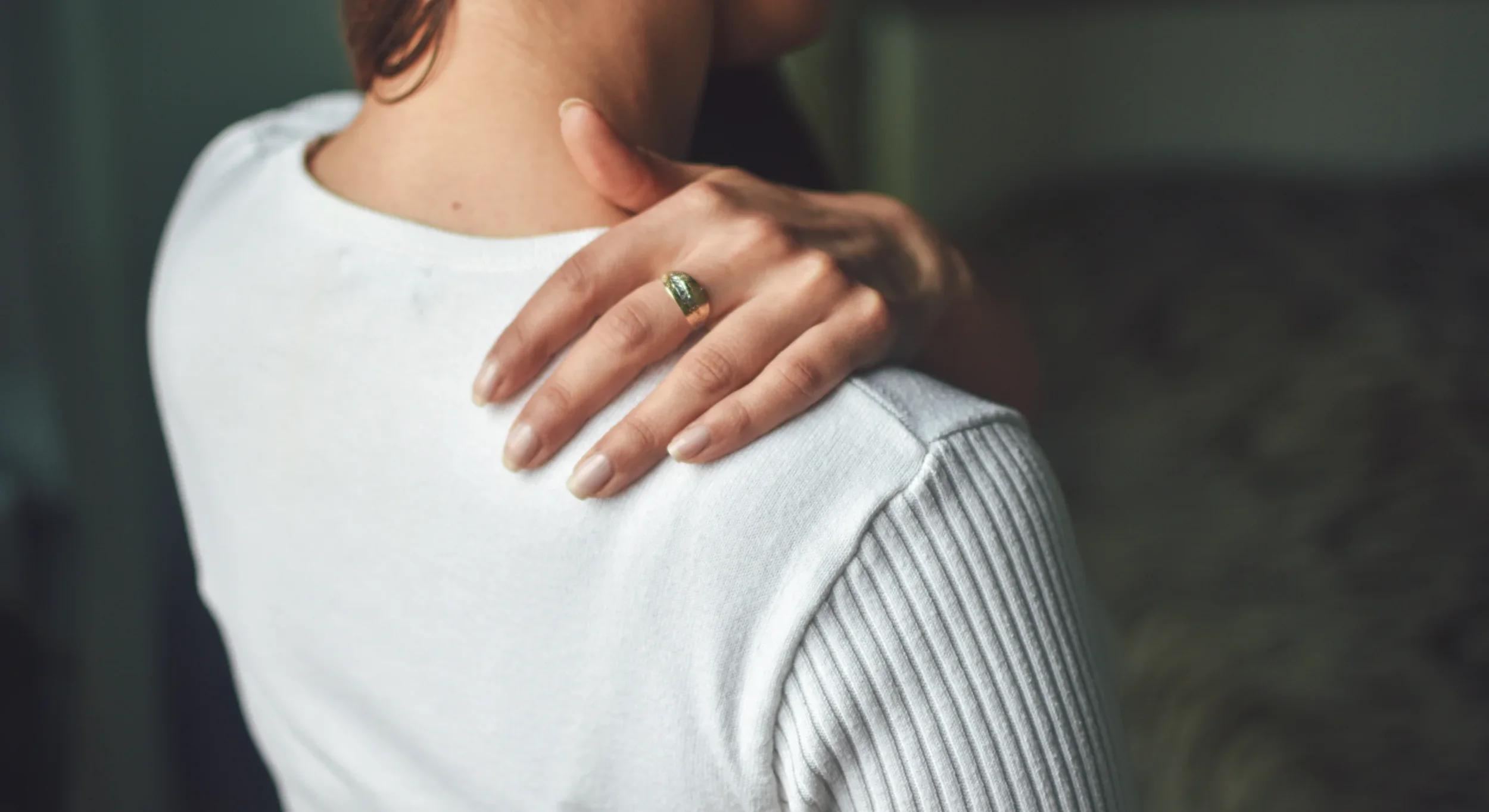
AC joint pain is unusually easy to identify, and that is clinically useful. Most people can place one fingertip directly on the sore spot at the top of the shoulder, and reaching across the body to touch the opposite shoulder reproduces it. That is quite different from the vague, hard to locate ache that usually means the neck is referring pain into the shoulder, and it is the first thing we check.
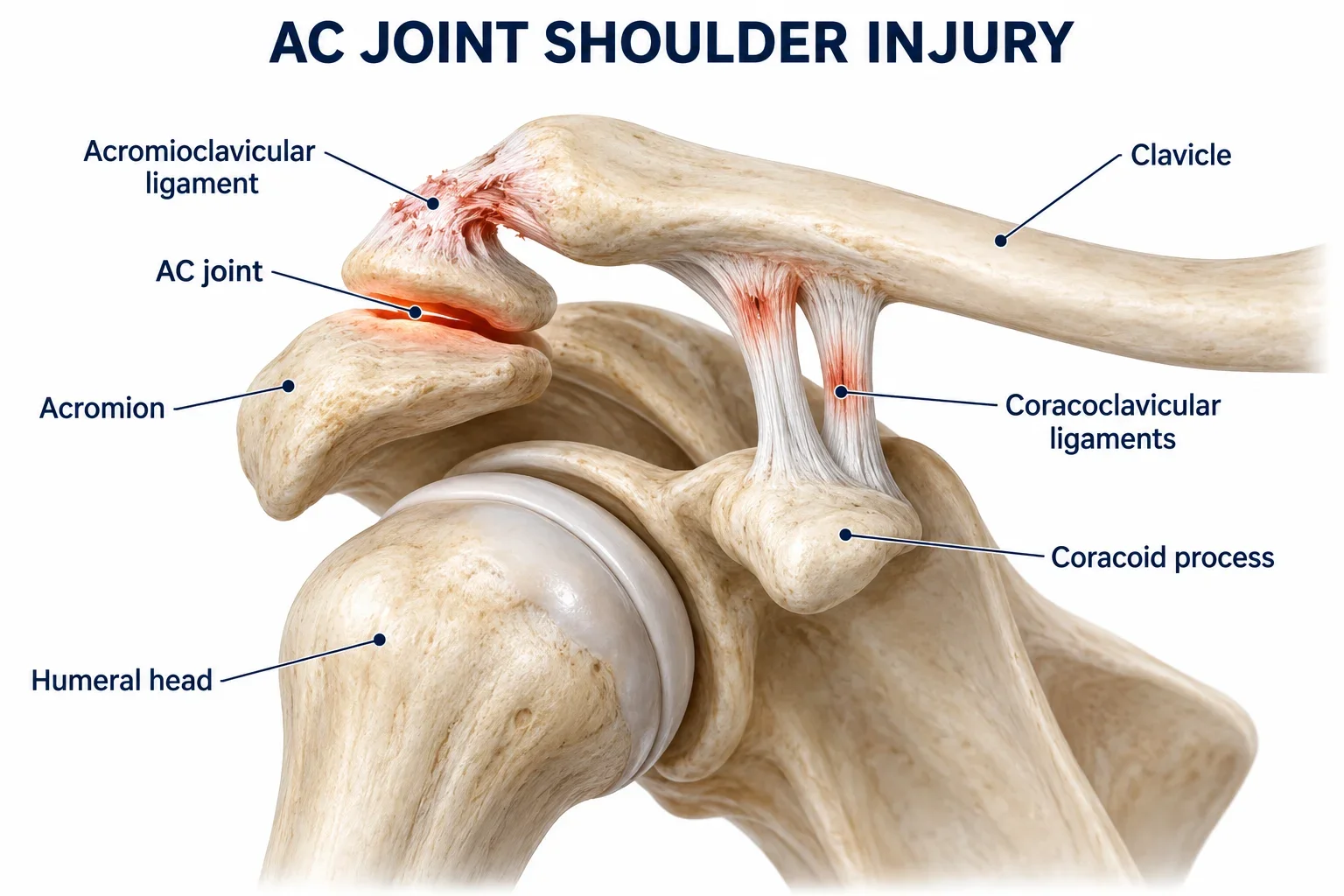
The acromioclavicular joint sits where the outer end of your collarbone meets the tip of your shoulder blade. The joint surface is very small, which makes it vulnerable both to a single heavy impact and to years of accumulated load. Falling onto the point of the shoulder can damage the joint and the ligaments that suspend the shoulder blade from the collarbone, producing what is commonly called a separated shoulder.
You Might Recognise Yourself Here
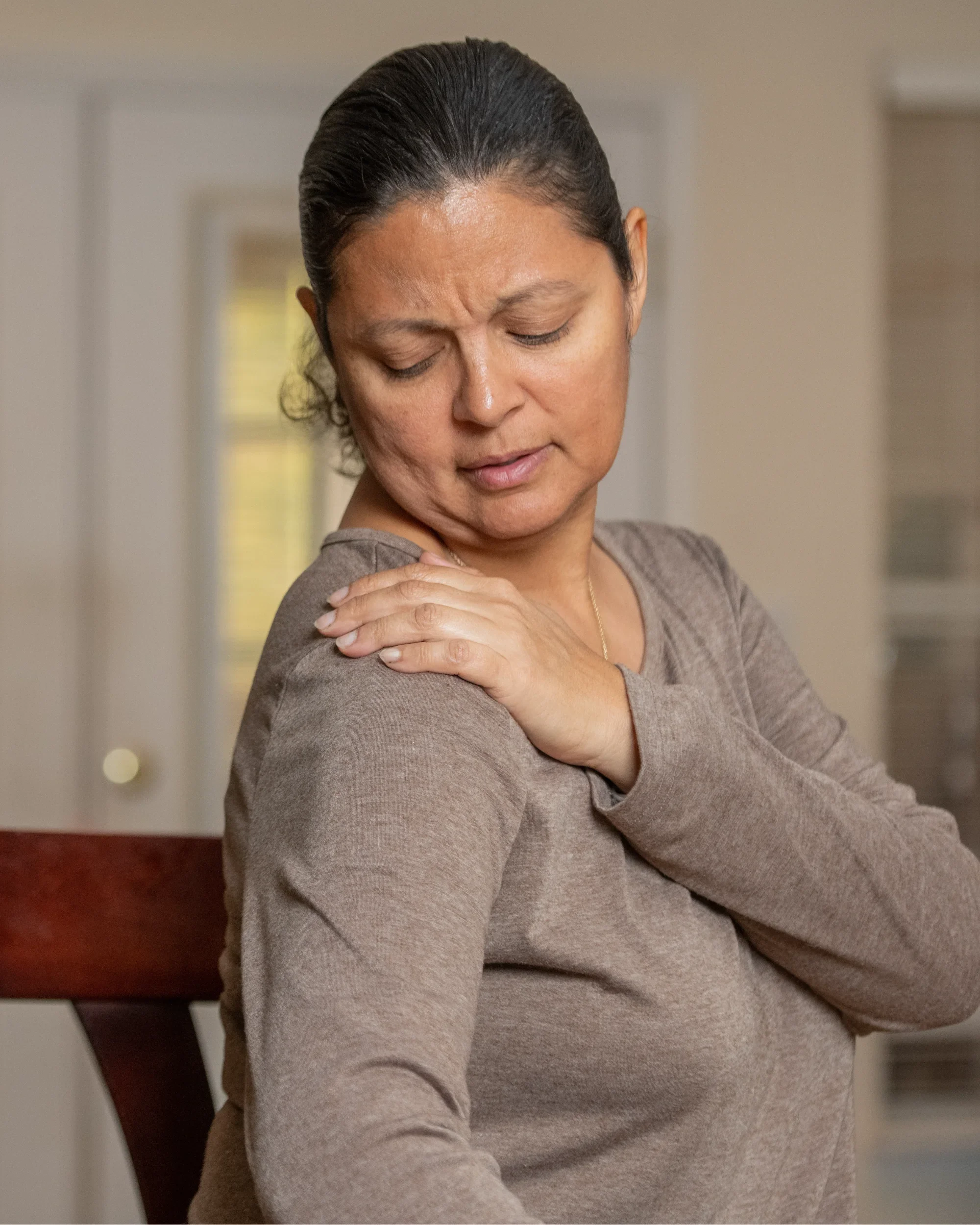
You went down in a tackle, came off your bike on a wet road, or fell skiing onto an outstretched hand. The top of your shoulder hurt immediately, and there is now a step or a bump at the end of your collarbone that is not there on the other side. Somebody has mentioned surgery and you are not sure whether you need it.
Or reaching across your body has quietly become painful over the past year. Fastening a seatbelt, putting on a jacket, washing the opposite shoulder. Lying on that side wakes you at night, and there is grinding or catching at the top of the shoulder when you move it.
Or your bench press and dips have become uncomfortable. The pain settles whenever you stop training and returns within a session or two of starting again. Nobody has been able to tell you what it is, and resting has not fixed it.
Shoulder Separation and AC Joint Injury
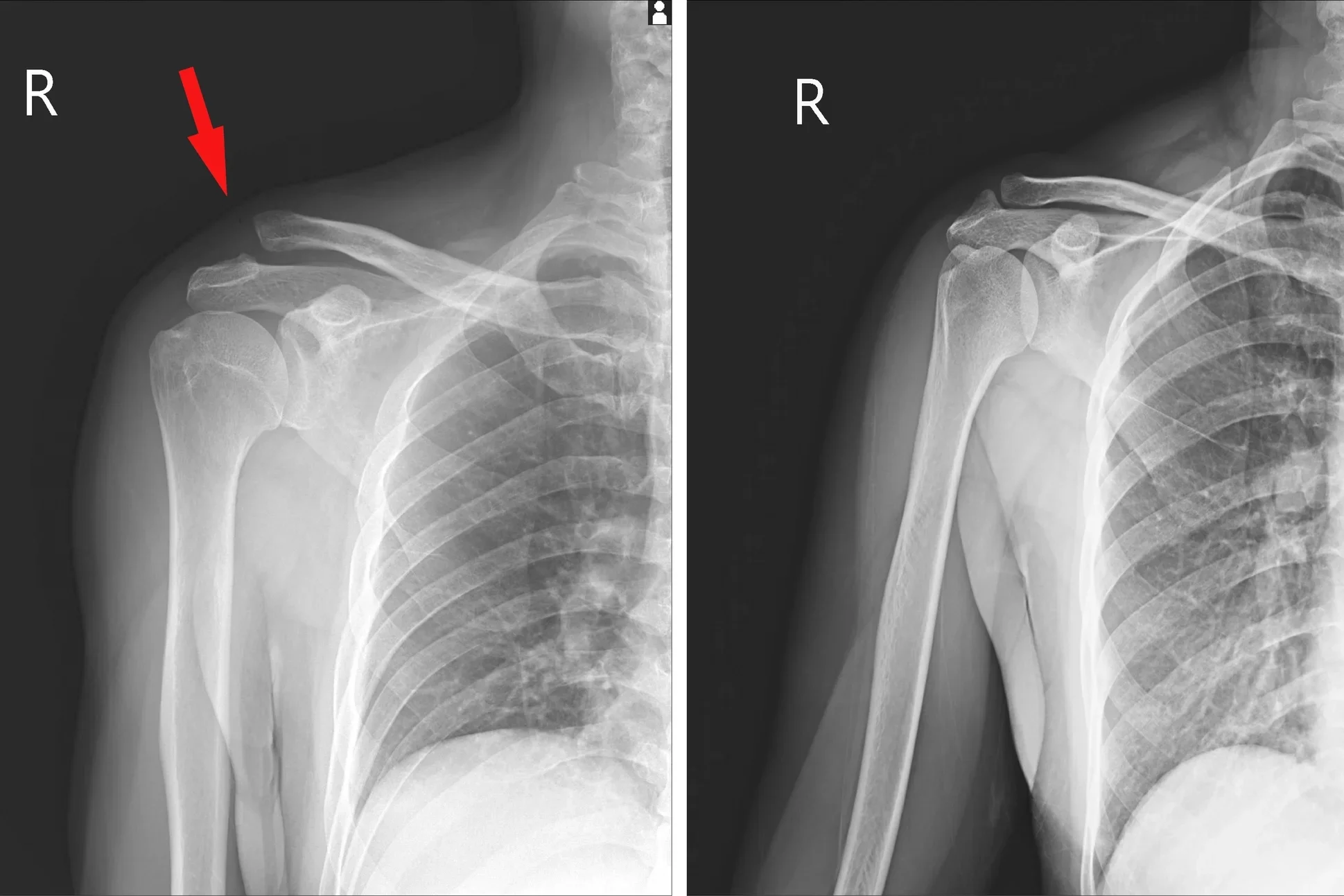
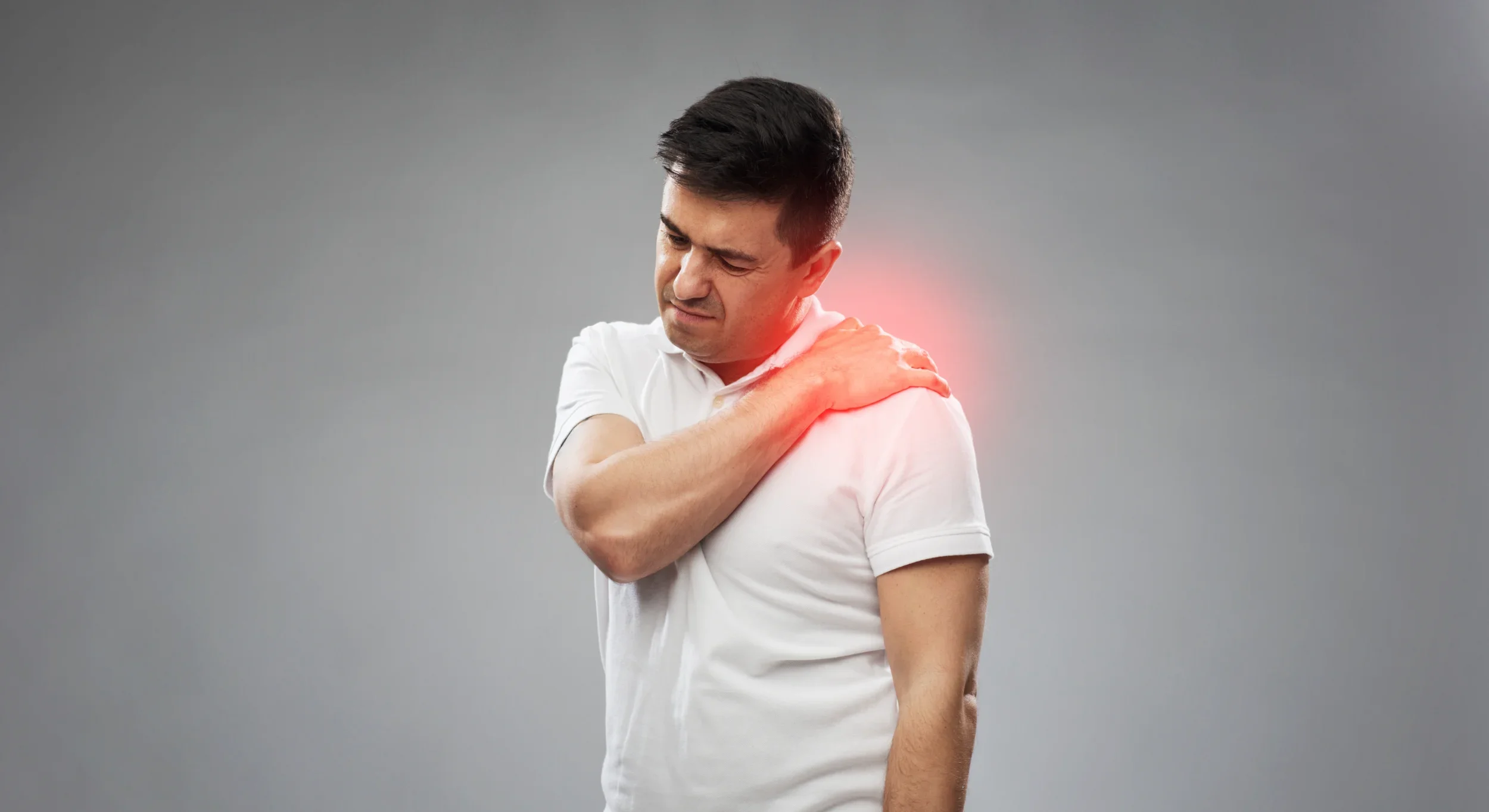
A separated shoulder is not a dislocated shoulder, though the two are frequently confused. The ball and socket joint is untouched. What has happened is that the ligaments anchoring your collarbone to your shoulder blade have been damaged, so the shoulder blade sags beneath a collarbone that is no longer securely tethered. The bump you can see is the end of the collarbone sitting proud, and the injury usually happens through direct impact onto the point of the shoulder.
These injuries are graded from one to six. Grade one means the ligaments are sprained but intact and symptoms settle within a few weeks. Grade two means the main AC ligaments have torn while the deeper coracoclavicular ligaments hold, so there may be a small step but the joint remains fundamentally stable. Grade three means both sets have gone, the separation is complete and the deformity is obvious. This grade sometimes leads to surgery, but by no means always. Grades four to six involve enough displacement that a surgeon is involved from the outset.
Do I Need Surgery for an AC Joint Injury?
For grade three injuries, research comparing surgical repair against structured rehabilitation shows broadly similar outcomes at a year and beyond on pain, function and satisfaction, with conservatively managed patients typically returning to work and sport sooner.
There is a further consideration if you play contact sport. Fixing an AC joint while you are still playing rugby or judo is often poorly timed. We will usually argue for rehabilitating properly now and revisiting surgery later if the joint becomes genuinely troublesome once your playing days end. Surgery is the right answer when displacement is severe, when there is significant scapular dysfunction alongside it, or when good rehabilitation has not resolved the pain. If that is where you are heading, we will say so clearly and get you in front of the right consultant quickly.
A sling helps for the first few days and starts working against you after about a week, stiffening the shoulder and switching off the muscles around it. Early treatment settles the joint and protects it from the movements that irritate it while keeping everything else moving, with taping to offload the joint where that helps. The work then shifts to restoring scapular position, control and timing, because that governs how much load the joint takes.
Expect two to four weeks for a grade one, four to eight for a grade two, and six to twelve for a grade three, with contact sport at the later end of each range.
AC Joint Arthritis
This pain typically creeps in over months rather than arriving suddenly. Reaching across your body to fasten a seatbelt, put on a jacket or wash the opposite shoulder becomes uncomfortable and sometimes sharply painful, as does reaching overhead. Lying on that side at night may wake you, and there may be grinding or catching at the top of the shoulder.
Because the joint surface is so small, cartilage wear here is very common, particularly in people who have done years of overhead work and in anyone who had a significant AC joint injury decades earlier. Arthritis on a scan does not automatically explain your pain, because identical findings turn up in plenty of comfortable shoulders. AC joint arthritis also very often occurs alongside subacromial impingement, because bony spurs narrow the space the rotator cuff tendons pass through, and treating one while ignoring the other is a common reason for partial results.
Arthritis here responds far better than most people expect. Pain at this joint is governed by how much load reaches it, and that is very much modifiable. In practice that means restoring scapular position and control, building rotator cuff and thoracic capacity, and modifying the handful of specific movements provoking it. Where pain is limiting your ability to do the rehabilitation at all, an ultrasound-guided injection opens a window that we then work within, and we have established referral pathways for this. Arthritis is managed rather than cured, but most people notice a meaningful difference within six to eight weeks once load is distributed properly, and that holds provided the strength work continues.
Weightlifter’s Shoulder and Distal Clavicle Osteolysis
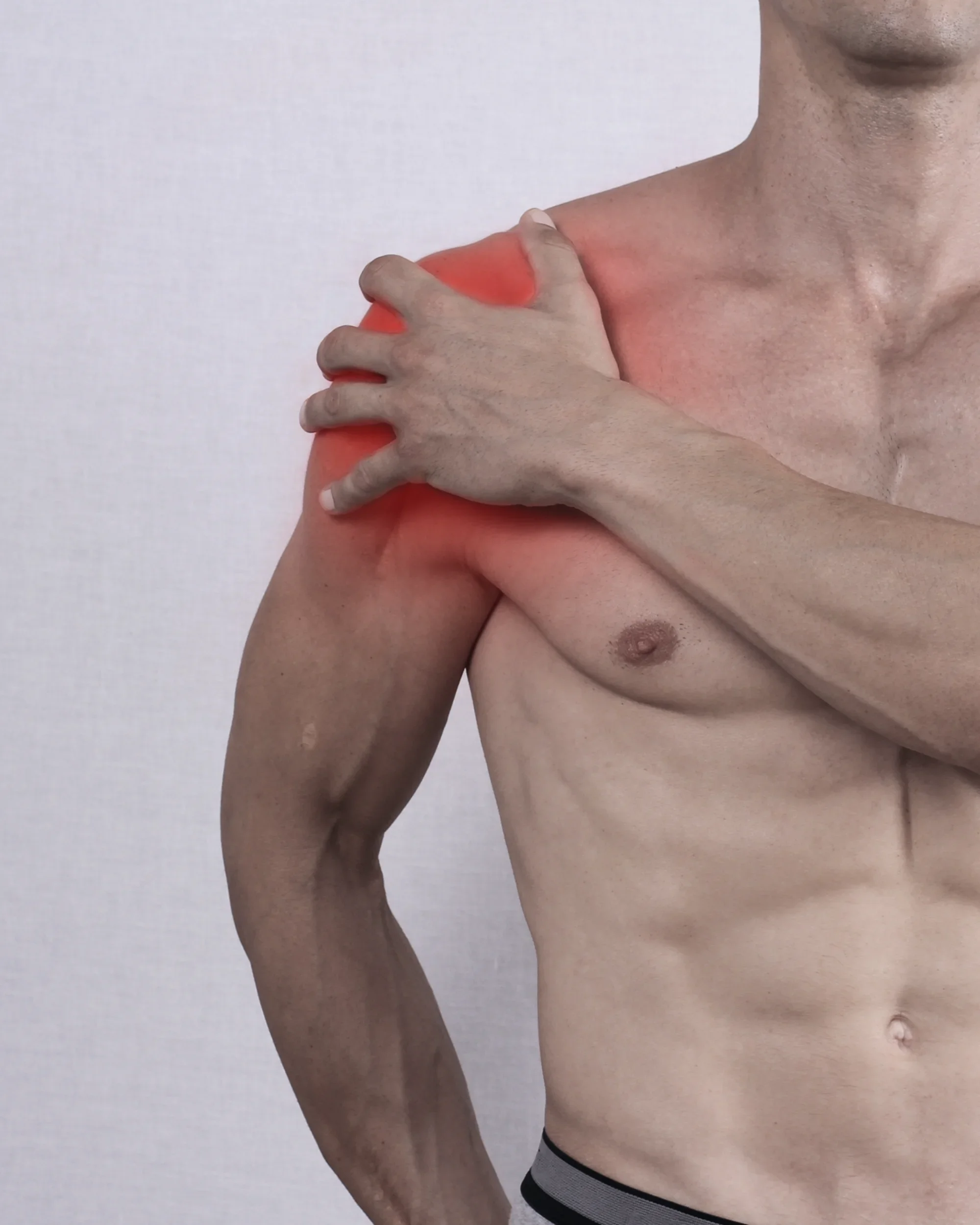
Many people who lift seriously or train CrossFit develop pain during and after bench pressing and dips. The pain settles when training stops and returns within a session or two of restarting, which is the pattern that distinguishes it.
Those movements concentrate load through the AC joint repeatedly. In some people the end of the collarbone begins breaking down faster than the body can repair it, essentially a stress reaction in bone. It is called distal clavicle osteolysis, and it is one of the most commonly missed causes of shoulder pain in people who train hard.
This needs load modification rather than rest, and certainly not pushing through. Bench depth usually changes so your elbows are not dropping behind the line of your body. Pressing volume comes down rather than disappearing. Barbell work often gives way temporarily to dumbbell or neutral grip variations. Alongside that, we build the scapular and thoracic capacity that is frequently the reason so much load was landing on the joint in the first place.
Why Your AC Joint Pain Has Not Got Better
The most common reason is that nobody has changed what the joint is being asked to tolerate. AC joint pain is a load problem. Rest reduces the load to zero, symptoms settle, and then you return to precisely the bench depth, the overhead volume or the contact exposure that caused it. Rest is not a treatment here. Specific, named modification is, and it has to be paired with building the capacity that lets you reverse those modifications later.
The second is that the shoulder blade has been left out of it. The AC joint is where the collarbone and the shoulder blade meet, so how the blade sits and moves on your ribcage directly determines the load passing through the joint. Treating the sore spot without addressing the platform it belongs to is why so many people get short-lived relief from hands-on treatment or an injection and are back where they started within weeks.
The third is being cleared by the calendar. When researchers examined how return to play is decided after AC joint surgery, the overwhelming majority of studies relied on time elapsed alone, and only a small fraction used any measure of strength or stability. Comfortable is not the same as ready. Returning to contact sport means taking impact through that shoulder and getting back up without hesitating, and that is a capacity you can measure.
Our Approach to AC Joint Treatment
Your first appointment lasts an hour. We establish which of the three pictures above fits, whether the joint is stable, and what the rest of the shoulder is doing to compensate. Most AC joint problems are diagnosed on examination, though we arrange imaging where displacement, fracture or diagnosis is uncertain. Treatment starts in that same session.
From there, the plan is built around offloading the joint, restoring the scapular mechanics that govern how much load reaches it, and then rebuilding capacity so that the movements you have modified can come back. Taping is genuinely useful in the early phase of an injury. Injection has a place where pain is blocking rehabilitation rather than as a treatment in its own right.
The final phase is the one most often skipped. We measure it rather than guess, using VALD handheld dynamometry to compare strength between sides, and we look for at least ninety percent symmetry before clearing return to sport. For contact athletes we add controlled impact exposure before competition rather than after it. Most people are cleared by the calendar rather than by capability, which is exactly why so many go back and struggle.
Frequently Asked Questions
Here are answers to some of the common questions we receive regarding AC joint pain treatment at Physio Remedies.
-
Two to four weeks for a grade one, four to eight weeks for a grade two, and six to twelve weeks for a grade three, with return to contact sport at the later end of each range. Grades four to six are surgical from the outset and follow their own timeline.
-
Usually not entirely, and that is genuinely fine. It reflects where the collarbone now sits relative to your shoulder blade. Plenty of people with a permanent step have full strength, full range and have returned to elite sport. Surgery purely to remove a bump is rarely a good trade.
-
No. We cannot regrow cartilage, but pain at this joint is driven by how much load reaches it, and that is very much modifiable. Most people notice a meaningful difference within six to eight weeks.
-
Often not. We image where a fracture is possible, where displacement makes surgery relevant, or where the diagnosis is genuinely uncertain. Bear in mind that arthritic changes at this joint appear on scans in plenty of pain-free shoulders.
-
Almost certainly, with modifications. Lower body and cardiovascular work usually continues unchanged. Upper body work is adapted rather than stopped, and we will be specific about exactly what to change and for how long.
-
That pattern points strongly towards the AC joint, and often towards distal clavicle osteolysis specifically. Pressing with the elbows dropping behind the line of the body concentrates load through a very small joint surface. It responds to modified technique and volume rather than to rest.
Book Your AC Joint Assessment at Physio Remedies, Mayfair
We will match you with the right physiotherapist for your specific problem and goals. Whether you have fallen on the point of your shoulder, your bench press has become uncomfortable, or reaching across your body has quietly turned painful over the past year, we would be pleased to assess you at Physio Remedies in the Lansdowne Club, Mayfair. We are a short walk from Green Park and Berkeley Square.
If you prefer to reach us directly: