

Neck Conditions
Whiplash Treatment and Physiotherapy in Mayfair, London
The most important thing we can tell most people after a whiplash injury is the opposite of what they expect to hear: rest and immobilisation make whiplash worse. A cervical collar, which remains a common recommendation in emergency departments, has been shown in research to produce worse outcomes than active early management. The instinct to protect the neck, to move less, to wait for it to settle: this is the instinct that turns an acute soft tissue injury into a chronic pain problem. The evidence, accumulated across multiple randomised controlled trials, is unambiguous: early, active, guided rehabilitation produces significantly better outcomes than rest.
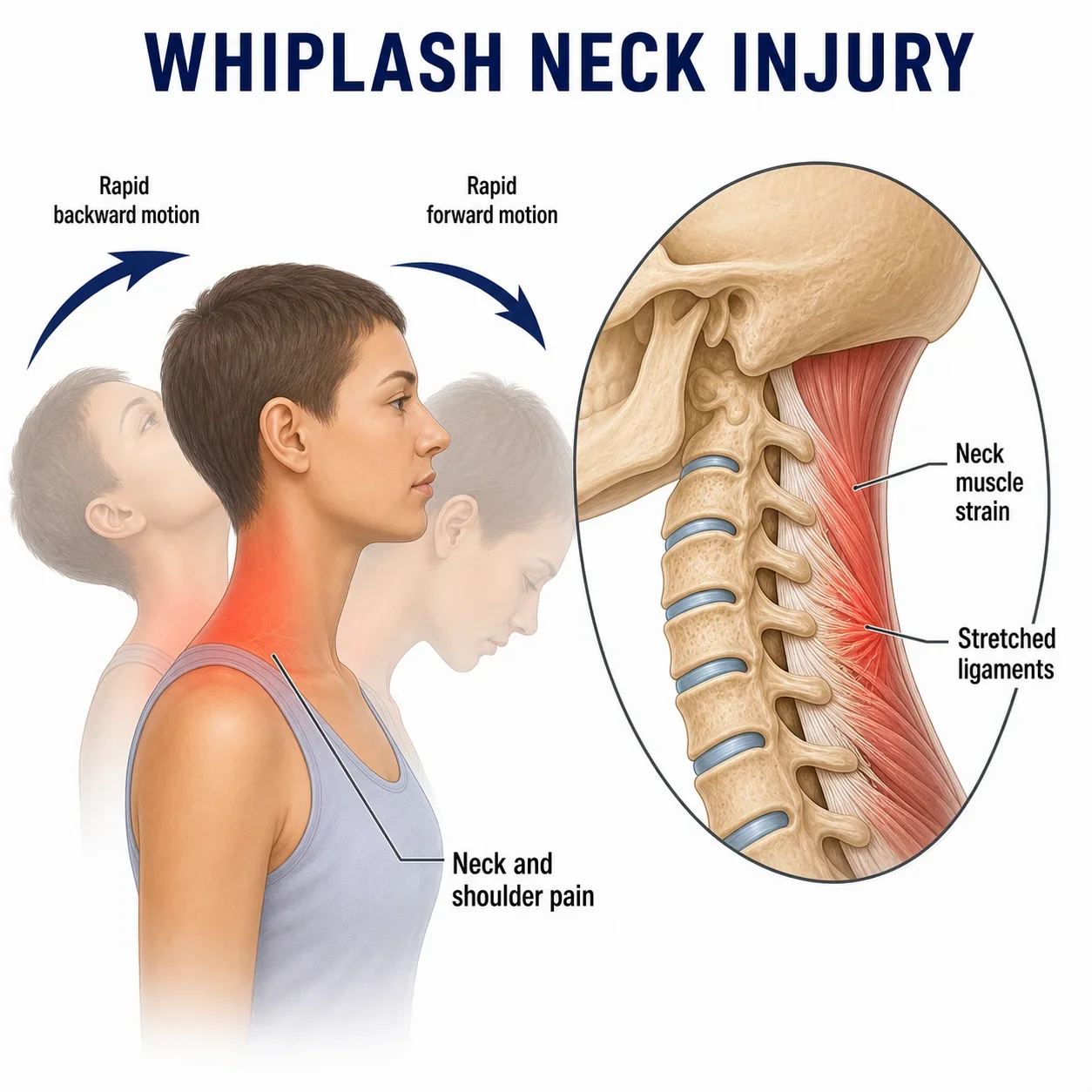
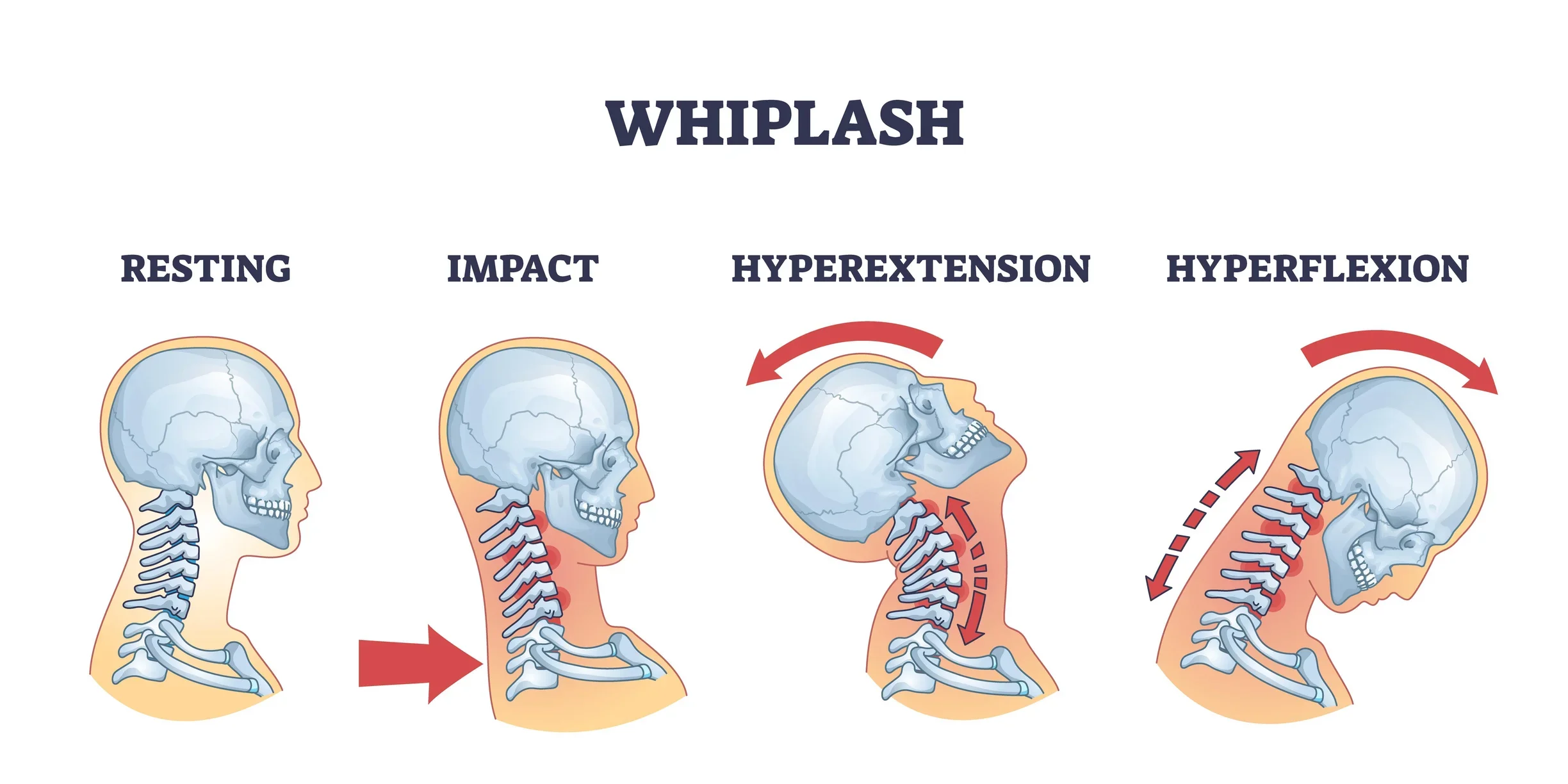
Whiplash is a soft tissue injury to the neck caused by sudden acceleration and deceleration of the head, most commonly in road traffic accidents but also in contact sport, falls, and other sudden-impact events. The muscles, ligaments, joint capsules, and discs of the cervical spine are placed under rapid tensile and compressive forces that exceed their normal tolerance. Most cases involve structures that will recover fully with appropriate management. What determines whether they do recover fully is largely what happens in the first days and weeks.

Something Worth Knowing About Timing
Many people who have been in a road traffic accident feel relatively well in the immediate aftermath. Adrenaline, the demands of the situation, and the absence of visible injury create a misleading picture. Whiplash symptoms typically peak at forty-eight to seventy-two hours after the injury, which is why people are often caught off guard when the pain worsens on the second or third day. If you were in an accident and felt fine initially, that is not a reliable indicator of what the following week will bring.
Seeking assessment early, within the first few days rather than after several weeks of waiting, significantly improves outcomes. Early physiotherapy establishes good movement patterns before protective muscle guarding has the chance to become established, addresses the pain and stiffness before they become chronic, and gives you a clear, evidence-based picture of what recovery looks like. Starting active rehabilitation early is not risky. Waiting is.

Why Whiplash Becomes Chronic
Whiplash that is poorly managed in the early weeks has a well-documented tendency to become chronic. Understanding why helps explain why our approach is structured the way it is.
The primary driver of chronicity is prolonged avoidance of movement. When pain leads to movement restriction, whether from a collar, self-imposed rest, or fear of re-injury, the deep cervical stabilisers that support and control the neck begin to decondition. Superficial muscles compensate, becoming overactive and fatigued. The cervical joints stiffen. The nervous system, receiving persistent pain signals without the normal movement input that would reassure it, begins to sensitise. Pain persists not because the original injury is still damaging tissue, but because the system has been trained to produce pain in the absence of normal movement.
The second driver is the psychological response to the injury. Fear of movement, anxiety about re-injury, and the experience of pain that feels unpredictable and out of proportion to activity all contribute to chronic whiplash. This is not a character failing or an exaggeration. It is a well-understood neurological process, and it is addressable. Part of effective whiplash rehabilitation is helping patients understand their pain, reduce fear avoidance, and rebuild confidence in movement.
Third: pre-existing cervical vulnerability. A neck that had limited mobility, old disc changes, or previous soft tissue injury before the whiplash is less resilient after it. This does not mean recovery is impossible, but it does mean rehabilitation needs to be more carefully planned and monitored.
Whiplash Associated Disorders: Understanding Severity
The Quebec Task Force classification divides whiplash associated disorders into grades that guide clinical management. Grade one involves neck complaint with no physical signs on examination: pain, stiffness, and tenderness without measurable restriction. Grade two involves neck complaint with musculoskeletal signs: reduced range of movement and point tenderness on examination. These are the two grades we see most frequently in clinic. Grade three involves neurological signs alongside neck pain: reduced reflexes, weakness, or sensory changes indicating nerve root involvement. Grade four involves fracture or structural instability and requires emergency assessment.
Grades one and two represent the large majority of whiplash presentations and respond well to active physiotherapy management. Grade three requires more careful assessment, imaging, and a modified rehabilitation approach that respects the neural component. If you have arm symptoms, significant weakness, or altered sensation following a whiplash injury, these need to be assessed properly before treatment begins.

Our Approach to Whiplash Rehabilitation
Assessment begins by establishing the grade and nature of your injury: range of movement, joint mobility at each cervical level, neurological status, and the specific structures that are tender and restricted. We screen for signs that warrant imaging or specialist referral before proceeding. We then have an honest conversation about what your recovery is likely to look like, what we are going to do about it, and crucially, why the approach we are recommending is different from resting and waiting.
Early management focuses on restoring pain-free range of movement, reducing muscle guarding through manual therapy, and beginning gentle active exercises that reassure the nervous system that movement is safe. We do not push into pain. We do not force range that is not available. We work within your current tolerance and expand it progressively.
As acute pain settles, we move into active rehabilitation of the deep cervical flexors, the stabilising muscles that are consistently impaired after whiplash and consistently ignored in passive treatment approaches. Isometric chin tucks, low-load endurance exercises, and progressive cervical strengthening form the foundation of this phase. The thoracic spine is treated alongside the cervical spine throughout: restoring thoracic extension and rotation reduces the compensatory load on the cervical segments.
We also use VALD handheld dynamometry to assess deep cervical flexor strength and endurance objectively, giving us a baseline and a measurable target for rehabilitation. Proprioceptive training, which addresses the impaired position sense that follows whiplash injury, is introduced as pain and movement settle.
Where pain is severe enough to prevent rehabilitation from progressing, we have clinical pathways to pain medicine consultants and sports medicine physicians who can advise on pharmacological pain management or targeted injection procedures. We do not manage complex whiplash in isolation from these colleagues when the clinical picture warrants their involvement.
When Whiplash Is More Complex
Dizziness and balance problems
Dizziness following whiplash is common and often alarming. It can arise from several sources: disruption to the cervical proprioceptors that contribute to balance and spatial awareness, irritation of the vertebral artery, or involvement of the vestibular system. Cervicogenic dizziness, originating from the cervical spine, responds well to the same manual therapy and stabilisation approach used for pain and stiffness. Where vestibular involvement is suspected, we refer for vestibular assessment. We do not proceed with cervical treatment where there are signs of vascular compromise, and our assessment includes appropriate screening.
Cognitive symptoms and fatigue
Some patients experience difficulty concentrating, memory problems, and significant fatigue following whiplash. These symptoms are real, they are recognised sequelae of the injury, and they are not unusual. They tend to improve as pain and sleep disruption improve. We acknowledge them, incorporate appropriate load management into rehabilitation, and refer to neuropsychology when symptoms are severe or persistent.
Headache
Post-whiplash headache is one of the most debilitating and persistent symptoms. Most whiplash headaches are cervicogenic: they originate from the upper cervical joints and refer pain into the head through the trigeminocervical pathway. The C2-C3 joint and the suboccipital muscles are commonly involved. These headaches respond to manual therapy targeting the upper cervical spine and deep cervical flexor rehabilitation. Where headache character suggests migrainous involvement or more central sensitisation, we manage this as part of the broader pain rehabilitation picture.
Frequently Asked Questions
Here are answers to some of the common questions we receive regarding neck pain treatment at Physio Remedies.
-
Most whiplash injuries of grade one or two severity improve significantly within six to twelve weeks with active management. The majority resolve fully within three to six months. A proportion, particularly those where treatment was delayed, where rest and immobilisation were the primary early approach, or where there is pre-existing cervical vulnerability, develop chronic symptoms that persist beyond six months. Early active rehabilitation is the single most effective way to prevent acute whiplash becoming chronic whiplash.
-
No, and this is one of the most important things to understand about whiplash recovery. Wearing a collar immobilises the neck, prevents the normal movement that promotes tissue healing, and accelerates deconditioning of the cervical stabilisers. The research clearly shows that patients who are given a collar and told to rest do worse at follow-up than those given early active management and encouraged to move. The collar is appropriate only in specific circumstances: suspected fracture or instability prior to imaging, or as a temporary comfort measure for a short period in severe acute pain. As a primary management strategy, it is counterproductive.
-
Some cases do resolve without treatment. Many do not, or take significantly longer to do so. The key variables are how quickly active management begins, how well pain is controlled in the early phase, and whether movement avoidance becomes established. The evidence is clear that people who receive early physiotherapy recover faster and more completely than those who wait. Waiting to see whether it settles is a reasonable approach for the mildest cases; for anything beyond very minor stiffness, early assessment is the better course.
-
No. Chronic whiplash, while more complex to manage than acute whiplash, responds well to active rehabilitation. The approach differs: we need to address the established muscle guarding, the sensitised nervous system, the fear avoidance patterns, and the deep cervical flexor weakness that has accumulated over months of reduced activity. This takes longer than early intervention, but it produces meaningful improvement in the large majority of patients. Many of the people we treat with whiplash have been struggling for six months to two years.
-
Yes. The forces involved in a whiplash injury can irritate the cervical nerve roots, producing symptoms that travel from the neck into the shoulder, arm, or hand. This indicates a more significant injury, typically grade three on the whiplash associated disorder classification, and requires careful neurological assessment and a modified rehabilitation approach. If you have arm or hand symptoms following a whiplash injury, these should be assessed as a priority.
-
Early physiotherapy for whiplash should not significantly increase your pain. We work within your current pain-free or low-pain range and expand it gradually. Some treatment techniques involve manual therapy to cervical and thoracic joints, which may produce temporary local soreness. We discuss everything we are doing and why, and adjust based on your response. The goal in the early phase is to reassure you that movement is safe, not to push through pain.
-
Not routinely, and not immediately in most cases. Imaging is indicated when there is clinical suspicion of fracture or structural instability, which we assess using established clinical decision rules, when neurological signs are present and significant, or when symptoms are not improving as expected despite appropriate treatment. Most whiplash injuries can be assessed and managed clinically. If imaging is indicated, we will arrange it through our clinical network.
Book Your Whiplash Assessment at Physio Remedies, Mayfair
We will match you with the right physiotherapist for your specific presentation.
If you have had a whiplash injury and want early, active, evidence-based management rather than rest and waiting, we would be pleased to assess you at Physio Remedies in the Lansdowne Club, Mayfair. We are a short walk from Green Park and Hyde Park Corner stations.
If you prefer to reach us directly: