
Muscle Conditions
Quad Strain & Tear Treatment in Mayfair, London
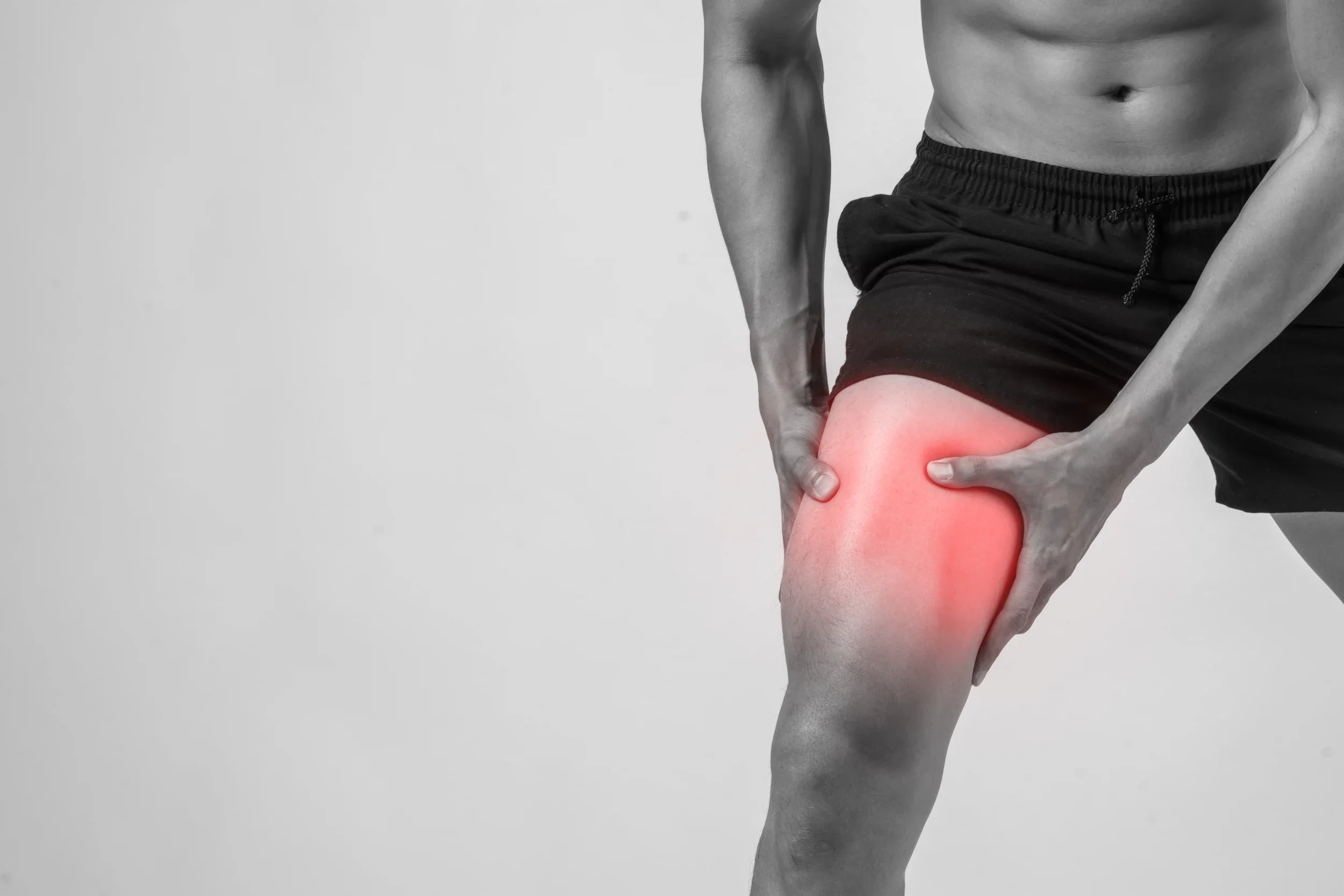
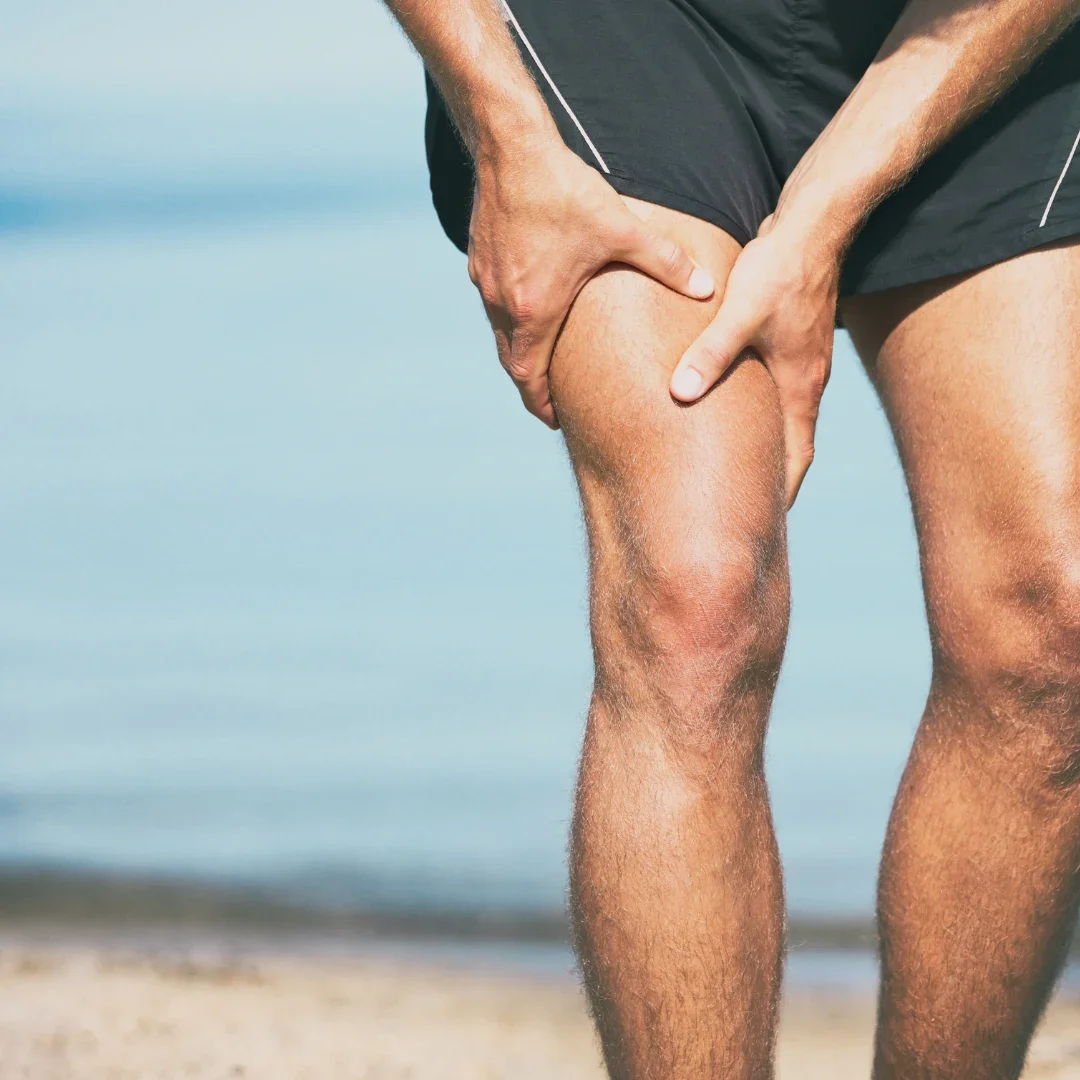
You struck a long ball on a heavy pitch, drove out of the blocks, or pushed through the last rep of a heavy split squat, and the front of your thigh grabbed. Sometimes there is a sharp pull and you carry on; sometimes the leg simply refuses to kick or sprint again. Over the next day, climbing stairs, getting out of a car and bending the knee fully all become uncomfortable, and some people notice a tender lump or even a dent in the front of the thigh.
That is a quad strain, also called a pulled quad, a torn quadriceps or a thigh strain. It is one of the most common muscle injuries in kicking and sprinting sports, and increasingly common in the gym. Most quad strains recover very well with the right physiotherapy. But pain at the front of the thigh can also come from the hip, the lower back, the knee tendons or the thigh bone itself, and some of those problems need very different care, which is why an accurate diagnosis comes first.
Torn Quadriceps, Quad Strain, Pulled Quad or Torn Quad: What Do They Mean?
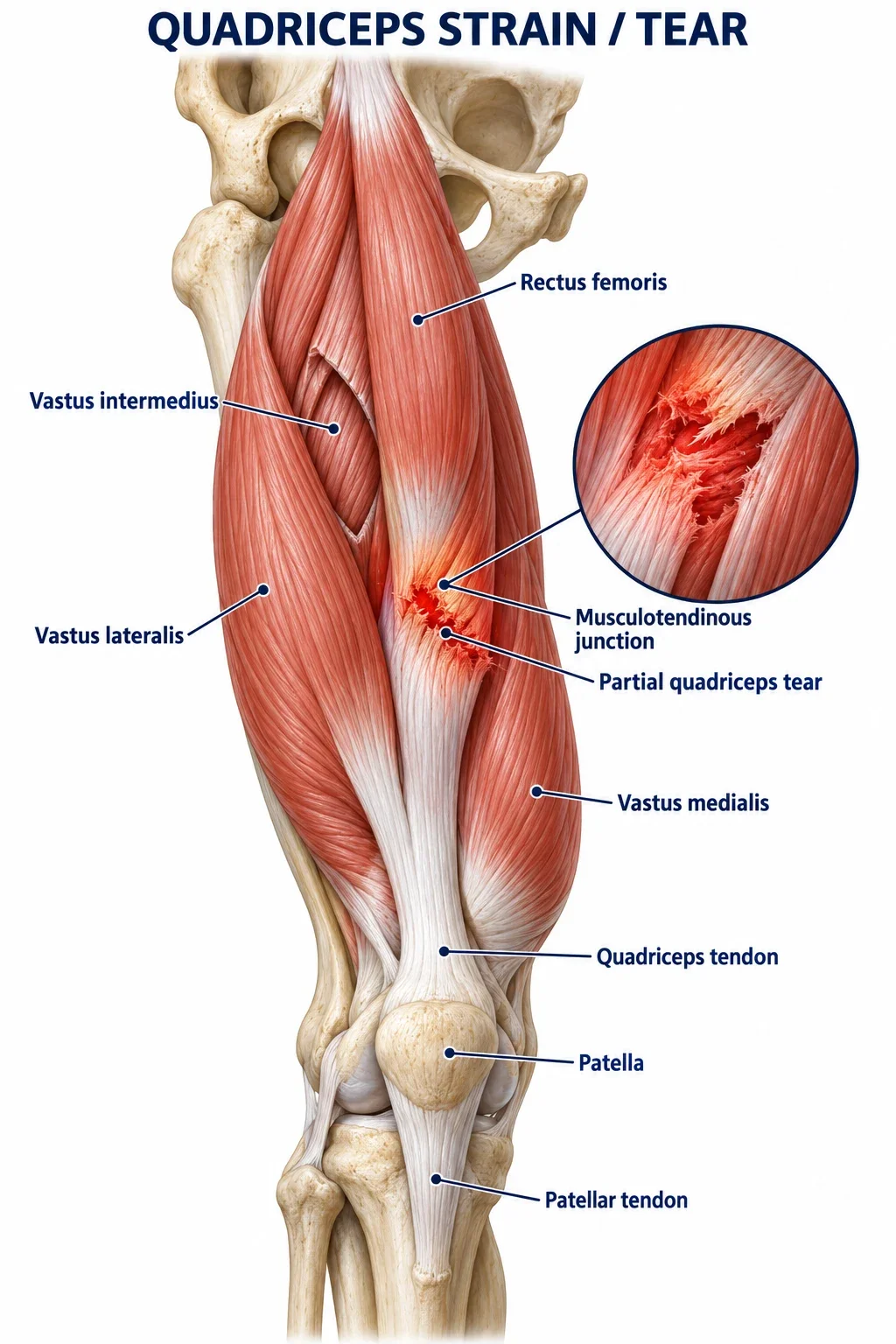
These terms describe the same injury at different points on a scale, from a minor pulled quad muscle, where a small number of fibres are overloaded, to a substantial tear. Where the injury sits matters just as much as its size.
Your quadriceps is four muscles. Three of them, the vastus muscles, run from the thigh bone to the kneecap and mainly straighten the knee. The fourth, rectus femoris, runs from the pelvis to the kneecap, crossing both the hip and the knee. That makes it the most vulnerable to tearing, especially in kicking, where it is stretched behind you and then contracts explosively, and in sprinting. It is the quad injury we see most often in footballers, rugby players and martial artists.
Rectus femoris has an unusual structure: a strip of tendon runs down the middle of the muscle, and some tears involve that central tendon rather than just the muscle fibres. Those injuries take noticeably longer to recover and need more careful rehabilitation, which is why two people with an apparently similar quad strain can have very different timelines. Injuries are graded according to the British Athletics Muscle Injury Classification, used across UK elite sport, which records both the severity and whether tendon tissue is involved.
If your pain sits right up at the front of the hip, in the crease where the thigh meets the body, the injury may be at the top end of rectus femoris or in the other hip flexors. Our hip flexor injuries page covers that area in detail.
Is It a Strain or a Dead Leg?
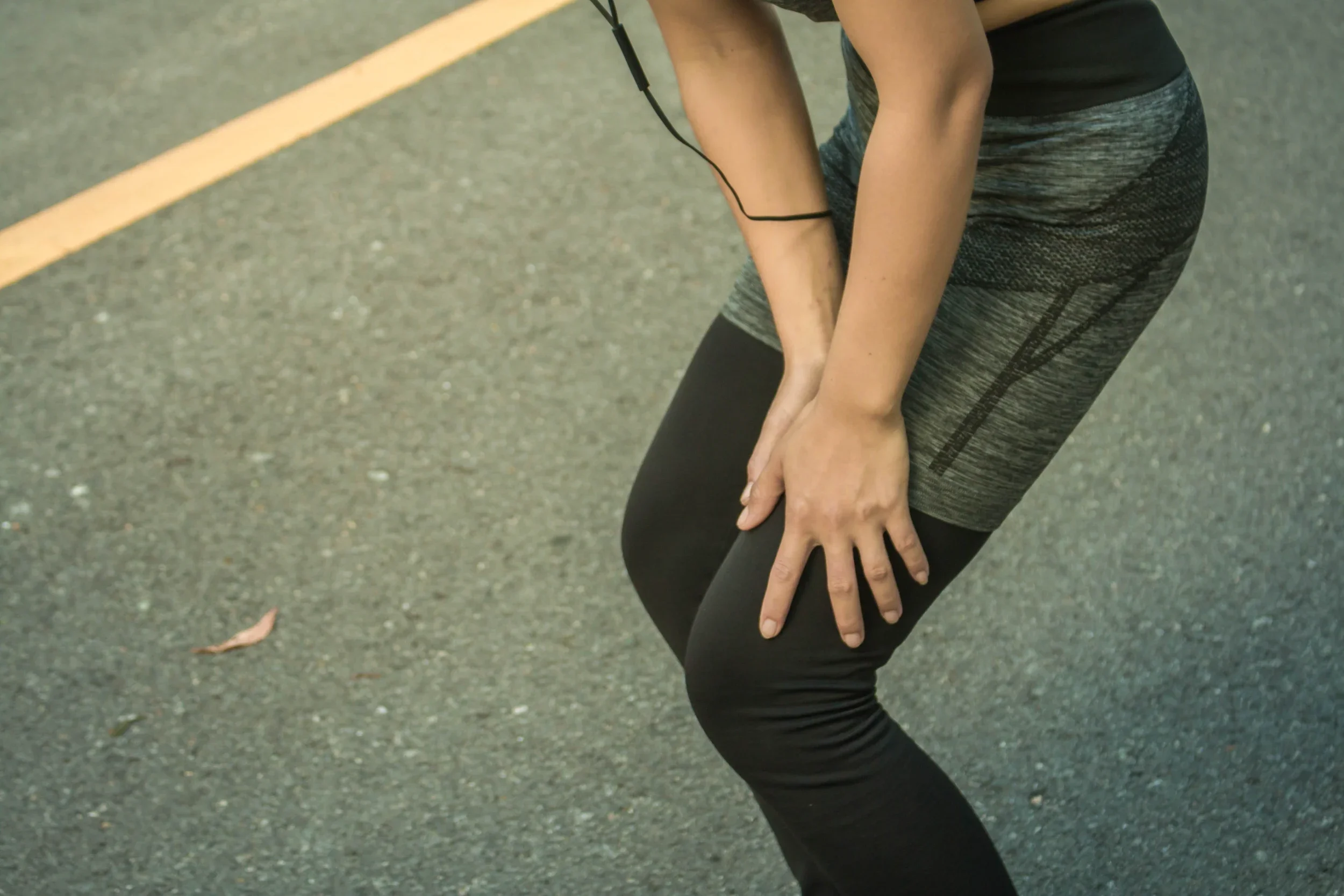
A quad strain happens without contact, during your own movement. A dead leg, or thigh contusion, is caused by a direct blow, usually a knee or a boot in contact sport, and it bruises the muscle rather than tearing it. The two are managed differently. After a dead leg, keeping the knee gently bent in the first day helps limit bleeding and stiffness, while heat, massage and alcohol in the first few days can increase bleeding within the muscle.
Occasionally, after a heavy dead leg, bone begins to form within the bruised muscle, a condition called myositis ossificans. It is more likely when the thigh is massaged hard or loaded aggressively too early. A firm lump that does not soften and knee bend that stops improving after two or three weeks should be checked, and we can arrange an X-ray or ultrasound to confirm it.
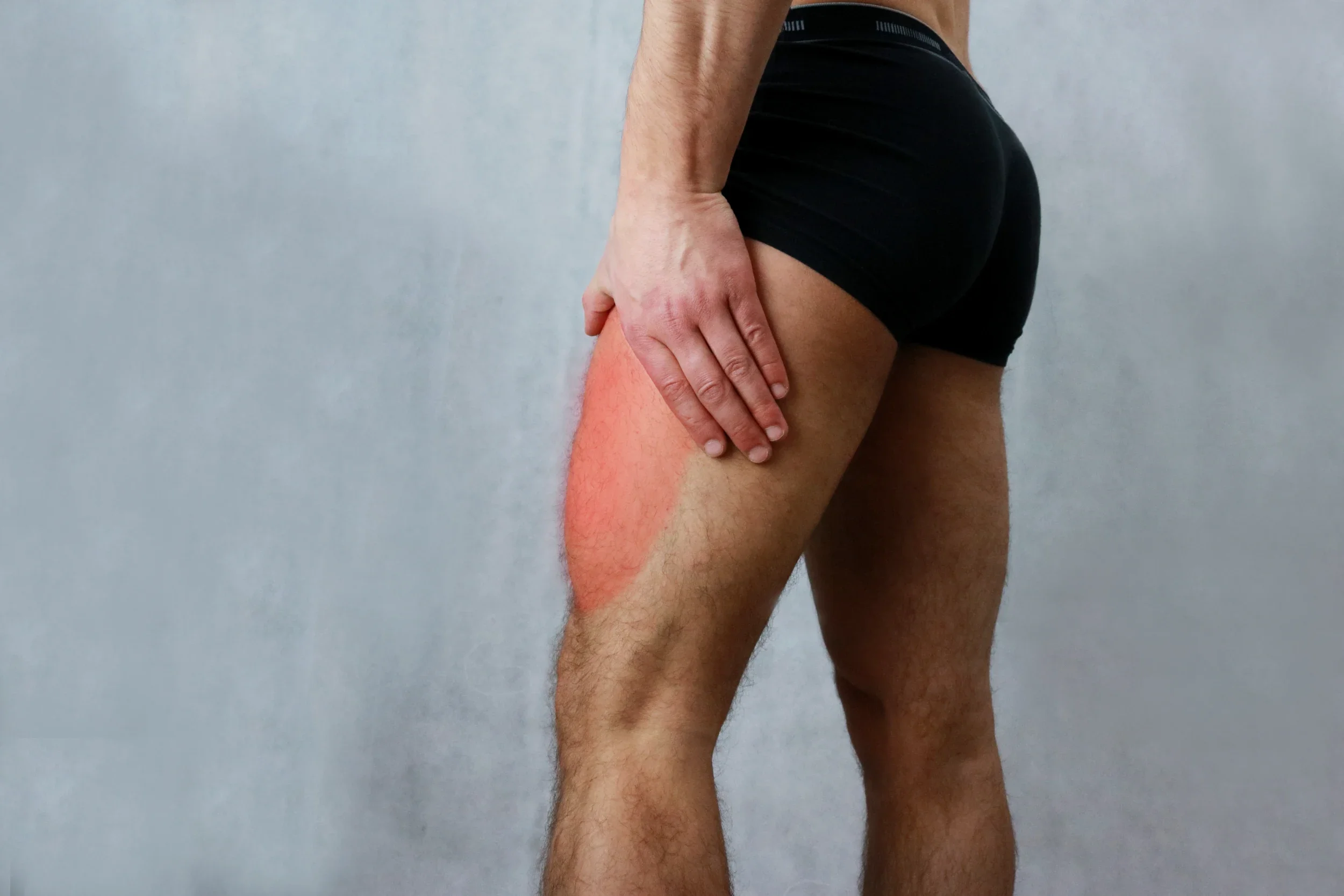
When Thigh Pain Needs Urgent Attention
A quadriceps tendon rupture, where the tendon tears away from the top of the kneecap, can feel like a severe quad strain. It typically happens in people over forty during a stumble, a missed step or landing awkwardly, and it leaves you unable to straighten the knee or lift the straight leg off the bed, often with a gap just above the kneecap. It needs urgent assessment, because repair works best within days. A similar injury can occur to the patellar tendon below the kneecap. Call us the same day and we will arrange imaging and a surgical opinion quickly.
In teenagers, kicking or sprinting can pull a fragment of growing bone away from the pelvis where rectus femoris attaches, and a limp with pain in the thigh or knee can be a sign of a slipped growth plate at the hip. Both need an X-ray, and the second needs it urgently. A young person with thigh or knee pain and a limp should never simply be treated for a strain.
A swollen, warm and tender thigh or leg without a clear injury may be a deep vein thrombosis and needs same-day medical assessment; call 999 if you become short of breath or develop chest pain. And very rarely, after a heavy blow, pressure builds within the thigh: severe, escalating pain with a tense, hard thigh is a reason to go to A&E.
Other Problems That Masquerade as a Quad Strain
More often, front-of-thigh pain that does not behave like a strain is coming from somewhere else. Treating it as a muscle injury simply delays the right treatment.
Pain referred from the spine
The nerves leaving the upper part of the lower back supply the front of the thigh, and irritation there causes aching, cramping or weakness in the quad, sometimes with little back pain. Clues include numbness or tingling over the front or inner thigh, a knee that gives way, and pain that has no clear moment of injury. A separate nerve problem, meralgia paraesthetica, causes burning, tingling or numbness over the outer thigh, often linked to tight belts or trousers, weight change or pregnancy. We check your back and nerve function as a routine part of every thigh assessment.
Problems with the bone
A stress fracture of the thigh bone causes a deep, poorly localised ache that worsens with running and hopping and may be felt at night. It is more likely after a rapid increase in mileage and in runners who are not eating enough for their training, including women whose periods have become irregular. A stress fracture near the hip needs prompt imaging, so if hopping on the leg is painful, please do not keep running on it.
Problems at the hip
The hip joint frequently refers pain into the front of the thigh and even the knee. Hip impingement, labral tears and early hip arthritis often cause a deep ache in the groin or front of the thigh, stiffness putting on socks, and pain with sitting or twisting, rather than a single moment of injury. Problems in the other hip flexors, including iliopsoas, can also be mistaken for a quad strain.
Problems at the knee
Pain just above or below the kneecap that builds with jumping, squatting or stairs is more often quadriceps or patellar tendinopathy than a muscle strain, and needs a tendon loading approach rather than strain rehabilitation.
Do I Need a Scan?
For most minor quad strains, no. A careful examination, including testing strength with the hip both bent and straight, tells us which muscle is injured and roughly how badly. We recommend imaging when a significant tear or central tendon involvement is suspected, when the injury is high up near the hip, when a precise return date matters for your sport, or when recovery is not following the expected course. Ultrasound and MRI are both useful for quad strains, X-ray is essential for teenagers with pain near the pelvis or hip, and suspected tendon ruptures need urgent imaging. We can arrange all of these quickly.
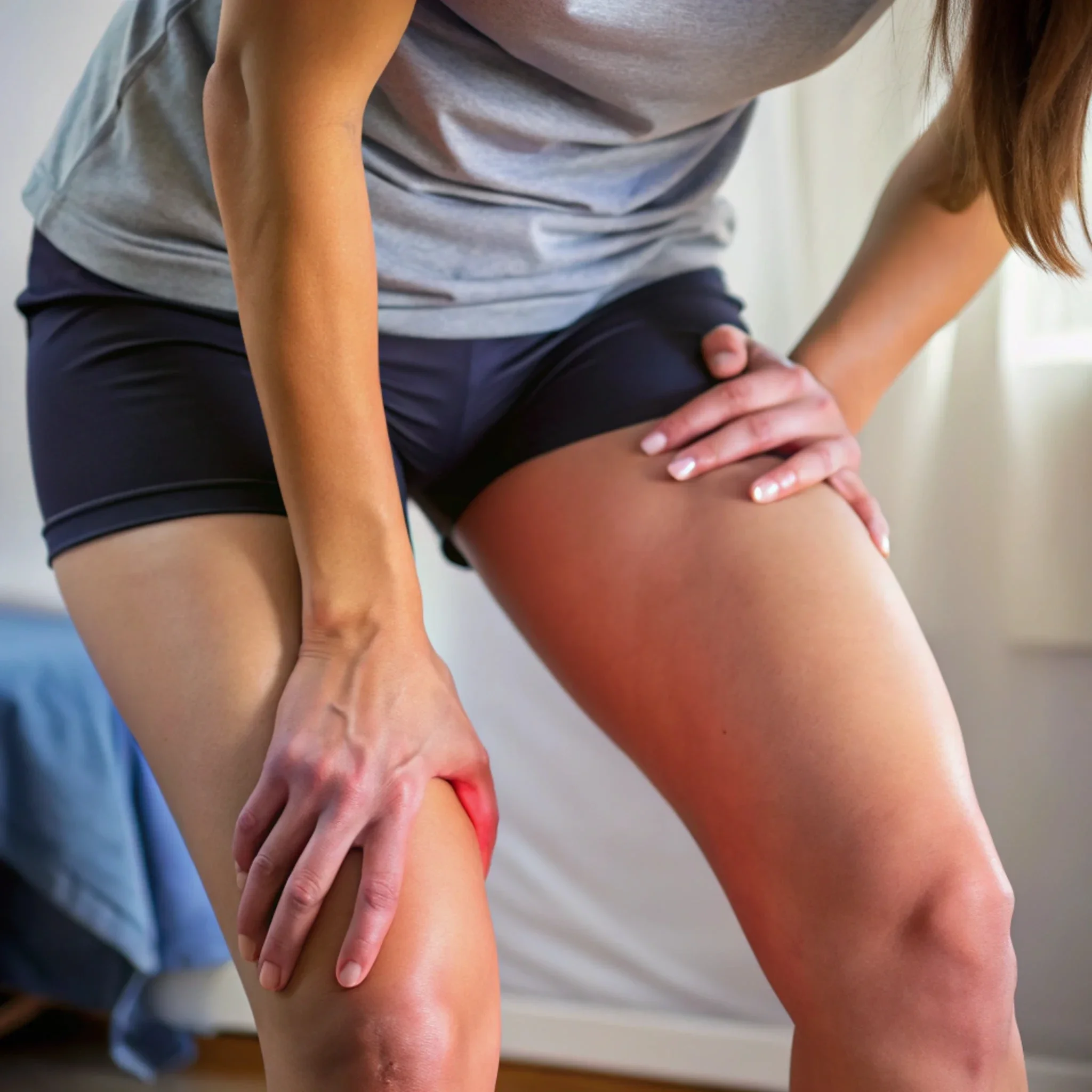
Why Quad Strains Come Back
The most common reason is returning to kicking before the muscle is ready for it. Squats, lunges and leg extensions rebuild the vastus muscles, but they do not prepare rectus femoris for being stretched at the hip and then contracting explosively, which is exactly what a long pass or a shot on goal demands. Rehabilitation that never includes graded, progressive kicking leaves the gap wide open.
Close behind are returning when the thigh feels fine rather than when it is strong, sudden increases in sprinting and kicking volume at the start of a season, fatigue late in matches, and injuries involving the central tendon, which need longer than a calendar-based return allows.
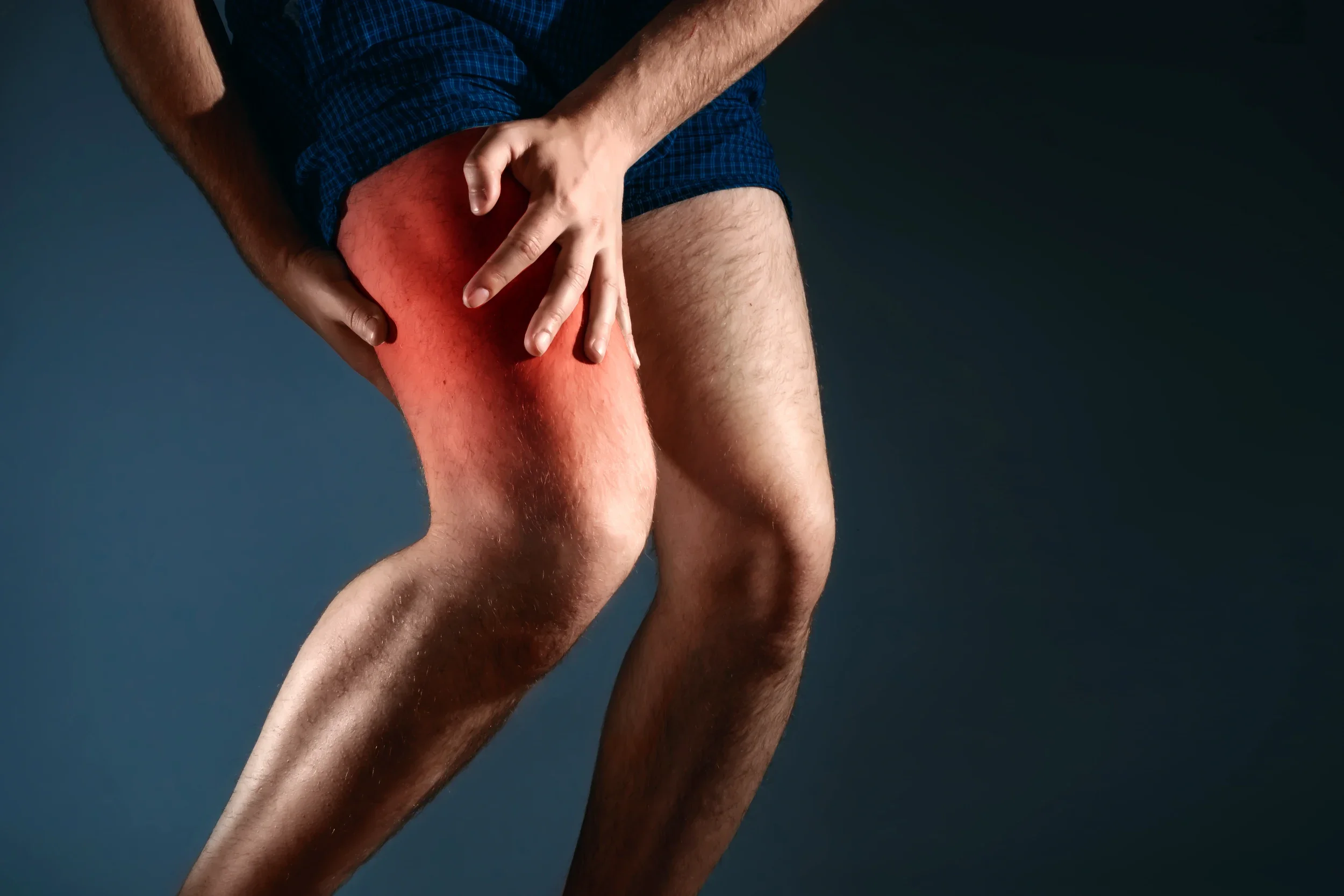
How We Treat a Quad Strain
Your first appointment lasts an hour. We establish exactly how the injury happened, rule out the problems above, examine your thigh, hip, knee and lower back, test your strength against the other side, and grade the injury. You leave with a diagnosis, an expected timeline, and rehabilitation already started.
In the first days, the aim is to protect the healing muscle without shutting the leg down. That may mean a short spell on crutches and compression for swelling. We will get you walking normally as soon as it is comfortable and steer you away from stretching, heat and deep massage over the injury while it is fresh. Gentle loading starts early with isometric holds, and where the quad has been switched off by pain, Compex electrical muscle stimulation helps restore its activation.
Strength work then becomes progressively heavier and moves towards the positions where quads tear: long muscle lengths with the hip extended, controlled lowering exercises such as reverse Nordic curls, and loading of rectus femoris at the hip as well as the knee. Where full load is not yet tolerated, blood flow restriction training lets us build strength with much lighter weights. We work on the hip, trunk and opposite leg alongside, because the kicking leg is only as good as the platform it swings from.
Running returns in stages, from easy jogging to accelerations and then genuine top speed. For kicking sports, we rebuild kicking deliberately: short passes, then longer passes, then driven balls and shooting at full power. The final phase is built around what you do, whether that is football, rugby, martial arts, sprinting or heavy lifting.
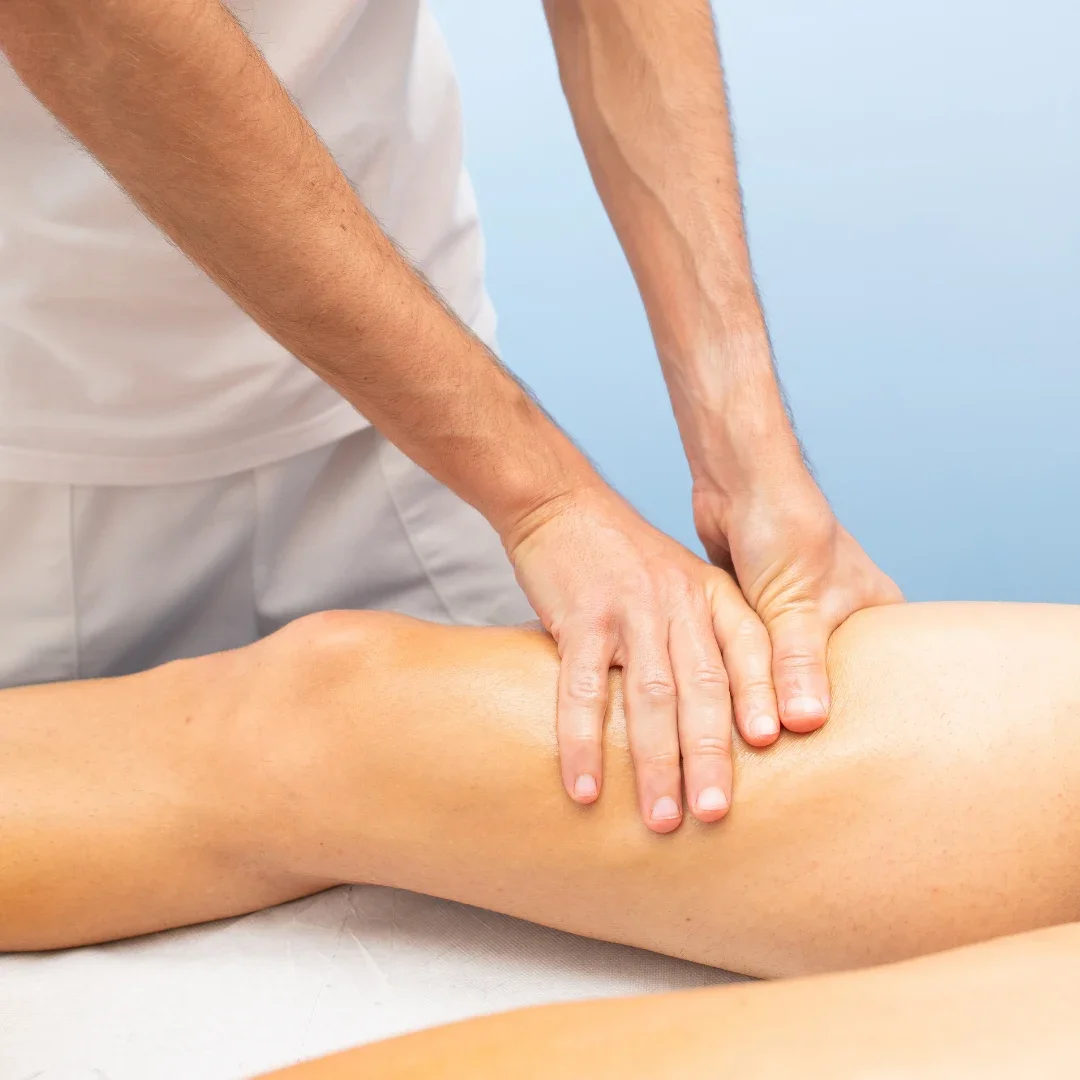
Measuring Readiness, Not Counting Weeks
Throughout your rehabilitation, we use VALD handheld dynamometry to measure knee extension and hip flexion strength on both sides, so we can see precisely where any deficit remains. VALD ForceDecks lets us compare the two legs in jumping and landing, where a thigh that feels fine can still be producing noticeably less force.
Our threshold for return to sport is at least 90% of the strength of your uninjured side, alongside confident sprinting, full-power kicking without apprehension and a clean response the following day. We do not clear anyone on the basis of weeks elapsed.
What About Shockwave Therapy?
We do not use shockwave on a fresh quad strain or tear, as it has no role in treating acute muscle injuries. Where persistent pain above or below the kneecap turns out to be a tendon problem rather than a muscle strain, focused shockwave can be a valuable part of treatment.
Frequently Asked Questions
Here are answers to some of the common questions we receive regarding quad strain and tear physiotherapy at Physio Remedies.
-
The typical signs are a sudden pull or sharp pain in the front of the thigh during kicking, sprinting or lifting, pain on bending the knee fully or lifting the leg, and tenderness, swelling or bruising over the following days. A larger tear may leave a visible dent or lump. If you are unsure, an assessment will confirm what you have and how severe it is.
-
A strain happens without contact, during your own movement. A dead leg follows a direct blow and bruises the muscle rather than tearing it. The early management differs, so it is worth knowing which you have.
-
Usually, yes, and gentle walking within comfort helps recovery. If you cannot straighten your knee or lift your straight leg off the bed, you may have torn a tendon rather than the muscle, and you should get it assessed the same day.
-
Not in the first few days. Stretching, deep massage and heat can all increase bleeding and irritation in the healing muscle. Ice and compression are fine for comfort. Movement returns through progressive loading, and we will tell you when specific range work is appropriate.
-
As a rough guide, minor strains take one to three weeks, moderate tears around three to six weeks, and injuries involving the central tendon of rectus femoris six to ten weeks or more. Even in elite football, where rehabilitation is daily, the average quad strain keeps a player out for around three weeks. Your grading and strength testing give a far more reliable timeline than these ranges.
-
The quickest recovery comes from doing the right things early rather than resting and hoping. Keep walking within comfort, avoid stretching, heat and deep massage in the first few days, start gentle loading within days, and rebuild strength and kicking fully before you return to sport. Most of the time lost with quad strains comes from injuring the muscle again by going back too soon.
-
Not for most strains. We recommend imaging when a significant tear, central tendon involvement or an injury near the hip is suspected, when a precise return date matters, or when progress stalls. Teenagers with pain near the hip or pelvis need an X-ray. We can arrange imaging quickly.
-
Rarely. Quad muscle tears are treated with rehabilitation. Surgery is considered for a rupture of the quadriceps tendon at the knee, a complete tear of the rectus femoris tendon from the pelvis in some athletes, or a central tendon injury that keeps recurring despite good rehabilitation. If surgery is a possibility, we will get you a specialist opinion within days.
-
When you have reached at least 90% of the strength of your other side on objective testing, have progressed through graded kicking and sprinting without pain or apprehension, and the thigh responds well the following day. Not before, whatever the calendar says.
-
Numbness, tingling or burning is a nerve symptom rather than a muscle strain. Over the outer thigh it is often meralgia paraesthetica, caused by pressure on a small skin nerve near the hip. Over the front or inner thigh it may be coming from the lower back. Both are assessed as part of your appointment.
-
Your initial assessment is £190 for one hour, including a full examination, strength testing and the start of your treatment. We accept Bupa, AXA and Cigna International; please check your cover before your appointment.
Quad Strain Physiotherapy in Mayfair, Near Green Park
Meet Paul Martin · Meet Philip Harris · Meet Charlie Brahmbhatt
If you have a quad strain or a torn quadriceps, or you are not sure what is causing your thigh pain, we would be pleased to assess you at Physio Remedies in the Lansdowne Club, Mayfair, a short walk from Green Park and Berkeley Square. If you cannot straighten your knee after an injury, please call rather than book online so we can see you quickly.
If you prefer to reach us directly: