
Muscle Conditions
Calf Muscle Tear Treatment in Mayfair, London
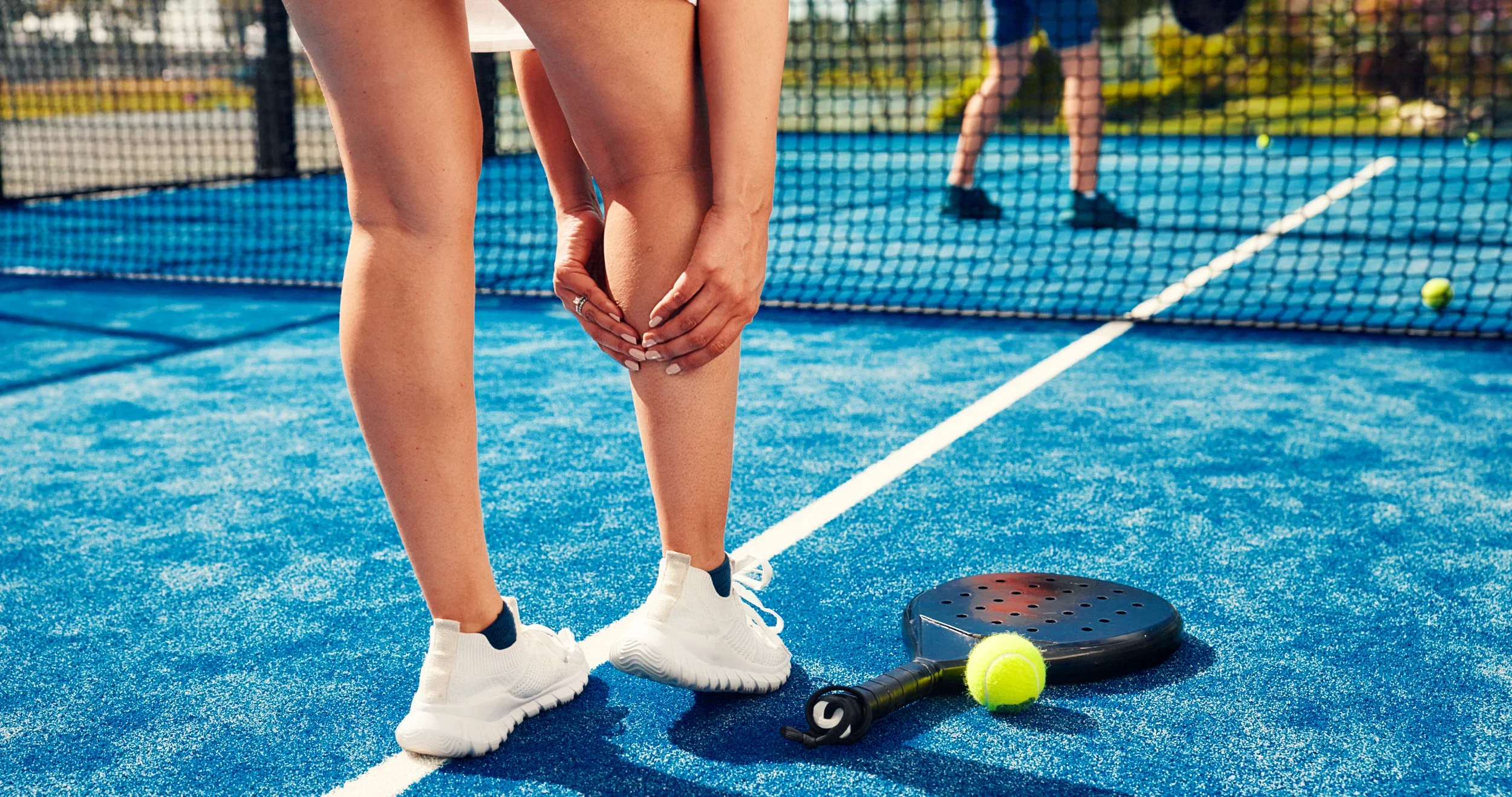
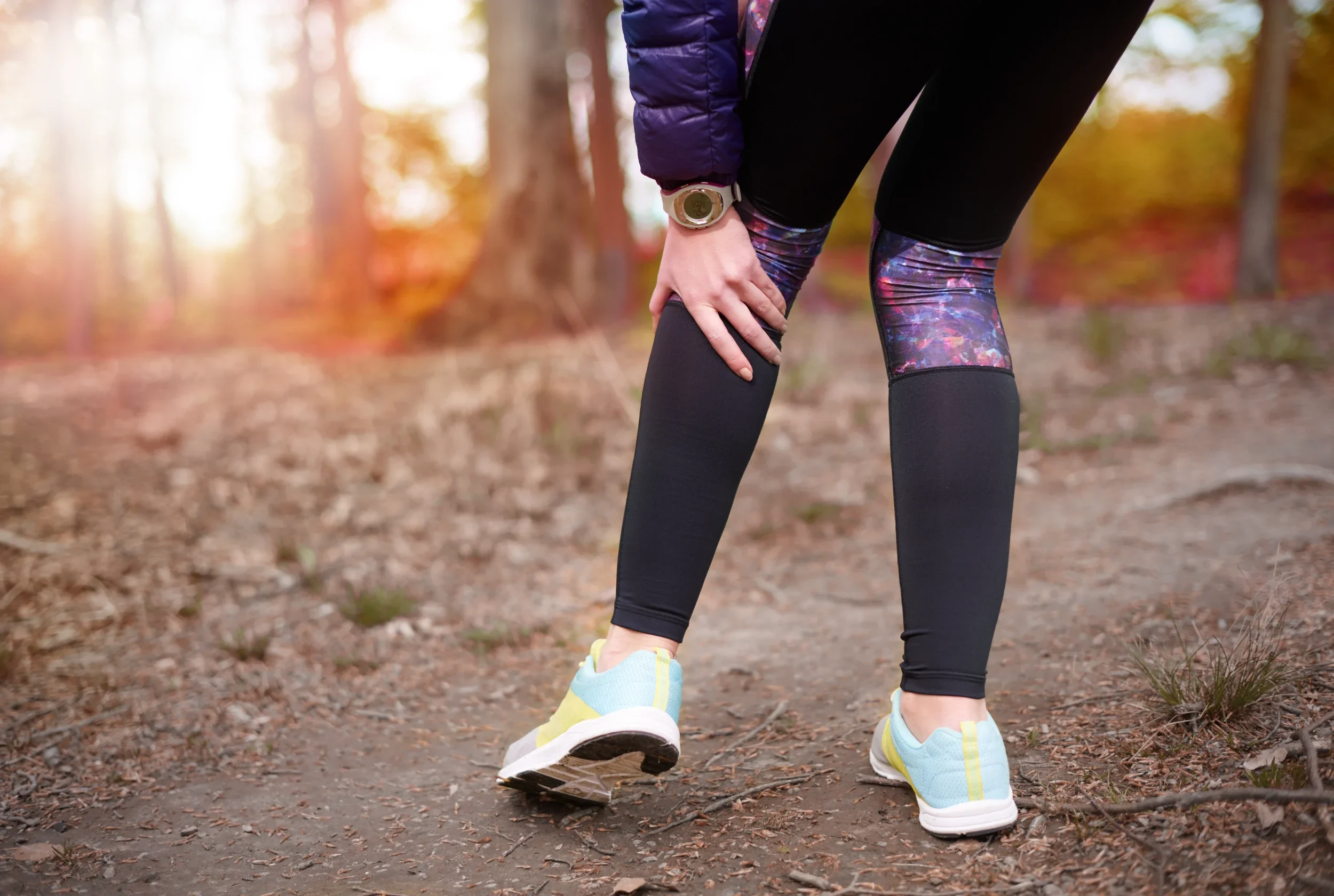
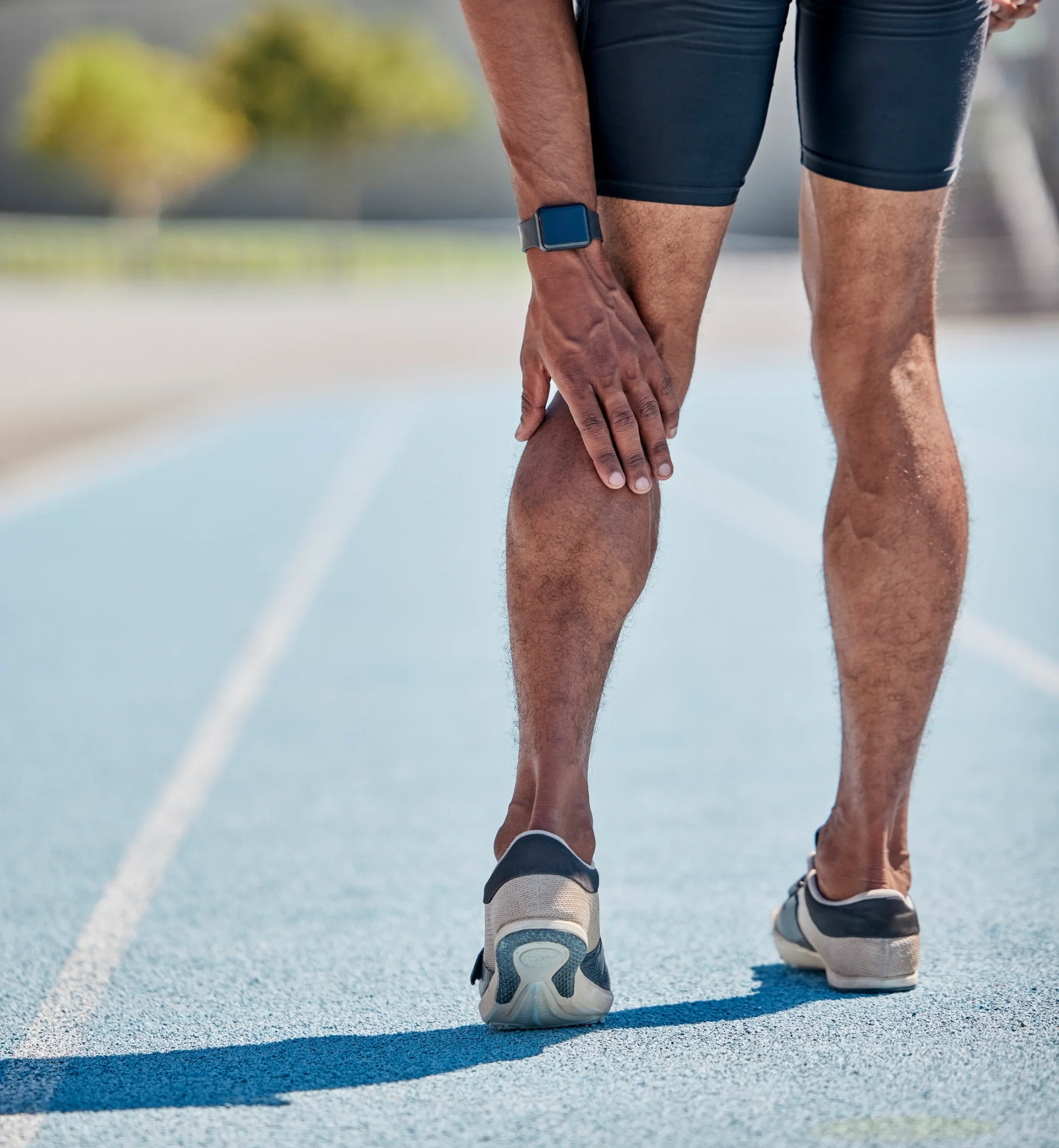
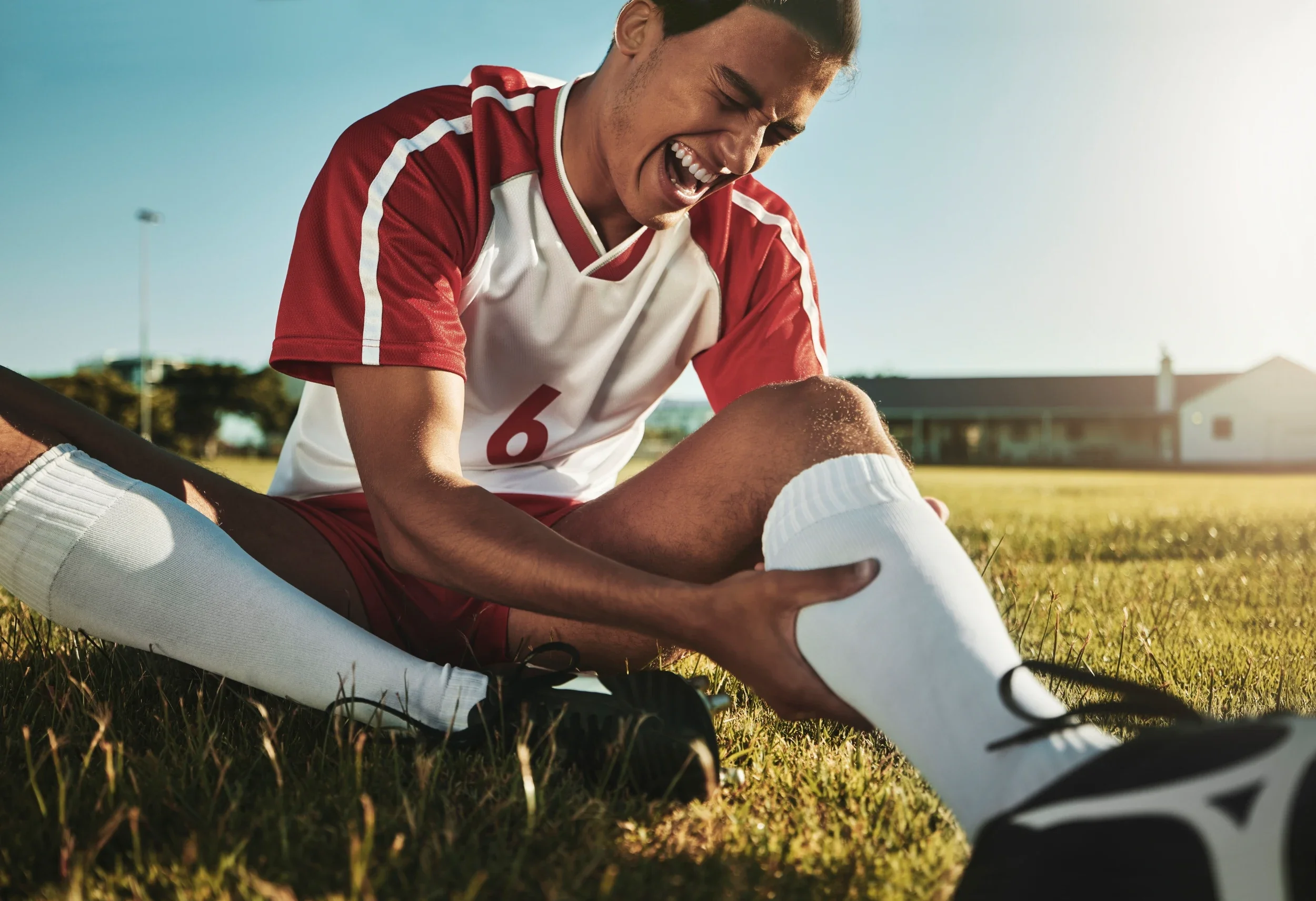
You pushed off to surge past someone at parkrun, stepped hard off a kerb to catch a bus, or went for the first quick ball of the new padel season, and something struck the back of your lower leg. Plenty of people turn round expecting to find that someone has kicked them or thrown a stone. There is nobody there. Within minutes walking is uncomfortable, going up on your toes feels impossible, and by the next day the calf is tight, swollen and perhaps bruised.
That is a calf strain, also called a torn calf muscle, a pulled calf muscle or, in its classic form, tennis leg. It is the most common calf muscle injury we see, particularly in active people from their mid-thirties onwards, and it has a frustrating habit of recurring when rehabilitation stops too soon. Most calf strains recover very well with the right physiotherapy. But not every sudden pain in the calf is a torn muscle, and some of the problems that imitate it need urgent medical attention rather than exercises, which is why an accurate diagnosis comes first.
Calf Muscle Strain, Pulled Calf Muscle or Torn Calf Muscle: What Do They Mean?
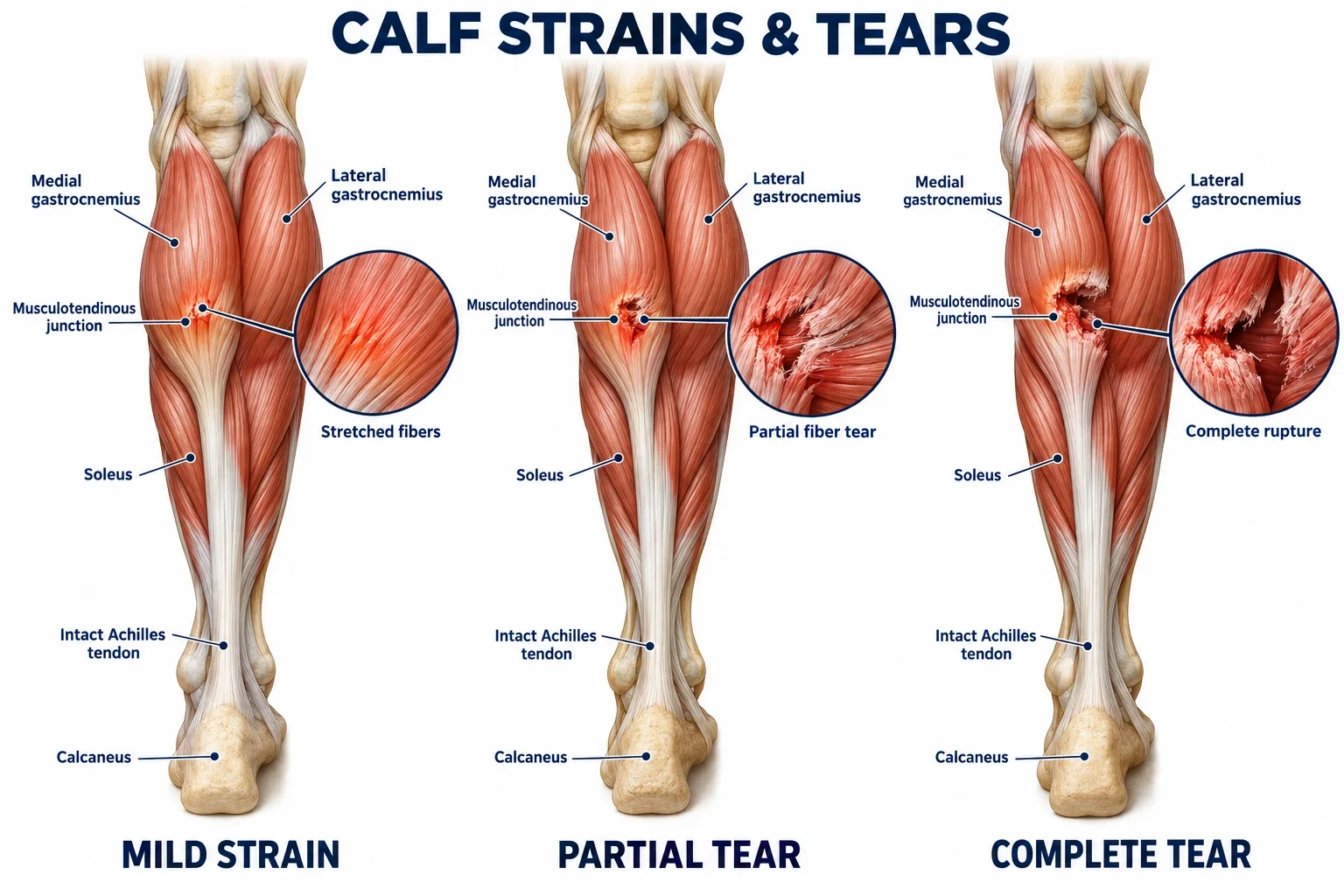
These terms describe the same kind of injury at different points on a scale, from a minor muscle pull in the calf, where a small number of fibres are overloaded, to a substantial tear. What matters just as much is which part of the calf is injured, because your calf is really two muscles doing different jobs.
The gastrocnemius is the bulky muscle you can see. It crosses both the knee and the ankle, so it is most vulnerable when the knee is straight and the ankle is suddenly loaded: a sprint start, a lunge, a jump or a quick change of direction. The classic gastrocnemius tear is in its inner (medial) head, where the muscle joins its broad sheet of tendon, and this is the injury known as tennis leg. It tends to be sudden, dramatic and easy to locate.
The soleus lies deeper and lower, and works with the knee bent. It carries enormous load during every running stride, particularly uphill and over long distances. Soleus injuries are often less dramatic: a tightening or cramp-like pain that builds through a run rather than a single moment. Because they feel less serious, they are frequently under-treated, yet they take at least as long to recover and account for most repeat calf injuries.
Calf strains and tears are graded according to the British Athletics Muscle Injury Classification, the system used across UK elite sport. It rates severity from 0 to 4 and records whether the damage extends into the tendon tissue within the muscle. Injuries that involve that tendon take longer to recover, which is why two people with a grade 2 calf tear can have very different timelines.
When Calf Pain Needs Urgent Attention
Three problems can feel like a torn calf and must not be treated as one.
An Achilles tendon rupture often feels exactly like being kicked in the back of the leg, and it is regularly mistaken for a calf strain. The pain and any gap tend to be lower down, towards the heel, and surprisingly many people can still walk, which is why it gets missed. If you cannot rise onto the toes of that leg, or the injury is close to the heel, call us the same day. We can test the tendon in minutes, and early management of a rupture makes a lasting difference to the outcome.
A deep vein thrombosis (DVT), a blood clot in the deep veins of the calf, can also cause calf pain and tightness. It usually comes on without a clear moment of injury, and the calf is typically swollen, warm, tender and sometimes red or darkened. The risk is higher after surgery, a long-haul flight, a period in a boot or cast, during pregnancy, with hormonal contraception or HRT, or with a previous clot. A calf tear and a DVT can also occur together, particularly when the leg has been immobilised. If a clot is possible, do not wait for a physiotherapy appointment: seek medical assessment the same day, and call 999 if you become short of breath or develop chest pain.
Rarely, bleeding after a large tear or a direct blow causes pressure to build inside the calf. Severe, escalating pain, a calf that feels rock hard, and pain on gently moving the toes are signs to go to A&E.
Other Problems That Masquerade as a Calf Tear
More often, calf pain that does not behave like a tear is coming from somewhere else. We see a steady stream of people who have been told they keep tearing their calf when the calf itself is not the problem.
Pain referred from the spine
Irritation of the S1 nerve root in the lower back refers pain, cramping and tightness into the calf, sometimes with very little back pain at all. Clues include tingling or numbness in the sole or outer edge of the foot, a calf that seems to cramp or tighten at the same point in every run without a clear injury, and push-off that feels weak rather than painful. In older runners, narrowing of the spinal canal can cause calf pain on walking that eases when you sit or bend forward. We examine your back and nerve mobility as a routine part of every calf assessment.
Problems with the circulation
Calf pain that comes on reliably after a certain distance of walking and eases within a few minutes of standing still can be a sign of narrowed arteries, known as intermittent claudication, particularly in people who smoke, have diabetes or have raised cholesterol. In young, fit athletes, popliteal artery entrapment, where the artery behind the knee is compressed by the calf muscle, causes exertional calf pain, sometimes with a cold, pale or numb foot. Chronic exertional compartment syndrome causes a tight, bursting ache that builds at a predictable point in a run and settles soon after stopping. None of these is a calf tear, none will respond to calf rehabilitation, and all need the right medical referral, which we arrange directly.
Problems at the ankle and knee
Achilles tendinopathy causes pain lower down, just above the heel, that is usually stiff first thing in the morning and builds over weeks rather than arriving in a moment. Posterior ankle impingement produces pain at the back of the ankle when the foot is pointed hard, as in dancing or kicking. A tibial stress fracture can cause deep, localised pain in the lower leg that worsens with every impact. An ankle that has stiffened after an old sprain can also overload the calf, turning repeated calf strains into an ankle problem. Above, a Baker’s cyst behind the knee can leak or rupture into the calf, causing sudden swelling that closely resembles a clot.
Do I Need a Scan?
For many minor calf strains, no. A careful history and examination, including testing strength with the knee straight and bent, tells us which muscle is injured and roughly how badly. We recommend imaging when a significant tear or tendon involvement is suspected, when a precise return date matters for your sport, or when recovery is not following the expected course. Ultrasound is excellent for calf tears and shows whether a collection of blood has formed between the muscle layers; MRI gives more detail on deeper soleus injuries. If a clot is possible, a Doppler ultrasound of the veins is the test that matters. We can arrange all of these quickly.
Why Calf Strains Come Back
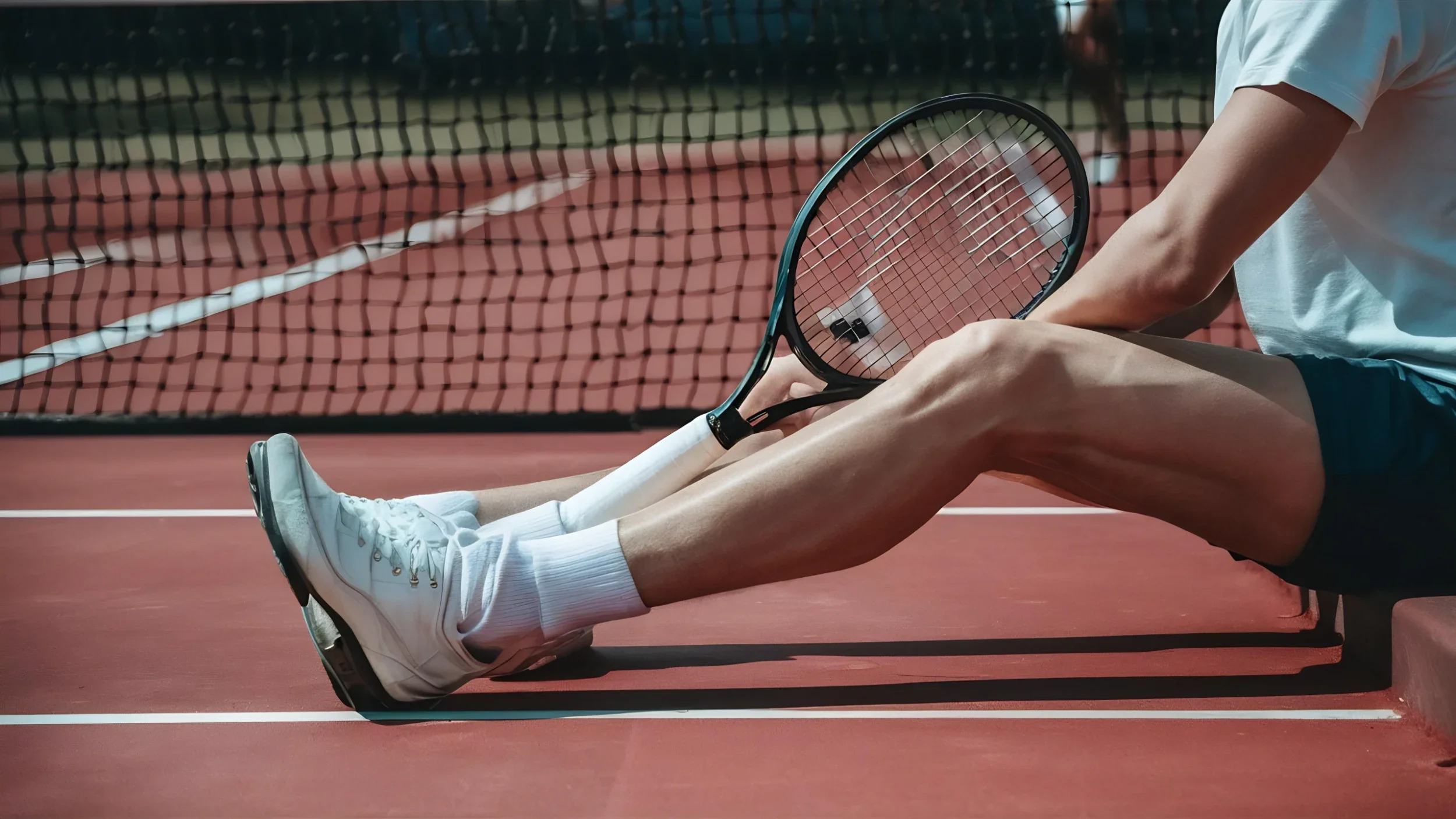
The calf is often pain-free for walking within a couple of weeks, and that is precisely when most people restart running. But walking asks very little of it. Running loads the calf with several times your body weight on every stride, and a calf that has lost strength after injury cannot tolerate that for long. The risk of recurrence is highest in the first couple of months after returning.
The other common reason is rehabilitation that only trains the gastrocnemius. Standing calf raises with a straight knee are the exercise everyone knows, yet the soleus, which is where most repeat injuries occur, needs heavy loading with the knee bent. Add a sudden jump in mileage, hills or speed work, a return to sport after months off, or simply being over forty, and a second tear becomes very likely unless strength is genuinely rebuilt.
How We Treat a Calf Strain
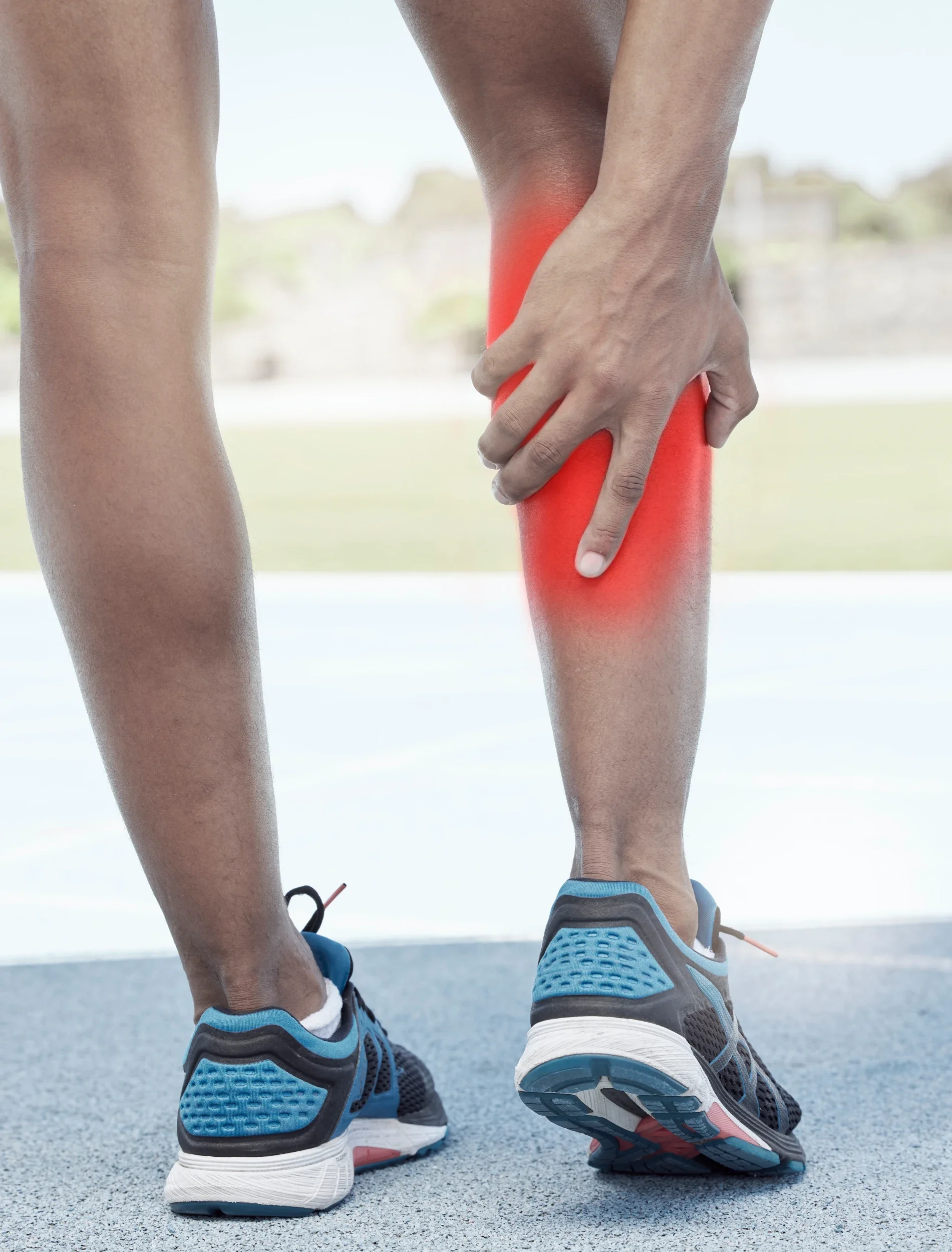
Your first appointment lasts an hour. We establish exactly how the injury happened, rule out the problems above, examine your calf, ankle, knee and lower back, test your strength against the other side, and grade the injury. You leave with a diagnosis, an expected timeline, and rehabilitation already started.
In the first days, the aim is to protect the healing muscle without shutting the leg down. Depending on severity, that may mean a short spell on crutches, a small heel lift in your shoe to ease the load, and compression for swelling. We will get you walking normally as soon as it is comfortable and steer you away from stretching or deep massage over the tear while it is fresh. Gentle loading starts early, often with isometric holds, because muscle heals stronger when it is asked to work.
Strength work then becomes progressively heavier, with both straight-knee exercises for the gastrocnemius and bent-knee exercises for the soleus, including heavily loaded seated calf raises. Where full load is not yet tolerated, blood flow restriction training lets us build strength with much lighter weights. We work on the ankle, hip and foot alongside, because a stiff ankle or weak glutes leave the calf doing more than its share.
Impact returns in stages: skipping, then hopping, then a structured walk-run progression that builds volume before any speed or hills. The final phase is built around what you do, whether that is repeated sprints and changes of direction for footballers, quick lunges and push-offs for tennis, squash and padel players, or long runs and hill work for runners.
Measuring Readiness, Not Counting Weeks
Throughout your rehabilitation, we use VALD handheld dynamometry to measure calf strength on both sides, with the knee straight and bent, so we can see whether the soleus or the gastrocnemius is lagging behind. VALD ForceDecks lets us assess hopping and jumping, where a calf that feels fine can still be producing far less force than the other side. We also track how many controlled single-leg calf raises you can perform compared with your uninjured leg.
Our threshold for return to running and sport is at least 90% of the strength of your uninjured side, alongside pain-free hopping and a clean response to running the following day. We do not clear anyone on the basis of weeks elapsed.
What About Shockwave Therapy?
Where persistent pain lower down turns out to be coming from the Achilles tendon rather than the muscle, focused shockwave can be a valuable part of treatment, and our Achilles tendinopathy programme covers that in detail.
Frequently Asked Questions
Here are answers to some of the common questions we receive regarding calf muscle tear physiotherapy at Physio Remedies.
-
The typical signs of a torn muscle in the calf of your leg are a sudden sharp pain or a sensation of being hit at the back of the lower leg, difficulty walking normally, pain or weakness going up on your toes, and swelling or bruising over the following days. A mild strain may just feel tight and sore. If you are unsure, an assessment will confirm what you have and how severe it is.
-
A tear almost always has a clear moment of injury during activity. A clot usually develops without one, and the calf becomes swollen, warm and tender, sometimes with redness or discolouration. The two can occasionally occur together. If there is any chance of a clot, seek medical assessment the same day rather than waiting to see a physiotherapist.
-
Both can feel like being kicked. An Achilles rupture is lower down, towards the heel, and usually leaves you unable to rise onto the toes of that leg, even if you can still walk. It needs urgent assessment. We can test the tendon quickly and arrange specialist care the same week if needed.
-
Usually, yes, and gentle walking within comfort helps recovery. With a larger tear, a few days on crutches and a heel lift can make walking more comfortable while the muscle settles. If you cannot put weight through the leg at all, get it assessed promptly.
-
Not while it is fresh. Stretching and deep massage over the injury can aggravate the healing tissue in the early stages. Ice and compression are fine for comfort. Movement returns through progressive loading, and we will tell you when specific range work is appropriate.
-
As a rough guide, minor strains take one to three weeks, moderate tears around four to six weeks, and larger tears or those involving the tendon tissue within the muscle eight to twelve weeks or more. Soleus injuries often take longer than people expect. Your grading and strength testing give a far more reliable timeline than these broad ranges.
-
The quickest recovery comes from doing the right things early rather than resting and hoping. Keep walking within comfort, use a heel lift and compression if we advise them, avoid stretching and deep massage over the injury in the first week, start gentle loading within days, and rebuild strength fully before you run. Most of the lost time we see comes from returning too soon and injuring the calf again, which costs far more time than it saves.
-
Not for most strains. We recommend ultrasound or MRI when a significant tear is suspected, when a precise return date matters, or when progress stalls, and a vein scan whenever a clot is a possibility. We can arrange imaging quickly.
-
Almost never. Calf muscle tears, even large ones, are treated with rehabilitation. Occasionally a large collection of blood within the calf may be drained under ultrasound guidance by one of our consultant colleagues, and we will advise if that is worth considering.
-
When you can hop on the injured leg without pain, have reached at least 90% of the strength of your other side with the knee both straight and bent, and the calf responds well the day after a trial run. We then build your running back in stages rather than returning straight to your previous mileage.
-
Usually because strength was never fully rebuilt, especially in the soleus, or because running volume returned too quickly. Sometimes it is because the problem is not really the calf: repeated calf ‘tears’ without a clear injury, particularly with tingling in the foot, should prompt a check of your lower back, ankle and circulation.
-
Your initial assessment is £190 for one hour, including a full examination, strength testing and the start of your treatment. We accept Bupa, AXA and Cigna International; please check your cover before your appointment.
Calf Strain Physiotherapy in Mayfair, Near Green Park
Meet Sarah Lawson · Meet Jane Baker
If you have a calf strain or a torn calf muscle, or you are not sure what your calf injury is, we would be pleased to assess you at Physio Remedies in the Lansdowne Club, Mayfair, a short walk from Green Park and Berkeley Square. If you suspect an Achilles rupture, please call rather than book online so we can see you quickly. If you think you may have a blood clot, please seek medical care today.
If you prefer to reach us directly: