
Knee Conditions
MCL and LCL Knee Ligament Injury Treatment in Mayfair, London
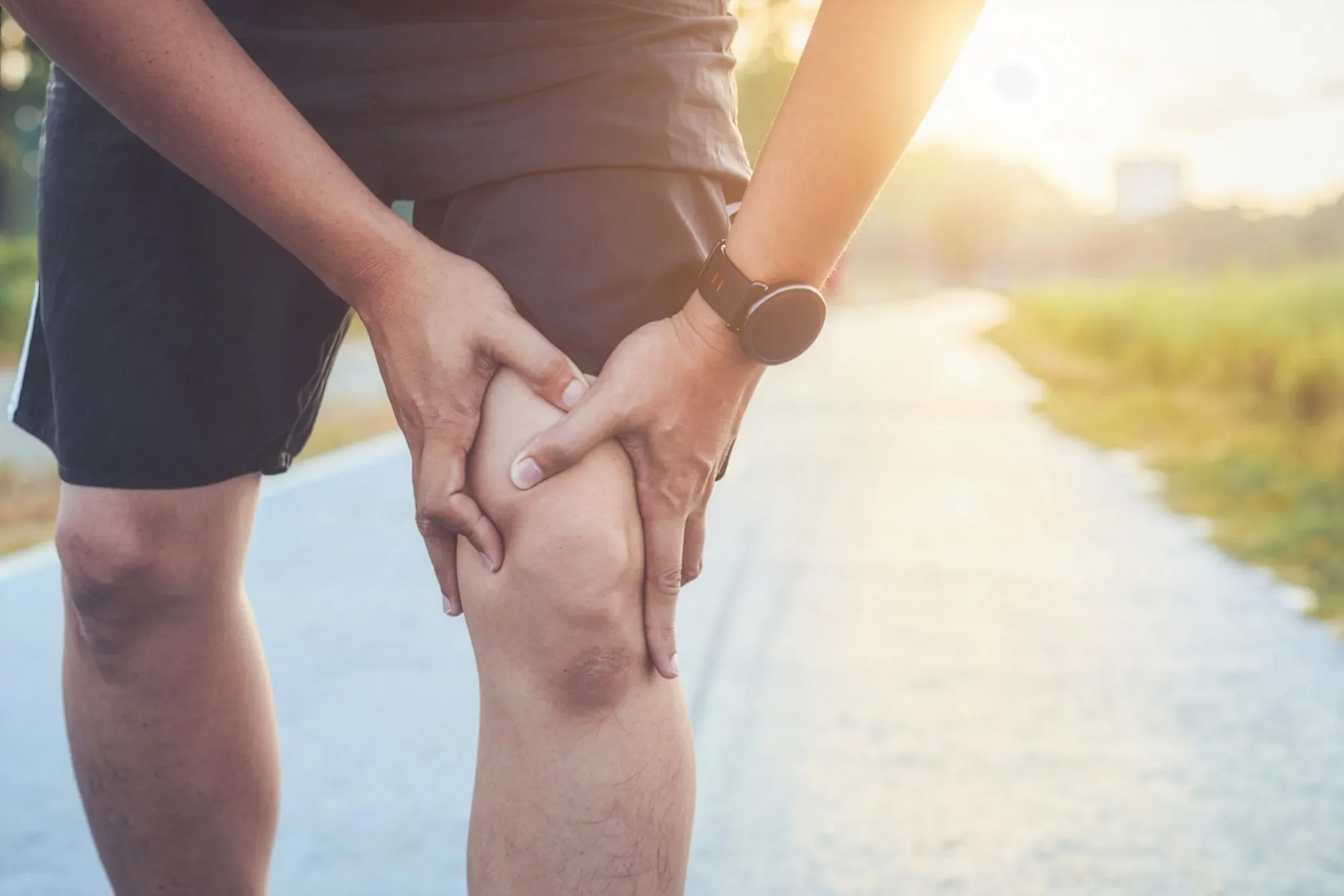
Collateral ligament injuries are among the most common knee injuries in contact and pivoting sport. A direct blow to the outside of the knee, a tackle that forces the knee inwards, a ski edge catching at speed — any of these can place enough force through the medial or lateral collateral ligament to stretch or tear it. What happens next, and how quickly you return to full activity, depends almost entirely on how well the injury is assessed and managed from the outset.
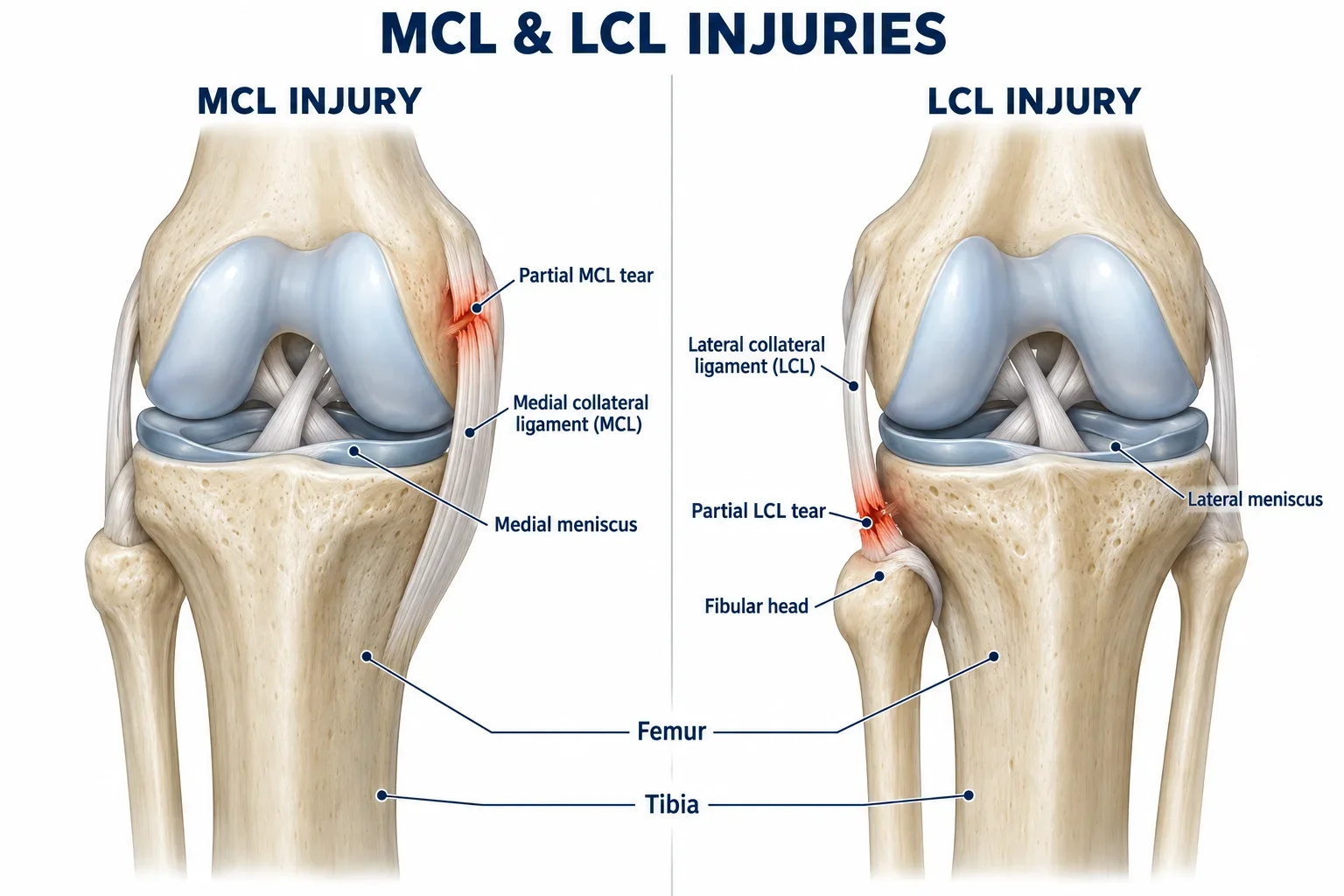
The medial collateral ligament, the MCL, runs along the inside of the knee connecting the femur to the tibia. It is the most commonly injured knee ligament, providing stability against forces that push the knee inward, known as valgus stress. The lateral collateral ligament, the LCL, runs along the outside of the knee connecting the femur to the fibula, and resists forces that push the knee outward. These two injuries are not simply mirror images of each other. MCL injuries are far more common, tend to heal well without surgery, and usually respond very well to structured physiotherapy. LCL injury (lateral collateral ligament injury) is less common, and will often involve other structures on the outer and back of the knee -namely the posterolateral corner. This requires very careful assessment to ensure nothing more significant has been missed.
We treat both injuries regularly at our Mayfair clinic. Our team has worked with rugby players, skiers, footballers, and judoka at elite and professional level, where collateral ligament injuries are a routine part of the clinical workload. That experience shapes how thoroughly we assess, how precisely we grade, and how confidently we guide you through rehabilitation and back to sport.
Do You Recognise Your Situation?
-
You were injured in sport and felt a pop or sudden pain on the side of your knee.
A tackle, a fall, an awkward landing. The knee may have swollen quickly or felt unstable immediately. You are not sure how serious it is or whether you need a scan.
-
You have inner knee pain that is not improving as expected.
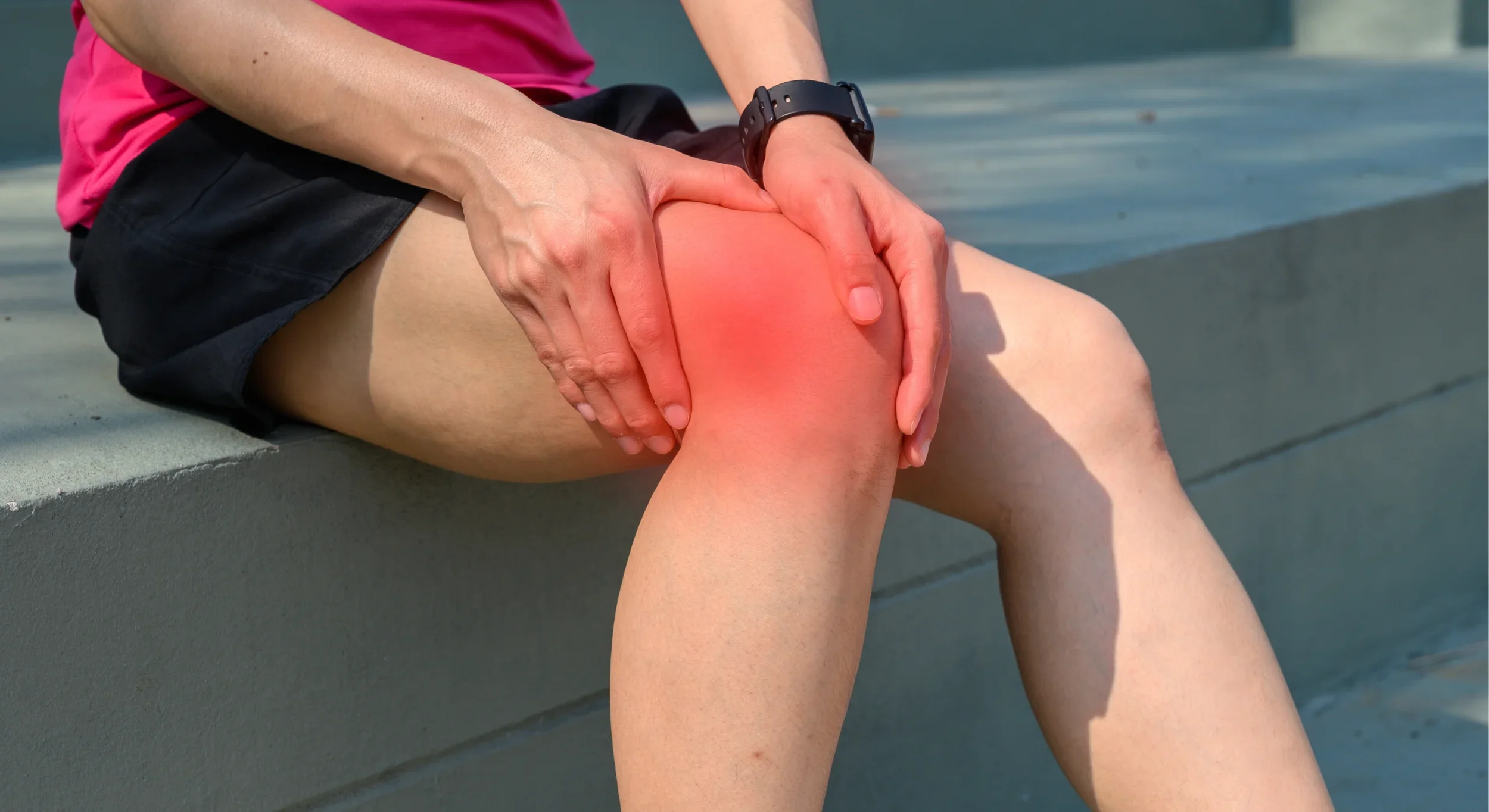
A medial collateral ligament injury that is not managed properly in the early stages can become a persistent problem. Tenderness along the inside of the knee, discomfort with sideways movement, and a sense of the knee not being quite right under load are all signs that the MCL needs proper attention.
-
You have outer knee pain and the knee feels loose or unreliable in terms of knee stability.
Lateral knee pain after a contact injury, particularly if the knee felt unstable at the time, may involve the LCL and potentially the posterolateral corner structures. This requires careful assessment rather than a wait-and-see approach.
-
You have had a knee ligament injury diagnosed elsewhere but are not confident the rehabilitation is specific enough.
Generic strengthening exercises without objective strength testing and a clear return to sport framework leave too much to guesswork. We can take over at any stage of your rehabilitation.
-
You sustained a combined knee injury and are managing multiple structures simultaneously.
MCL tears frequently occur alongside ACL injuries (anterior cruciate ligament injuries). LCL injuries are often associated with posterolateral corner involvement. Managing a combined knee ligament injury requires a coordinated approach that accounts for every structure involved.
How We Assess and Grade Your Knee Ligament Injury
Accurate grading matters because it determines your entire rehabilitation plan and your realistic return to sport timeline.
Collateral ligament injuries are graded on a scale of one to three based on severity. A grade one injury involves stretching of the ligament fibres without tearing, a grade two injury involves a partial tear, and a grade three injury is a complete rupture. The distinction between these grades is made clinically through a careful examination, not simply from how much pain you are in at the time of injury. Grade three injuries can sometimes feel less acutely painful than grade two injuries, which means pain alone is not a reliable guide to severity.
At your first appointment, we will take a thorough history of how the injury happened, examine the knee joint carefully including stability testing under valgus and varus stress, and assess for involvement of any associated structures including the ACL, PCL, medial meniscus, and posterolateral corner. We will tell you clearly what we have found and what it means for your recovery.
We will also measure your knee ligament strength and lower limb strength objectively using hand-held dynamometry. This tells us not just where you are relative to your uninjured side, but sets the specific strength targets you need to reach before you are safely ready to return to sport. That decision is based on data, not on how many weeks have passed or on how the knee feels on a good day.
When imaging is needed
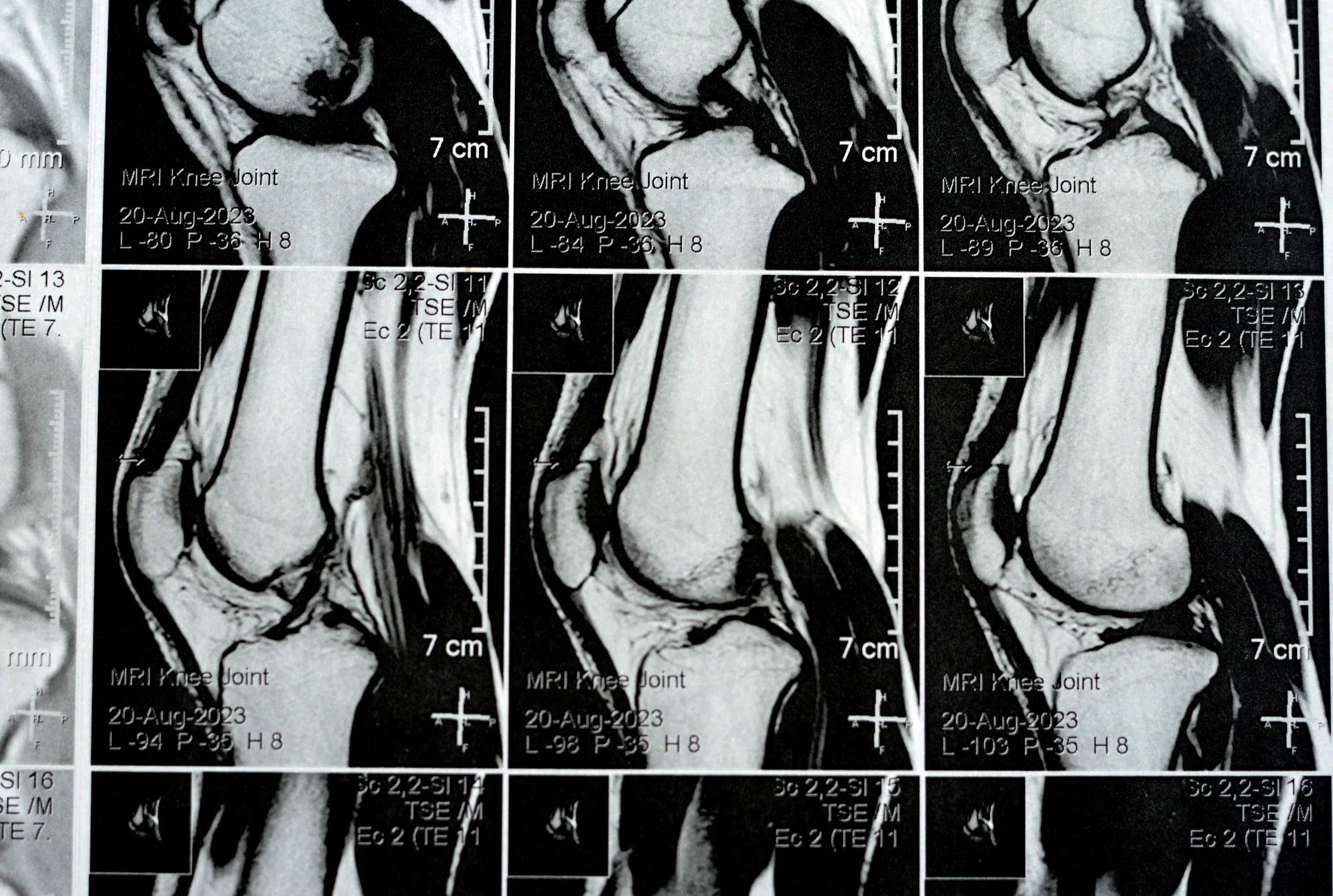
Most isolated MCL injuries can be assessed and graded clinically without imaging. However, if we suspect a grade three tear, a combined ligament injury, or posterolateral corner involvement, an MRI scan is the investigation of choice and provides the most complete picture of what has been damaged. LCL injuries are often associated with injuries to other structures in the knee, and if the LCL injury is more severe, it is likely that other parts of the knee have also been damaged.
If you need an MRI, we can arrange rapid access through our specialist network, usually within 48 hours. If your injury requires orthopaedic input, we can connect you with the right consultant quickly and without delay.
Our Approach to MCL and LCL Rehabilitation
Grade one and grade two MCL injuries respond very well to physiotherapy alone. Initial management focuses on reducing swelling and pain, restoring full range of movement, and beginning progressive strengthening of the muscles that support the knee, particularly the quadriceps, hamstrings, hip abductors, and glutes. A hinged knee brace is sometimes appropriate in the early stages to protect the healing ligament from repeated valgus stress, particularly if you need to continue some level of activity.
As the ligament heals, we progress to functional strengthening, proprioception and balance work, and sport-specific drills that prepare the knee for the demands of returning to play. We use objective dynamometry at each stage to track your strength recovery and to confirm when you are genuinely ready to progress rather than relying on symptom resolution alone.
Grade three MCL injuries require a more structured approach and a longer rehabilitation timeline. Most grade three MCL tears still heal without surgery, but they require careful protection in the early weeks and a progressive loading programme that does not rush the tissue through phases it is not ready for. We monitor healing closely and adjust your programme accordingly.
LCL and posterolateral corner injuries require particular care. Isolated LCL injuries are rare and are usually associated with other nearby structures. When the posterolateral corner is involved, the rehabilitation demands are more complex, and the threshold for surgical referral is lower than with isolated MCL tears. We will identify this early, manage it appropriately within physiotherapy, and refer to our orthopaedic network without delay if surgical input is needed.
Combined MCL and ACL injuries are the most common multi-ligament knee injuries we see, particularly in rugby and football. The management sequence matters: in many cases, the MCL is allowed to heal before ACL reconstruction is considered, because operating on a stiff, swollen knee produces worse outcomes. We work closely with orthopaedic surgeons to coordinate the right timing and to manage the MCL rehabilitation in parallel with pre-operative conditioning for the ACL.
Our Experience with Knee Ligament Injuries
Medial and lateral collateral ligament injuries are a significant part of what we see at Physio Remedies, particularly among rugby players, skiers, footballers, and judoka. Our team has managed these injuries at Olympic Games, Commonwealth Games, and with professional rugby including the Barbarians, where MCL injuries in contact sport are a routine clinical challenge. We understand the difference between an injury that can be managed conservatively with confidence and one that needs rapid orthopaedic input, and we make that distinction clearly and quickly.
We also understand the frustration of a knee ligament injury that is not rehabilitated properly and becomes a persistent problem. Inner knee pain, medial knee instability, or lateral knee pain that recurs under load is often the result of a previous collateral ligament injury that was rested rather than rehabilitated. If you are dealing with ongoing knee ligament problems rather than an acute injury, we can assess what has been missed and build a programme that addresses it properly.
Frequently Asked Questions
-
Grade one MCL sprains typically recover within two to four weeks with appropriate management. Grade two partial tears usually take four to eight weeks. Grade three complete tears can take eight to twelve weeks or longer, depending on whether other structures are involved. Return to contact sport at any grade should be guided by objective strength testing rather than time alone.
-
Injuries to the MCL rarely require surgery and are often treated with a hinged brace. If you have injured just your LCL, treatment can be similar to an MCL sprain, but surgery may be recommended, especially in cases where the ligament has pulled directly off the bone. We will give you a clear view of where your injury sits and whether surgical referral is appropriate.
-
Not always. Isolated MCL injuries can often be accurately graded clinically. We recommend MRI when we suspect a grade three injury, posterolateral corner involvement, or an associated ACL or meniscal injury. If imaging is needed, we will arrange it quickly.
-
Usually yes, even with more significant injuries, though comfort and stability will vary with grade. We will advise you on appropriate weight-bearing and whether crutches or a brace are helpful in your specific case.
-
With appropriate rehabilitation, most MCL and LCL injuries recover full stability. The key is ensuring that the muscles supporting the knee, particularly the quadriceps, hamstrings, and hip stabilisers, are genuinely strong rather than merely adequate. Objective strength testing throughout your rehabilitation ensures this is the case.
-
Return to contact sport requires full pain-free range of movement, strength symmetry of at least 90 per cent compared to your uninjured side on objective testing, and confidence under sport-specific loading. We provide a structured return to sport programme and do not clear you for contact until the strength data supports it. For grade one MCL injuries in sport, this may be as soon as two to three weeks. For grade three injuries or combined ligament involvement, the timeline extends accordingly.
Book Your Knee Ligament Assessment
If you have injured the inside or outside of your knee, do not leave the assessment to chance. Early, accurate grading of a collateral ligament injury determines everything that follows, and getting it right from the start gives you the best chance of a full, confident recovery.
Your assessment costs £190 and lasts one hour. We will diagnose what has been injured, grade it accurately, arrange imaging if needed, and begin treatment in that same session.
If you prefer to reach us directly: