
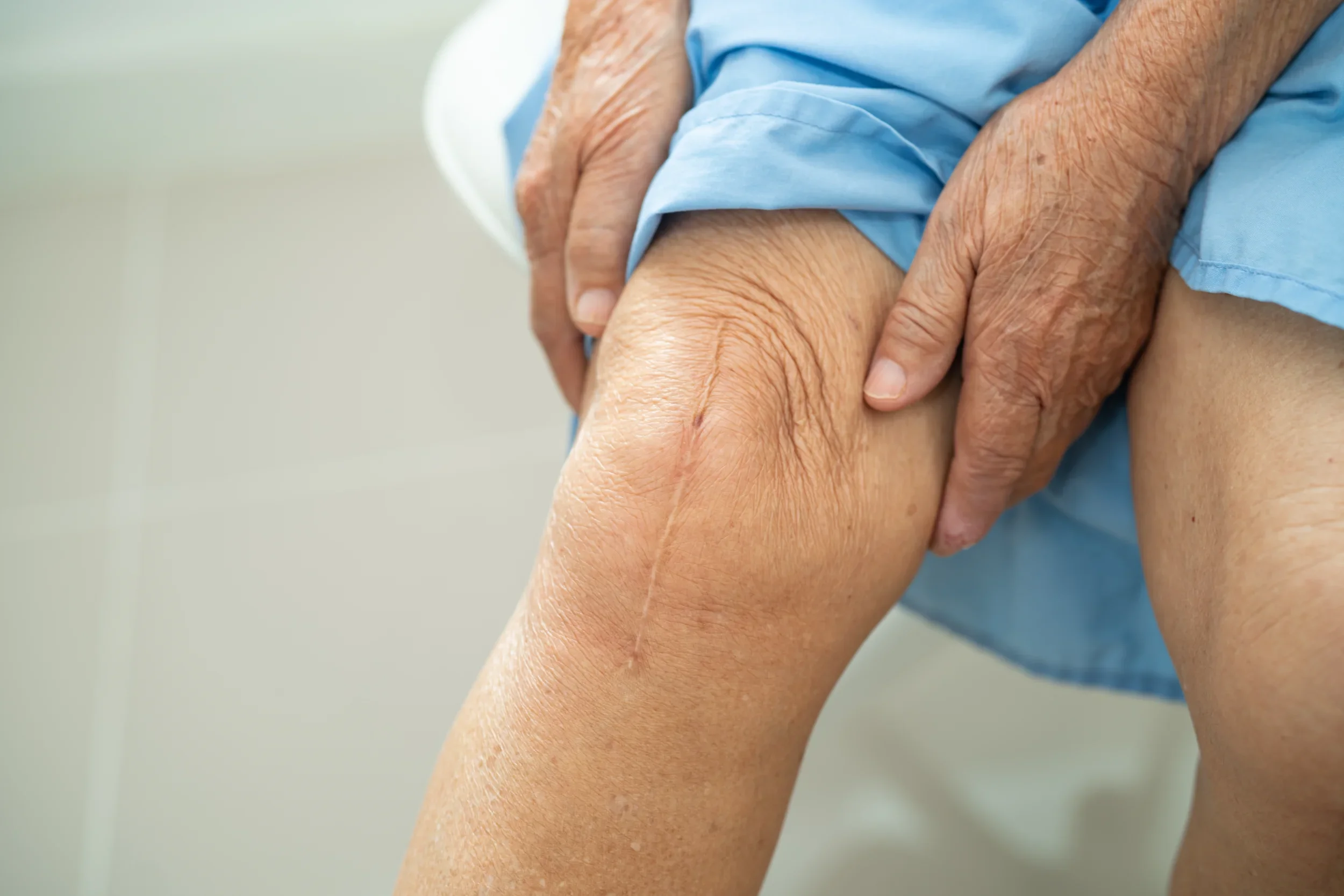
Knee Conditions
Knee Replacement Physiotherapy in Mayfair, London
Surgery replaces the joint. Rehabilitation determines what you actually get back.
Total knee replacement is one of the most reliably successful operations in orthopaedic surgery, but the quality of physiotherapy afterwards varies enormously, and so do outcomes.
At Physio Remedies in Mayfair, we specialise in total knee replacement surgery rehabilitation for patients who want more than the standard post-operative pathway offers. Surgeons are now operating earlier because implants last longer. Someone having a knee joint replacement at 55 in good physical health carries very different expectations from someone at 75, and the standard protocol was designed for the older cohort. If you want to return to cycling, skiing, tennis, or simply commuting without dread, you need a different approach.
We use progressive loading protocols grounded in current evidence, objective strength testing throughout, and first-hand experience of the recovery itself.
What Is a Total Knee Replacement?
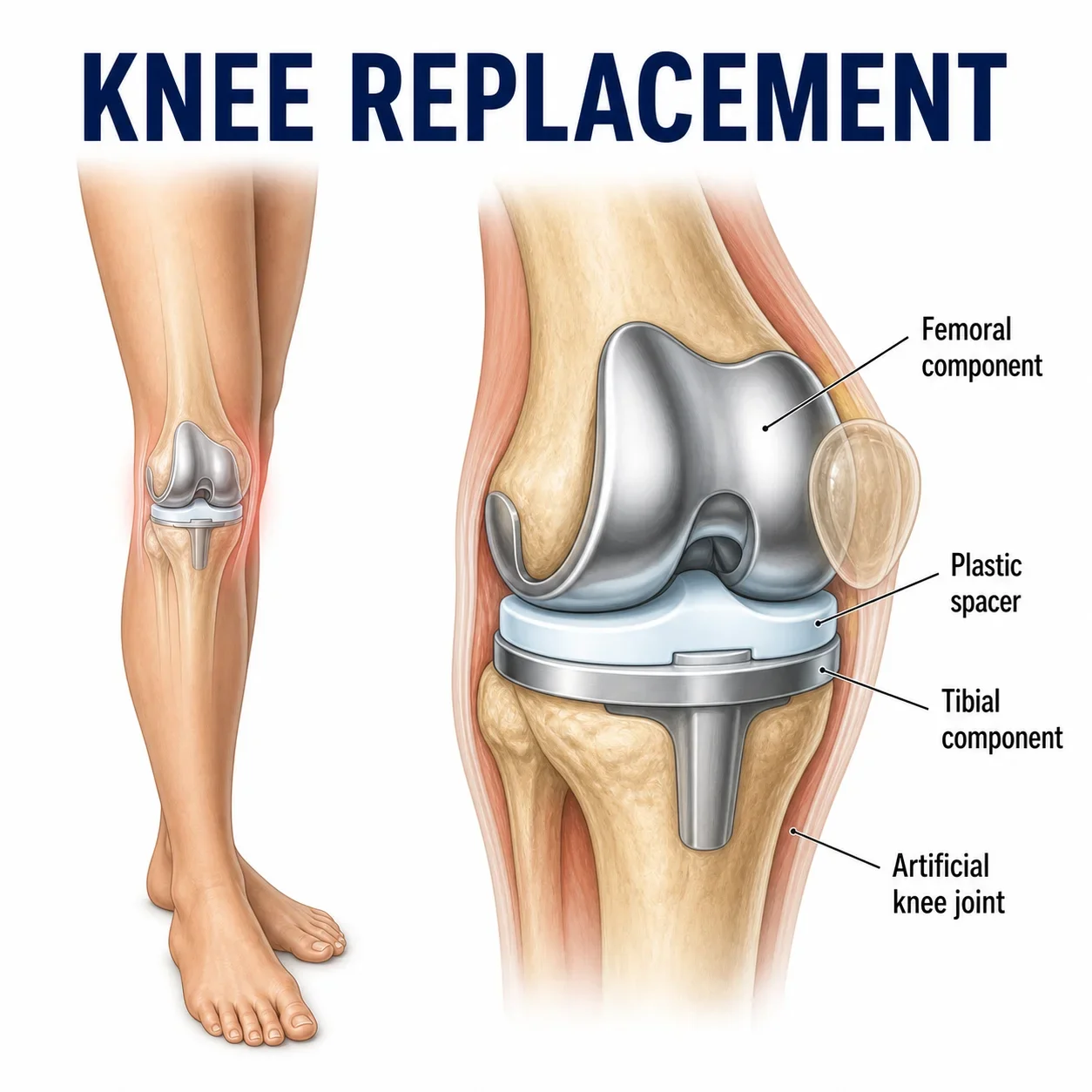
A total knee replacement (also called total knee arthroplasty) is joint surgery to remove damaged cartilage and bone from the knee joint and replace them with prosthetic implants: metal components on the femur and tibia, and a smooth plastic spacer that recreates the cushioning your cartilage once provided. The operation typically takes one to two hours and can be performed under general anaesthesia or regional anaesthesia from the waist down. Most patients go home the same day or after one night.
The knee has three compartments:
Inner (medial)
Outer (lateral)
Beneath the kneecap (patellofemoral)
A total joint replacement is a knee surgery that addresses all three. A partial knee replacement surgery (aka unicompartmental replacement) addresses only the damaged compartment, and tends to be used withe arthritis is localised to just one knee compartment.
The surgical procedure involves a short stay in hospital. The knee surgeon (orthopaedic surgeon) makes carefully planned cuts in the shin bone and thigh bone, to remove the worn surfaces, and metal implants are fitted to prepared bone surfaces. There is a femoral component and a tibial component which are fixed securely in place with a kind of bone cement. A very tough plastic spacer separates the too, and whilst the artificial knee can never be as good as a ‘native' healthy knee, the goal is to take away the dreadful arthritis pain, and enable the patient to get back to being active.
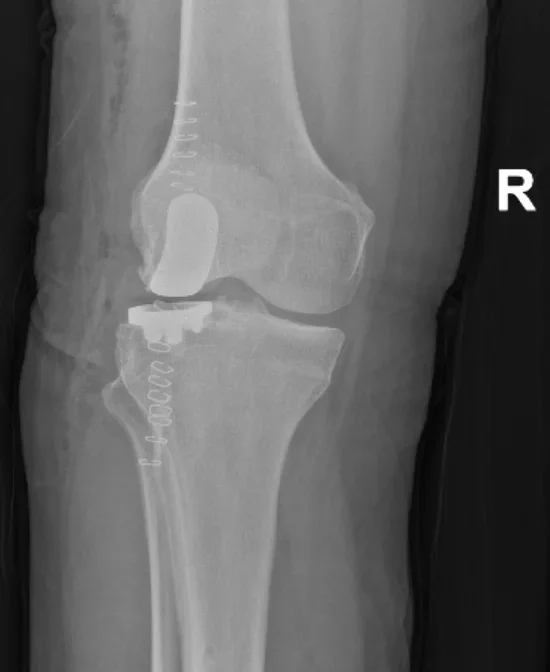
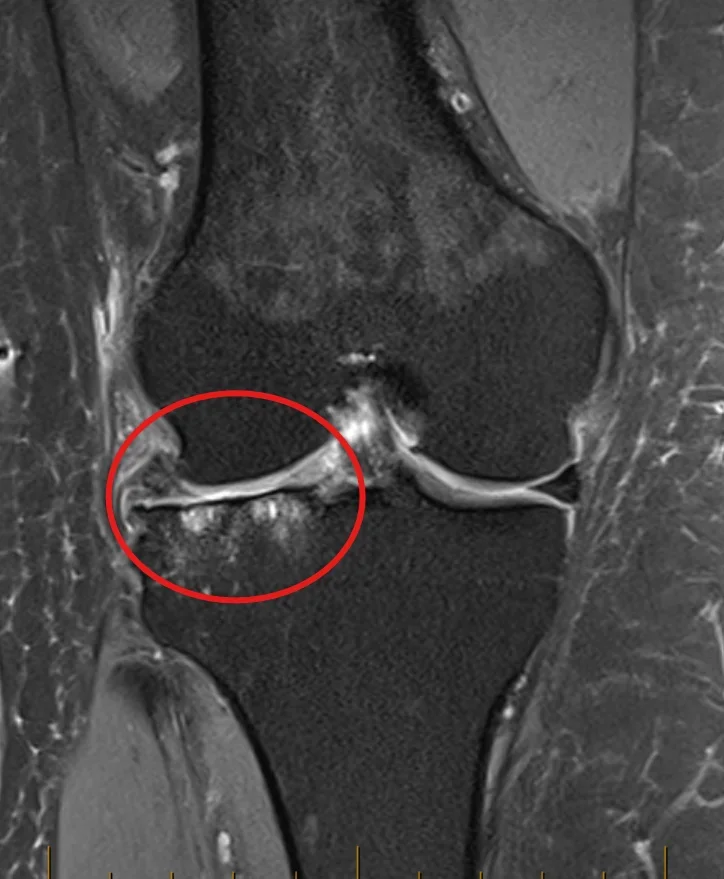
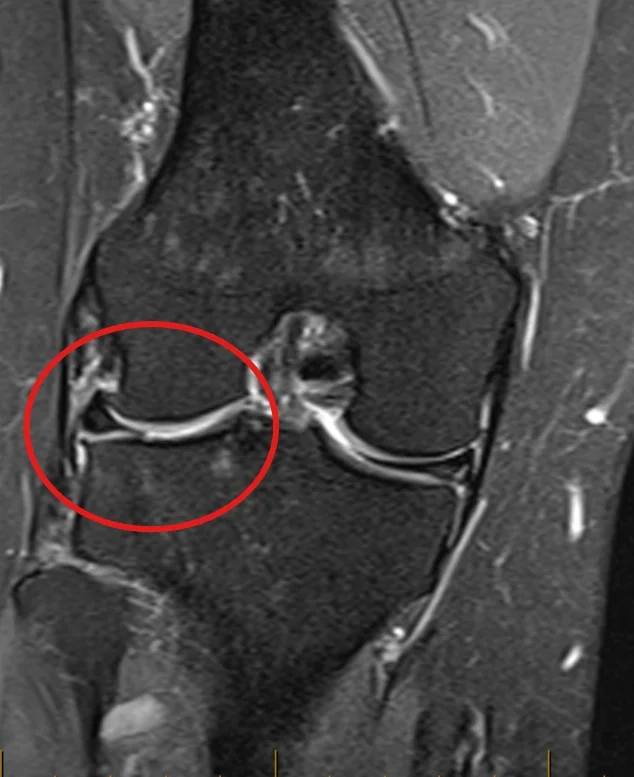
Our physiotherapist Sarah Lawson had a lateral unicompartmental replacement in January 2025, and her experience is described here.
The most common cause of knee pain requiring joint replacement surgery is osteoarthritis: gradual erosion of protective cartilage that leaves bone grinding on bone. Post-traumatic arthritis, which can develop years after a significant knee injury or fracture, is another frequent cause. In both cases, conservative treatments eventually stop providing adequate relief and the joint itself needs replacing with an artificial knee implant.
Almost everyone who has a knee replacement sees improved function for at least ten to fifteen years, and many live with the same prosthesis for the rest of their life. Operating while you are fit and healthy typically produces better rehabilitation outcomes than waiting until you are significantly deconditioned.
As with any surgery, complications are possible though serious ones are uncommon, including blood clots, infection, nerve or blood vessel issues, and in rare cases implant problems. Your surgeon will discuss your individual risk profile. Our role is to ensure the post-operative phase is managed in a way that minimises the risk of stiffness, strength deficits, and failed return to activity.
When Is a Knee Replacement Recommended?
A total knee replacement is typically recommended when knee arthritis is severe and conservative treatments have stopped working. The key indicators are:
Severe pain limiting your walking, standing, and sleep, and requires constant pain medication
Stiffness preventing full bending or straightening
Swelling that no longer settles with rest or treatment
A grinding or bone-on-bone sensation in the joint
A meaningful loss of independence in daily life
The decision to operate is yours and your surgeon's. Patients who commit to prehabilitation before surgery and structured physiotherapy after knee replacement consistently achieve better outcomes. That process starts with us.
Prehabilitation Before Knee Replacement Surgery
The best investment you can make in your recovery is to begin prehabilitation before your operation date. Patients who prehab feel less anxious on the day of surgery, recover faster in the immediate post-operative period, and progress more confidently through rehabilitation because they have already started doing it.
During prehabilitation at our Mayfair clinic, we focus on:
Strengthening the muscles around your knee, hip, and ankle without irritating the joint before surgery
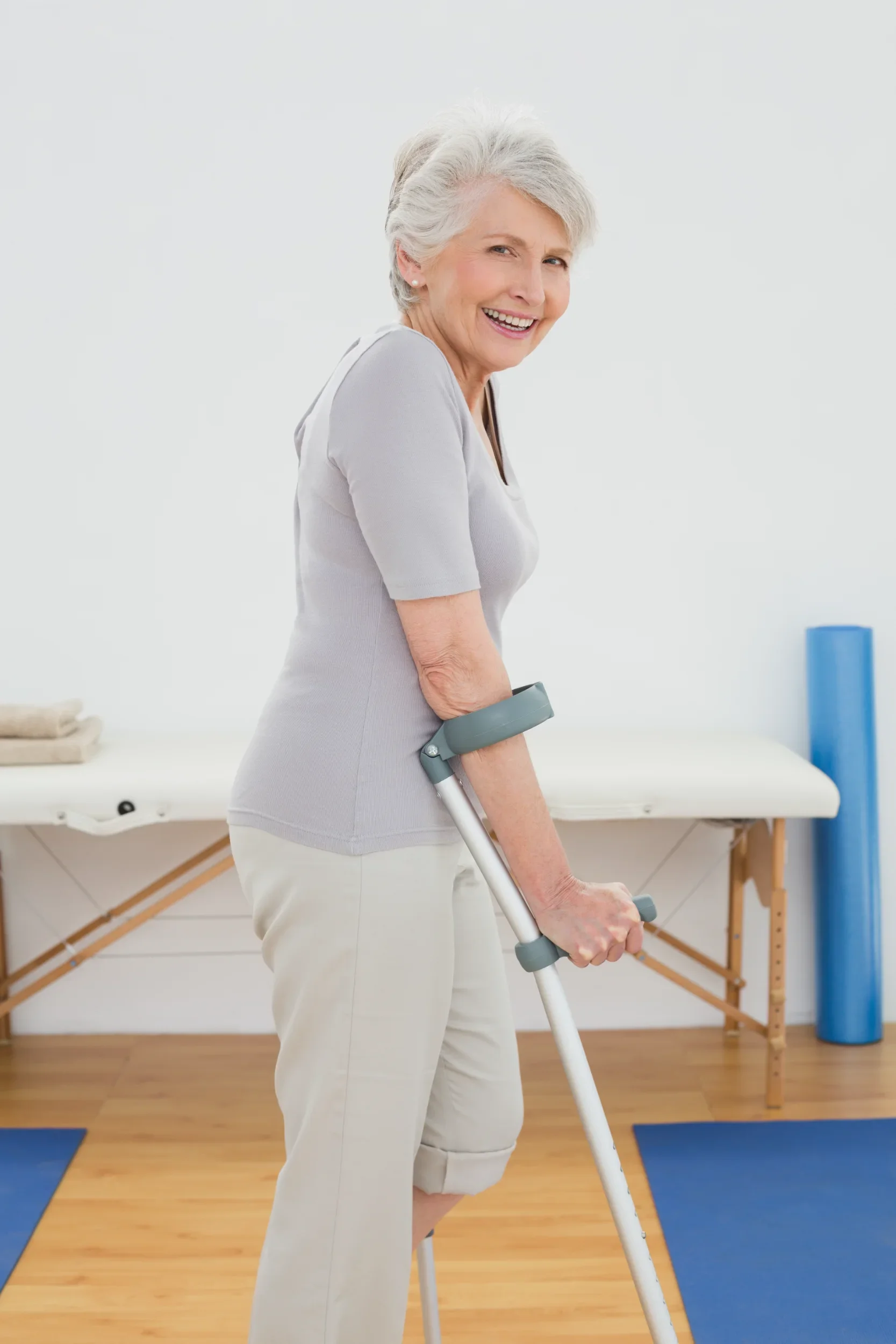
Practising the movements you will need immediately after the operation: transfers in and out of bed and chairs, managing steps, walking with crutches
Introducing muscle stimulation and swelling management strategies
Mental preparation: understanding what the first weeks will genuinely feel like reduces fear, and fear amplifies pain
Why Standard Knee Replacement Rehabilitation So Often Falls Short
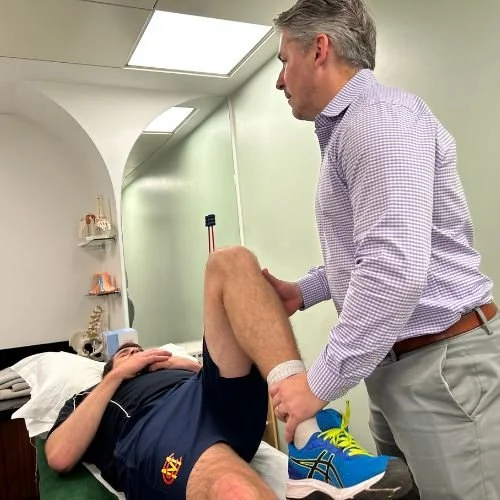
Post-operative physiotherapy after knee replacement was largely designed for an older, less active population with modest goals. The exercises are frequently under-challenging, the progressions too cautious, and the information given in the critical first two weeks is often inadequate. We see the consequences regularly: patients arriving at our Mayfair clinic having plateaued months post-surgery, wondering why they are still not right.
Two problems come up repeatedly. The first is time-based protocols: progressing patients because the calendar says week four, regardless of whether the knee is ready. Progression should be milestone-based. You move to the next stage when your knee demonstrates it is ready, not when the date says so.
The second is asking patients to travel to clinic in the first two weeks. A freshly replaced, inflamed knee does not need to be loaded into a car and driven over London roads. What you need in that phase is gentle active movement, careful monitoring, and regular reassurance, all of which we deliver remotely.
Physiotherapy After Knee Replacement: Our Approach
Weeks one and two: remote rehabilitation
We manage the first two weeks via video consultation. You film your knee replacement exercises on a simple tripod and we check in every two to three days. Short, regular contact during this phase makes a material difference to confidence and progress. From week three we see you in clinic at the Lansdowne Club in Mayfair.
In the first days after surgery, two practical things make a disproportionate difference that standard discharge paperwork rarely mentions:
Prop yourself up to roughly thirty degrees rather than lying flat. This reduces strain on your hip flexors and makes sleep considerably easier.
Rest your heel on a surface with something to push against. This activates the quad and hamstring together and allows almost pain-free early movement.
We send patients home with Compex muscle stimulation as standard. In the very early days you may not feel up to much, and that is entirely normal. Ten minutes is enough to start. It's really important you take adequate pain relief. You will also be prescribed blood thinning medications by your medical team, to reduce the risk of developing a blood clot whilst you're less active.
Knee replacement exercises: what your programme looks like
Your exercise programme evolves through three phases:
Early phase: quad activation through quad sets, straight leg raises, and heel slides, alongside range of motion work and walking practice with aids
Middle phase: progressive strengthening with step-ups, mini squats, single leg calf raises, and glute and hip work that rebuilds the entire kinetic chain
Return-to-sport phase: plyometric progressions and sport-specific loading, for patients returning to active hobbies or competitive sport
These are not exercises off a standard sheet. They are monitored and adjusted at every session based on how your knee is responding. Some swelling after loading is acceptable if it settles overnight. Swelling that does not clear by morning means you have done too much, and we adjust accordingly.
Blood Flow Restriction training
Blood Flow Restriction (BFR) training is one of the most significant advances in knee replacement rehabilitation in recent years. Working with leading BFR researcher Nicola Graham, we use protocols tailored to male and female physiology to maintain muscle activation and drive metabolic change from the very early stages of recovery, without loading the knee heavily. Five minutes on, two minutes off, two sets. We achieve considerably more, considerably earlier, than traditional rehabilitation allows.
For patients who want to use BFR at home between sessions, we recommend the Hitero system: a two-strap design that provides consistent self-occlusion simply and practically.
Objective testing with VALD dynamometry
As healing progresses, we shift to rebuilding strength through carefully monitored progressive loading. We use VALD dynamometry to measure your knee strength objectively at each stage, comparing your operated side to the non-operated side. You need to achieve at least ninety per cent of that baseline before returning to demanding physical activity. This is the threshold below which reinjury risk is significantly elevated. We track it throughout and adjust your programme based on the data, not guesswork.
For patients returning to sport, we add VALD ForceDecks hop testing and plyometric assessment as you approach full activity. The Lansdowne Club's facilities in Mayfair provide a proper rehabilitation gym where this progressive work happens in a real training environment.
The psychology of recovery
Managing the psychological dimension of recovery is as important as managing the physical one. You will see rapid improvement and then hit plateaus. Those plateaus are frustrating and they happen to everyone. Understanding they are normal and temporary makes them far easier to navigate.
Younger, more active patients find this hardest because their expectations are higher. Regular check-ins, honest communication, and consistent reassurance that progress is happening are as therapeutically important as the exercises themselves. We build that into every stage of your care.
What It Is Actually Like: A Physiotherapist's First-Hand Account
Our physiotherapist Sarah Lawson underwent a lateral unicompartmental knee replacement in January 2025. We share her account because the most useful thing we can offer patients is honest information from someone who has genuinely been through it.
The first sixteen weeks are hard. Your knee feels like a foreign object. It aches and does not always do what you want. The first night in hospital is noisy and disorienting: DVT pump on one leg, Game Ready machine on the other, broken sleep that makes you question your decision. That feeling passes. But it is real, and knowing it is coming makes it easier to manage.
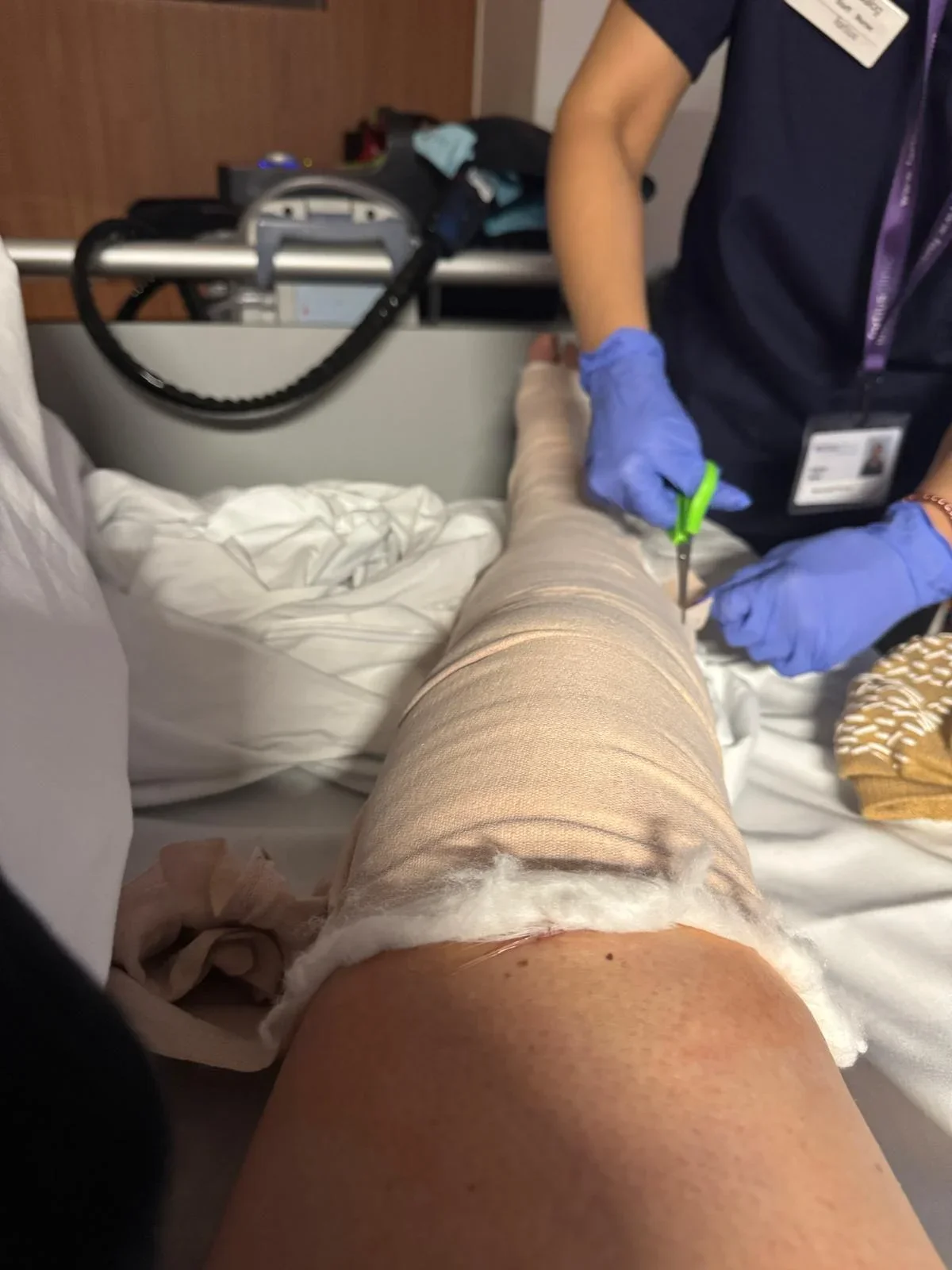
One thing patients dread disproportionately is having staples removed. The skin is so numb post-operatively that it is almost painless. The anticipation is considerably worse than the procedure itself.
Sarah's recovery milestones:
Six weeks: returned to work as a practising physiotherapist
Twelve weeks: cycling her London commute
Eight months: started a Couch to 5K running programme
Twelve months: back on skis
Her clearest advice: your life needs to fit around this operation for the first three to four months, not the other way around. Twenty to thirty minutes of daily attention to your knee does not mean the gym every day. It means deliberate, managed effort: exercises, muscle stimulation, swelling management. Get the foundation right and the later stages follow.
Knee Replacement Recovery Time: What to Realistically Expect
Recovery is not linear, but the broad milestones look like this:
Weeks one to six: the most demanding phase. The knee aches and does not feel like yours yet.
Weeks six to twelve: the knee begins to feel more like yours. Most patients in desk-based work return to their jobs, though fatigue remains a factor.
Four to six months: moving with real confidence on most surfaces.
Nine months: most patients stop thinking about their knee every day.
Twelve months: those who have committed to rehabilitation have largely returned to the activities they had written off.
We are honest about this from the first appointment because over-optimistic timelines cause unnecessary anxiety. A year is a realistic full-recovery horizon for most active patients. It is not a year of struggle; it is a year of measurable, visible progress.
How Often Will You Need Physiotherapy After Knee Replacement?
A typical treatment schedule looks like this:
Weeks one to two: remote via video consultation
Weeks three to six: weekly clinic appointments in Mayfair
Weeks six to twelve: fortnightly in clinic with video check-ins between
Ongoing: monthly reviews until you have met your functional goals
Budget for around twenty sessions as a minimum. For patients returning to sport or high-demand activity, more will be needed. Most insurance policies cover only a fraction of this: Bupa typically funds ten to fifteen sessions on a major post-operative case. Under-rehabbing a knee replacement is a false economy.
If you have a personal trainer, we share your programme with them so they can support you between sessions. They cannot replace clinical oversight, as they will miss the details that determine whether you are progressing safely, but the two roles work well in parallel.
When to Come to Us
Come to us at any of these stages:
Before your operation, if you have a date scheduled and want to prepare properly
Immediately after surgery, to begin rehabilitation with a team that understands what each stage demands
Months post-surgery, if you have stalled. Plateauing after knee replacement is common when protocols have been too passive, and it is rarely too late to make meaningful progress.
We work closely with leading orthopaedic surgeons and consultants across London, including at OneWelbeck, Fortius, Grosvenor Orthopaedics, the London Orthopaedic Clinic, and HCA. If complications arise or your recovery raises questions that need a surgical opinion, we can arrange access quickly. You will never be left without a clear next step.

“Sarah has been fantastic with expert advice and getting me back to sport after my partial knee replacement. Thank you.”
Frequently Asked Questions
-
The first two to three weeks are genuinely painful. Stay ahead of the pain rather than waiting until it is severe before taking medication. Pain diminishes markedly by six weeks, though some aching and joint-line soreness can persist at three to four months, particularly after activity. The key distinction is between acceptable loading discomfort (a moderate ache that settles within a few hours) and pain that does not clear, which signals you have done too much. We teach you to monitor and interpret your knee's response from the very first session.
-
The programme evolves through phases. Early on: quad sets, straight leg raises, heel slides, and gentle range of motion work. As the knee settles: step-ups, mini squats, single leg calf raises, and glute and hip strengthening. For active patients later: hopping progressions and sport-specific exercises. What matters is not the individual exercises but the quality of progression and how carefully they are monitored. Generic exercise sheets do not cut it.
-
For many patients, yes, but it typically takes twelve months or more to achieve comfortably, and some find it permanently uncomfortable even when the knee is otherwise functioning well. Kneeling is not harmful to the prosthesis itself. We address it as a specific rehabilitation goal for patients who need it: gardeners, those who practise yoga or Pilates, patients with young children. Padding, technique, and gradual exposure all help.
-
In the first six weeks:
Prolonged sitting without moving
Long car journeys
High-impact activity and twisting movements
Swelling that does not settle overnight
In the medium term, high-impact sports are restricted until strength testing confirms readiness, typically at least nine to twelve months. Long-term, most surgeons advise against contact sport to protect the implant, though cycling, swimming, golf, skiing, and tennis are generally well tolerated. We give you specific guidance based on your goals rather than blanket restrictions.
-
If your goal is to return to sport, sustained physical activity, or a demanding job, yes. The evidence is clear that more intensive, supervised rehabilitation produces better outcomes. NHS provision after knee replacement is typically six to eight sessions. Most insurers fund ten to fifteen on a major post-operative case. Neither is close to the twenty-plus sessions comprehensive rehabilitation requires. The cost of under-rehabbing, in lost function, extended recovery time, and the risk of a second operation, is considerably greater than the cost of doing it properly the first time.
-
Yes. Prehabilitation strengthens the muscles around the knee before surgery, teaches you the movements you will need immediately post-operatively, and significantly reduces anxiety on the day. Patients who prehab recover faster, leave hospital sooner, and report better outcomes.
-
Most active patients are meaningfully better by three to four months and functionally recovered by six to twelve months. A full year is the realistic horizon for feeling genuinely back to normal. High-impact sport typically takes longer. The recovery is not linear; there are plateaus, and the pace varies considerably between individuals.
-
We use objective VALD dynamometry testing rather than time elapsed since surgery. You need to achieve ninety per cent of your non-operated side's strength before returning to high-demand activities. We also use functional hop testing and plyometric assessment to confirm the knee can handle dynamic load. The goal is to know with confidence that you are ready, not simply to hope that you probably are.
-
In most cases, no. We manage the first two weeks via video consultation. You film your exercises on a tripod, we watch and correct your form, and we check in every two to three days. You do not need hands-on treatment when your knee is still at thirty degrees and inflamed. You need guidance and monitoring, both of which we deliver remotely.
-
Yes. Plateauing after knee replacement is extremely common when post-operative programmes have been too passive or too generic. We see patients who are months or even years post-surgery and have never fully regained the function they expected. A reassessment, objective VALD strength testing, and a structured plan from where you currently are can make a significant difference even at that stage.
Book Your Knee Replacement Assessment in Mayfair
Whether you are preparing for surgery, recently post-operative, or stuck in a plateau months down the line, we can help you move forward.
If you prefer to reach us directly: