
Knee Conditions
Anterior Knee Pain, Patellofemoral Syndrome, and Patella Subluxation Treatment in Mayfair, London
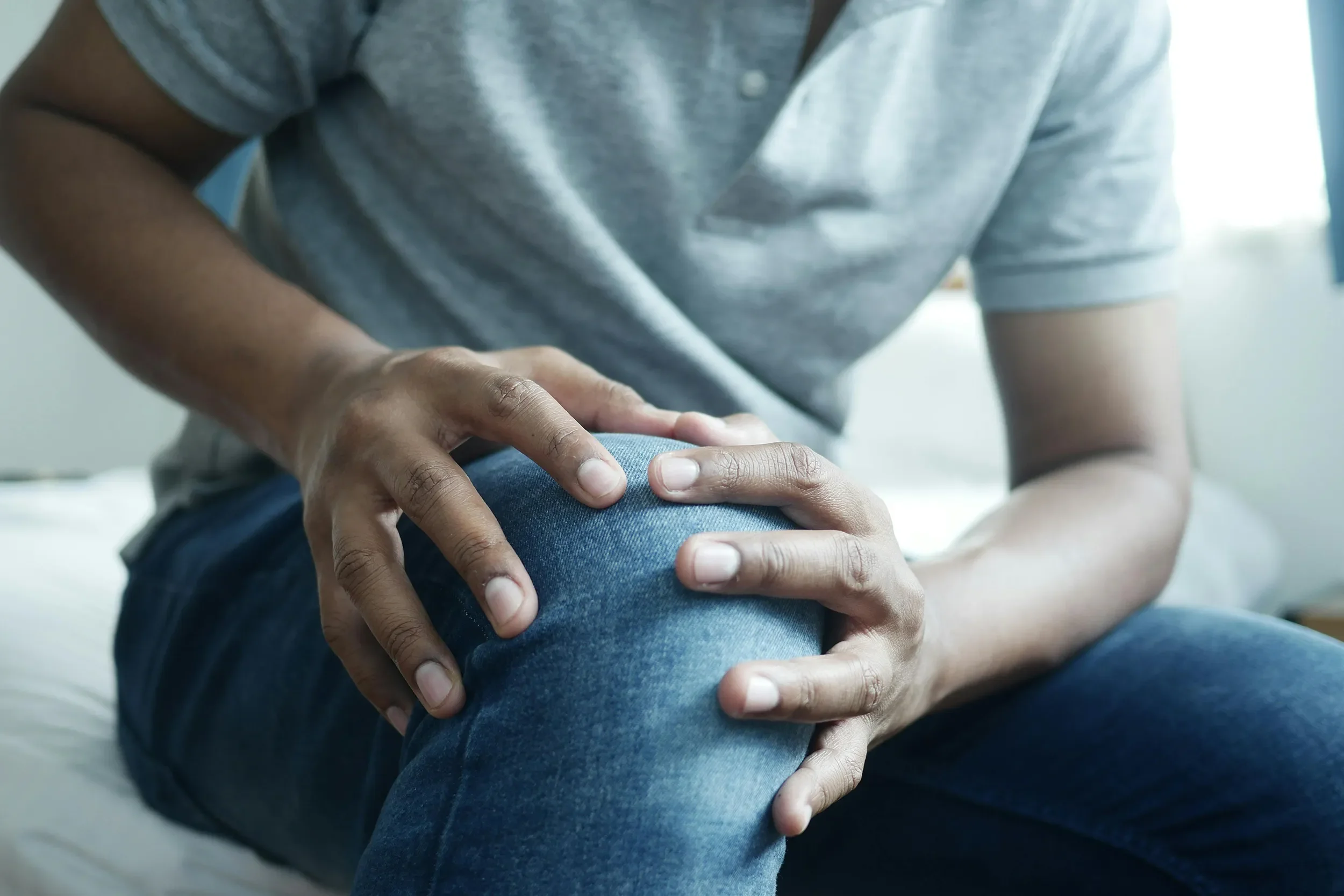
The knee joint is a hinge joint between two areas that rotate - the hip above and the foot below - and the most common reason knee pain treatment fails is that practitioners treat the just the knee joint, rather than the underlying cause that is driving it.
At Physio Remedies, we assess and treat the whole system and not just your joint pain. Our specialist knee physiotherapists have managed knee injuries at the Olympic Games, Commonwealth Games, and with professional rugby including the Barbarians, and two of our physiotherapists bring something beyond clinical expertise: Sarah has been through a knee replacement herself, and Phil has recovered from a torn meniscus requiring arthroscopy. We also have direct access to London's leading orthopaedic surgeons and sports medicine physicians - if you need imaging, an injection, or a surgical opinion, we can usually connect you with the right specialist within 48 hours.
Understanding the Conditions
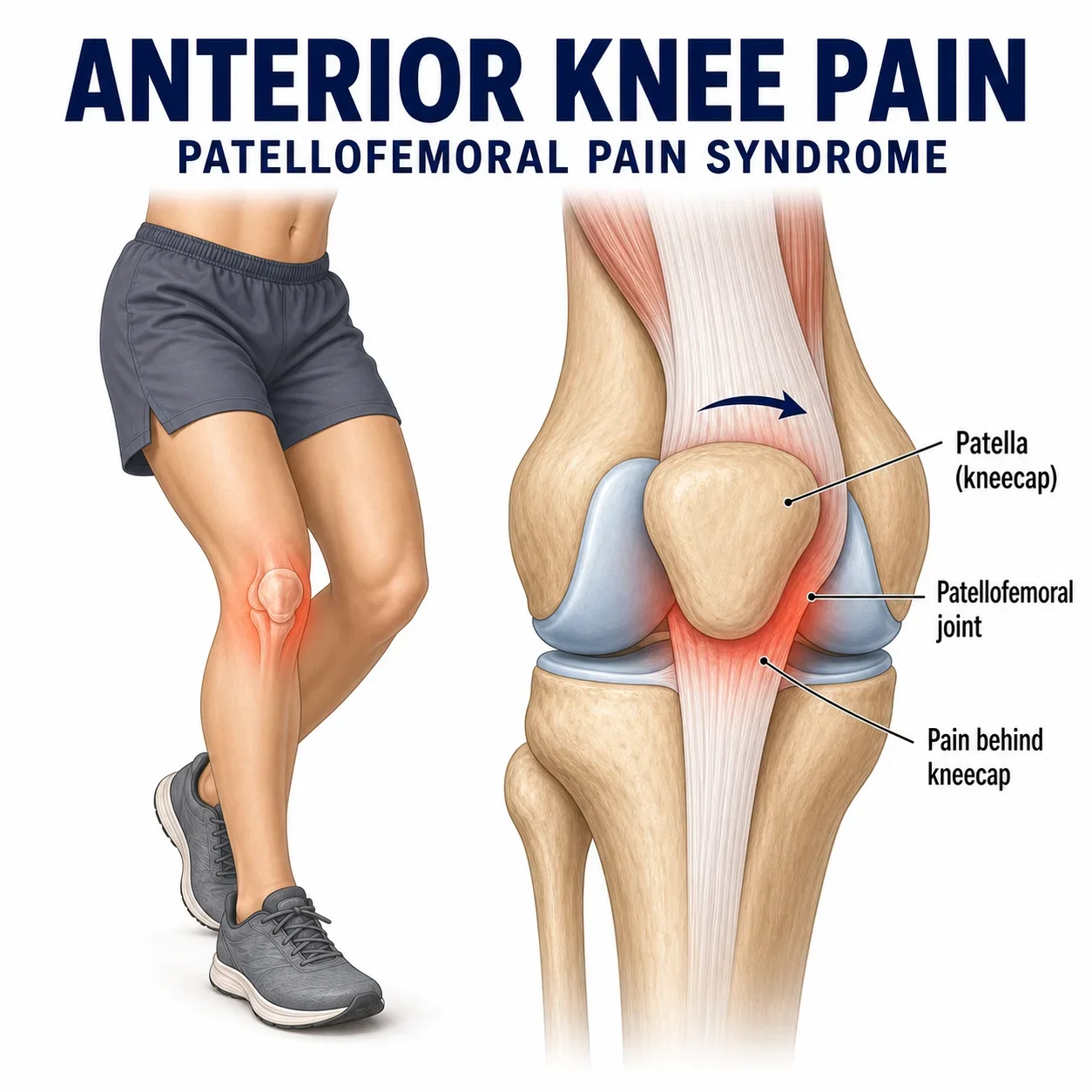
Anterior knee pain is a broad term for pain at the front of the knee. It describes where symptoms are located rather than a specific diagnosis, and it covers several different structures and causes. Most cases involve the patellofemoral joint, but fat pad irritation, patellar tendinopathy, and bursitis can all produce pain in the same region. Accurate diagnosis matters because the treatment for each is different, and treating the wrong structure is the most common reason anterior knee pain does not resolve.
Patella subluxation is a different and more specific problem. The kneecap partially slides out of the trochlear groove, usually outwards towards the lateral side of the knee, before returning to its normal position. Unlike a full dislocation, which is an acute emergency, subluxation can be subtle and may go unrecognised for some time. Subluxation produces a characteristic feeling that the kneecap is shifting or giving way, often with associated apprehension during activities that load the knee in flexion. Kneecap instability of this kind is more common in younger patients, in hypermobile individuals, and in those with anatomical factors such as a shallow trochlear groove or a relatively high-riding kneecap.
Patello femoral pain syndrome, or PFPS, is the most common specific diagnosis within anterior knee pain. It describes patellofemoral joint pain arising from the kneecap not tracking smoothly through the trochlear groove under load. The result is increased pressure on the cartilage surfaces and surrounding tissues, producing a characteristic pattern: worse going downstairs, worse squatting, worse after prolonged sitting — sometimes called the cinema sign — and often accompanied by a sensation of grinding or clicking behind the kneecap. Patellofemoral pain syndrome treatment responds well to physiotherapy when it addresses the specific cause of the tracking problem rather than simply strengthening the quadriceps (thigh muscle) in isolation. Most patients with PFPS who receive appropriately targeted rehabilitation do well.
PFPS is sometimes called runner's knee, though this term is also used for IT band syndrome. The distinction matters because the two conditions feel different, affect different parts of the knee, and respond to different treatments. Kneecap pain when running that is felt around or behind the kneecap is more likely to be patellofemoral in origin, whereas pain on the outside of the knee after a set distance is more typical of IT band syndrome.
Fat Pad Impingement
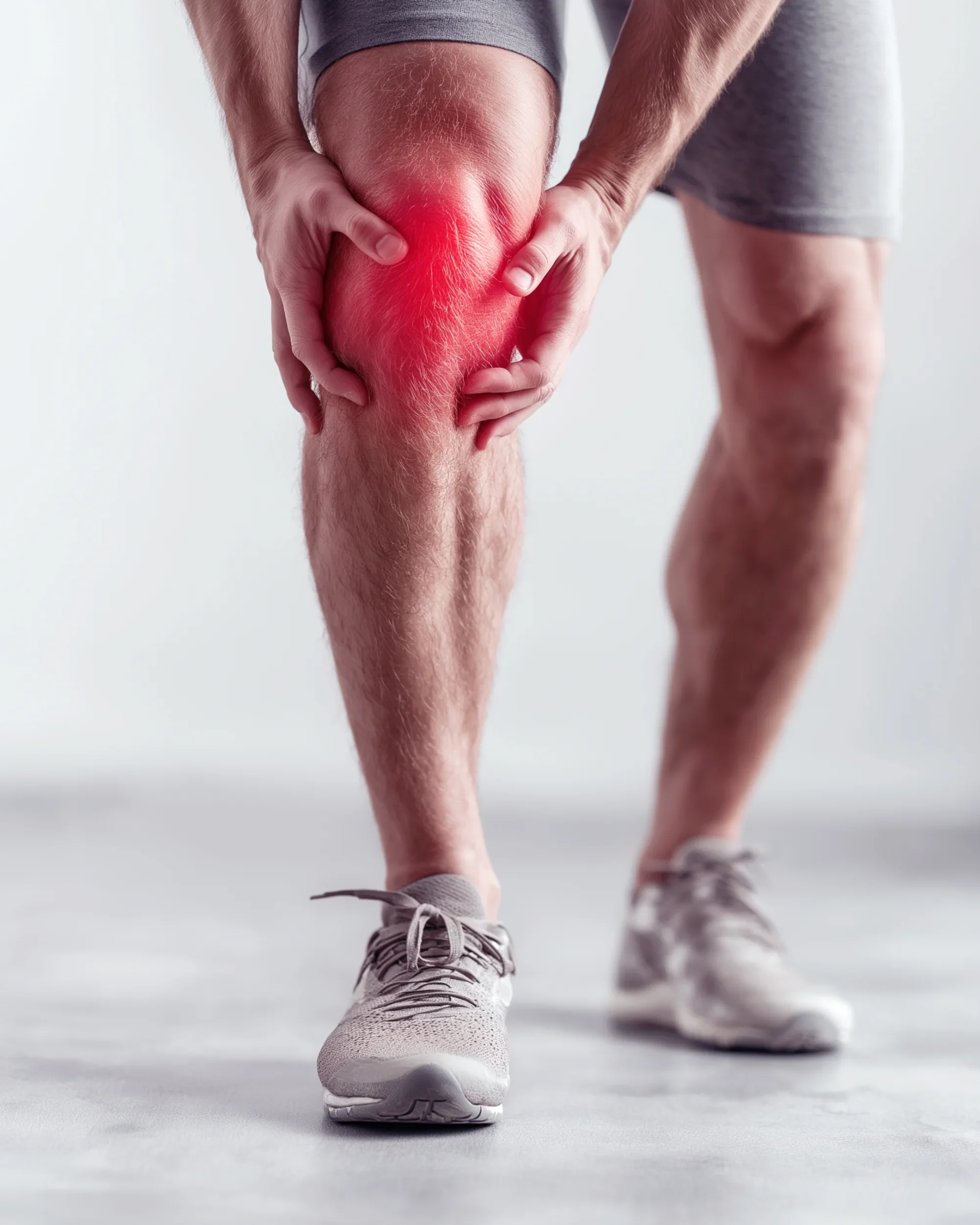
The infrapatellar fat pad, also known as Hoffa’s fat pad, sits just below your kneecap, behind the patellar tendon. It is one of the most nerve-rich structures in the knee, so when it is repeatedly pinched as the knee straightens fully or pushes back beyond straight, it hurts out of all proportion to its size.
The pain sits below the kneecap rather than behind it, often with a soft puffiness either side of the tendon. Unlike PFPS, it is typically worse when you stand with your knees braced back, straighten the leg forcefully or kick, rather than after sitting. It is common in people whose knees extend past straight, after a fall onto the knee, and following arthroscopy or ACL reconstruction.
Fat pad impingement is often treated as PFPS or patellar tendinopathy, and the strengthening that suits those conditions, particularly in full extension, keeps pinching the fat pad. We calm it first by changing the positions that compress it, using specific unloading tape and adapting your exercise, then rebuild quadriceps and hip strength progressively. Recent irritation often settles within a few weeks.
Do You Recognise Your Situation?
-
Knee pain behind the kneecap that is worse on stairs or after sitting.
The classic presentation of patellofemoral joint pain and PFPS. Going downstairs tends to be more painful than going up because descending loads the patellofemoral joint at a greater angle. Prolonged sitting with the knee bent produces a dull ache that eases when you stand and move.
-
Kneecap pain when running or cycling that has not responded to rest.
Anterior knee pain and PFPS are common in runners and cyclists because both activities produce repetitive patellofemoral loading. If the loading pattern driving the problem is not addressed, rest removes the pain temporarily without removing the cause.
-
A feeling that your kneecap shifts or gives way during sport or everyday movement.
This is the defining symptom of patella subluxation. It may be accompanied by a brief sharp pain and immediate apprehension about loading the affected leg. Many patients describe an instinctive avoidance of positions or activities that have previously caused an episode.
-
Apprehension about returning to sport after a kneecap dislocation or subluxation.
That apprehension is clinically meaningful and is part of what we assess and address in rehabilitation, not a psychological barrier to be dismissed. We assess functional readiness through objective testing before clearing any patient to return to sport after a patella instability event.
-
Front knee joint pain that has been present for months without a clear diagnosis.
Persistent anterior knee pain that has not been accurately diagnosed is often the result of treating symptoms rather than cause. We will establish what is driving your knee pain before we treat anything.
Why Anterior Knee Pain and PFPS So Often Persist
The most common failure in treating patellofemoral pain syndrome is focusing on the kneecap rather than the reasons it is not tracking correctly.
The kneecap sits in the trochlear groove and is guided through it by a complex balance of forces from the muscles and soft tissues around it. The vastus medialis oblique, the VMO, is the innermost part of the quadriceps and plays a key role in pulling the kneecap medially during movement. Weakness in the VMO relative to the outer quadriceps, tightness in the lateral retinaculum and iliotibial band, and most importantly, weakness in the hip abductors (such as gluteus medius) and external rotators all contribute to the kneecap being pulled laterally and loaded unevenly through the trochlear groove. The knee pain patients experience from this pattern is consistent and real, but it originates from these upstream causes rather than from the kneecap itself.
Generic quadriceps strengthening without addressing the gluteal weakness, and the movement patterns that are overloading the patellofemoral joint will produce partial and temporary improvement at best. This is why so many patients with anterior knee pain and PFPS have responded partially to previous physiotherapy only to relapse when they returned to training.
For patella subluxation, the picture is more complex. The medial patellofemoral ligament, the MPFL, is the primary soft tissue structure preventing the kneecap from sliding laterally. A subluxation or dislocation event stretches or tears the MPFL to varying degrees. Recurrence rates for patellar instability are around 40 per cent, with a greater risk following repeated episodes compared to a first event. Whether physiotherapy alone is sufficient to restore kneecap stability depends on the extent of MPFL damage, the anatomical characteristics of the knee, and the demands of the patient's sport. We will give you an honest assessment of where your knee sits on that spectrum, and give you specific exercises to continue to strengthen your knee during your treatment journey.
Our Approach to Patellofemoral Pain and Kneecap Instability
Accurate diagnosis first. Before treating anything, we establish what is actually causing your front knee pain. We differentiate between patellofemoral pain syndrome, fat pad irritation, patellar tendinopathy, and patella subluxation through careful clinical assessment. Where imaging is needed — for example to assess cartilage damage after a kneecap dislocation, or to evaluate trochlear depth in recurrent subluxation — we arrange it promptly through our specialist network.
Objective strength testing throughout. We use hand-held dynamometry to measure VMO activation and overall quadriceps strength between sides. This identifies the specific strength deficit driving the tracking problem and gives us measurable targets to work towards. For patients recovering from patella subluxation or dislocation, we apply the same 90 per cent strength symmetry threshold as our return-to-sport criteria for other knee conditions. Most patients presenting with recurrent kneecap problems have never had their VMO strength objectively measured.
Addressing the full movement picture. We assess hip abductor and external rotator strength, foot pronation, running gait, squat mechanics, and overall lower limb alignment — all of which influence patellofemoral joint loading. A runner whose knee collapses inward on each stride is loading the lateral facet of the patellofemoral joint excessively regardless of how much quadriceps work they do. We identify and correct those patterns, not just the local weakness.
Taping and bracing as adjuncts. Patellar taping to improve kneecap tracking can provide meaningful short-term pain reduction that allows rehabilitation to progress more comfortably. It is a useful adjunct, not a standalone treatment, and we use it where appropriate while working towards the muscular control that makes it unnecessary.
Managing patella subluxation conservatively. For a first-time subluxation without significant cartilage damage and without major anatomical risk factors, physiotherapy is the correct first line of treatment and produces good outcomes when done thoroughly. We manage the acute phase, restore range of movement, rebuild VMO and hip strength progressively, and use functional testing to confirm readiness before return to sport.
When surgical referral is appropriate. Not all cases of kneecap instability are manageable with physiotherapy alone. Recurrent subluxation despite thorough rehabilitation, significant MPFL damage on MRI, marked trochlear dysplasia, or a high-riding kneecap may point towards surgical intervention being the better long-term option. We work closely with orthopaedic colleagues who specialise in patellofemoral surgery, including MPFL reconstruction and tibial tubercle procedures, and we refer without delay when that is the right decision. You will always have a clear next step.

Our Experience
Anterior knee pain, patellofemoral pain syndrome treatment, and patella instability represent a significant part of what we treat at Physio Remedies in Mayfair. Our team has worked with athletes across contact sports, racket sports, and endurance sport where patellofemoral problems are a consistent clinical challenge, as well as with everyday patients in London whose knee pain behind the kneecap is stopping them from doing the activities they care about.
Our gym and rehabilitation facilities at the Lansdowne Club give us the space to progress rehabilitation from early VMO activation through to sport-specific plyometric and landing mechanics under supervision. That matters particularly for patients returning to sport after kneecap instability, where the quality of the final rehabilitation phase determines both confidence and recurrence risk.
Frequently Asked Questions
-
Anterior knee pain describes where it hurts. Patellofemoral pain syndrome describes what is wrong. The two terms are often used interchangeably, but the distinction matters clinically: anterior knee pain is a symptom — pain at the front of or around the kneecap — while PFPS is the specific diagnosis that explains why that pain is there. Not all anterior knee pain is PFPS. Fat pad irritation, patellar tendinopathy, and bursitis can all produce pain in the same location but require different treatment. Knowing that you have front knee pain is the starting point. Knowing that the cause is patellofemoral joint loading rather than a tendon or bursa is what allows us to treat it correctly.
-
No, though people often use the terms interchangeably. Chondromalacia refers to actual cartilage breakdown on the underside of the kneecap, which can only be confirmed on imaging or at arthroscopy. PFPS is a clinical pain syndrome — many people with significant patellofemoral joint pain have completely normal cartilage. Chondromalacia is one possible finding in some patients with anterior knee pain, not a synonym for the condition as a whole.
-
Often yes, with modifications to load and technique. The goal is to keep you active while reducing the patellofemoral joint loading driving your symptoms. We will give you specific and practical guidance based on your pain levels, how quickly symptoms settle after exercise, and what your training or race goals are.
-
Most cases respond significantly within six to eight weeks of a well-structured rehabilitation programme targeting the specific strength deficits involved. Cases that have been present for many months, or that have been inadequately treated previously, take longer — typically three to four months of consistent rehabilitation. The most important factor is whether the VMO and hip strength deficits are being specifically and progressively addressed.
-
It is significant rather than dangerous. The immediate concern after a subluxation or dislocation is potential cartilage damage, which is why imaging after a first event is sometimes warranted. The longer-term concern is recurrence, which physiotherapy can substantially reduce but cannot always eliminate. We will give you an honest assessment of your recurrence risk and what the realistic options are.
-
Not as a first step in most cases. First-time dislocation without major cartilage damage is managed conservatively with physiotherapy and produces good outcomes when done thoroughly. Surgical reconstruction of the MPFL becomes the more appropriate option for those with recurrent kneecap instability despite proper rehabilitation, or for those with anatomical factors that make conservative management unlikely to succeed long-term.
-
The medial patellofemoral ligament is the primary soft tissue structure that prevents the kneecap from sliding laterally out of the trochlear groove. It is almost always damaged to some degree in a patella dislocation event. In less significant injuries it heals adequately and provides sufficient restraint. In more significant injuries it stretches permanently and can no longer prevent re-dislocation. The extent of MPFL damage is one of the key factors that determines whether physiotherapy alone is likely to succeed in restoring kneecap stability.
Book Your Anterior Knee Pain Assessment
If knee pain behind the kneecap, front knee pain, or kneecap instability is limiting your sport, training, or daily life, an accurate diagnosis is the essential first step. Generic patellofemoral pain syndrome treatment without identifying the specific cause is the reason most cases do not resolve.
Your assessment at our Mayfair clinic costs £190 and lasts one hour. We will establish exactly what is driving your symptoms, explain it in plain language, and begin treatment in that same session.
If you prefer to reach us directly: