
Knee Conditions
ACL Surgery Rehab & Treatment in Mayfair, London
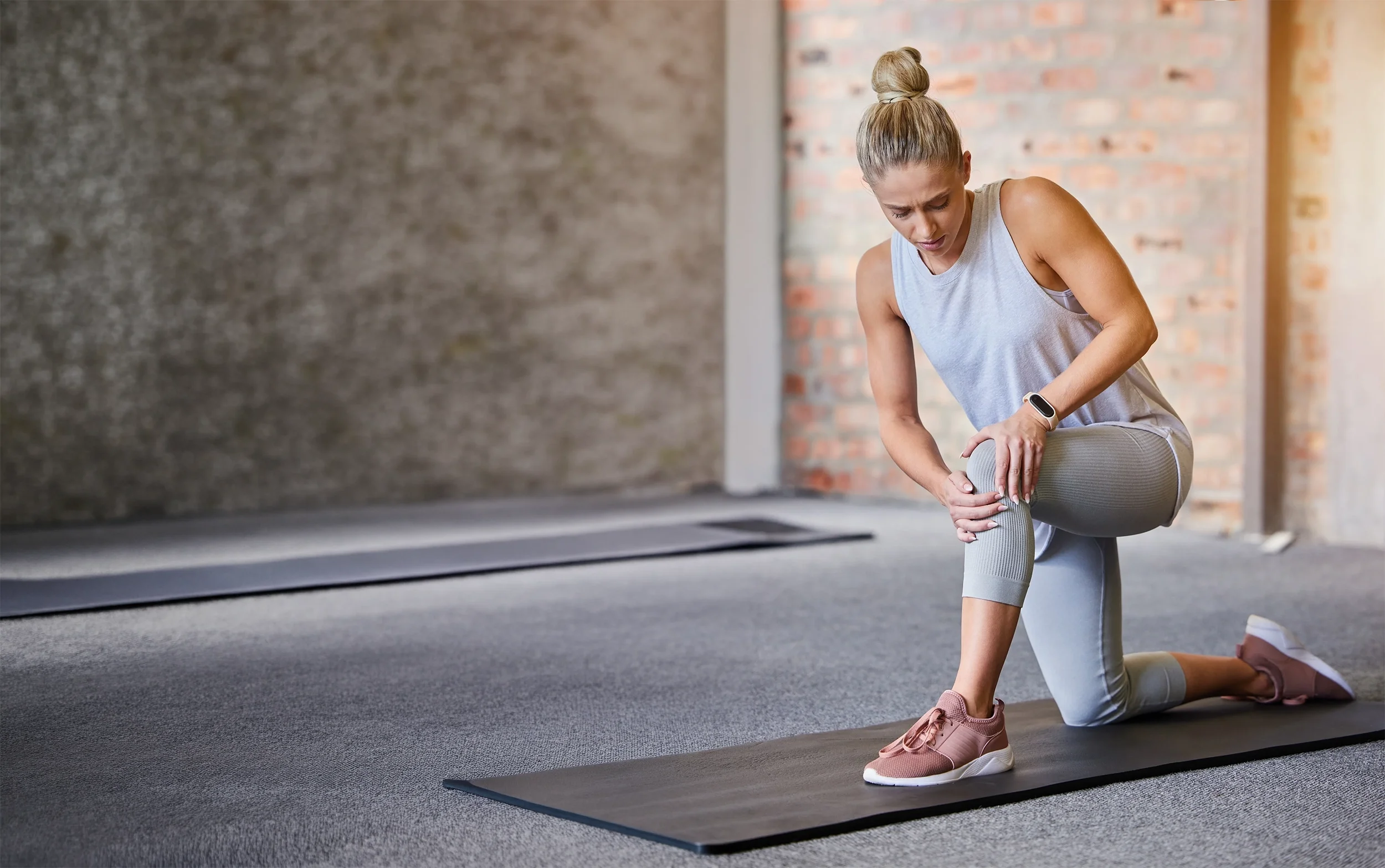
An ACL injury is one of the most disruptive things that can happen to an active person. The pop, the swelling, the sudden instability, and then the long road that follows: the questions about surgery, the commitment required, and the uncertainty about whether you will get back to the sport or activity you love.
At Physio Remedies in Mayfair, we see ACL patients at every stage: those who have just been injured and are trying to understand their options, those preparing for reconstruction surgery, those in the middle of post-operative rehabilitation, and those who have finished treatment elsewhere but have not got back to where they want to be.
We offer clinical honesty, objective testing throughout, access to a proper rehabilitation gym at the Lansdowne Club, and the sport-specific progression that most physiotherapy practices cannot provide.
What Is the ACL and What Does an ACL Tear Mean?
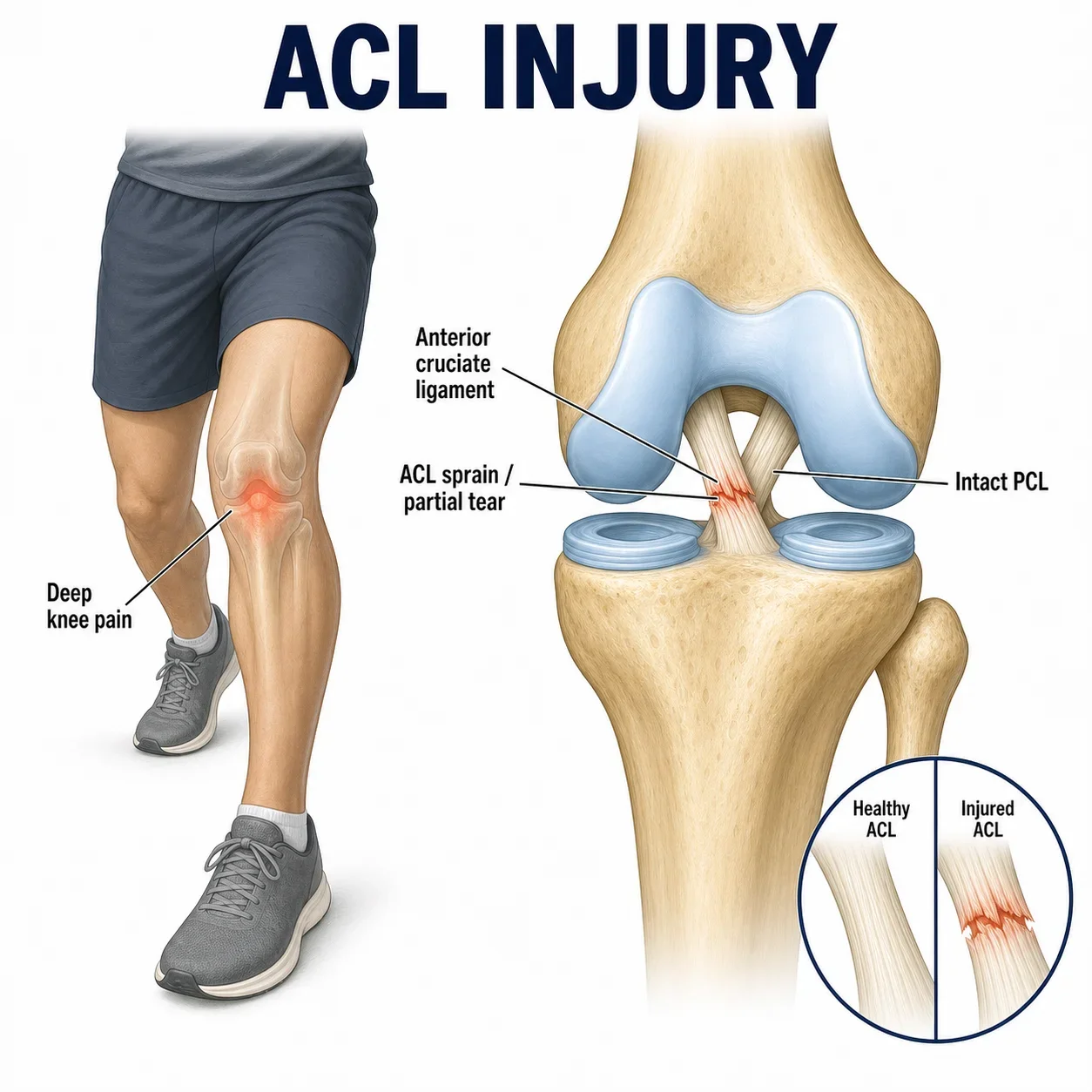
The anterior cruciate ligament (ACL) is one of the two main internal stabilisers of the knee. Its primary function is to resist anterior translation and rotation of the tibia on the femur: it stops the shin bone sliding forwards and rotating out of alignment with the thigh bone. It also plays an important role in proprioception, the brain's awareness of where the knee is in space.
The ACL sits in close anatomical relationship with the medial meniscus (the cartilage on the inner side of the knee), which is in turn connected to the medial collateral ligament (MCL). In the most severe cases, an ACL tear also involves the medial meniscus and MCL together, a combination known as the Unhappy Triad. When combined injuries are present, the rehabilitation and surgical decisions become more complex.
ACL injuries exist on a spectrum. A partial tear may present with less swelling and better immediate function than a complete rupture. This is why clinical assessment and imaging are essential before any decisions are made about treatment. Common signs of an ACL injury include:
A pop or crack at the moment of injury
Rapid, significant swelling within the first few hours
A feeling that the knee has given way or feels unstable
Loss of range of movement and significant pain in the first days
How Does an ACL Tear Happen?
ACL injuries fall into two broad categories. Intrinsic injuries occur through the individual's own movement, typically during deceleration with the lower leg turned outwards relative to the knee: sudden changes of direction, poor landings from height, and pivoting with a fixed foot are the classic mechanisms. Extrinsic injuries are caused by an external force, usually a blow to the outside of the knee.
The sports where ACL injuries most commonly occur are those involving rapid direction changes, jumps, and contact: football, rugby, netball, skiing, basketball, judo, and hockey among them. We also see ACL tears in recreational runners, gym users, and cyclists who have taken a fall.
Several biomechanical factors increase the risk, and addressing them is a core part of our rehabilitation approach:
Poor hip and trunk control, allowing the knee to collapse inwards under load
Tightness in the gastrocnemius (calf) muscle, altering load distribution at the knee
Misaligned resting posture of the lower limb, increasing shear stress on the ACL
Incompletely rehabilitated ankle injuries, which transfer load up the chain to the knee
Returning to sport without correcting these factors is a reliable route to re-injury.
What Does ACL Reconstruction Surgery Involve?
ACL reconstruction is a keyhole (arthroscopic) procedure to replace the torn ligament with a graft. The most common graft sources are the patient's own hamstring tendon, the patellar tendon (bone-patellar tendon-bone), or a donor graft. Your surgeon will advise which is most appropriate based on your age, sport, and anatomy. The new graft is anchored into tunnels drilled in the femur and tibia, and over the following months it undergoes a biological process called ligamentisation, gradually becoming a functioning ligament. This process takes time, which is why the rehabilitation timeline is long even when the knee feels fine earlier.
The operation itself typically takes 60 to 90 minutes and is performed under general or spinal anaesthesia. Most patients go home the same day. You will leave on crutches and with the knee in a brace or bandage. The post-operative period in hospital is brief; the work happens in the months of rehabilitation that follow.
Additional procedures are sometimes performed at the same time: meniscal repair or trim if the meniscus is damaged, MCL reconstruction if there is lateral corner involvement, or a lateral extra-articular tenodesis (LET) in patients with high rotational instability or a history of re-rupture. Your surgeon will discuss these possibilities based on your imaging and clinical findings.
Do I Need Surgery for an ACL Tear?
This is the question every patient asks. The honest answer is: it depends on who you are and what your knee needs to do. You do not need to decide immediately. A window of several months exists before reconstruction needs to happen, and using that time to get a proper diagnosis and settle the knee is the right approach.
Surgery is more likely to be the right choice if:
You play sports involving cutting, pivoting, or rapid directional changes at any meaningful level
You have combined injuries: significant meniscal damage, lateral corner instability, or MCL involvement alongside the ACL
After three months of dedicated rehabilitation the knee still gives way during activities that matter to you
You want long-term protection from the joint degeneration that persistent instability causes over time
Surgery may not be necessary if:
Your daily and sporting life does not require high-level pivoting or cutting movements
Your knee achieves adequate stability through rehabilitation and you can do the activities that matter to you without giving way
Your age, overall health, and activity goals suggest the risks of surgery outweigh the benefits
For patients aged 40 to 55 who want to ski hard for a few weeks a year, play recreational sport, or stay active without competitive demands, the conversation is more nuanced. Long-term instability does accelerate joint degeneration, which is a genuine argument for reconstruction even at that age. We work through this decision with you based on your goals and your knee, not a blanket recommendation.
Prehabilitation Before ACL Reconstruction Surgery
If reconstruction is the right decision for you, when you have it matters enormously. The single most important pre-operative principle is this: do not operate on a hot, swollen, angry knee. A knee going into surgery in that state produces significantly worse outcomes. You want a quiet knee: settled swelling, restored range of movement, and some degree of quad activation before the operation.
During ACL prehabilitation at our Mayfair clinic, we focus on:
Reducing swelling and restoring full range of movement
Re-establishing quad activation and basic lower limb strength
Building hip, glute, and core strength that will be critical during post-operative rehabilitation
Teaching you the early post-operative exercises before surgery so they feel familiar rather than daunting
Preparing you mentally: patients who understand the journey before it starts navigate it considerably better
ACL Surgery Rehab: Our Approach at Physio Remedies Mayfair
Our ACL rehabilitation programme follows evidence-based guidelines including the Aspetar and ACL Melbourne protocols, adapted to the individual in front of us. We use milestone-based progression, not time-based progression. You move to the next stage when your knee demonstrates it is ready, not when the calendar says so. The failure to apply this principle is one of the primary reasons patients end up re-injured or unable to return to sport.
Early post-operative phase (weeks zero to six)
Priorities in the first six weeks:
Swelling management and pain control
Restoring full knee extension as a priority: loss of extension in the early weeks causes lasting functional problems
Re-establishing quad activation and basic muscle control
Progressive weight-bearing and gait retraining
Education on how to monitor your knee's response to loading and what signals indicate you have done too much
We send patients home with Compex muscle stimulation as standard. In the early days you may not feel up to much: build up gradually, ten minutes at a time.
Blood Flow Restriction training
Blood Flow Restriction (BFR) training is one of the most significant advances in ACL rehabilitation in recent years. Working with leading BFR researcher Nicola Graham, we use protocols tailored to male and female physiology to maintain muscle activation from the very early stages of recovery, without loading the graft or the knee heavily. Five minutes on, two minutes off, two sets. We achieve considerably more, considerably earlier, than traditional rehabilitation allows. For patients who want to use BFR at home between sessions, we recommend the Hitero system: practical, evidence-based, and easy to self-manage.
Strength building phase (weeks six to sixteen)
This is where most ACL rehabilitations fail when underprescribed. The quad, hamstring, glute, and hip muscles need to be progressively and sufficiently loaded, not just exercised gently. We regularly see patients who have completed physiotherapy elsewhere with good range of movement and no swelling, but only 60 per cent of the force output of their non-injured side. They return to sport and either re-injure the ACL or sustain a secondary injury because the load protection was never there.
This phase includes:
Heavy slow resistance training for the quadriceps and hamstrings
Progressive single leg work: step-ups, split squats, single leg press, Romanian deadlifts
Glute and hip strengthening to address the biomechanical contributors to the original injury
Balance and proprioception training to restore the knee's positional awareness
Objective VALD dynamometry testing at regular intervals to measure strength output on both sides
Objective testing: the 90 per cent rule
We use VALD dynamometry throughout rehabilitation to measure quad and hamstring strength objectively, comparing your operated side to the non-operated side. The threshold is clear: 90 per cent of your non-operated side before you are safe to return to running or sport. Below that threshold, re-injury risk is substantial. We also use VALD ForceDecks for single leg hop for distance, triple hop, and plyometric assessments tested in a fatigued state to replicate match conditions. Passing strength testing when fresh and failing under fatigue is a known predictor of re-injury, so we test both.
End-stage rehabilitation and return to sport
Re-injury rates after ACL reconstruction are as high as 20 per cent within the first two years post-surgery in athletes who return prematurely, and approximately 6 to 9 per cent overall. The most common cause is returning before strength symmetry and functional readiness have been confirmed. This is the phase where rushing costs the most.
End-stage rehabilitation at our Mayfair clinic uses the Lansdowne Club gym, purpose-built for this kind of progressive, sport-specific work. You cannot do proper ACL end-stage rehab in a treatment room. The gym gives us the space to:
Run plyometric progressions: box jumps, single leg landing drills, reactive jump sequences
Assess and correct running mechanics using gait analysis, identifying compensatory patterns that increase re-injury risk
Run agility and sport-specific drills: shuttle runs, ladder drills, cone work, rapid directional change under load
Build neuromuscular control: the unconscious trained response of the muscles to protect the knee during dynamic movements
Perform full return-to-sport clearance testing including VALD dynamometry, hop tests, and the ACL-RSI psychological readiness scale
The day-one commitment
At the first session, we make a clear agreement with every patient: you do not finish rehabilitation until you can jump off a bench, land on one leg, turn, and sprint. When you can do that and you genuinely trust your knee, you are finished. Cut the rehabilitation short before that milestone, and the risk of re-injury is high.
We also use the ACL-RSI (Return to Sport after Injury) scale to formally assess psychological readiness before clearance. Physical capacity and psychological readiness do not always arrive together, and we do not clear a patient who is physically ready but mentally apprehensive about their knee. Both need to be in place.
Women and ACL Injuries
Higher injury rates in female athletes.
Female athletes sustain ACL injuries at a significantly higher rate than male athletes in equivalent sports, driven by differences in neuromuscular control, muscular strength relative to joint load, biomechanical alignment, and the effects of hormones on ligament laxity. This is not a reason to avoid sport; it is a reason to ensure rehabilitation uses protocols adapted for female physiology and addresses the specific biomechanical contributors.
The daily commitment.
There is a pattern we see regularly in female patients that is worth naming honestly. Women managing jobs, children, and the demands of other people's lives often deprioritise their own recovery without realising it. ACL rehabilitation requires a consistent daily commitment over several months. This is not negotiable if you want to return to sport safely. We understand the pressures, and our approach is to work with your life rather than against it, but the commitment itself cannot be shortened.
Female-specific BFR protocols.
We use BFR protocols specifically adapted for female physiology, developed in collaboration with researcher Nicola Graham, whose current work includes PhD-level research on female endurance athletes. Female occlusion levels differ from male, and applying male protocols to female patients is not best practice.
Hormonal factors.
For perimenopausal and menopausal patients, hormonal changes affecting ligament quality and inflammatory load are additional factors we account for in the treatment approach.
ACL Reconstruction Recovery Time: What to Realistically Expect
A year is the honest answer for most patients. We say this at the first appointment, not to be discouraging, but because patients who go in expecting six months and find themselves at nine months without full function become anxious and frequently return to sport before they are ready. The milestones below are approximate: everyone progresses at a different rate.
Weeks zero to six: swelling management, quad activation, restoring extension, basic weight-bearing
Weeks six to sixteen: progressive strengthening, single leg work, VALD testing milestones, introduction of running when criteria are met
Months four to nine: sport-specific loading, plyometrics, agility work, running progression
Months nine to twelve: full clearance testing, psychological readiness assessment, graduated return to training and competition
Twelve months: most patients are back in full training and have stopped thinking about their knee every day
Elite athletes with intensive daily rehabilitation support may return to competitive sport at nine months. For recreational athletes playing pivoting sport, plan for a year. These are not arbitrary timelines: they reflect the time the graft needs to remodel and the muscle mass needs to rebuild to the threshold that protects it.
How Often Will You Need ACL Physiotherapy in London?
A typical ACL rehabilitation schedule with us:
Weeks zero to six: weekly clinic appointments in Mayfair
Weeks six to twelve: fortnightly in clinic, with a home programme between
Months three to nine: monthly reviews alongside independent gym-based programming
Return-to-sport phase: more frequent sessions during testing and sport-specific drills
Budget for a minimum of twenty sessions. Most insurance policies cover far fewer: Bupa typically funds ten to fifteen sessions on a major post-operative case; Cigna International and Bupa International tend to be more generous. We are recognised by all major insurers including Bupa, AXA, and Cigna International. The gap between what insurance covers and what comprehensive rehabilitation requires often has to be self-funded. Under-rehabbing to save money is a reliable route to re-injury, which costs considerably more in the long run.
If you have a personal trainer, we share your programme with them. They keep you motivated and help you execute the plan between clinic appointments. What they cannot do is replace clinical decision-making: the details of load management, graft protection, and readiness testing require physiotherapy expertise.
When to Come to Us
We treat patients at all stages of an ACL injury, from the day of injury through to return to sport. We also see patients who play football, rugby, netball, skiing, basketball, judo, and contact sports where ACL injuries are most prevalent, and those from recreational sport and gym training. Come to us at any of these points:
Immediately after injury: for clinical diagnosis, advice on the surgery decision, and early management
Pre-operatively: for prehabilitation to get the knee into the best possible state before reconstruction
Immediately post-operatively: to begin structured ACL surgery rehab from the start
Mid-rehabilitation: if you feel you have plateaued or your current physiotherapy is not progressing you towards sport
Post-rehabilitation: if you have been cleared but cannot get back to your sport or do not trust your knee under load
We work closely with leading orthopaedic knee surgeons across London, including at OneWelbeck, Fortius, Grosvenor Orthopaedics, the London Orthopaedic Clinic, and HCA. If you need a surgical opinion, imaging, or rapid onward referral, we can arrange that quickly.
What to expect at your first appointment
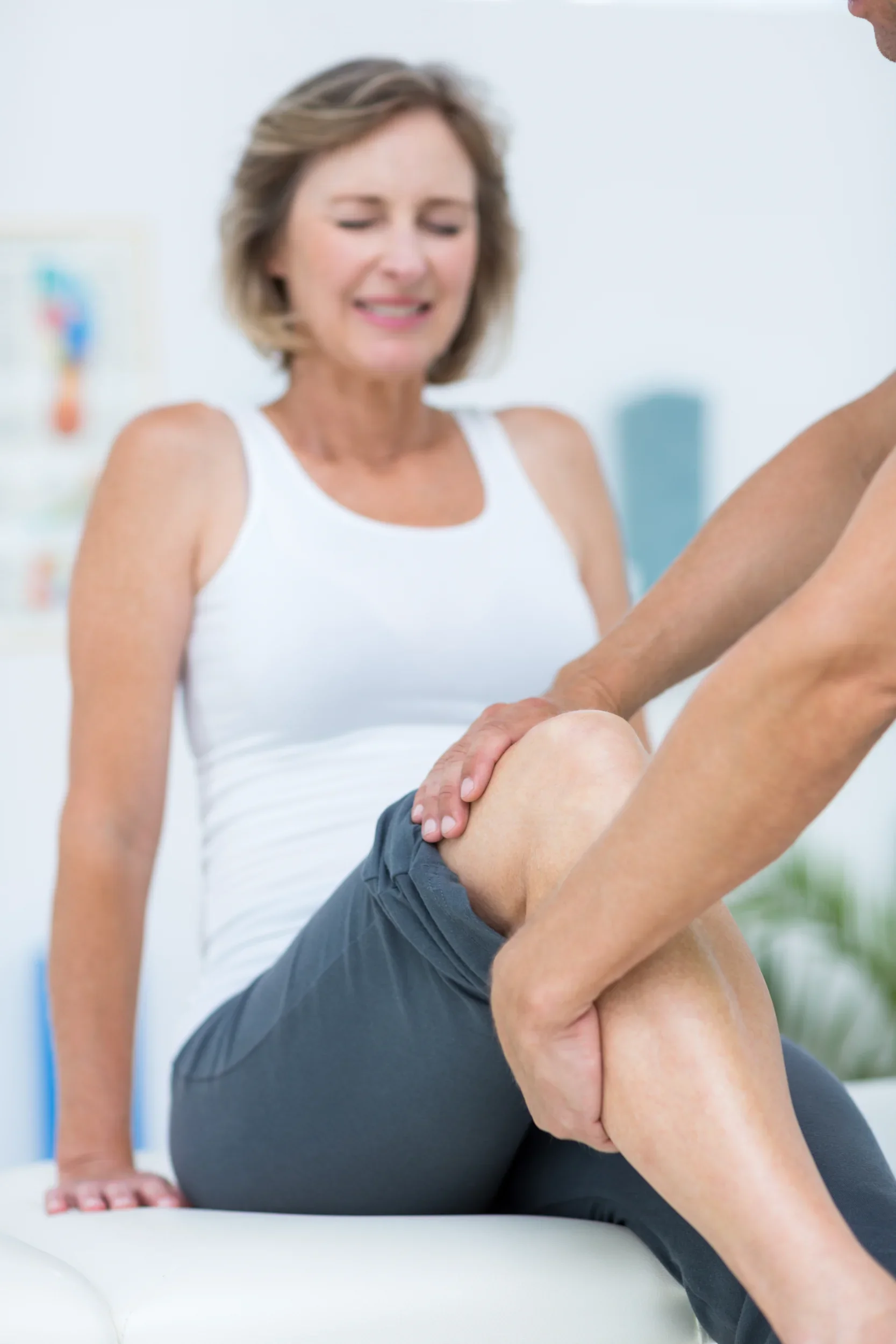
Your first appointment lasts one hour. We take a full history of the injury and your activity goals, perform a clinical assessment of the knee including stability testing and range of movement, and review any imaging you already have. We then give you a clear explanation of what has happened, what your options are, and what the realistic pathway forward looks like. We begin treatment in that same session. You will leave with a clear plan, not just a diagnosis.

“Sarah Lawson is a very experienced sports physio, determined to help you to not only get better, but also back to whatever sport you enjoyed before the injury. In my case she was determined to get me back on skis. I had to have numerous operations on the same knee before I could even have the ACL repaired. There were times I felt like giving up but Sarah kept me positive and working through exercises I thought I wouldn’t be able to do , Throughout the long recovery she was patient and encouraging but also knew exactly how much to push me to get me to through those exercises. And I did get back on skis ! Thank you Sarah!”
Frequently Asked Questions
-
Not necessarily. It depends on the severity of the injury, whether other structures are involved, and what your activities require. Many patients whose sport does not involve high-level pivoting or cutting achieve excellent function through rehabilitation alone. For those who play contact or pivoting sport, or have combined injuries, surgery is usually the right choice. You have a window of several months before reconstruction needs to happen, and using that time to get a proper diagnosis and settle the knee is the right approach.
-
A year for most patients. At nine months, most stop thinking about their knee every day. At twelve months, most are back in full training. Elite athletes with intensive daily support may return to competitive sport at nine months. Going back earlier than the graft and strength thresholds allow is the primary driver of re-injury.
-
When you can pass the objective clearance criteria, not when a set number of weeks has elapsed. You need 90 per cent of your non-operated side's strength on VALD dynamometry, single leg hop and triple hop tests within 10 per cent of the other side in a fatigued state, and demonstrated psychological readiness on the ACL-RSI scale. When all three are met, you are ready.
-
For some patients, conservative management is entirely appropriate and produces excellent long-term function. For others, persistent instability causes progressive cartilage and meniscal damage that becomes more complex to treat over time. The practical test: after three months of dedicated rehabilitation, can you do the activities that matter to you without your knee giving way? If yes, surgery may not be necessary. If not, the argument for reconstruction becomes considerably stronger.
-
Yes. Female athletes sustain ACL injuries at a higher rate than male athletes in equivalent sports, driven by differences in neuromuscular control, lower limb biomechanics, and hormonal effects on ligament laxity. This is a reason to ensure ACL rehabilitation uses female-specific protocols, addresses the biomechanical contributors, and accounts for hormonal context including menopausal status.
-
Physiotherapy in the weeks before reconstruction, focused on getting the knee into the best possible condition for surgery: swelling settled, full range of movement restored, quad activation established. A quiet knee consistently produces better post-operative outcomes than operating on a hot, inflamed joint. Patients who prehab also find the early rehabilitation less daunting because they already know the exercises.
-
A non-surgical management option involving twelve weeks in a brace to encourage natural ACL healing. Our physiotherapist Naomi holds certification in the protocol. The evidence base is still developing and expert opinion is divided. It is a legitimate option for patients strongly averse to surgery who will commit fully to the protocol. For most patients wanting to return to pivoting sport, reconstruction currently has the stronger evidence base.
-
Re-injury rates are as high as 20 per cent within the first two years post-surgery among athletes who return prematurely, and approximately 6 to 9 per cent overall. The primary cause is returning before strength symmetry has been confirmed. Objective clearance testing, not elapsed time, is the only reliable protection against this.
-
No. We can assess you clinically and, if findings indicate an ACL injury, arrange or recommend appropriate imaging. If you already have an MRI report, bring it: we will interpret it alongside what we find clinically. A scan tells us about structure; our assessment tells us about function.
-
Yes. This is one of the most common presentations we see: patients with good range of movement and no swelling who cannot bridge the gap back to running at pace, changing direction, or trusting the knee under load. A reassessment, VALD strength testing, and a sport-specific plan from where you currently are can make a significant difference. The gap between basic function and return to sport is precisely where we specialise.
A Patient's Experience
"Undergoing ACL treatment was challenging, but Naomi made a huge difference in my recovery. The great care, psychological support, and dedicated training plan really helped me get my strength and confidence back. Looking forward to going back to sports soon."
Ambra, Physio Remedies patient
Book Your ACL Assessment in Mayfair, London
Whether you have just been injured, are preparing for surgery, are mid-rehabilitation, or cannot bridge the gap back to your sport, we can help you move forward.
If you prefer to reach us directly: