

Hip & Groin Conditions
Hip Osteoarthritis & Total Hip Replacement Rehabilitation in Mayfair, London
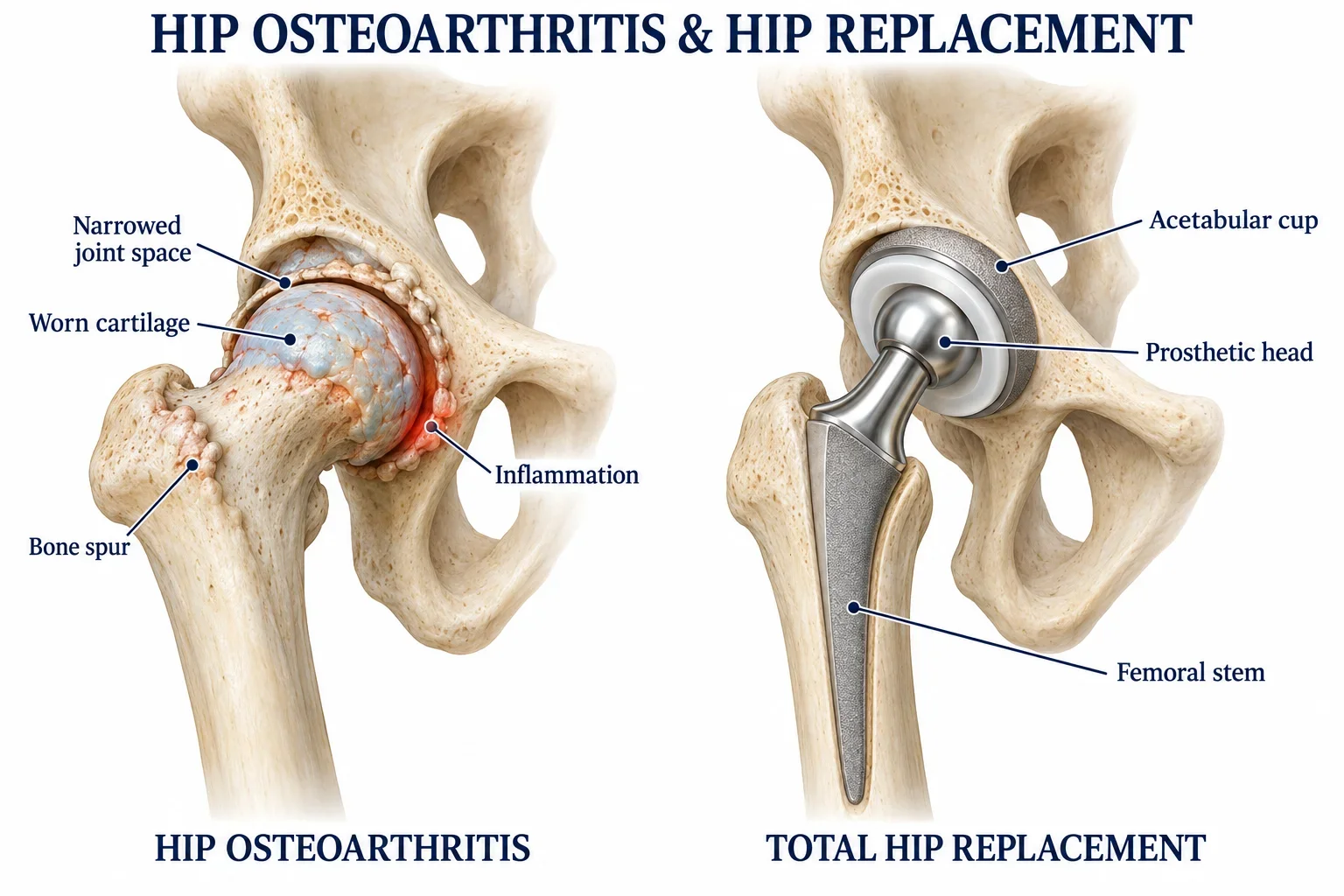
At some point, everyone with significant hip osteoarthritis asks the same question: how long before I need a new hip? It is not always asked out loud, and it is rarely answered honestly. The orthopaedic system tends toward a binary: manage it conservatively or book the surgery. What gets lost in that conversation is that physiotherapy is not simply the conservative option you try before surgery. It is the intervention that determines how well you function in the months you are waiting, how much better you arrive at the operating table, and how completely you recover on the other side.
We treat hip osteoarthritis and total hip replacement rehabilitation as a continuum rather than two separate clinical problems. Some patients come to us still in the managing phase, trying to defer surgery as long as possible or trying to understand whether they are genuinely at the point where it is the right decision. Some are preparing for surgery that has been scheduled. And some have had their hip replaced and have reached the limit of what a sheet of hospital exercises was going to achieve. In each case the clinical approach is different. The standard of care is the same.
Living With Hip Osteoarthritis: Why Exercise is the Treatment, Not the Preparation for Treatment
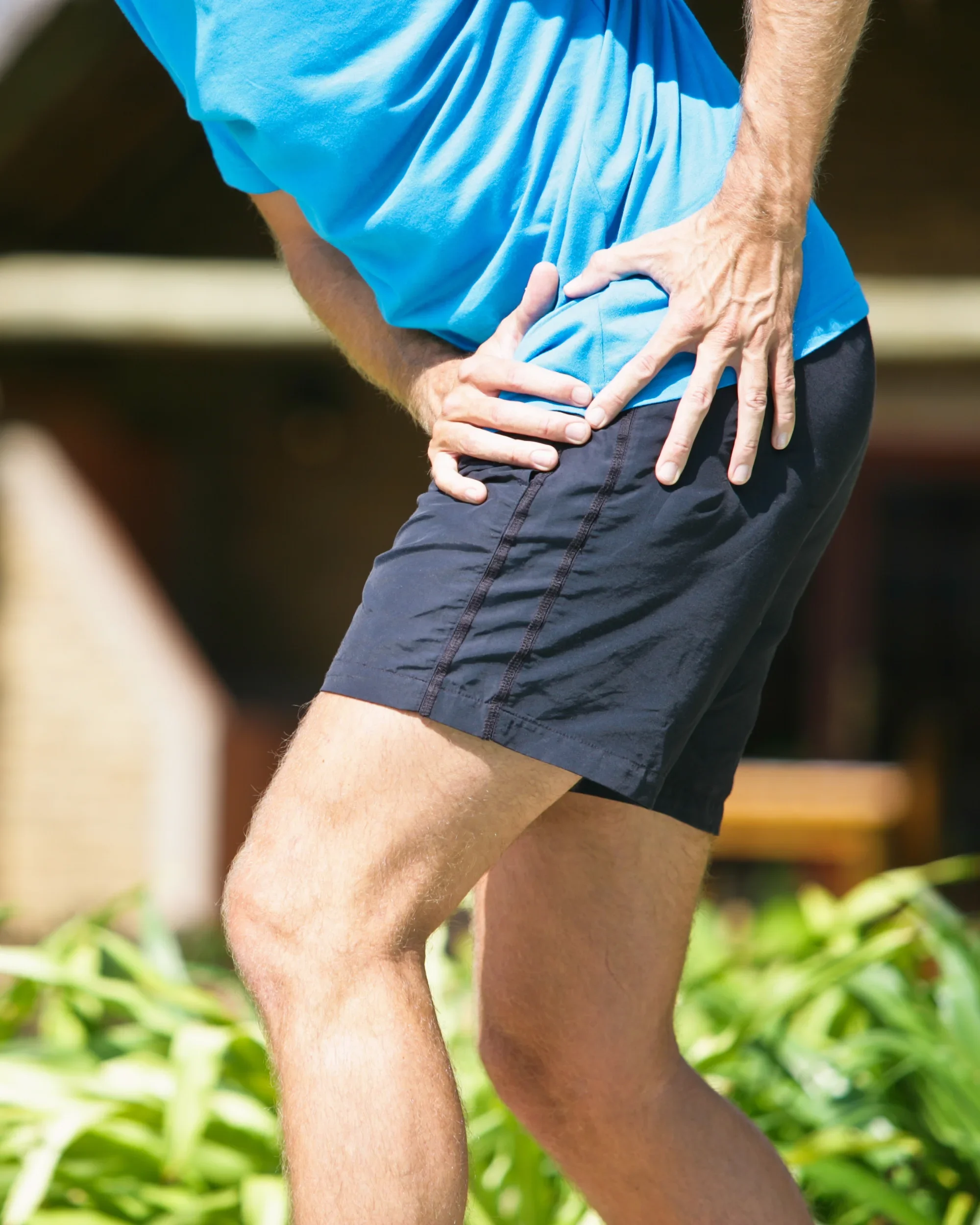
If your hip is painful, stopping activities that aggravate it is a reasonable short-term instinct. As a long-term strategy it accelerates the problem. Hip osteoarthritis is painful partly because of the joint changes, and substantially because of the muscle weakness and altered movement patterns that develop around a joint that is being protected. The hip abductors, the muscles running from the pelvis to the outer thigh, are the primary load managers of the hip during walking and single-leg activities. When they weaken, more force goes through the joint with every step. The pain worsens, the patient moves less, the muscles weaken further. The cycle is reliable and it runs in one direction unless something interrupts it.
Exercise interrupts it. The evidence base for physiotherapy in hip osteoarthritis is not ambiguous: structured strengthening reduces pain, improves function, and delays the progression to surgery. This is not a consolation prize while you wait for an operation. It is an active treatment with measurable outcomes. We test hip abductor and quadriceps strength using VALD dynamometry at your assessment, which gives us the specific deficits rather than impressions. The programme we build addresses those deficits directly, progresses systematically, and is monitored at every session. Patients who have previously been given a generic hip exercise sheet and found it ineffective find this a significantly different experience.
We also address what is happening above and below the hip. Stiffness in the lumbar spine, weakness in the knee, and altered foot mechanics all change how load reaches the hip joint. A programme that treats the hip in isolation without examining these contributions will consistently underperform. We assess the whole picture and treat what we find.
Before Surgery: Why Prehabilitation Changes Your Outcome
The standard advice before a hip replacement is to stay as active as possible. That is not the same as prehabilitation, and the difference is clinically significant. Patients who arrive at surgery having completed a structured prehab programme have stronger hip abductors, better cardiovascular reserve, and are already familiar with the post-operative exercises. They discharge from hospital faster, report better function at three months, and are less frightened of movement in the immediate post-operative period because they have already been doing the exercises and understand what the precautions actually mean.
Our prehab programme begins six to twelve weeks before surgery where scheduling allows. It sets specific strength targets for the hip abductors and quadriceps, builds cardiovascular capacity, reviews the home environment and any equipment that will be needed at discharge, and teaches the early post-operative exercise programme before surgery so it is already embedded. If your surgery is imminent and six weeks is not available, we start immediately and cover as much ground as the time permits. The conversation about what to expect post-operatively, the precautions specific to your surgical approach, and how the rehabilitation will progress is also part of this phase. Patients who have had that conversation in advance recover with noticeably less anxiety.
After Surgery: What Hip Replacement Gives You and What Rehabilitation Builds
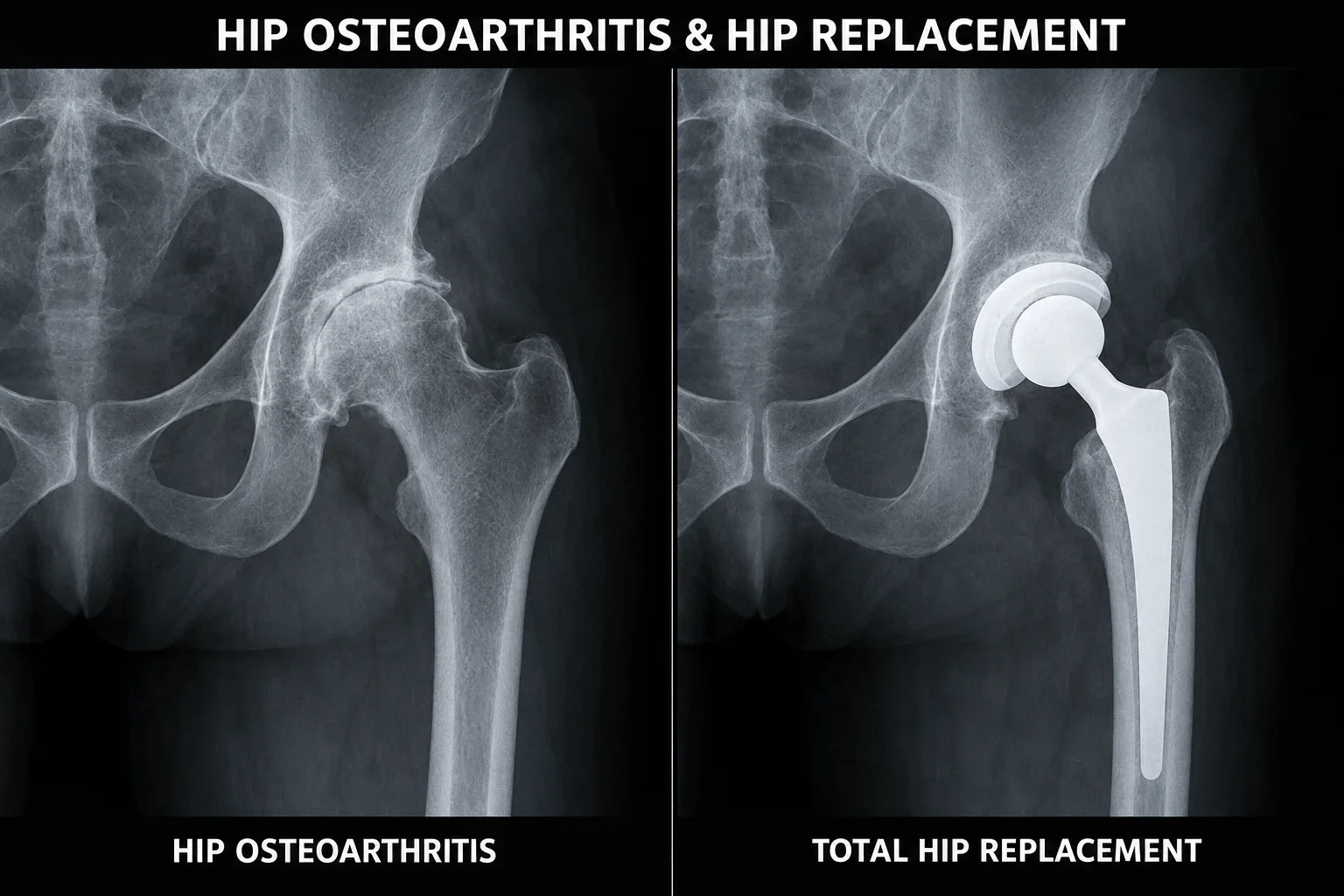
A total hip replacement reliably eliminates the joint pain of osteoarthritis. Patients who have lived with significant hip OA for years are often genuinely amazed at how quickly the pain from the joint itself resolves. This is the surgery working as intended, and it is worth acknowledging. What surgery does not deliver automatically is the hip abductor strength, the normal gait pattern, and the confidence to load the hip fully that are needed for the functional recovery patients expect. THA alone does not typically normalise function, and post-operative rehabilitation is recommended to optimise joint motion, strength, and function. The patients who are disappointed with their hip replacement are almost always those who had a technically good operation and inadequate rehabilitation.
The most reliable predictor of long-term functional outcome after total hip replacement is hip abductor strength. The gluteus medius stabilises the pelvis during single-leg loading, which is every step of every walk. When it is insufficient, the pelvis drops toward the unaffected side with each stride, and the patient compensates by leaning toward the operated side. This is the Trendelenburg gait pattern that gives hip replacement patients their characteristic limp months after surgery. It is not the prosthesis. It is not the surgical technique. It is a muscle that was weakened by years of arthritis and was not specifically rehabilitated after the operation.
Your Surgical Approach and What It Means for Your Precautions
The precautions you are given after a hip replacement depend on how your surgeon accessed the joint. In a posterior approach, the hip external rotator muscles are divided and repaired during surgery: the precautions that follow, typically no hip flexion beyond 90 degrees, no internal rotation, and no crossing the legs, exist to protect that repair while it heals. In an anterior approach, the surgery is performed between muscle planes without dividing the hip muscles, which is why anterior approach patients typically have fewer movement restrictions and often walk more confidently in the early weeks. A direct lateral approach involves partial detachment of the gluteus medius, which has specific implications for how aggressively abductor strengthening can be progressed in the first weeks.
It is also worth knowing that the evidence for strict hip precautions has become considerably less certain in recent years. Research increasingly suggests that patients given fewer restrictions demonstrate earlier functional recovery and equivalent dislocation rates to those managed with standard precautions. The decision about precautions rests with your surgeon, and we follow their protocol precisely. What we add is a clear, practical explanation of what the precautions mean in daily life, which reduces the fear-of-movement that strict restrictions sometimes generate and which can itself slow recovery.

How We Rehabilitate Hip Replacements
We begin with an objective baseline. Hip abductor strength is tested using VALD dynamometry against the unaffected side at your first appointment, giving us the size of the deficit in numbers rather than impressions. Most patients are surprised: even those who feel they are walking reasonably well are frequently at fifty to sixty per cent of their unaffected side. The 90% symmetry threshold is our target before functional discharge, and the programme is designed to reach it rather than to manage symptoms until the patient feels well enough to stop.
In the early weeks, where tissue healing limits what can be loaded directly, we use Blood Flow Restriction training to build meaningful muscle stimulus at loads the healing tissues can tolerate. This is clinically significant: the muscle atrophy that accumulates during the protected phase is one of the primary drivers of slow recovery, and BFR allows us to address it substantially earlier than conventional loading would permit. As recovery progresses, the programme advances through bilateral strengthening, single-leg work, functional movement patterns, and where relevant, sport-specific loading. We use VALD ForceDecks for single-leg loading and symmetry assessments before clearing patients to return to recreational sport.
Manual therapy for the hip joint, the lumbar spine, and the adjacent soft tissues is integrated throughout. Scar management for the surgical incision begins once the wound is fully healed. Gait retraining addresses the compensatory movement patterns that have developed over months or years of arthritic hip pain and that do not resolve automatically once the pain source is removed. These are the elements that separate structured post-THR rehabilitation from a sheet of exercises and a follow-up appointment at six weeks.
Realistic Recovery Timelines
Most patients walk comfortably around the house within two weeks of surgery. Driving returns at six weeks for a left-sided replacement and six to eight weeks for the right, subject to your surgeon’s guidance. Walking any meaningful distance without a significant limp typically takes three to four months. Return to golf, cycling, and recreational tennis depends on hip abductor strength and what objective testing shows, and is usually achievable at four to six months. Return to running is possible for many patients but the decision involves a conversation with your surgeon about impact loading on the prosthesis, and we guide that discussion specifically.
These are honest averages, not promises. Individual variation is significant, and the patients who recover most completely are those who continue with a structured strengthening programme at three, six, and twelve months rather than stopping when they feel well enough to manage daily life. The gap between ‘well enough’ and the level of function that was there before the arthritis became serious is almost always closed by rehabilitation, not by time alone.

Working With Your Surgeon
We read your operative notes and understand the approach used, the prosthesis implanted, and any specific protocol your surgeon has prescribed. We communicate with the surgical team directly when we identify anything during rehabilitation that warrants review. If you have not yet had surgery and are looking for a recommendation for an orthopaedic hip surgeon in London, we have established working relationships with consultants who specialise in hip replacement and can facilitate access without delay. We accept Bupa, AXA, and Cigna International insurance.
Frequently Asked Questions
Here are answers to some of the common questions we receive regarding hip osteoarthritis and total hip replacement at Physio Remedies.
-
Yes, meaningfully so, and the evidence is not in doubt. Structured strengthening reduces pain and improves function in hip OA. It does not reverse the joint changes, but it changes how the hip performs within those changes, often substantially. The key is that the programme addresses the specific muscle deficits driving your symptoms, measured objectively, rather than providing generic hip exercises. If you have tried physiotherapy for hip OA and found it ineffective, the question is whether it was the right programme rather than whether physiotherapy can help.
-
Yes. The hip pain from arthritis resolves with surgery. The muscle weakness, altered gait pattern, and reduced proprioception that developed over years of arthritic hip pain do not. Without structured rehabilitation, hip replacement patients consistently show hip abductor weakness, abnormal gait mechanics, and reduced function at one and two years post-surgery compared to those who complete a structured programme. The hospital exercises are a starting point, not the programme.
-
Walking around the house: one to two weeks. Driving: six to eight weeks. Walking meaningful distances without significant limp: three to four months. Return to golf, cycling, or recreational tennis: four to six months. Return to more demanding activity: depends on objective strength testing. These are realistic averages for patients with structured rehabilitation. Without it, recovery is typically slower and less complete. The most important thing to understand is that feeling well enough to manage daily life and reaching your pre-arthritis level of function are different endpoints, and the second requires a longer and more deliberate process than most patients are told to expect.
-
Hip precautions are movement restrictions prescribed for the first six weeks after surgery to protect the hip while the soft tissues heal. They vary by surgical approach: posterior approach patients typically avoid bending the hip beyond 90 degrees, crossing the legs, and rotating the foot inward. Anterior approach patients have fewer restrictions. We explain exactly what your precautions mean in daily life, how to manage dressing, bathing, sleeping, and moving around, and how to live confidently within them rather than fearfully avoiding all movement. After six weeks, we discuss with your surgeon when restrictions can be lifted and progress the rehabilitation accordingly.
-
Return to low-impact sport including golf, cycling, and recreational tennis is typically achievable at four to six months for patients with structured rehabilitation and adequate hip abductor strength. Return to running is possible but involves a conversation with your surgeon about impact on the prosthesis. We use VALD dynamometry and ForceDecks hop testing to confirm objective readiness before clearing return to any higher-demand activity. We also discuss what your surgeon has advised about long-term impact loading and factor that into the plan. Playing sport after hip replacement is a realistic goal for the majority of our patients in this age group.
-
When hip pain is limiting sleep, interrupting daily activities, and no longer responding adequately to exercise, analgesia, and activity modification, surgery is worth a serious conversation with an orthopaedic consultant. Physiotherapy cannot tell you whether to have surgery, but it can tell you with objective measures whether your hip has reached the point where conservative management is delivering diminishing returns. If that point has been reached, we refer directly and quickly to hip surgeons we work with and trust.
-
Prehabilitation is structured physiotherapy before surgery with the goal of improving surgical outcomes. For hip replacement, stronger patients before surgery consistently recover faster, discharge from hospital sooner, and report better function at six months. It is worth doing, and the ideal window is six to twelve weeks before the operation. If your surgery is coming sooner, we start immediately. If you are in the decision-making phase, we begin with the conservative management programme and transition to prehab as the surgical date approaches.
-
Almost certainly hip abductor weakness. The gluteus medius is weakened by years of arthritis and by the surgical approach, and it does not recover without specific rehabilitation. When it is insufficient, the pelvis drops on the opposite side with every step, creating the characteristic post-THR limp. This is treatable. We test hip abductor strength on VALD dynamometry at your assessment and build a programme specifically to address the deficit.
-
Yes, and this is often the most useful time to come. Understanding objectively what your hip abductor strength is, how it is affecting your function, and what a structured programme can achieve gives you a more informed basis for the surgical decision than a brief outpatient appointment alone. We are direct about what physiotherapy can and cannot achieve for your specific hip, and we do not use a physiotherapy programme to delay a surgical decision that has already been made.
-
A well-positioned prosthesis and a fully functioning hip are not the same thing. Persistent pain after THR with good imaging almost always reflects soft tissue causes: hip abductor weakness, scar tissue tethering, bursitis around the greater trochanter, or movement patterns that developed during the arthritic years and were not corrected by surgery. These are identifiable and treatable. If the pain does not fit this picture, we facilitate prompt orthopaedic review.
Book Your Hip Assessment in Mayfair
Whether you are managing hip osteoarthritis, preparing for surgery, or recovering from a hip replacement, your first appointment lasts one hour. We will assess where you are objectively, tell you what is achievable, and give you a clear plan.
If you are searching for hip arthritis physio or hip replacement rehabilitation in London, we are based at the Lansdowne Club in Fitzmaurice Place, Mayfair, a few minutes’ walk from Green Park station.
If you prefer to reach us directly: