
Hip & Groin Conditions
Hip Flexor Pain and Injuries: Treatment in Mayfair, London
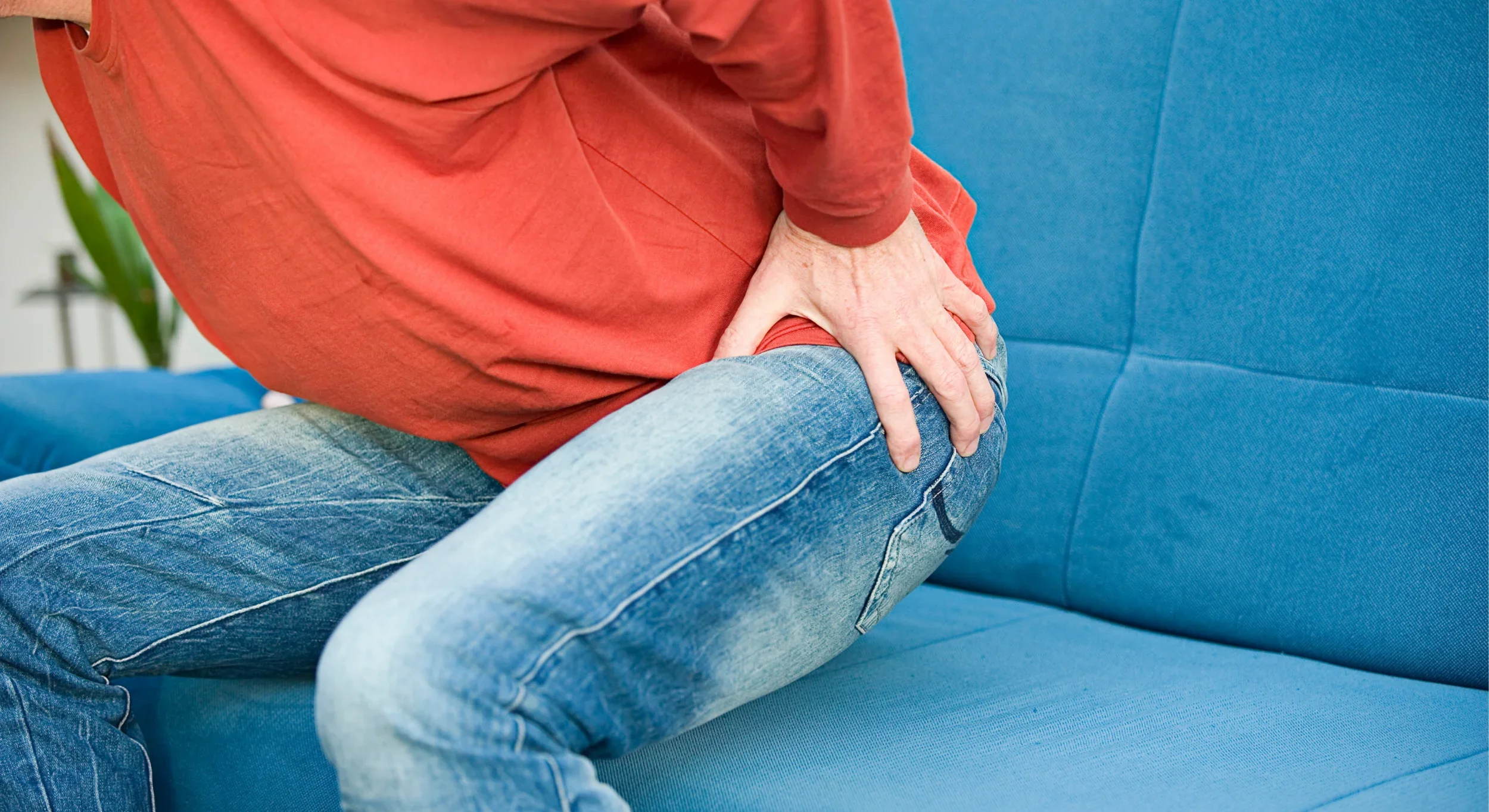
There are two quite different people who develop hip flexor problems. The first felt something give way during a sprint or a kick: a sharp pull at the front of the hip, an immediate reluctance to drive the knee forward, the sinking realisation that training has stopped. The second has no injury to point to. They sit at a desk for nine hours a day. The anterior hip has been deepening its ache for months, worse after long days, stiff in the mornings, starting to affect running at the weekend. Both will have been told the same thing: stretch your hip flexors.
Stretching is usually the wrong answer for both, and it is often the reason neither has improved. At our Mayfair clinic we assess what is actually happening at the front of the hip: whether this is an acute muscle tear, a hip flexor pull that has been mismanaged into a chronic tendinopathy, a snapping hip driven by the iliopsoas tendon flicking over the front of the hip joint, or a postural loading problem with the lumbar spine implicated. Each requires a different approach, and all of them respond well when that approach is right.
What Is Happening at the Front of Your Hip?
These three presentations share an anatomy but have different mechanisms. Getting the distinction right at the outset determines everything about how they should be managed.
You were accelerating hard and felt an immediate, sharp pull at the front of the hip. You finished the session but every stride felt wrong. Lifting the knee against resistance is now painful and the front of the hip is tender to touch. You want to know what has torn, how badly, and what the realistic timeline looks like.
When your hip moves through flexion you feel, or hear, a snap or click at the front. You have been told it is snapping hip syndrome, but no one has explained why it is happening, whether it matters, or what to do about it.
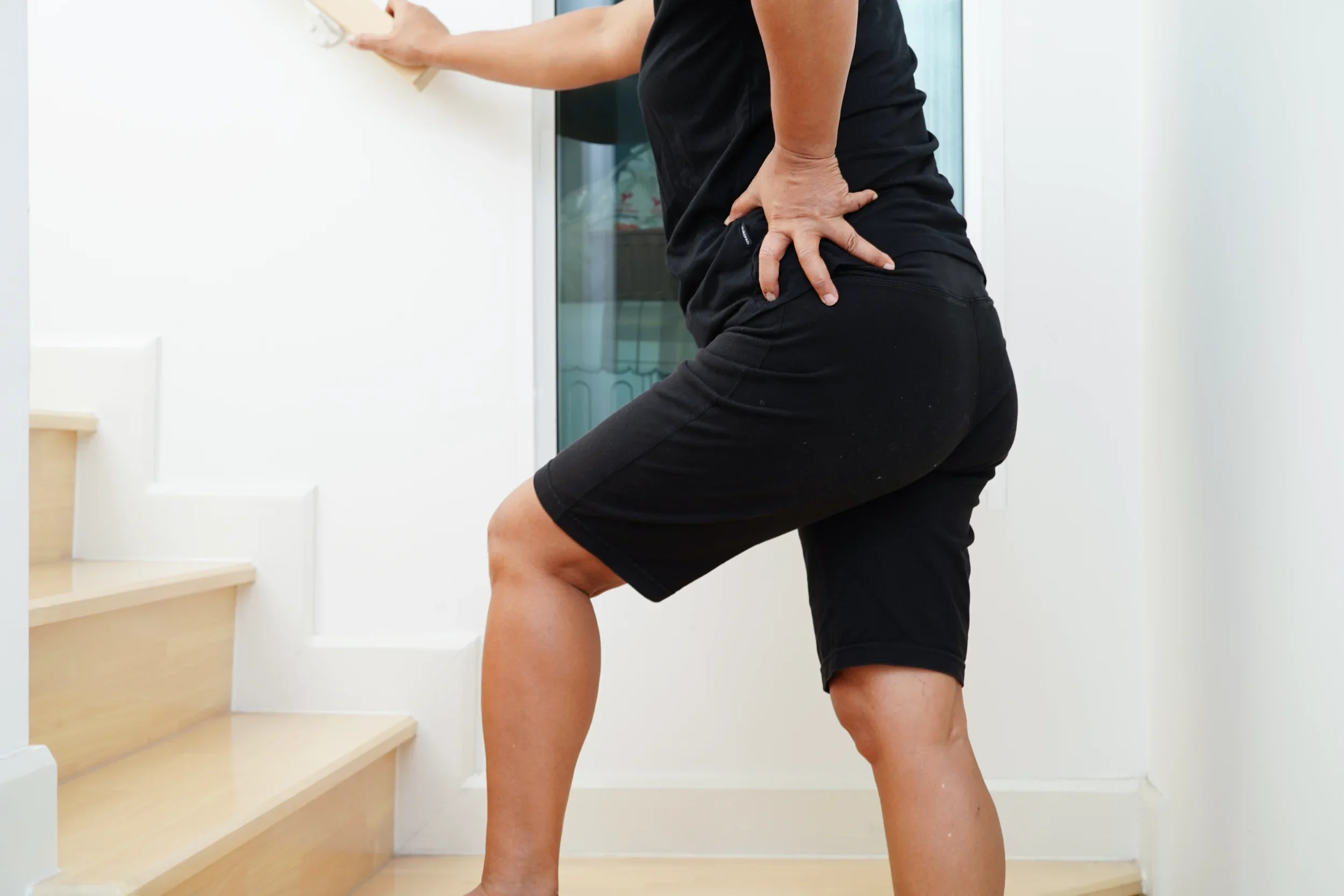
There was no single moment. The anterior hip has been uncomfortable for months, stiff in the mornings, aching after long periods of sitting, and increasingly reluctant during runs. You have been stretching the hip flexor diligently, but has made no difference.
Hip Flexor Strain, Tear, and Tendinopathy: Understanding the Spectrum
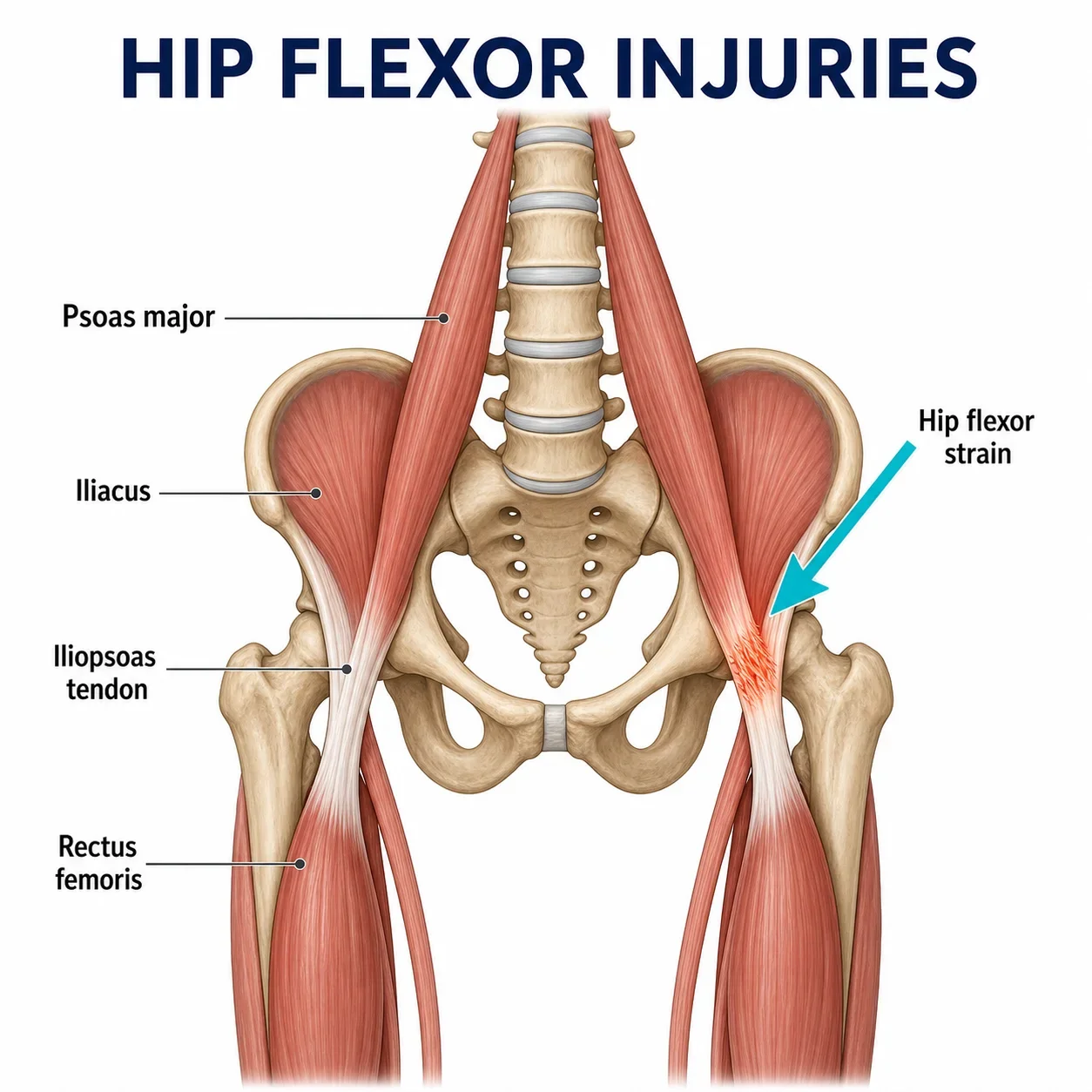
An acute hip flexor strain or tear is most often to the rectus femoris, which originates at the front of the pelvis, or to the iliopsoas, the deep muscle formed by the psoas and iliacus that runs from the lumbar vertebrae through the pelvis to the femur. The mechanism is the same in both: rapid, forceful eccentric loading during sprinting, kicking, or a change of direction under load.
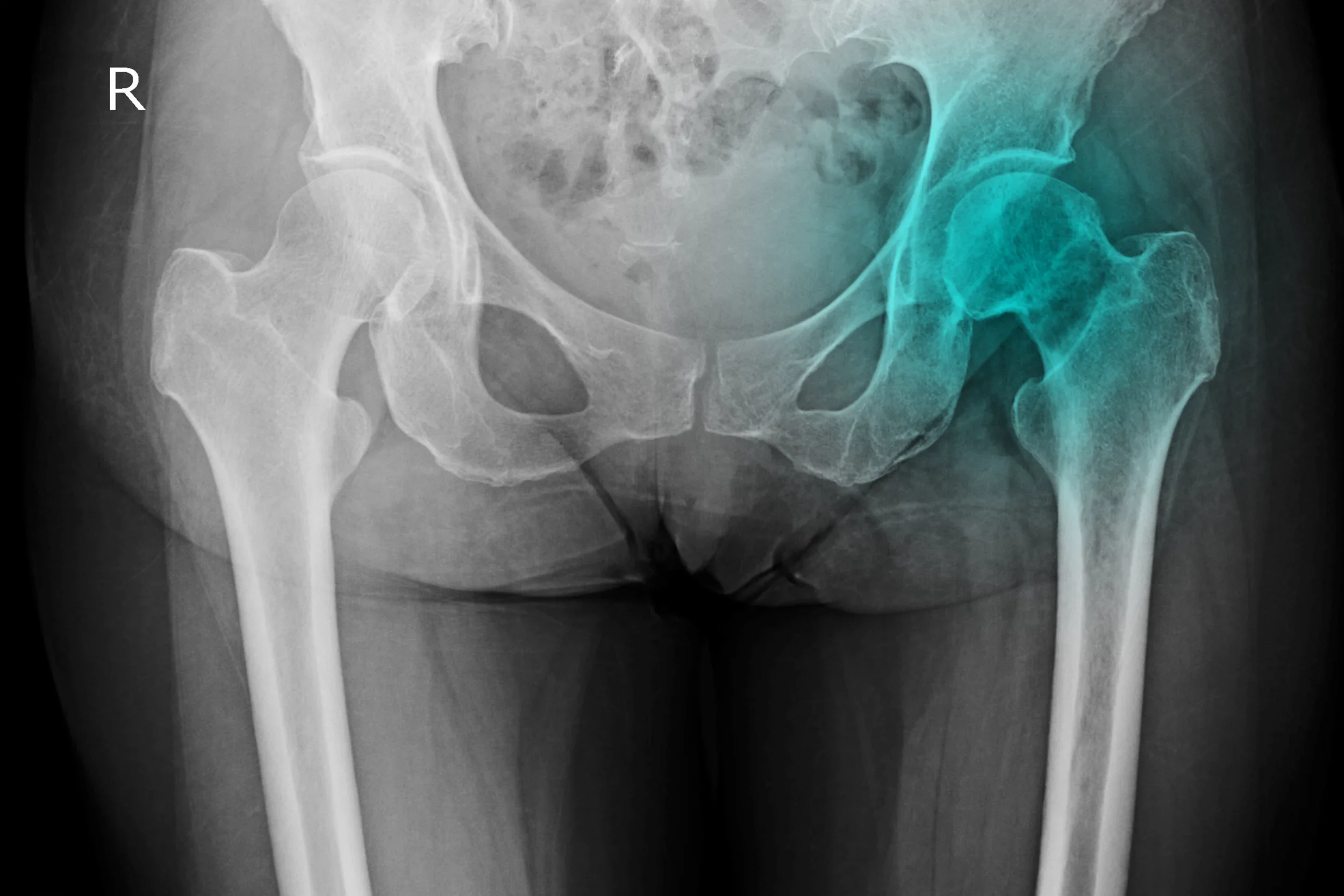
In adolescent athletes, the same explosive mechanism produces a fundamentally different injury: an apophyseal avulsion fracture at the anterior inferior iliac spine (AIIS), where the rectus femoris attaches to the pelvis. During the adolescent growth spurt, the cartilaginous growth plate at this site is weaker than the tendon, so it is the bone that fails rather than the muscle. This injury presents identically to a hip flexor pull, but it is a ‘pull off’ injury, and it requires imaging (such as an MRI) to confirm. Most AIIS avulsion fractures in teenagers recover well with conservative management over two to three months, but to prevent its recurrence, it needs expert physio input and progressive loading.
Iliopsoas tendinopathy develops without any traumatic incident. The tendon becomes sensitised and structurally disorganised through cumulative overloading, most commonly in distance runners, in athletes whose training volume has spiked, and in people who spend the majority of their day in hip flexion. This is not a straightforward inflammatory condition. It does not resolve with rest, anti-inflammatories, or stretching. It requires graduated progressive loading targeted specifically at the hip flexor tendon, and may need referral for imaging and injection treatment if it’s being persistent.
Snapping hip syndrome, or coxa saltans interna, occurs when the iliopsoas tendon flicks over the iliopectineal eminence as the hip moves through its range. The ‘snap’ is often audible as well as palpable. Snapping without pain is common, benign, and does not require treatment. When snapping is associated with anterior hip pain, it usually indicates the tendon is under load it cannot comfortably manage, and it frequently leads to the irritation of the iliopsoas bursa underneath it, but it also associated with restricted hip movement that might occur with femoroacetabular impingement or early hip osteoarthritis.
The desk-based presentation deserves particular attention because it is routinely missed. The psoas is the only muscle in the body that directly connects the lumbar spine to the lower limb. Prolonged sitting holds it in a chronically shortened position, alters how the lumbar vertebrae are loaded, and places the iliopsoas tendon in a state of persistent low-level irritation. The anterior hip pain these patients describe is real and often progressive. It is not resolved by hip flexor stretching, which compresses the anterior hip further. It is resolved by changing the loading environment and building the hip flexor capacity these patients have never developed.
Why Your Hip Flexor Has Not Got Better
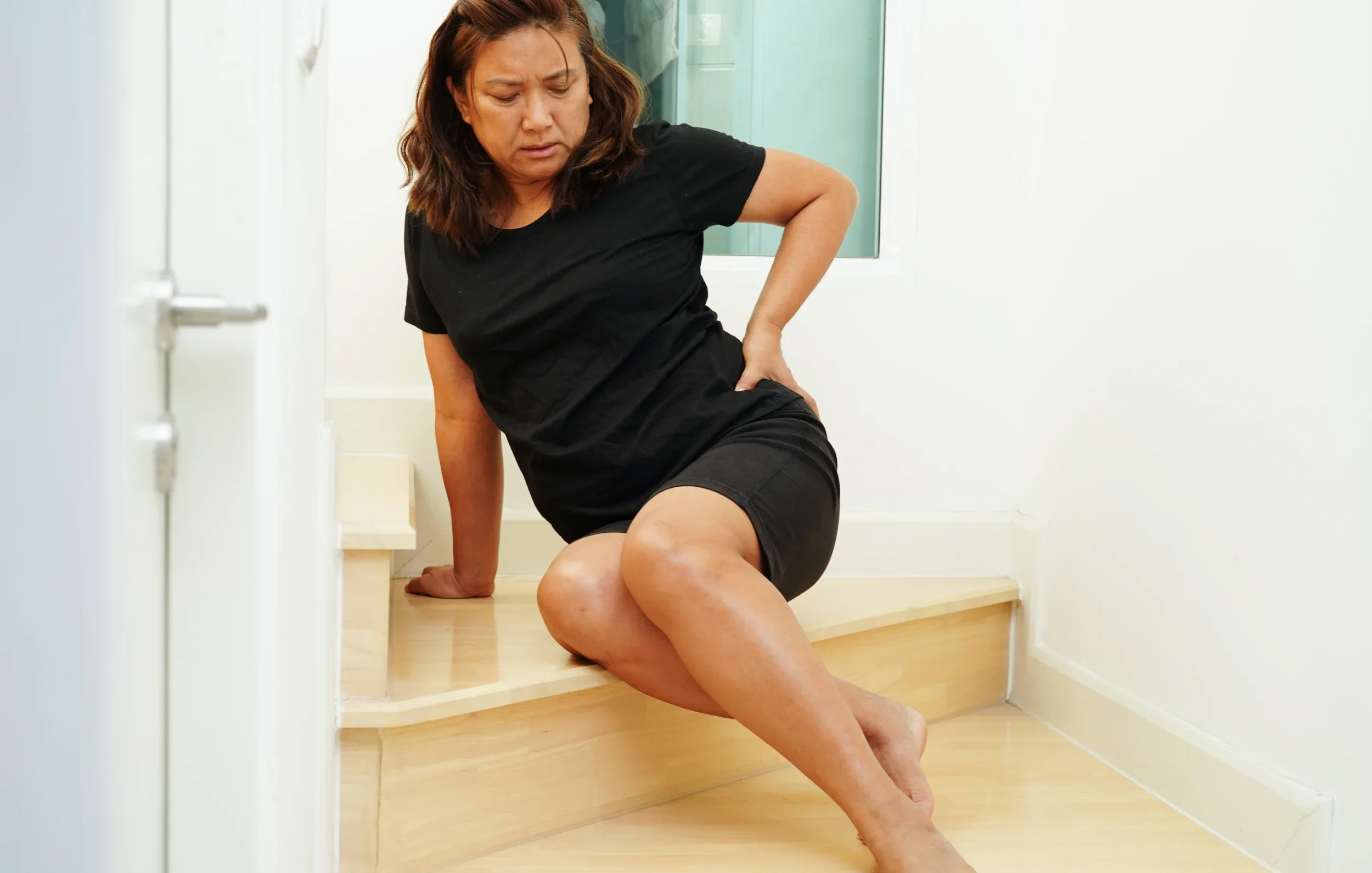
First of all, you need to be clear on whether or not your pain actually is cause by a hip flexor problem. Conditions such as femoroacetabular impingement and hip osteoarthritis can commonly masquerade as hip flexor pain. That is why getting an accurate assessment and diagnosis is so important.
Additionally, you may be doing the wrong thing by trying to stretch your hip flexors. In most cases this is simply doesn’t help, and in some cases it actively worsens the problem. Research shows consistently that the iliopsoas in patients with anterior hip pain is more often lengthened, overloaded and weak, rather than being shortened. The sensation of tightness at the front of the hip is the sensation of an overworked, fatigued muscle. Stretching it increases compressive stress at the tendon attachment: the opposite of what the tissue needs.
Rest is the other common failure. Relative rest from the aggravating activity is appropriate in the acute days after a hip flexor tear. But weeks of rest without graduated loading leaves healing tissue weak and disorganised. For tendinopathy it has no therapeutic value beyond temporary symptom reduction: the moment loading resumes, the tendon is exactly as unprepared as it was before.
We find that in patients who come to see us for a second opinion about their hip flexor problem, the lumbar spine has rarely been assessed. Because the psoas attaches to the lumbar vertebrae, hip flexor problems and low back pain are frequently intertwined. Treating the hip flexor in isolation, without examining the lumbar spine and pelvis, leaves half the picture unexamined and guarantees an incomplete outcome.
Our Approach to Hip Flexor Treatment
We begin by establishing exactly what you have. Anterior hip pain has a wide differential: iliopsoas or rectus femoris strain, psoas tendinopathy, avulsion fracture, hip impingement (femoroacetabular impingement) or osteoarthritis, or referred pain from the lumbar spine or sacroiliac joint. A thorough history and physical examination will distinguish between these in almost all cases. Where imaging would change management, we arrange MRI or diagnostic ultrasound directly through our referral network.
We assess the complete picture: hip flexor and hip extensor strength, lumbar spine mobility and control, pelvic stability, and the specific demands of your sport or working day. We use VALD hand-held dynamometry to measure hip flexor strength output between sides objectively. For return to sport, we apply a 90% symmetry threshold: until the hip flexor can produce at least 90% of the output of the uninjured side, the risk of reinjury at high speed or high load remains unacceptably elevated.
For chronic iliopsoas tendinopathy and painful snapping hip, we use focused shockwave therapy with our Piezowave2 system where the evidence supports it. The iliopsoas tendon sits deep to several layers of tissue and is not adequately reached by the radial shockwave devices used by most clinics. Focused shockwave, combined with a structured progressive loading programme, produces consistently good outcomes in cases where stretching and rest have already failed. Where injection therapy is indicated, including corticosteroid into the iliopsoas bursa or platelet-rich plasma for recalcitrant tendinopathy, we have direct referral pathways to musculoskeletal radiologists and sports medicine consultants in London.
Philip Harris has treated hip flexor injuries at Olympic Games, Commonwealth Games, and with the Barbarians, where a mismanaged hip flexor problem ends a season. That diagnostic precision informs how we approach every hip flexor presentation in our Mayfair clinic, whether the goal is returning to international sport or completing a marathon training block.
When to Come to Us
Come to us as soon as possible after an acute hip flexor strain or tear. Early diagnosis clarifies severity and guides load management from the outset, significantly reducing the risk of an acute injury becoming a chronic tendinopathy. If you are bringing a teenager who hurt their hip during football or sprinting, come promptly: adolescents require imaging to exclude an apophyseal avulsion fracture, which presents identically to a muscle strain but is managed differently. Come to us if anterior hip pain has not improved with rest or stretching, or if you have been told you have a hip flexor injury but have not been given a progressive loading programme. Come to us if you have a snapping hip that is now associated with pain. Come to us if hip flexor pain keeps returning every time you try to rebuild your training.
Frequently Asked Questions
Here are answers to some of the common questions we receive regarding hip flexor pain and injuries at Physio Remedies.
-
In most cases of hip flexor tendinopathy or chronic anterior hip pain, stretching is not helpful and can worsen the problem. The sensation of tight hip flexors is almost always a sign of overloaded, fatigued muscle, not a shortened one. Stretching increases compressive stress at the tendon attachment: the opposite of what the tissue needs. What resolves hip flexor tendinopathy is progressive loading, not lengthening.
-
This depends on what you have and where you are in recovery. For an acute tear, early loading is isometric and pain-guided. For tendinopathy, the programme is built around graduated progressive hip flexor strengthening, typically progressing from isometric holds through isotonic loading to sport-specific movements. Hip flexor rehabilitation exercises also address the hip extensors, pelvic stability, and the lumbar spine, because the injury rarely exists in isolation. We will give you a specific programme with measurable targets, not a generic exercise sheet.
-
Snapping hip syndrome, or coxa saltans, refers to the iliopsoas tendon flicking over the bony prominence at the front of the pelvis during hip movement. It is common, often painless, and does not require treatment in the absence of symptoms. When snapping is associated with anterior hip or groin pain it warrants assessment, as it usually indicates the tendon is under load it is struggling to manage, often alongside iliopsoas bursitis.
-
A Grade 1 strain managed correctly: two to three weeks. A Grade 2 tear: six to twelve weeks. Chronic iliopsoas tendinopathy that has been present for several months: three to six months to achieve full, durable resolution. The critical measure is not time but whether hip flexor strength has reached 90% of the uninjured side on objective testing. That is the threshold we use to determine readiness to return to full training.
-
Yes, and it is more common than most people realise. The psoas is the only muscle connecting the lumbar spine directly to the lower limb. Sitting for prolonged periods holds it in a chronically shortened position, alters lumbar loading, and irritates the iliopsoas tendon over time. This is not resolved by hip flexor stretching. It needs a change in loading environment and progressive strengthening in ranges the hip rarely experiences at a desk.
-
It could be, and it is important to find out. In growing adolescents, the explosive kicking or sprinting action that causes a muscle strain in adults can instead pull a bone fragment away from the front of the pelvis: an apophyseal avulsion fracture at the AIIS. The growth plate there is weaker than the tendon during the adolescent growth spurt, so the bone fails first. It presents identically to a hip flexor pull: sudden anterior hip pain, difficulty lifting the knee, tenderness at the front of the hip. It is frequently missed and treated as a soft tissue injury. A plain X-ray will confirm or exclude it, and we will arrange this at assessment.
-
We accept Bupa, AXA, and Cigna International. Your first assessment is £190 and lasts one hour.
Book Your Hip Flexor Assessment in Mayfair
If hip flexor pain, anterior hip pain, or a snapping hip is affecting your sport, your running, or your daily life, book an assessment at Physio Remedies in the Lansdowne Club, Mayfair. We are a short walk from Green Park and Berkeley Square and regularly see patients from across central London.
If you prefer to reach us directly: