
Hand & Wrist Conditions
De Quervain’s Tenosynovitis Treatment in Mayfair, London
There is a particular quality to de Quervain’s tenosynovitis pain that patients describe almost identically: a sharp catch on the thumb side of the wrist when they grip, lift, or rotate the hand. Picking up a kettle. Opening a jar. Lifting a child out of a cot. Serving at tennis. The movement that triggers it varies, but the location does not: that bony ridge at the base of the thumb, where the tendons from the thumb pass through a narrow sheath on their way up the wrist.
Two tendons are involved: abductor pollicis longus and extensor pollicis brevis. They share a fibrous tunnel, the first extensor compartment, on the radial side of the wrist. When that tunnel becomes inflamed and the sheath thickens, the tendons can no longer glide freely within it. Every movement of the thumb or wrist becomes a source of friction, and friction, sustained over days and weeks, becomes pain.
In the majority of cases, de Quervain’s tenosynovitis does not require surgery. It does require a proper diagnosis, an honest account of what is loading the tendon, and a treatment plan that goes beyond rest and a splint.

De Quervain’s Tenosynovitis: Why Is It Called ‘Mommy Wrist’ (Mummy Wrist)?
The nickname is well earned. De Quervain’s tenosynovitis, named after the Swiss surgeon Fritz de Quervain who first described it in 1895, has a well-documented peak in new mothers, and the reason is both mechanical and hormonal.
When you lift an baby, the natural position is to extend the thumbs outward and support the baby’s weight through a splay-handed grip, wrists angled down. Feeding positions, whether breast or bottle, load the thumb extensors for sustained periods in postures the wrist has rarely been conditioned for. Then come the transfers: in and out of cots, car seats, prams, baths. None of these loads is heavy in isolation. Accumulated across a full day, repeated thousands of times over weeks of disrupted sleep and physical deconditioning, they are more than enough to inflame the first extensor compartment.
The hormonal picture compounds the mechanical one. During pregnancy, relaxin is produced in increasing quantities to soften ligaments in preparation for birth. In the postpartum period, it is still present and still affecting connective tissue quality throughout the body, including the tendon sheaths at the wrist. If a mother is breastfeeding, oestrogen levels remain suppressed, which further reduces collagen resilience and the sheath’s ability to recover between bouts of loading. The tendon sheath is under mechanical stress at precisely the moment its capacity to handle that stress is lowest.
It is worth noting that fathers and other caregivers are not immune! We see de Quervain’s in new fathers with the same regularity, driven by the same mechanical loading, without the hormonal contribution. The mummy’s wrist label is clinically useful, but it should not obscure the fact that anyone performing repetitive thumb and wrist movements in awkward positions is at risk, regardless of whether they have recently had a baby.
Who Gets De Quervain’s Tenosynovitis?
Beyond new parenthood, de Quervain’s is significantly more common in women than in men, and incidence is highest between the ages of 30 and 55. The same hormonal mechanisms that make new mothers vulnerable apply during perimenopause and menopause: declining oestrogen compromises the quality of tendon sheaths throughout the body, and the wrist is no exception. If you are perimenopausal and finding that thumb and wrist pain has arrived alongside other joint or tendon problems, the hormonal picture is worth discussing at your assessment.
We also see de Quervain’s regularly in:
Tennis players and racquet sport athletes, where grip and wrist rotation under load are sustained across long sessions
People in keyboard-intensive roles who hold their wrists in awkward positions across long working days
Musicians, particularly string players
Manual workers and those in construction, care, or clinical roles
People with diabetes or inflammatory conditions, which affect tendon sheath quality and resilience
Occasionally it follows a previous wrist injury or fracture that has altered the anatomy of the compartment. In some cases the condition appears without any clear precipitant, particularly when hormonal factors are the primary driver.
Recognising De Quervain’s: Symptoms and the Finkelstein Test
The pain sits at the base of the thumb and along the radial side of the wrist. It is sharpest when pinching or gripping, when rotating the wrist, or when making a fist with the thumb tucked inside the fingers. In more established cases, there is visible swelling over that thumb-side ridge, and sometimes a catching or snapping sensation as the thickened tendon drags within its sheath. Some people notice the pain more after a period of rest, when the sheath has stiffened, and then again with the first loading movements of the day.
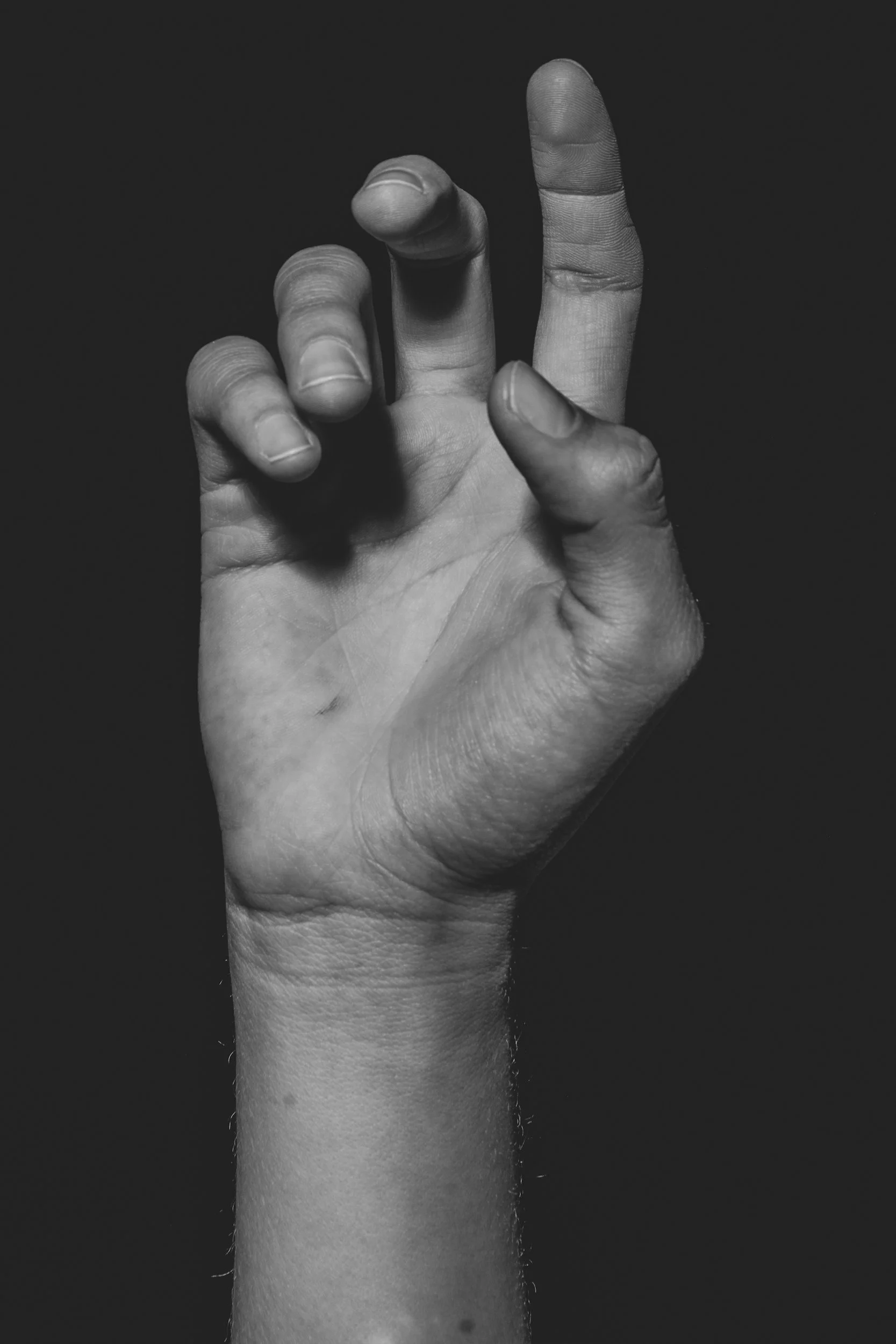
A simple test you can try yourself is Finkelstein’s test: fold your thumb across the palm and wrap your fingers over it, making a fist with the thumb tucked underneath. Then bend the wrist sharply towards the little finger side. Sharp pain at the base of the thumb and wrist is a positive result. This is one of the primary clinical tests we use in assessment, and a meaningful indicator of de Quervain’s tenosynovitis.
A positive Finkelstein’s test is not a diagnosis. It does not tell you how established the inflammation is, whether there is a radial nerve contribution to the pain, or what the most appropriate treatment approach is. What we are also looking for at assessment is whether anything further up the arm, at the elbow, shoulder, or neck, is adding to the nerve’s irritability and amplifying wrist symptoms. That broader picture changes the treatment.
How We Treat De Quervain’s Tenosynovitis
The first thing we establish at our Mayfair clinic is what is actually sustaining the problem. Rest and a splint reduce symptoms temporarily, but they do nothing to change the mechanics that caused the tendon sheath to inflame in the first place. The moment the same activities are resumed, the same friction returns. This is why we see so many patients who have already tried one approach and found it worked partially, or not at all.
Steroid injections are a particular example. Corticosteroid injection into the first extensor compartment tendon sheath can be genuinely useful, and in the right circumstances we will refer for one: when pain is too severe to allow rehabilitation to progress, or when conservative measures have reached a ceiling. But an injection is not curative on its own. If the tendon is still being loaded in the same way through the same activities, recurrence is the predictable outcome. We use injections as a tool within a broader plan, not as the plan itself.
Assessment at our clinic includes Finkelstein’s test, palpation of the first extensor compartment, grip strength and thumb range of movement, and a look at the wrist, forearm, elbow, and neck. We check for radial nerve involvement, upstream contributing factors, and anything in how you work, train, or move that is sustaining the load on the tendon sheath.
Treatment then works across three areas. The first is offloading: working out which specific postures and activities are driving symptoms/irritation and making targeted changes.
For desk workers, that often involves a workstation review, and our clinic provides formal DSE and ergonomic assessments directly. For new parents, we look at lifting and feeding positions and find practical modifications. A thumb spica splint, which holds the thumb and wrist still while leaving the fingers free, is typically part of early management, worn at times of peak loading and gradually weaned as the tendon settles.
The third area is any contributing factors elsewhere. If there is a radial nerve component, if neck or shoulder mechanics are adding to the picture, or if the hormonal context of perimenopause is relevant, those are addressed as part of the overall plan rather than treated as separate problems.
The second area is progressive tendon loading. This is the stage most commonly missed, and the one that determines whether the condition recurs. Offloading is not enough: the tendon sheath needs graded resistance work to rebuild its tolerance to the demands of your daily life, work, and sport. We guide you through a specific programme of thumb and wrist strengthening that increases load systematically without overloading the sheath in the process. The goal is a tendon that can handle a full grip, a backhand, a lifting shift, or a day at a keyboard, not one that is merely pain-free at rest.
Frequently Asked Questions
Here are answers to some of the common questions we receive regarding De Quervain’s Tenosynovitis treatment at Physio Remedies.
-
Not in most cases. De Quervain’s tenosynovitis can usually be confidently diagnosed on clinical examination alone, using Finkelstein’s test and palpation. If you already have ultrasound or MRI results, bring them: they add useful context. If symptoms are ambiguous or not responding as expected, we may recommend imaging. We will advise you at your first appointment.
-
If the same loading patterns continue, the problem can and sometimes does, recur. An injection reduces inflammation and can provide significant relief, but it does not address the underlying reason the tendon sheath became inflamed. If the same loading patterns continue, the problem will recur. We assess what is sustaining the load and build a rehabilitation plan around progressive tendon loading and activity modification. Some people do well with a second injection combined with more structured rehabilitation. In cases where injections are no longer providing adequate relief, surgical referral is worth discussing.
-
In most cases, yes. The goal is targeted modification rather than blanket rest. For desk workers, that means adjusting workstation setup and hand position. For tennis players, it means identifying which specific movements are most provocative and modifying those, often grip mechanics, backhand loading, or wrist-heavy groundstrokes, while keeping the rest of your game going. Stopping entirely tends to be counterproductive, and it is rarely necessary.
-
It can be. If you are perimenopausal or menopausal and experiencing de Quervain’s alongside other tendon or joint complaints, a shared hormonal mechanism is often connecting them. Declining oestrogen affects connective tissue quality throughout the body, and we take that broader picture into account rather than treating the wrist in isolation.
-
For mild to moderate cases addressed early, meaningful improvement within four to six weeks is realistic. More established cases, or those driven primarily by hormonal changes, take longer. If symptoms are not improving after a reasonable trial of conservative treatment, we will reassess and discuss whether injection or surgical referral is the appropriate next step.
-
We accept Bupa, AXA, and Cigna International. Our initial assessment is £190 for one hour. Please contact us to confirm your cover before your appointment.
Book Your De Quervain’s Tenosynovitis Assessment at Physio Remedies, Mayfair
If thumb or wrist pain is affecting your grip, your work, your sport, or your daily life, we would like to help. We are based at the Lansdowne Club in Mayfair, a short walk from Green Park and Berkeley Square.
If you prefer to reach us directly: