

Foot & Ankle Conditions
Plantar Fasciitis Treatment, Specialist Heel Pain & Shockwave Therapy in Mayfair London
Specialist Achilles tendon pain treatment in Mayfair combining focused shockwave therapy with progressive loading protocols. If your Achilles pain hasn't resolved with rest, stretching, or previous physiotherapy, we can help you get back to running, sport, and daily activities without pain.
What is Plantar Fasciitis?
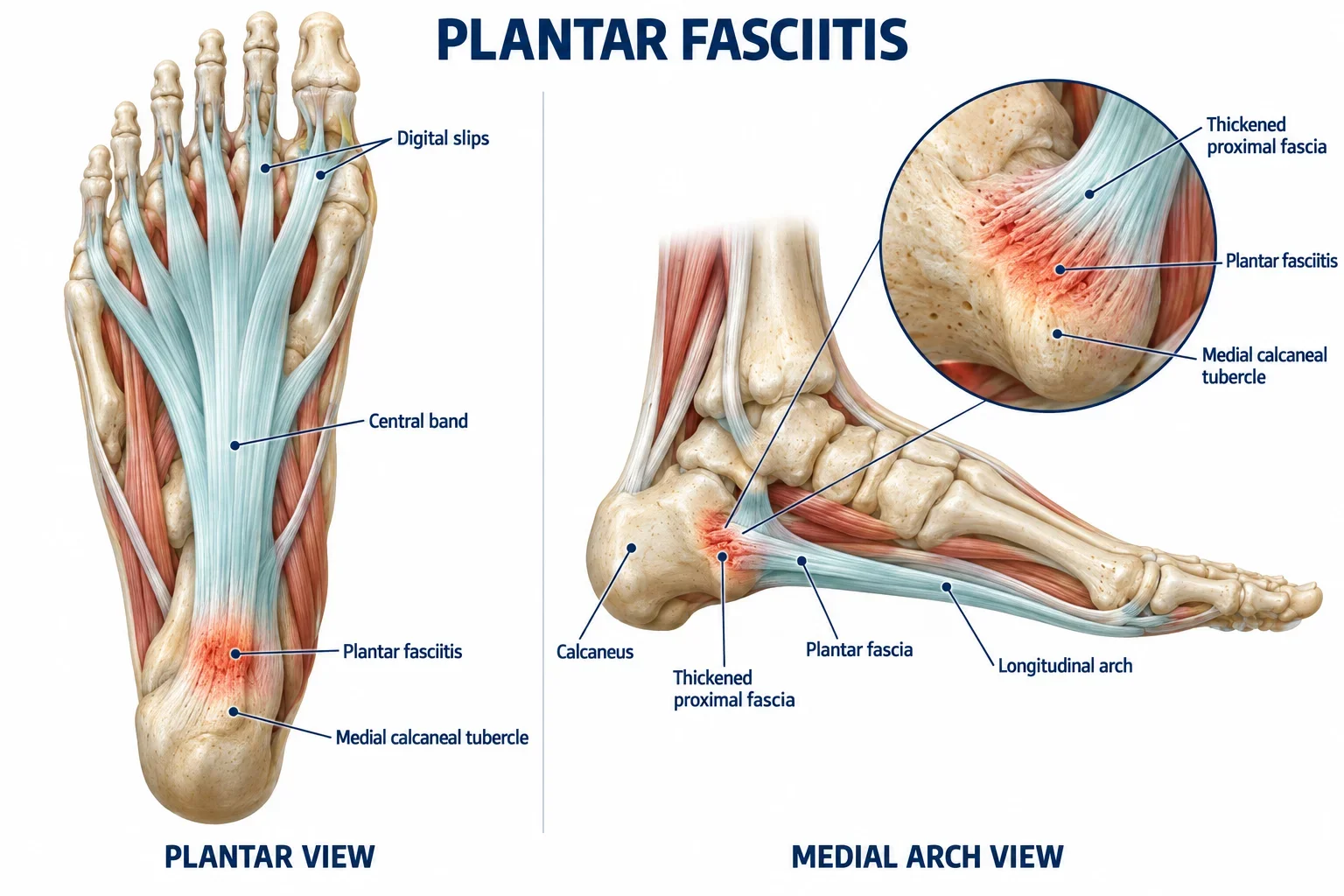
The plantar fascia runs from the heel bone along the sole of the foot to the bases of the toes, supporting the arch and acting as a spring mechanism during walking and running. When loaded beyond its capacity to repair itself, degenerative change develops at the heel bone (calcaneal) attachment, producing the characteristic heel pain.
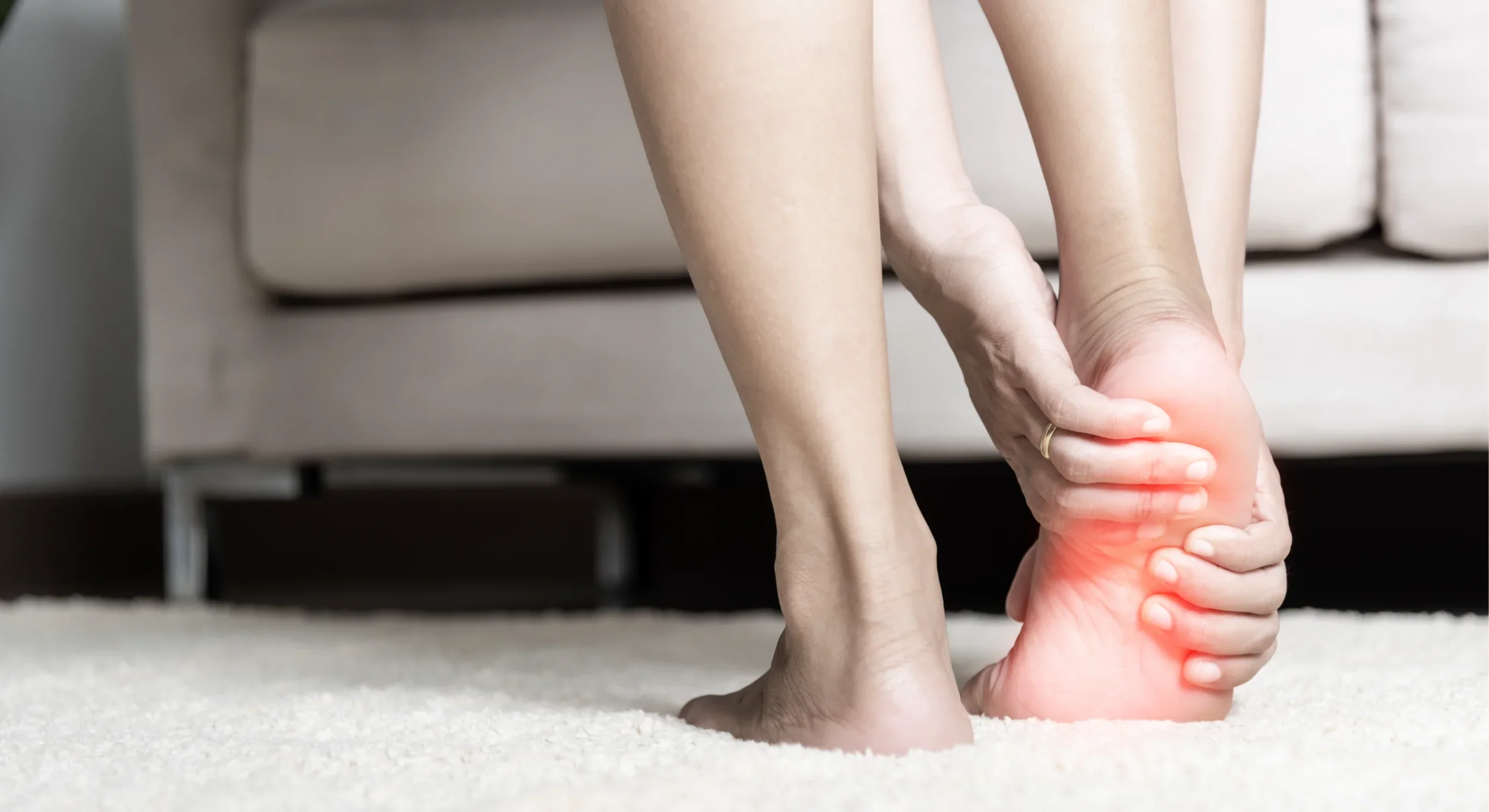
The first steps out of bed are the moment most people with plantar fasciitis dread most. The heel pain is sharpest then: a deep, stabbing discomfort on the underside of the foot that gradually eases after a few minutes of walking and returns after sitting. If you enjoy sport or running, you may find that it settles with rest, only to reappear within a week or two after returning to sport.
Plantar fasciitis implies inflammation, but in chronic cases, which is what most patients have by the time they seek specialist treatment, the pathology is degenerative rather than inflammatory.
Heel spurs, frequently mentioned in connection imaging of the condition, are a consequence of chronic fascial tension rather than a cause of symptoms. Their presence or absence doesn’t change the management approach.
Why Plantar Fasciitis Often Becomes Chronic
Plantar fasciitis is no longer thought of as a simple inflammatory condition. In persistent cases, it behaves more like a degenerative tendon-type problem, where the tissue has lost its ability to tolerate load. The most common reasons heel pain doesn't improve are:
Too much rest, not enough loading and exercise
Rest may calm pain temporarily, but it doesn't restore tissue capacity.
Stopping treatment too early
Pain often improves before tissue strength does, leaving you vulnerable to recurrence.
Stretching without strengthening
Stretching alone does not rebuild the plantar fascia or the calf complex that supports it.
Stretching without strengthening
Stretching alone does not rebuild the plantar fascia or the calf complex that supports it.
Shockwave without a loading plan
Shockwave can stimulate healing, but without progressive loading, results rarely last.
Is It Definitely Plantar Fasciitis?
Not all plantar heel pain is plantar fasciitis. A clear diagnosis matters. Conditions we routinely rule out include:
Fat pad inflammation
Nerve-related heel pain (e.g. Baxter's nerve)
Stress fractures
Insertional Achilles tendon pain at the heel bone
Foot pain that is referred from the calf muscle, ankle or lower leg
Will You Need Specialist Imaging?
If your diagnosis is unclear, or if symptoms aren't behaving as expected, we can arrange rapid access to specialist imaging or Sports Medicine consultation through our London network.
Our Approach to Plantar Fasciitis Treatment
We treat plantar fascia pain using the same evidence-based principles applied to chronic tendon problems: focused shockwave therapy, progressive loading, and objective testing.
This approach is part of our wider Tendon Pain Treatment in London programme.
Focused Shockwave Therapy for Plantar Fasciitis Pain
We use Piezowave2 focused shockwave therapy, one of very few focused systems available in central London. Unlike radial shockwave (commonly used in gyms and basic clinics), focused shockwave:
Delivers energy precisely to the plantar fascia at depth
Provides higher energy density at the point of injury
Is better suited for stubborn, chronic heel pain
Most patients require around three focused shockwave sessions, delivered alongside physiotherapy and loading guidance. Shockwave helps stimulate tissue repair — but it is not a standalone cure.
Progressive Loading: The Missing Piece in Heel Pain Recovery
Your plantar fascia does not heal by avoiding load. It heals by learning to tolerate load again. Your rehabilitation programme is structured in phases:
01
Settle irritability
We manage pain levels, modify aggravating activities, and establish a baseline load your heel can tolerate safely.
02
Rebuild capacity
We progressively load the plantar fascia and calf complex using targeted strengthening exercises. This is where long-term improvement happens.
03
Reintroduce impact
Walking volume, running, jumping, or gym activity is reintroduced in a controlled way.
04
Return to full activity
We ensure your heel can tolerate real-world demands, not just exercises in the clinic.
Some discomfort during rehab is normal. What matters is how symptoms respond over the following 24–48 hours. We teach you how to judge this yourself.
You're Ready
We don't rely on "it feels a bit better". Where appropriate, we use:
Calf strength testing
Single-leg endurance benchmarks
Side-to-side comparisons
You should be approaching 90% of your non injured side before returning to higher-impact activities. Anything less significantly increases reinjury risk.

Common Mistakes That Delay Plantar Fasciitis Recovery
We see these repeatedly:
Aggressive stretching first thing in the morning
Walking barefoot on hard floors at home
Relying on insoles without strengthening
Resting until pain settles, then jumping straight back into running
Treating heel pain as a purely foot problem
Correcting these issues is often the turning point in recovery.

How Long Does Plantar Fasciitis Take to Heal?
Most patients notice early improvements within 2–4 weeks, with more meaningful functional gains over 8–12 weeks.
However, full tissue remodelling can take several months, especially in long-standing cases. Our aim is not short-term pain relief, but durable recovery.
If you haven't seen clear progress within three months, the plan needs reassessment.
When Further Investigation Is Needed
If progress is slower than expected, or if your symptoms don't fit a typical pattern, we can arrange:
Diagnostic ultrasound MRI imaging Sports Medicine consultation
Guided injection procedures where appropriate
You're never left without a clear next step.
Frequently Asked Questions
Here are answers to some of the common questions we receive regarding plantar fasciitis treatment at Physio Remedies.
-
Some discomfort is normal during treatment, but intensity is adjusted to your tolerance and sessions are short.
-
Often yes, with modification. We'll guide you clearly on what to reduce and what you can continue safely
-
They can reduce symptoms short-term, but they don't replace the need for strengthening and load progression.
-
Many people have had radial shockwave without an adequate loading programme or stopped too early. Focused shockwave combined with structured rehabilitation often produces very different results.
Book Your Plantar Fasciitis Assessment
If heel pain is limiting your walking, running, or daily activity, we can help. Your assessment will determine whether plantar fasciitis is the true cause of your pain and outline a clear, evidence-based plan for recovery.
If you prefer to reach us directly: