
Foot & Ankle Physiotherapy
Bunion Treatment & Rehabilitation in Mayfair, London
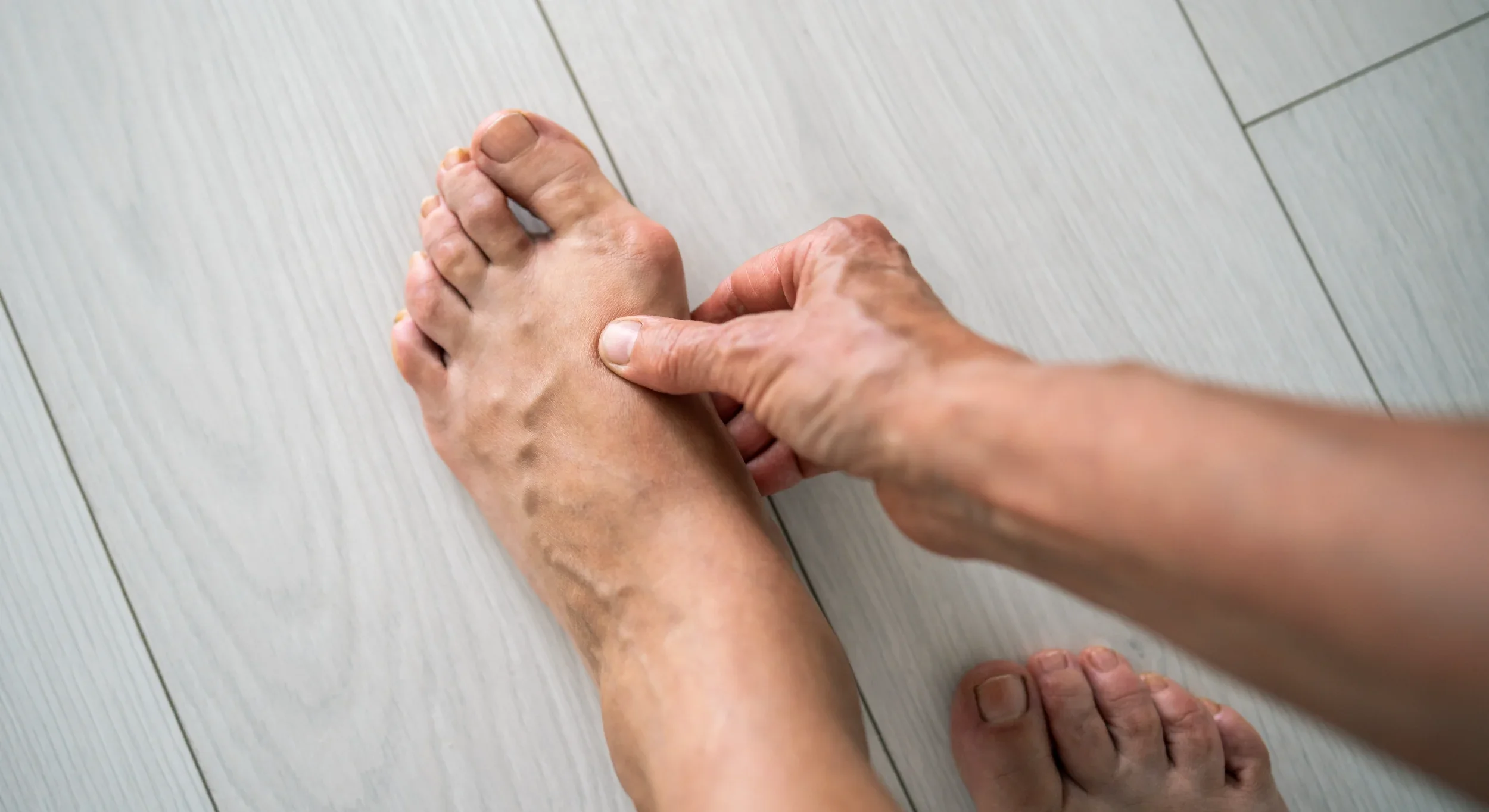
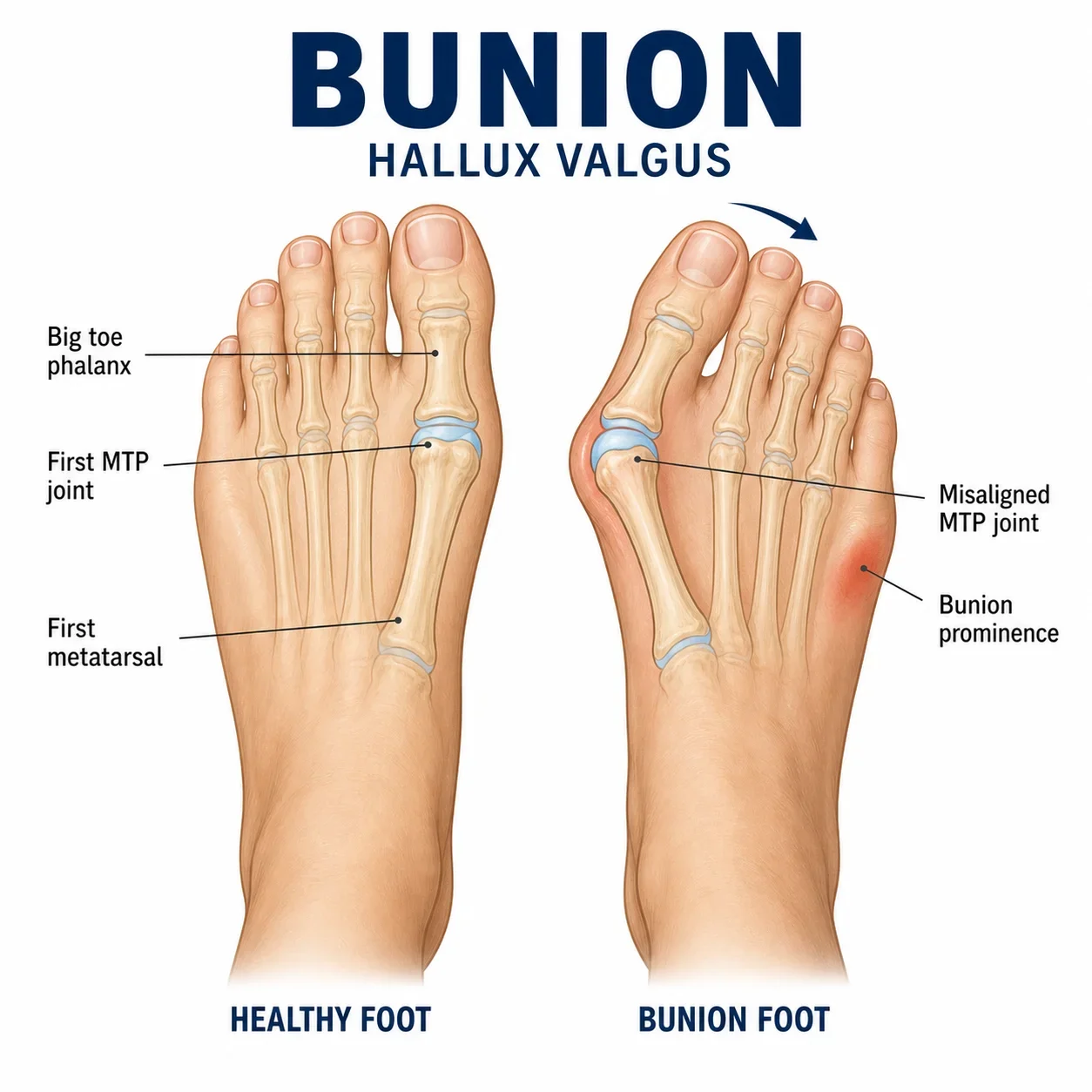
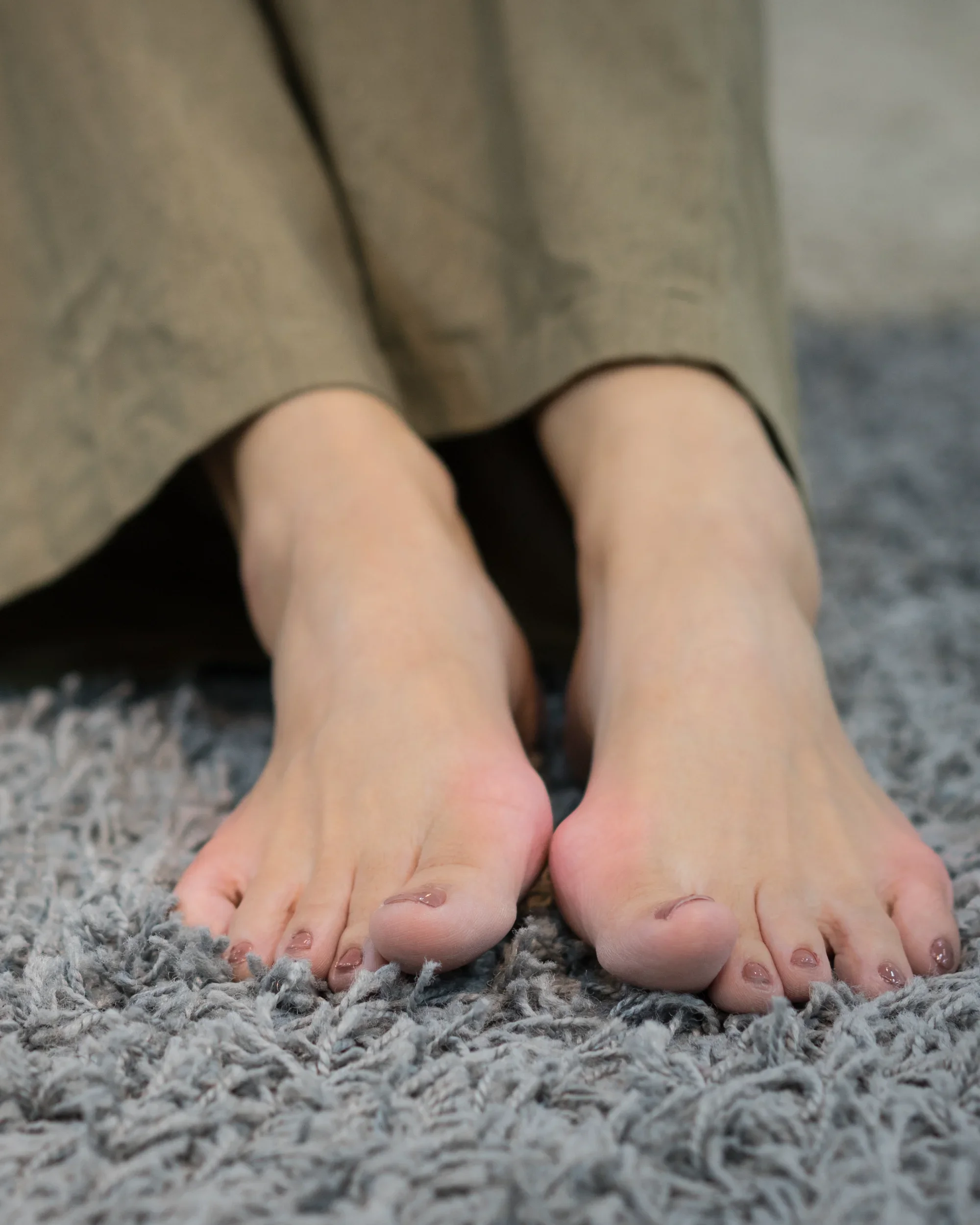
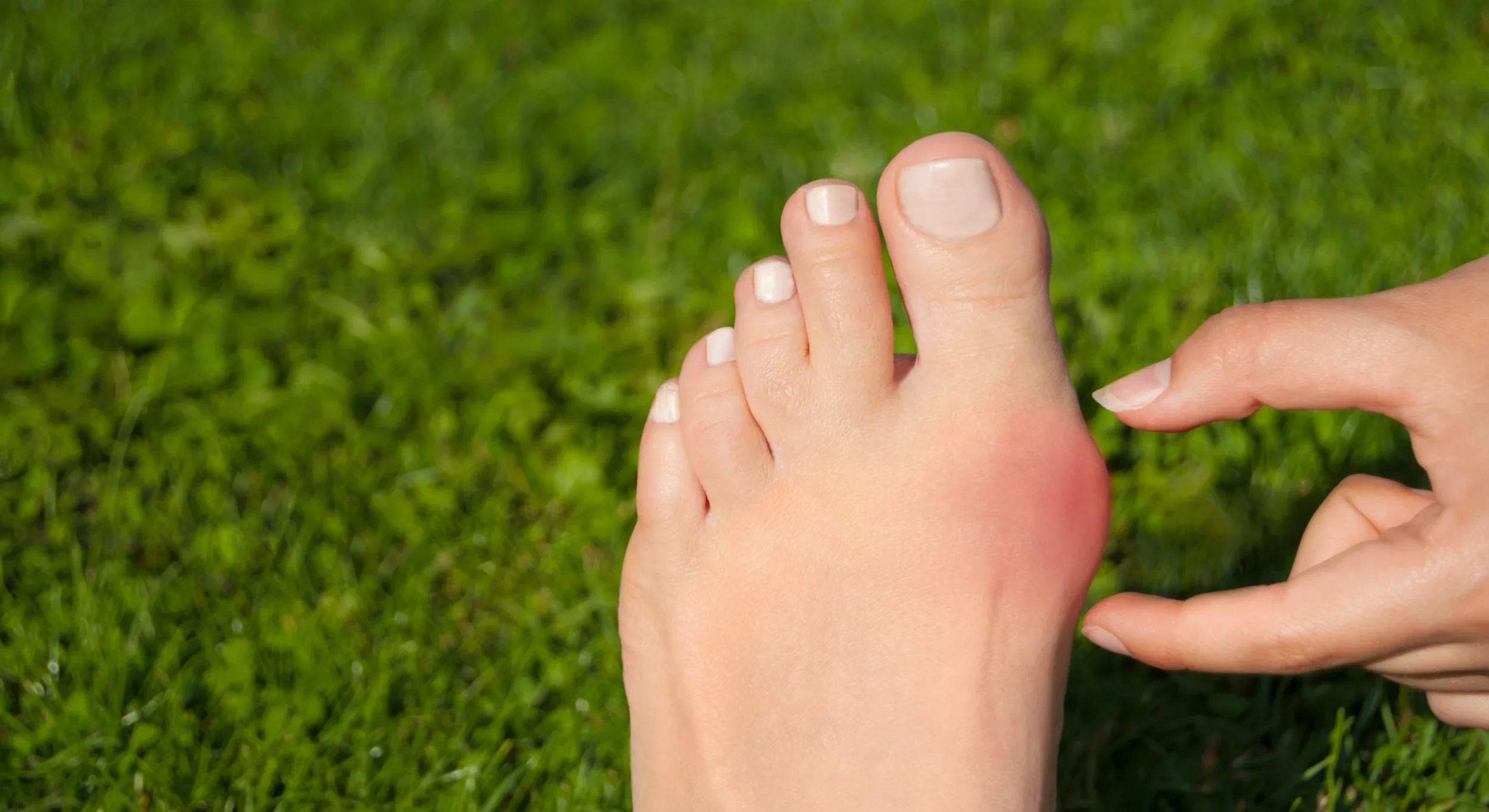
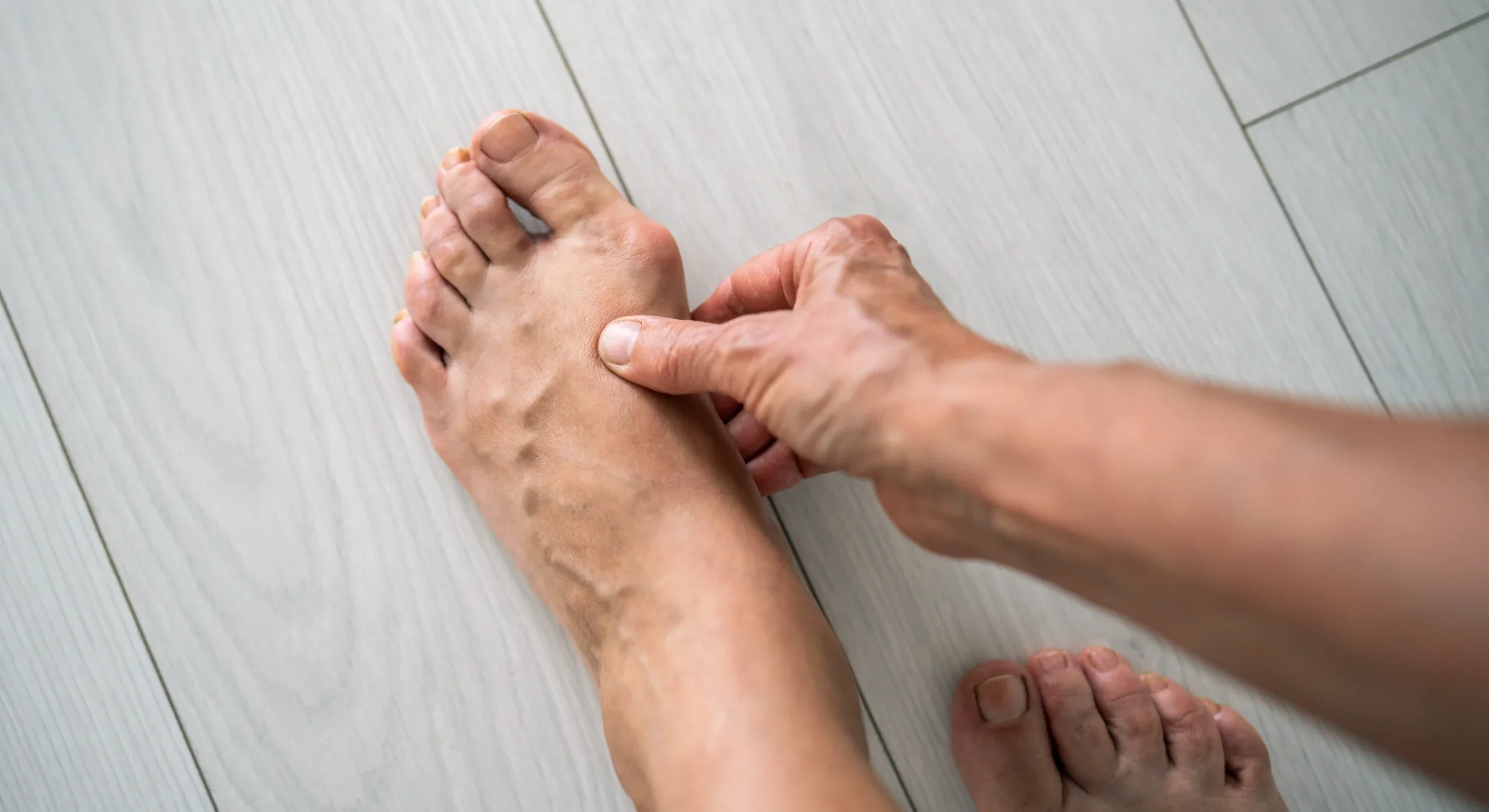
A bunion is not just a bump on the side of your foot. Clinically it is called hallux valgus or hallux abducto valgus (HAV), and it is a progressive structural deformity of the first metatarsophalangeal joint: a) the angle between the first and second metatarsal bones often increases beyond normal values. The exact diagnostic/severity thresholds vary by source and X-ray measurement method. B) the big toe drifts toward the lesser toes, and the joint at the base of the big toe becomes increasingly prominent and painful. C) the big toe can also rotate so the nail is no longer facing up. Understanding it this way matters because it changes what effective treatment looks like. You are not treating a bump. You are managing a biomechanical problem that alters how load travels through the entire foot with every step, and that alters how the foot, ankle, knee, and hip interact above it.
Jane Baker, our specialist foot and ankle physiotherapist and a member of the Association of Foot and Ankle Physiotherapists, sees bunions across the full clinical spectrum: mild deformities that can be managed conservatively for years, severe hallux valgus that requires surgical correction, patients who come to her before their operation wanting to arrive in the best possible condition, and patients who come after surgery wanting to make the most of their rehabilitation. The goal in every case is the same: to do everything that physio and podiatry can do before surgery becomes necessary, and to ensure that when surgery does happen, the outcome is as good as it can be.
What a Bunion Does to Your Foot and Body
When the big toe deviates toward the lesser toes, it loses its normal load-bearing function during the push-off phase of walking. The first ray and big toe play a key role in propulsion and load transfer as the foot hits the ground, moves through to heel rising and the foot leaves the ground. When hallux valgus disrupts this, the foot compensates by offloading through the second, third, and fourth toes instead. This is called transfer metatarsalgia, and it produces the forefoot pain under the ball of the foot that many people with bunions experience and do not immediately connect to their big toe.
The consequences do not stop at the forefoot. When the first toe cannot function properly, the mechanics of the entire foot change. The arch is affected, the ankle compensates, and altered walking patterns develop that change how load reaches the knee and hip. We regularly see patients who present with knee or hip discomfort that traces back, on thorough assessment, to a bunion on the foot below. This is why our assessment does not begin and end at the foot: we examine both feet, the ankle, the calf, the hip, and how the person actually walks, because treating the bunion in isolation while leaving the compensatory patterns untouched produces incomplete results.
What Causes Bunions: Genetic Factors, Mechanics, and Footwear
Patients often arrive believing their bunion is entirely genetic and therefore inevitable. Genetics does play a role, particularly in determining tissue quality: people with hypermobile joints have more compliant ligaments throughout the body, and the ligaments supporting the first metatarsophalangeal joint are no exception. A foot with more inherent laxity is more susceptible to the deforming forces that produce hallux valgus. But genetics is not the whole story, and it is not the part that treatment addresses.
Foot mechanics, muscle strength, joint mobility, footwear, and walking pattern are all contributing factors that are modifiable. Footwear that compresses the forefoot or elevates the heel shifts load distribution in ways that accelerate bunion progression. Weakness in the intrinsic foot muscles, the small muscles within the foot itself, reduces the dynamic support of the first metatarsophalangeal joint. Hip weakness alters how the pelvis is controlled, which alters how load reaches the foot with every step. Addressing these factors does not reverse the structural deformity that is already present, but it significantly affects the rate at which it progresses and the degree of pain and functional limitation it causes.
This is also why working with a podiatrist is a meaningful part of our management approach for bunions. Orthotics and insoles that modify how the foot loads during walking address a dimension of the problem that strengthening exercises alone cannot fully reach. We work collaboratively with podiatry colleagues when this input is clinically appropriate.
Conservative Management: What Physiotherapy Can Achieve
The goal of conservative management for a bunion is not to reverse the structural deformity. Once the intermetatarsal angle has increased and the joint has remodelled, physiotherapy cannot straighten the toe. The ieal situation is to prevent the bunion developing, but if it has, physiotherapy can do is slow the progression, reduce or eliminate pain, restore as much big toe function as possible, and manage the downstream consequences in the forefoot, ankle, knee, and hip. For many patients, this amounts to years of comfortable, active life without surgery.
Our assessment establishes the severity of the deformity, the degree of pain and functional limitation, the strength deficits in the intrinsic foot muscles, calf, and hip, the footwear the patient wears and how it affects loading, and whether bilateral bunions are present. Bilateral hallux valgus is common and requires bilateral assessment: treating one foot while ignoring the compensatory loading on the other produces a partial result at best.
Treatment combines intrinsic foot muscle strengthening, big toe mobility and alignment work, calf and hip strengthening to address the kinetic chain above the foot, manual therapy for the joint and adjacent soft tissues, gait retraining to improve push-off mechanics, footwear guidance, and podiatry referral for orthotics where appropriate. We also teach patients to monitor their bunion over time and to understand which changes signal progression and warrant reassessment. The aim is not dependence on physiotherapy but genuine long-term self-management.
Physiotherapy cannot reverse an established structural bunion, but it can often reduce pain, improve foot function, address compensatory loading patterns, and may help slow further progression when combined with appropriate footwear and, where needed, podiatry input.
Before Bunion Surgery: Why Prehabilitation Matters
When conservative management has been exhausted and surgery is the right next step, the quality of the post-operative outcome depends substantially on the condition of the foot and the strength of the surrounding structures going into the operation. A foot that arrives at surgery with reasonable intrinsic muscle strength, adequate calf and hip function, and a patient who already understands the post-operative exercises and what rehabilitation involves, recovers faster and more completely than one that has simply waited for a surgical date.
Wherever the surgical timeline allows, we see patients before their bunion operation specifically to address this. We strengthen the structures that will support the rehabilitation, review the post-operative exercise programme before surgery so it is already familiar, discuss what to expect at each stage of recovery, and address any footwear, mobility, or home environment issues that need to be in place before the operation. This is not always possible when surgical timelines are short, but even a few weeks of focused preparation may help improve readiness for surgery and make early rehabilitation and the post-operative period easier.
After Bunion Surgery: Rehabilitation to Full Function
Surgery commonly includes procedures such as Scarf and/or Akin osteotomies, Chevron procedure and can be an open surgery or minimally invasive. Recovery timelines are broadly consistent: 2 weeks bed rest with minimal activity, and at the 2 week post op review, a post-op shoe for another 4 weeks, normal shoes often 6–12 weeks, sport/walking commonly 3–6 months, but swelling may continue much longer. The surgery realigns the first metatarsal and corrects the intermetatarsal angle. During this protected phase, physiotherapy focuses on oedema management, joint mobility within the permitted range, maintaining calf and foot intrinsic muscle activity through non-impact exercise, scar management once the wound is healed, and addressing the stiffness that immobilisation inevitably produces.
Once weight-bearing progresses and footwear restrictions are lifted, the rehabilitation builds through progressive big toe loading, calf and intrinsic strengthening, gait retraining to establish normal push-off mechanics through the corrected joint, and gradual return to footwear and activities. The first metatarsophalangeal joint requires specific mobilisation work to restore the range of motion, particularly extension, that is essential for normal walking. This is one of the most consistently underdone elements of post-bunion-surgery physiotherapy and one of the most important: a stiff, corrected joint that cannot extend adequately is a joint that cannot drive normal gait mechanics regardless of the quality of the surgical correction.
We track progress against functional milestones rather than timelines: return to normal footwear, normal gait without compensatory patterns, return to walking for extended distances, and return to sport and exercise are each confirmed by assessment rather than assumed at a fixed number of weeks.
When We Refer for Surgical Opinion
We refer for surgical consultation when a bunion has progressed to the point where it is significantly limiting daily activity or footwear choice despite thorough conservative management, when the deformity is severe enough that physio and podiatry are unlikely to prevent ongoing progression, or when the patient is already at the point where they want a definitive surgical assessment. We make this call honestly and without delay. Referring a patient who needs surgery is not a failure of conservative management: it is the appropriate next step in a continuum of care, and we make the referral with a clear summary of what has been tried and what the clinical picture shows.
We have direct referral pathways to foot and ankle orthopaedic surgeons in London and can arrange appointments without the delays of a GP referral. We accept Bupa, AXA, and Cigna International insurance.
Frequently Asked Questions
Here are answers to some of the common questions we receive regarding shoulder pain and treatment at Physio Remedies.
-
Physiotherapy cannot reverse the structural deformity once it has developed. What it can do is significantly slow or halt progression, reduce or eliminate pain, restore big toe function, and manage the loading consequences in the forefoot, knee, and hip. For many patients, this means years of comfortable, active life without surgery. For others, surgery is eventually the right decision, and physiotherapy determines how well they arrive at that operation and how completely they recover from it.
-
Genetics determines tissue type and joint laxity, which influences susceptibility to developing a bunion. Footwear, foot mechanics, muscle strength, and walking pattern are also significant contributors, and these are all modifiable. We cannot change your tissue type, but we can address how you load your foot, how strong the supporting muscles are, and how your footwear distributes force. We can also advise on footwear. These interventions do not guarantee prevention but they measurably affect the rate of progression.
-
A bunion that is not yet painful is at the stage where physiotherapy is most effective. Progressive deformity is easier to slow than to manage once pain and functional limitation are established. If you have a bunion that is not causing significant symptoms but you can see it is changing, an assessment to understand the contributing factors and establish a management plan is worthwhile. The cost of an assessment is considerably less than the cost of managing a severe hallux valgus or recovering from surgery.
-
Yes, and it is important that both feet are assessed rather than only the more symptomatic one. When both big toes are affected, the compensatory loading patterns are bilateral and often more entrenched. Treatment addresses both feet, both the primary deformity and the load management above and below, and footwear guidance applies to the whole foot rather than accommodating one side while ignoring the other.
-
Most patients are walking with a surgical shoe within days of the operation. Normal footwear is typically possible at six to twelve weeks depending on the procedure and the individual. Walking for extended distances without pain or significant compensatory gait usually takes three to four months. Return to sport and exercise depends on what the activity involves, but most patients can return to low-impact exercise at four months and to running and racquet sports at four to six months with structured rehabilitation. These timelines improve with prehabilitation before surgery.
-
The right exercises depend on the severity of your bunion, your specific strength deficits, and your goals. In general, intrinsic foot muscle strengthening (short foot exercises and toe spreading), big toe alignment and mobility work, calf strengthening, and hip abductor strengthening all play a role. We assess and prescribe specifically rather than providing generic exercise sheets, because the wrong exercises done at the wrong time, particularly after surgery, can be counterproductive.
-
Not usually. The diagnosis is typically made clinically and confirmed on plain X-ray, which your GP or orthopaedic consultant will arrange. If you already have imaging, bring the reports and we will use them as part of our assessment. If we identify anything during assessment that warrants imaging and you do not already have it, we can arrange referral.
-
Both, ideally. Physiotherapy addresses muscle strength, movement patterns, gait mechanics, and the kinetic chain above the foot. Podiatry addresses orthotic management of how the foot loads during walking. These are complementary interventions. We work with podiatry colleagues and refer between the two disciplines when it is clinically appropriate. Neither alone provides the complete picture that both together can offer.
Book Your Bunion Assessment in Mayfair
Whether your bunion is mild and you want to understand how to manage it long-term, you are preparing for surgery, or you are recovering post-operatively, your first appointment lasts one hour. We will assess the deformity, the strength deficits, the whole-body load picture, and give you a clear plan. The assessment costs £190.
If you are searching for bunion physiotherapy or hallux valgus treatment in London, we are based at the Lansdowne Club in Fitzmaurice Place, Mayfair, a few minutes’ walk from Green Park station.
If you prefer to reach us directly: