
Elbow Conditions
Golfer's Elbow Treatment and Physiotherapy in Mayfair, London
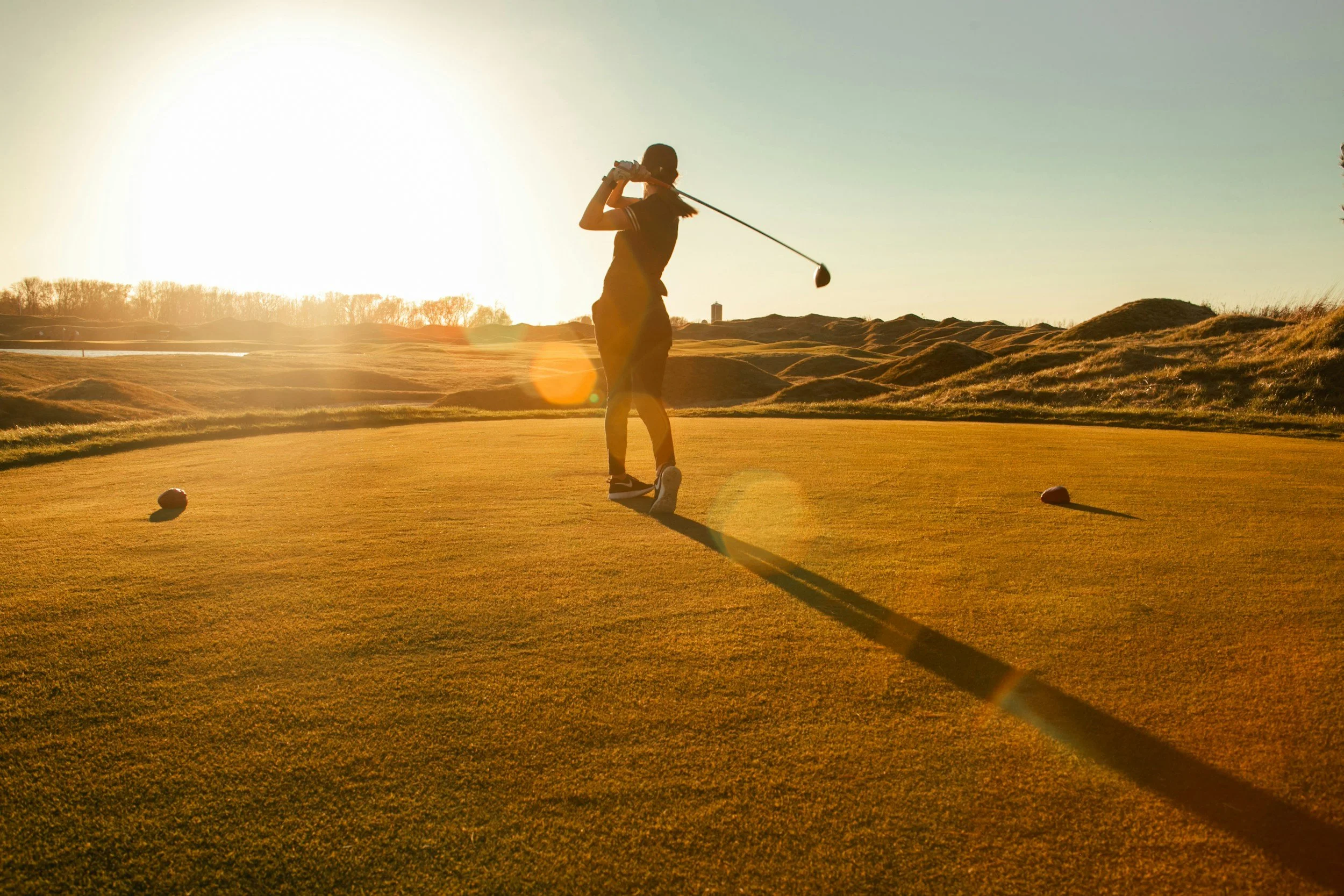
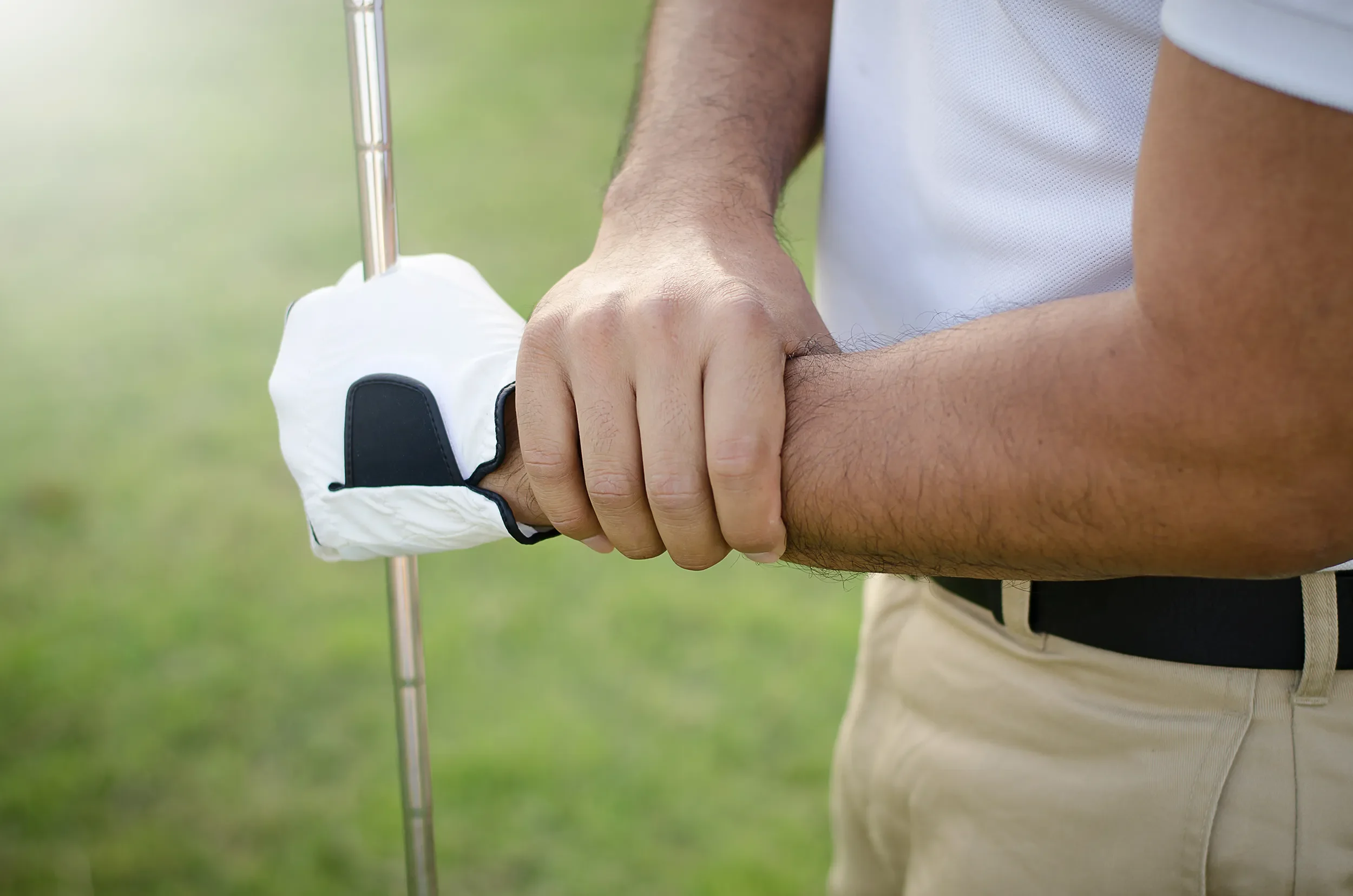
Golfer's elbow catches people who have never been near a golf course far more often than those who have. We see it regularly in climbers, whose grip positions load the inner elbow repeatedly under high force. In rowers, from the pull phase. In gym-goers who do heavy barbell rows, curls, and deadlifts without adequate recovery. In carpenters, plasterers, and anyone whose work involves sustained gripping or repeated forearm rotation. Golf accounts for a fraction of the medial elbow tendinopathy we treat.
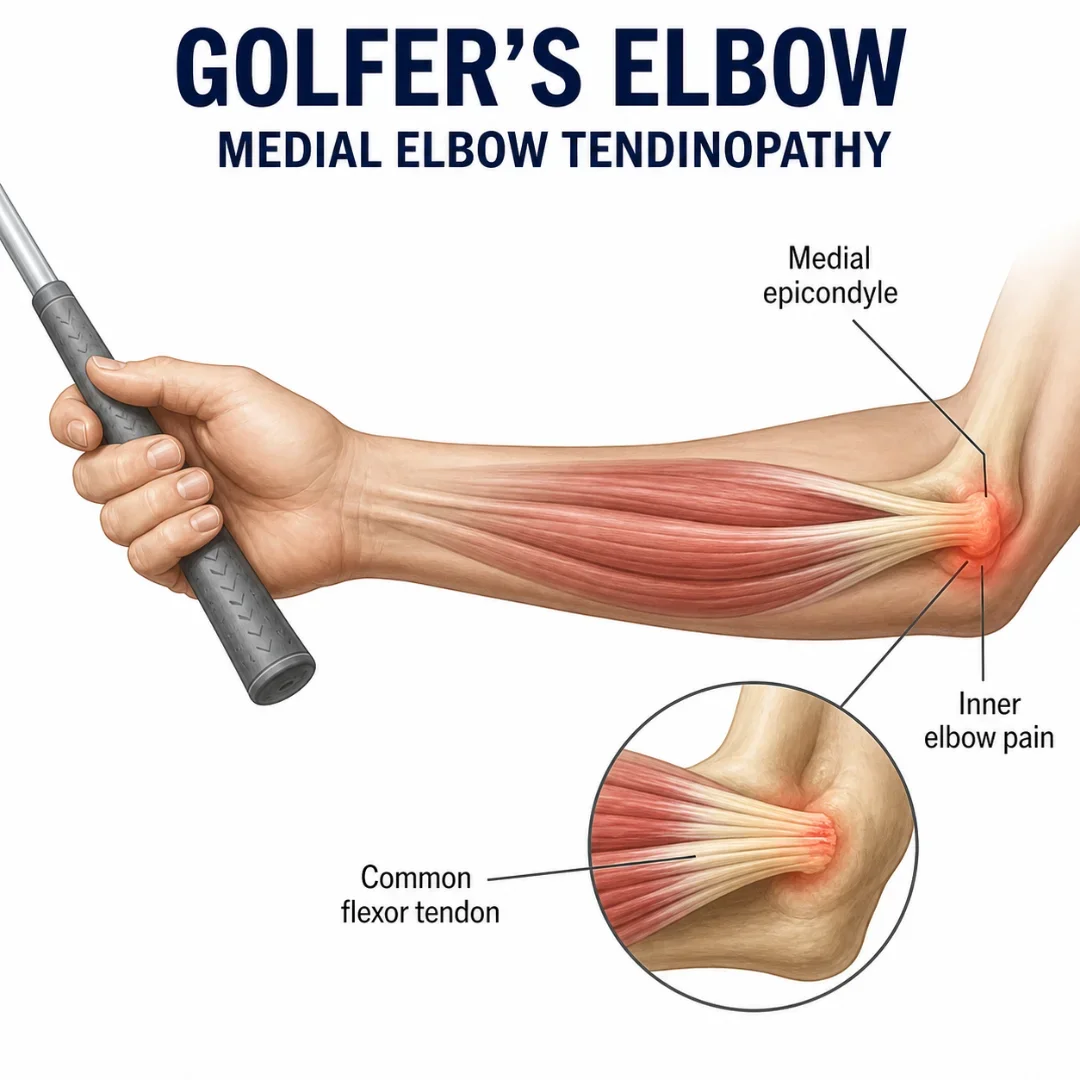
The formal name, medial epicondylopathy, is more accurate than the historical term medial epicondylitis, which implies an inflammatory process. In established cases, what is happening is degenerative change in the common flexor tendon: the tendon has been loaded beyond its capacity to recover, and progressive loading is what rebuilds it. That distinction matters for treatment. Anti-inflammatory strategies manage symptoms in the short term; they do not address the tendon.
The Question to Answer First: Tendon or Nerve?
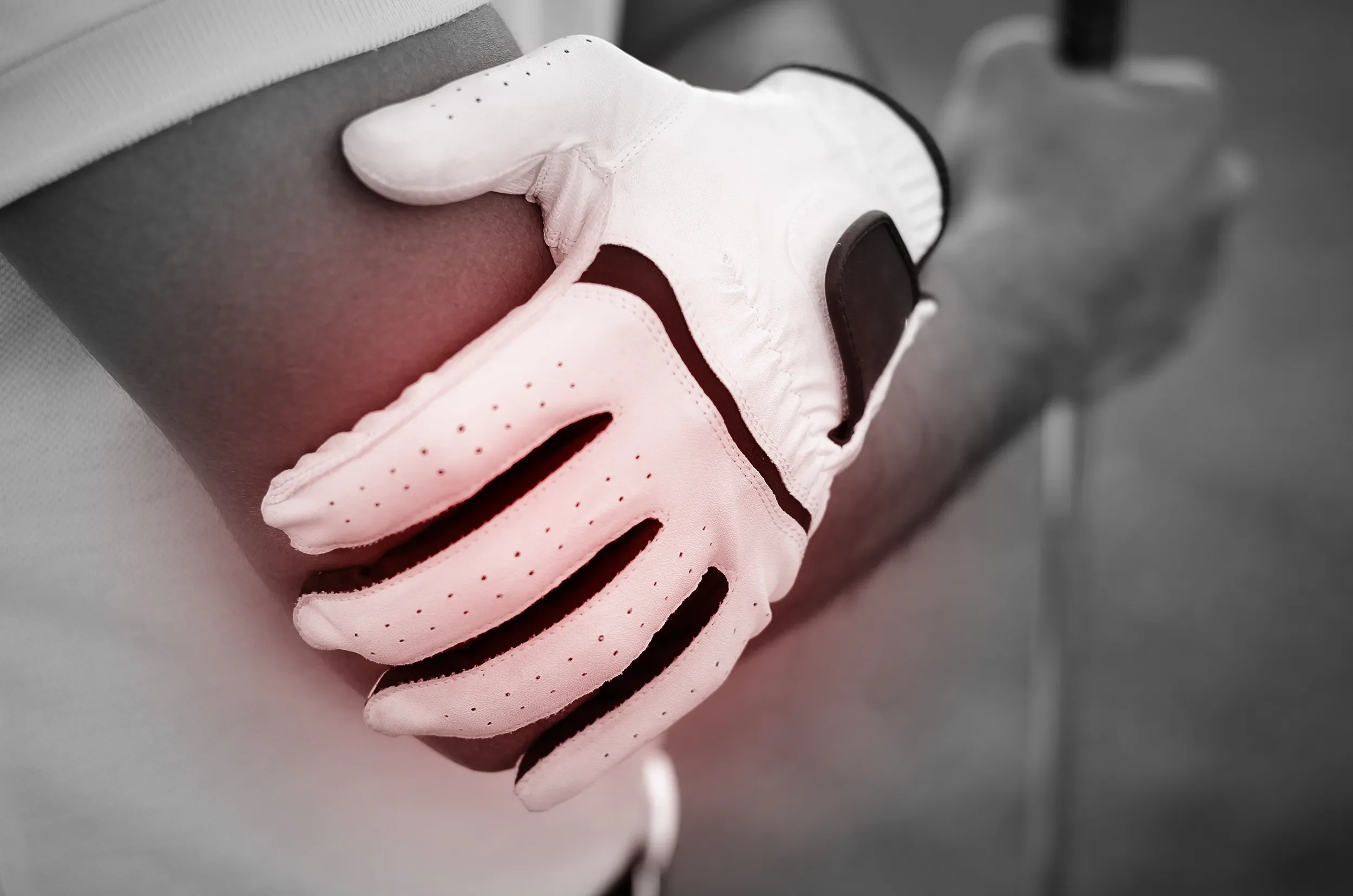
The ulnar nerve runs through a groove directly behind the medial epicondyle, the bony prominence on the inner elbow. This means that golfer's elbow and cubital tunnel syndrome, where the ulnar nerve is compressed or irritated at the elbow, produce pain in almost exactly the same location. They are easy to confuse. Treatment for each is entirely different, and treating the wrong one achieves nothing.
The distinction that matters most clinically: if your inner elbow pain is accompanied by numbness or tingling extending into the ring and little fingers, or weakness in certain grip positions, that is a nerve story rather than a tendon story. Cubital tunnel syndrome also tends to be worse when the elbow is held in a flexed position for extended periods — reading, sleeping with the elbow bent, driving. Golfer's elbow is typically more predictably provoked by gripping and loading rather than by sustained postures.
In practice, the two conditions can coexist. Medial elbow tendinopathy and ulnar nerve irritation sometimes develop together, particularly in climbers and overhead throwing athletes where both structures are under repeated stress. A thorough assessment establishes which is the primary driver before we commit to a treatment direction. If there is genuine diagnostic uncertainty, we will refer for nerve conduction studies or imaging before proceeding.
How Long Does Golfer's Elbow Take to Heal?
Golfer's elbow is generally slower to resolve than tennis elbow, partly because the medial elbow structures are harder to offload during daily activity, and partly because the populations most affected — climbers, rowers, gym users — often find it difficult to modify the loads that are driving the problem. That said, most cases respond well to the right approach.
With a properly structured loading programme, meaningful improvement typically comes within eight to twelve weeks. Full resolution usually takes four to six months. Cases that have been present for more than six months, or where repeated cortisone injections have been used without addressing the tendon, take longer — but they still respond. The important thing to understand is that the tendon heals through progressive load, not through rest, and the sooner that process begins properly the shorter the overall timeline.
What Works and What Does Not
Rest
Rest reduces pain by reducing load on the tendon. The moment load returns — gripping in the gym, pulling in the boat, holding a golf club — the same tendon is meeting the same demands it could not handle before, and the pain returns. For the populations most affected by golfer's elbow, complete rest often means complete cessation of the training or sport that defines their week, which is not sustainable and not necessary. The right approach is modifying load during rehabilitation, not eliminating it.
Cortisone injection
The research on cortisone for medial epicondylopathy mirrors what we see with lateral: superior short-term pain relief, meaningful risk of worse outcomes over six to twelve months compared with physiotherapy. For a condition driven by tendon degeneration rather than acute inflammation, suppressing the inflammatory response that forms part of the tendon's healing attempt produces predictable short-term gains and longer-term problems. Repeated injections are particularly unhelpful. A single injection to manage severe acute pain and create a window for rehabilitation is occasionally appropriate; injections as a primary treatment strategy are not.
A golfer's elbow brace or strap
A medial elbow strap can reduce tendon load during activity and provide some symptomatic relief, which makes it a reasonable short-term aid. It does not rebuild the tendon's capacity. We may recommend one early in rehabilitation, particularly for patients who cannot avoid the aggravating activities during the working day, as a bridge rather than a solution.
Exercises that are too gentle or poorly sequenced
The common flexor tendon responds to progressive loading in the same way all tendons do: it needs to be systematically challenged at increasing loads to stimulate adaptation. Gentle wrist flexion stretches and light resistance work are a starting point, not a rehabilitation programme. Heavy slow resistance training for wrist flexion and forearm pronation, progressed carefully over months based on twenty-four-hour symptom response, is what produces lasting change. Most patients who have already done exercises that have not worked have been doing the right type of exercise at the wrong load.
Our Approach at Physio Remedies
Assessment starts with ruling in or out the ulnar nerve contribution, as described above. We then establish a clear picture of what is loading your medial elbow: your sport or training, your working posture and grip demands, and specifically which movements reproduce the pain. We measure grip strength objectively using VALD handheld dynamometry, comparing both sides, to establish a baseline and a target. For return to full training or sport, we look for pain-free grip strength within ten percent of the uninjured side.
The loading programme begins with isometric wrist flexion exercises, which allow tendon loading with minimal pain provocation in the early stages. This transitions to isotonic loading through full range, progressing toward heavy slow resistance training for both wrist flexors and forearm pronators as capacity builds. The programme is monitored and adjusted based on your twenty-four to forty-eight hour response after each session. Some discomfort during loading is expected; a significant flare the following day means we have moved too quickly.
For climbers, we pay specific attention to grip positions: the crimp and half-crimp positions that load the medial elbow most aggressively, and how to sequence a return to these as rehabilitation progresses. For golfers, we look at the swing mechanics that are overloading the trailing arm — typically late-hit patterns and leading wrist breakdown at impact. For gym users, we assess deadlift and row technique, grip width, and whether accumulated volume across the week is allowing sufficient recovery.
When we use focused shockwave
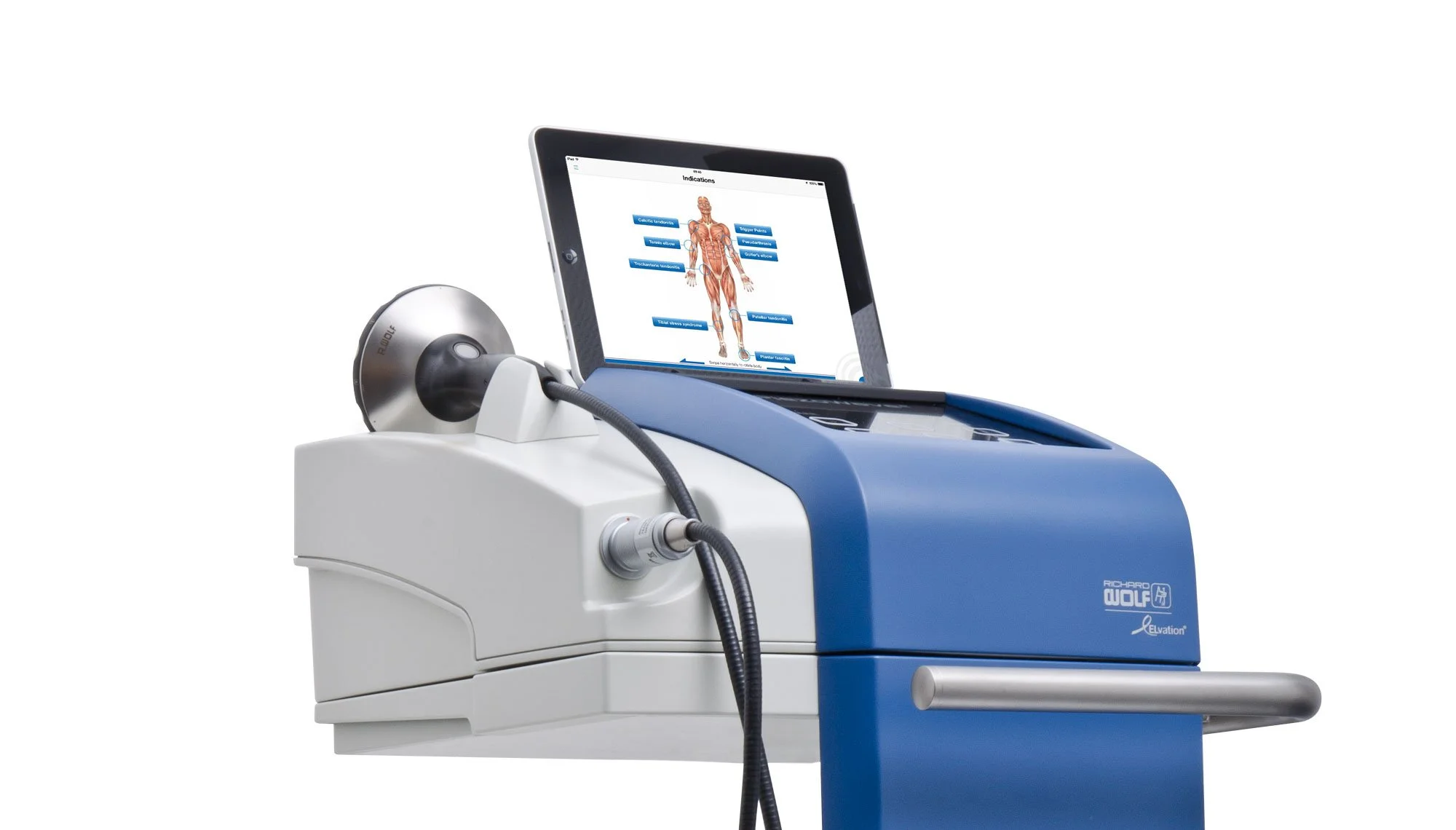
For medial epicondylopathy that is not responding to a well-structured loading programme, we use Piezowave2 focused shockwave therapy. The evidence base for shockwave at the medial elbow is less extensive than for lateral epicondylopathy, but it is positive for chronic cases, and focused shockwave's ability to reach deep tissue with precision makes it more appropriate than the radial shockwave available at most clinics. Sessions are typically five to ten minutes, delivered weekly over three to six weeks, and most patients describe them as uncomfortable but manageable. We use it as part of a comprehensive programme, not as a standalone treatment.
When we refer
Where loading and shockwave have been properly optimised without sufficient improvement, we refer for ultrasound-guided PRP injection through our established network of sports medicine consultants and radiologists. PRP has a reasonable evidence base for medial epicondylopathy and avoids the longer-term concerns associated with repeated cortisone. If there is genuine clinical suspicion of cubital tunnel syndrome as a primary or contributing diagnosis, we refer for nerve conduction studies. Surgery for golfer's elbow is rarely necessary before twelve months of well-managed conservative care; where it is, we refer to upper limb surgeons with specific expertise in this area.
Frequently Asked Questions
Here are answers to some of the common questions we receive regarding golfer’s elbow treatment at Physio Remedies.
-
With appropriate treatment, most patients see meaningful improvement within eight to twelve weeks and substantial resolution within four to six months. Chronic cases — those present for more than six months, or where repeated injections have been used — take longer but still respond well. The key is starting the right loading programme early and being consistent with it.
-
The location of pain is similar — inner elbow, sometimes radiating down the forearm — but the distinguishing features of cubital tunnel syndrome are numbness or tingling extending into the ring and little fingers, weakness in specific grip positions, and pain that is worse when holding the elbow flexed for extended periods rather than when actively gripping and loading. In practice the two can coexist. If you have any numbness or tingling, tell us at your assessment: it changes both the diagnosis and the treatment approach.
-
The short-term pain relief is real; the longer-term evidence is not encouraging. Repeated injections in the absence of a proper loading programme are counterproductive and, in a tendon with poor blood supply like the common flexor, carry a risk of further tissue compromise. If pain is severe enough to prevent rehabilitation from progressing, a single injection to create a window for treatment is occasionally appropriate. As a standalone management strategy, it is not.
-
Usually yes, with modification. For climbers, this typically means avoiding crimping on steep terrain and focusing on open-hand positions and footwork-intensive routes while the tendon recovers. For gym users, it usually means modifying grip positions, reducing volume on pulling movements, and temporarily lowering loads. For golfers, it often means reducing round frequency and working on swing mechanics. Complete cessation of training is rarely necessary and often counterproductive for motivation and overall conditioning.
-
Tennis elbow is lateral epicondylopathy: pain at the outer elbow from the common extensor tendon, worse with wrist extension and gripping. Golfer's elbow is medial epicondylopathy: pain at the inner elbow from the common flexor tendon, worse with wrist flexion, gripping, and forearm pronation. Both are tendinopathies driven by overload and both respond to progressive loading. They occasionally coexist, and both can occur in people who play neither golf nor tennis.
-
The evidence is positive for chronic cases that have not responded to loading alone, though less extensive than for tennis elbow. Focused shockwave, which we deliver using the Piezowave2 system, is more appropriate than radial shockwave for reaching the depth of the medial elbow structures. We use it as part of a comprehensive programme when the clinical picture supports it, not as a first-line standalone treatment.
-
Rarely. Surgery is appropriate when comprehensive conservative management — properly structured loading, focused shockwave, and where indicated PRP — has genuinely failed over twelve months or more. The large majority of medial epicondylopathy cases resolve without it. A good physiotherapy strengthening programme consistently delivered over three to six months is the evidence-based first line of treatment, and it works in most cases.
-
The most common reasons for recurrence: the loading programme was stopped when symptoms resolved rather than being continued to full capacity; the technique or training patterns that caused the problem were not addressed; or the total load through the elbow — across training, sport, and work — was not properly managed during and after rehabilitation. We look at all of these factors as part of treatment, and we give you a clear picture of what maintenance loading looks like to keep the tendon healthy long-term.
Book Your Golfer's Elbow Assessment at Physio Remedies, Mayfair
We will match you with the right physiotherapist for your specific presentation and training demands.
If golfer's elbow or medial elbow pain is affecting your training, your sport, or your daily life, we would be pleased to assess you at Physio Remedies in the Lansdowne Club, Mayfair. We are a short walk from Green Park and Hyde Park Corner stations.
If you prefer to reach us directly: