
Back Conditions
Sciatica Treatment in Mayfair, London
Our Approach to Sciatica
Sciatica is one of the most disabling pain presentations we see at Physio Remedies, and one of the most frequently mismanaged. Between us, we have treated hundreds of cases: from City professionals sitting in agony through long working days, to runners whose training has stopped completely, to people who have been told their scan looks bad and are frightened about what that means. In most cases, the outlook is considerably better than they have been led to believe.
What Is Sciatica?
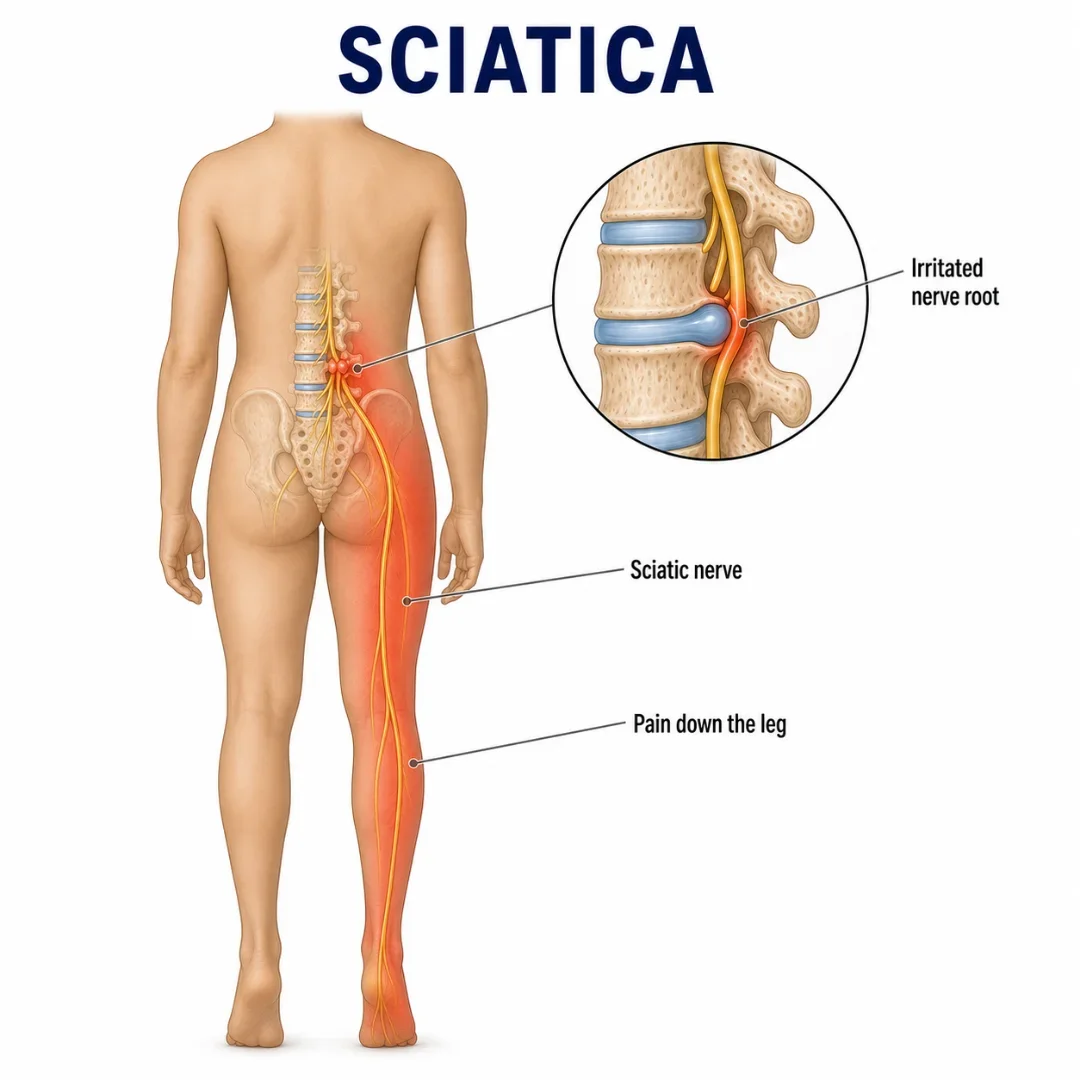
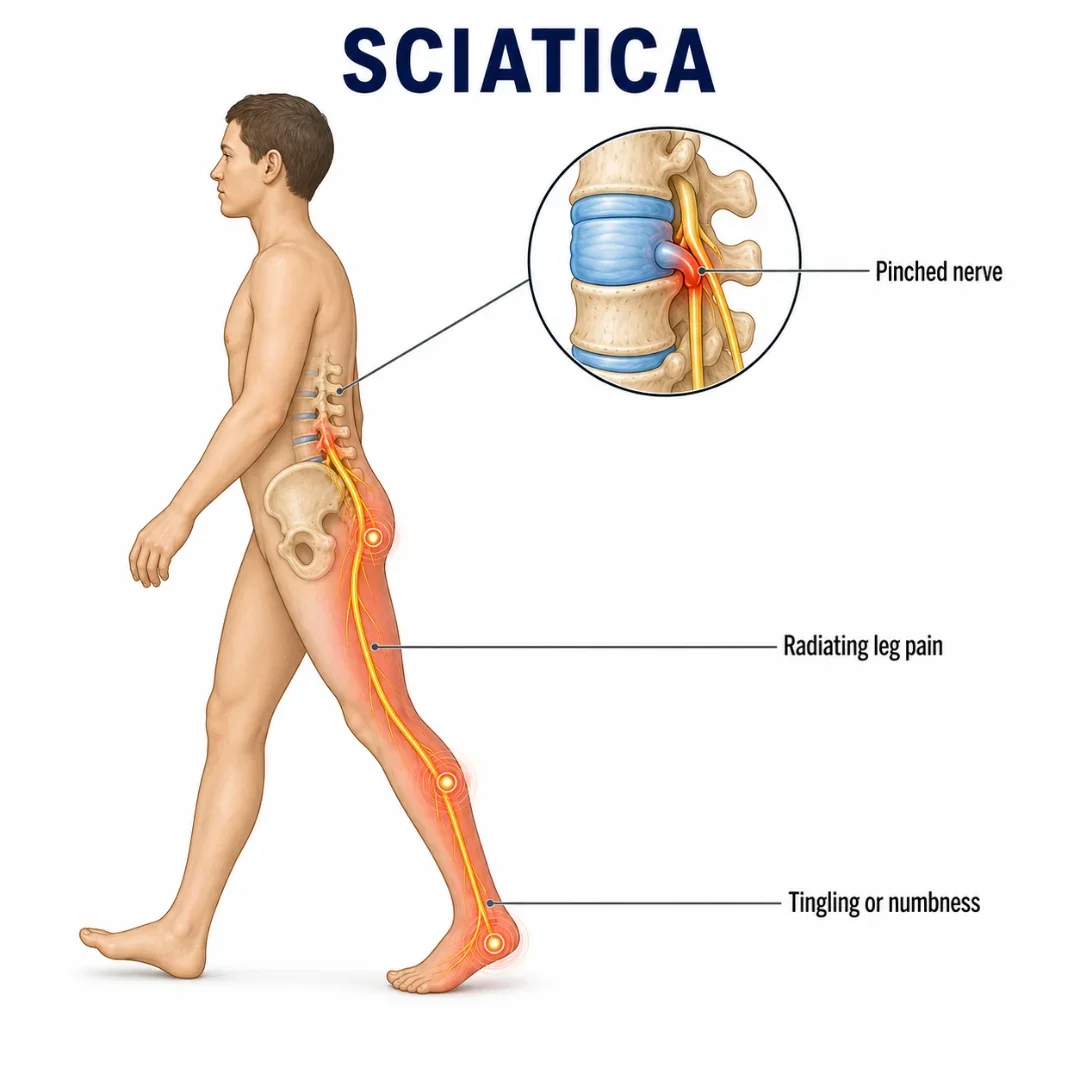
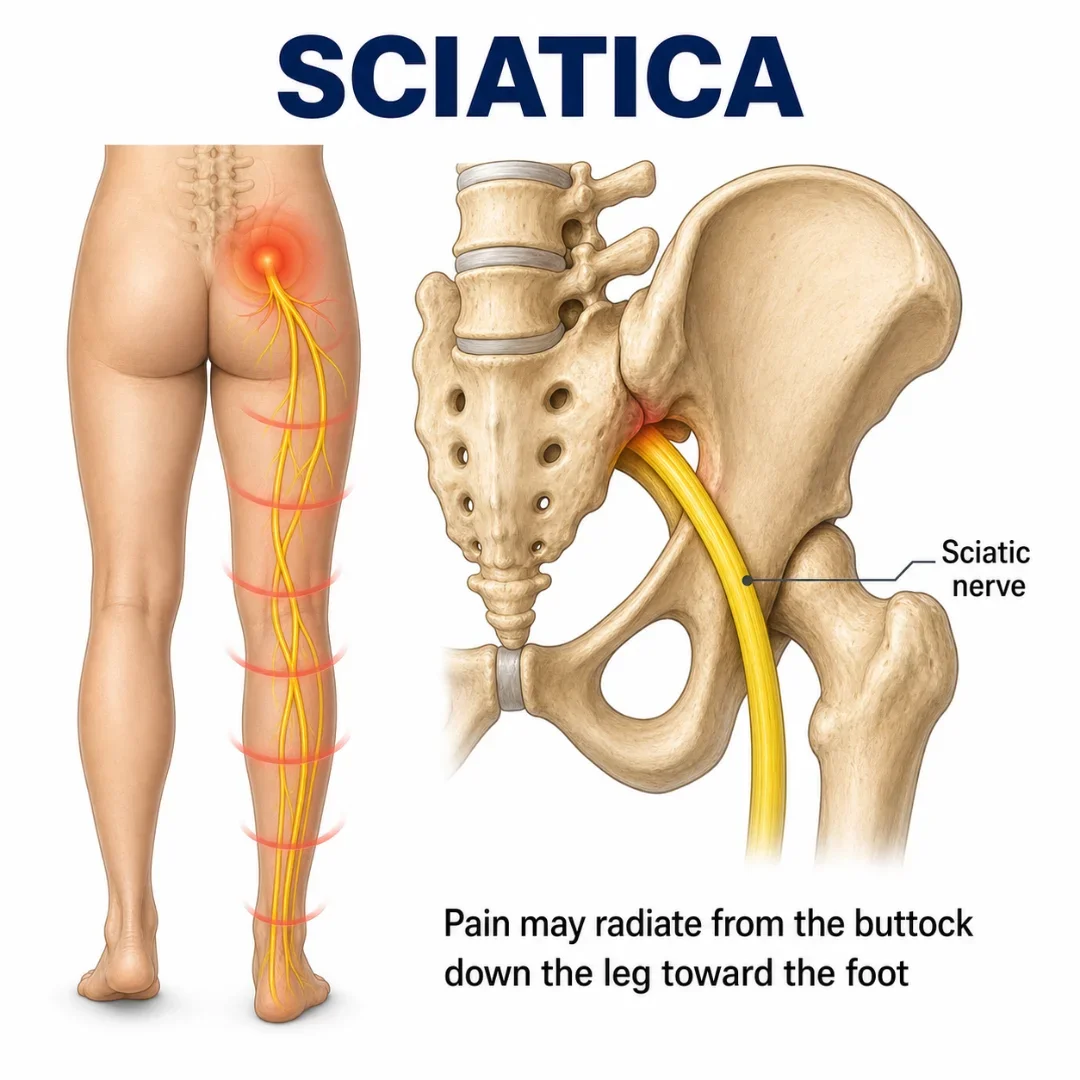
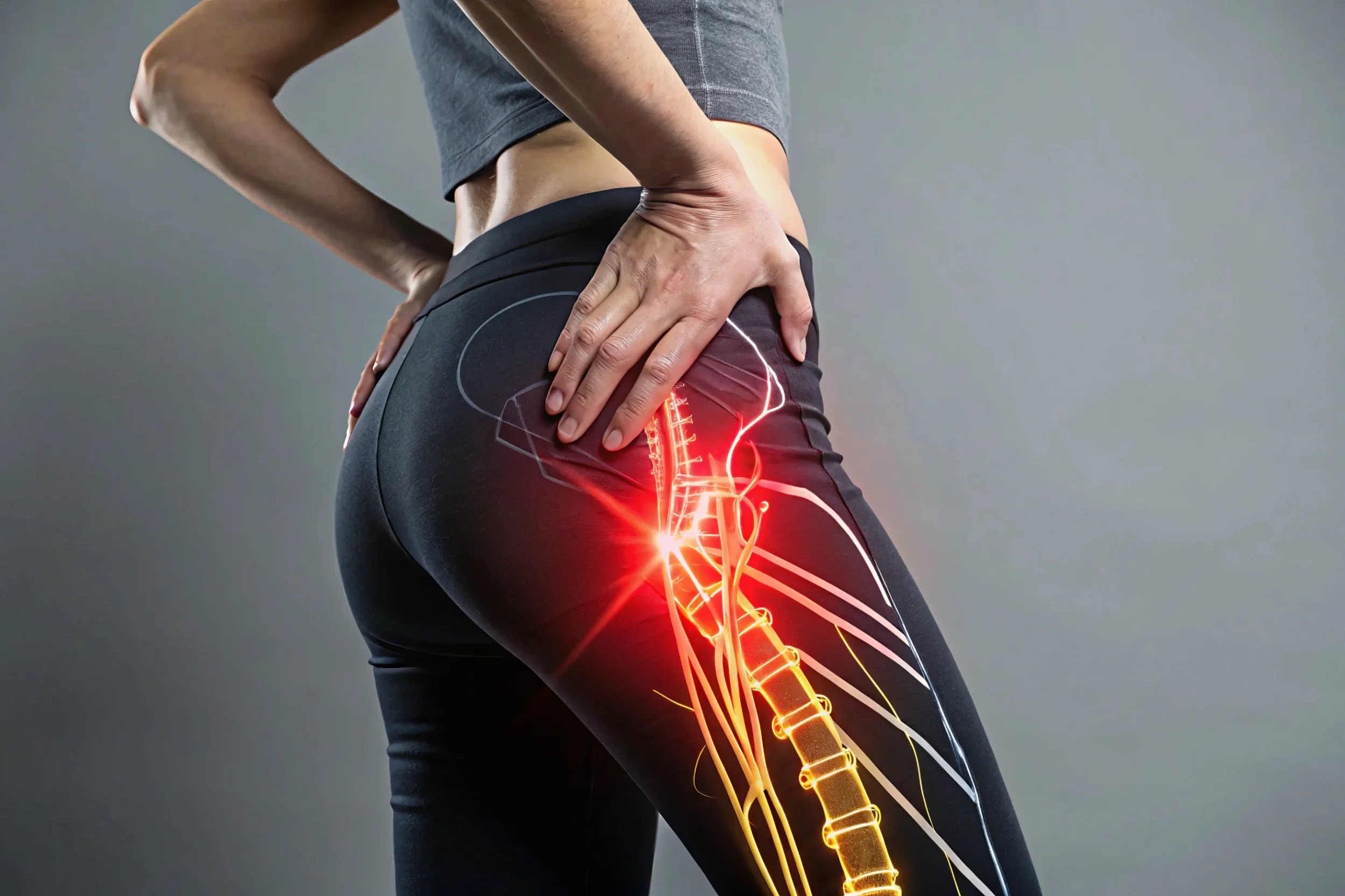
Sciatica is a lay term that describes pain, numbness, tingling or weakness that travels along the sciatic nerve, which runs from the lower lumbar spine through the buttock and down the back of the leg into the foot. It is not a diagnosis in itself but a description of symptoms, most commonly caused by a disc herniation at L4/L5 or L5/S1 compressing a nerve root as it exits the spinal canal. The pain and neurological symptoms are felt in the leg because that is where the nerve travels, even though the problem originates in the spine. Interestingly, people with sciatica may not experience low back pain - but often only have sciatic nerve pain, and the sciatica symptoms might only be present in the calf or foot of the affected leg. There is often muscle spasm in the lower back, which can bring additional pain.
Sciatica can also present with muscle weakness (e.g. ‘foot drop') if they herniated disk causes sufficient nerve compression or nerve damage.
What Causes Sciatica?
A lumbar disc herniation is the most common cause of sciatic pain: the inner nucleus of a disc pushes through its outer wall and contacts a nerve root, triggering both mechanical compression and a localised inflammatory response. Even a small disc bulge (herniated disc) can cause intense nerve pain in the leg because nerve tissue is exquisitely sensitive.
Other causes we see regularly include the following.
Lumbar spinal stenosis
Age-related narrowing of the spinal canal from thickened ligaments, arthritic facet joints and bone spurs. Typically affects people over sixty, produces symptoms in both legs, and characteristically worsens with walking and improves with sitting or bending forward. This pattern is called neurogenic claudication and requires a different treatment approach from disc-related sciatica.
Piriformis and deep gluteal syndrome
The sciatic nerve passes through or adjacent to the piriformis muscle in the deep buttock. Compression here can mimic disc-related sciatica but requires different treatment, with no lumbar component involved.
Spondylolisthesis
When one vertebra slips forward on the one below, narrowing the nerve root exit. Degenerative spondylolisthesis is particularly common in women over fifty, often at L4/L5, and typically responds well to physiotherapy focused on lumbar stabilisation.
Sciatica in pregnancy
Hormonal ligament laxity, postural changes and increased pelvic load can all compress or irritate the sciatic nerve. Physiotherapy during pregnancy is safe and effective, and often addressing pelvic girdle pain simultaneously is what resolves the sciatic symptoms.
Slipped Disc
A disc herniation, aka ‘slipped disc’, occurs when the soft inner nucleus of an intervertebral disc pushes through its outer wall. This can compress a nearby nerve root, producing the shooting or burning leg pain characteristic of sciatica, or it can cause localised lower back pain without leg involvement. Disc pain is typically worse with sitting and bending forward, and often better with walking or lying flat.
One thing we find ourselves repeating in almost every disc-related consultation: scan findings and symptoms have a surprisingly loose relationship. A large proportion of people with disc herniations visible on MRI are entirely pain-free, and many pain-free spines show changes that would be described as pathological. What matters clinically is the correlation between the scan and your symptoms. We will always interpret imaging in the context of our examination findings, not in isolation, and we will give you an honest, clear account of what your results actually mean.
The majority of disc-related back pain resolves without surgery. The disc material is gradually reabsorbed by the body, and appropriate physiotherapy supports this process, addresses the contributing factors, and rebuilds the spinal support system to reduce the risk of recurrence. For the small minority where surgery is the right answer, we will tell you directly and refer you promptly.
Slipped Disc Causing Sciatica
A disc herniation, aka ‘slipped disc’, occurs when the soft inner nucleus of an intervertebral disc pushes through its outer wall. This can compress a nearby nerve root, producing the shooting or burning leg pain characteristic of sciatica, or it can cause localised lower back pain without leg involvement. Disc pain is typically worse with sitting and bending forward, and often better with walking or lying flat.
One thing we find ourselves repeating in almost every disc-related consultation: scan findings and symptoms have a surprisingly loose relationship. A large proportion of people with disc herniations visible on MRI are entirely pain-free, and many pain-free spines show changes that would be described as pathological. What matters clinically is the correlation between the scan and your symptoms. We will always interpret imaging in the context of our examination findings, not in isolation, and we will give you an honest, clear account of what your results actually mean.
The majority of disc-related back pain resolves without surgery. The disc material is gradually reabsorbed by the body, and appropriate physiotherapy supports this process, addresses the contributing factors, and rebuilds the spinal support system to reduce the risk of recurrence. For the small minority where surgery is the right answer, we will tell you directly and refer you promptly.
Is It Actually Sciatica? Why Diagnosis Matters
The word sciatica is used loosely, and this matters clinically. We regularly assess people who have been told they have sciatica when what they actually have is referred pain from the lumbar facet joints, sacroiliac joint dysfunction, piriformis syndrome, or hip pathology mimicking nerve symptoms. These require different treatment. If previous physiotherapy has not worked, misdiagnosis is frequently why.
True nerve root sciatica produces symptoms in a specific dermatomal pattern. L4 compression causes pain and numbness into the inner lower leg. L5 produces symptoms into the outer calf, the top of the foot and the big toe, sometimes with weakness lifting the foot. S1 affects the outer foot and little toe, with weakness in the calf and a reduced ankle reflex. Referred pain from joints tends to stay above the knee and does not produce these defined neurological signs.
In your assessment at Physio Remedies we will establish precisely which structure is responsible for your symptoms. That diagnosis drives everything that follows.
How Is Your Sciatica Affecting You?
You cannot sit for more than twenty minutes without the leg pain becoming unbearable.
Your commute is agony. You have had the scans, been told there is a disc bulge, and are wondering whether you are heading for surgery.
You have had physiotherapy and it has not worked.
You were given exercises, told to keep moving, and sent away. Six weeks later you are no better. This usually means treatment was not specific enough to your presentation.
It keeps coming back.
Each episode frightens you a little more and you are becoming increasingly cautious about bending, lifting or doing anything that might trigger it. That growing avoidance is itself a problem we need to address.
You have noticed weakness or numbness in your leg or foot.
Foot drop, difficulty standing on your toes, or a leg that does not feel quite like your own. This is nerve root compression affecting motor function and requires prompt specialist assessment.
When Sciatica Is Serious: Red Flag Symptoms
Most sciatica is not a medical emergency. However, go to A&E immediately if you experience saddle anaesthesia (numbness in your inner thighs, perineum or genitals), loss of bladder or bowel control, or difficulty passing urine. These can indicate cauda equina syndrome, which requires urgent surgical intervention. Sciatica following significant trauma, unexplained weight loss, fever or a history of cancer also requires urgent medical assessment before physiotherapy.
Why Your Sciatica Has Not Got Better
You have been resting when you need to move
The instinct when you have shooting leg pain is to stop everything that provokes it. But sustained rest is one of the worst things you can do for sciatica. The sciatic nerve needs movement to remain mobile. Resting it in one position for extended periods increases neural sensitivity and makes it more reactive. Progressive, appropriate movement is what settles the nervous system, not avoidance.
You have been frightened by your scan
MRI reports describing disc herniations and nerve root compression are alarming to read, but scan findings and symptoms have a surprisingly loose relationship. A substantial proportion of people with significant herniations on MRI have no symptoms at all, and many pain-free spines show findings that would be described as pathological. What matters is the correlation between the scan and your clinical picture, and that requires clinical judgement, not just a radiology report. We will always interpret imaging in the context of what we find on examination.
Your nerve has not been treated, only your back
A disc pressing on a nerve root is a spinal problem, but the symptoms are primarily neural. Treating the lumbar spine without also addressing the mobility and sensitivity of the sciatic nerve itself produces incomplete results. Nerve mobilisation is a core component of effective sciatica treatment that is frequently omitted.
Nobody has addressed why it happened in the first place
A disc herniation does not occur randomly. It is the result of accumulated load: movement patterns, posture, muscle imbalances and a loading event that pushed a vulnerable disc beyond its tolerance. Without identifying and addressing those contributing factors, you will very likely have another episode. We want to understand the full picture before we start treatment.
Our Approach to Sciatica Treatment
Your first appointment lasts an hour. we will take a detailed history, assess your lumbar spine and neural system, test muscle strength, reflexes and sensation to establish which nerve root is involved, and examine the contributing factors that led to the problem in the first place. we will explain clearly what we find and what we believe needs to happen.
Treatment starts with pain management and typically combines manual therapy to the lumbar spine, nerve mobilisation to restore sciatic nerve movement and reduce neural sensitivity, specific loading and rehabilitation in the form of gentle exercises, and education about managing your symptoms between sessions.
For some patients, imaging or onward referral for a nerve root injection (or other spinal injections)is the right next step. we will tell you honestly when we believe that is the case, and we have the referral pathways to make it happen promptly. What we will not do is give you a generic exercise sheet and hope for the best.
Our Experience
Between our team, we have worked at Olympic Games, Commonwealth Games and World Games, and with professional rugby including the Barbarians. Working with athletes who cannot afford months of cautious management sharpens your clinical thinking considerably. You learn to diagnose precisely, treat specifically, and progress rehabilitation at the right pace. We bring that standard to every patient we see, whether you are a competitive athlete or simply trying to get through a working day without pain.

Frequently Asked Questions
Here are answers to some of the common questions we receive regarding sciatica and treatment at Physio Remedies.
-
Most acute sciatica improves significantly within six to twelve weeks with appropriate treatment. The disc material causing the compression is gradually reabsorbed by the body, and the nerve root recovers. Chronic cases, or those that have been poorly managed, take longer. With proper rehabilitation the aim is not just to resolve this episode but to significantly reduce the risk of the next one.
-
Sitting increases pressure within the disc and places the sciatic nerve in a lengthened position, both of which aggravate nerve root compression. If your sciatica is better walking and worse sitting, this is a classic pattern and actually a reasonable prognostic sign: it suggests the problem is positional and mechanical rather than severe or fixed.
-
In most cases yes, and appropriate movement is part of the treatment. Walking and swimming are generally well tolerated. The specific exercises that help depend on your presentation: some people are worse with flexion and better with extension, others the opposite. Generic exercises prescribed without knowing your directional preferences are at best unhelpful. This is why assessment before prescribing anything matters.
-
Most acute sciatica does not require an MRI before we can begin effective treatment. If your symptoms are not responding within four to six weeks, or if we need to confirm a clinical suspicion before recommending a specific intervention, we will refer you for imaging. If you already have a scan, bring it: we will interpret it in the context of our examination findings, not in isolation.
-
The majority of sciatica patients we treat do not need surgery, and we will always be direct with you about this. Most disc herniations resolve with physiotherapy and time. When we believe a surgical opinion is genuinely warranted, we will say so and refer you promptly. We will not string out a course of treatment in someone who needs a different intervention.
-
Both produce buttock pain and leg symptoms, which is why they are confused. True sciatica produces defined neurological signs corresponding to a lumbar nerve root. Piriformis syndrome compresses the nerve in the buttock without lumbar signs, and the straight leg raise and neural tension tests that reproduce sciatica are usually negative. The treatment differs significantly, which is why clinical examination rather than accepting a previous diagnosis is essential.
-
Lumbar spinal stenosis is an age-related narrowing of the spinal canal that produces leg symptoms typically worse with walking and better with sitting. Many cases respond well to physiotherapy. Surgery is not inevitable, and we will give you an honest assessment of whether conservative management is likely to be sufficient in your case.
-
No. You can book directly with us. If you need imaging, medication, an injection or surgical assessment, we will advise this and refer you directly to the appropriate specialist.
Book Your Sciatica Appointment
If shooting leg pain, numbness, weakness or sciatic nerve symptoms are affecting your work, sleep, sport, or daily life, book an assessment at Physio Remedies in the Lansdowne Club, Mayfair.
If you prefer to reach us directly: