

Back Conditions
Facet Joint Pain Treatment in Mayfair, London
Facet joint pain is one of the most common causes of lower back pain we see, and one of the most consistently undertreated. Not because it is difficult to treat, but because it is so frequently misdiagnosed. It is mistaken for disc-related pain, treated with the wrong exercises, and either made no better or actively made worse. The patient is left wondering why their back is not improving, often months into a treatment programme that was never targeted at the right structure.
If your back pain is worse when you arch backwards, worse first thing in the morning, and has a nagging stiffness that eases once you get moving, there is a strong chance your facet joints are the primary source. A thorough assessment at our Mayfair clinic will establish whether that is the case and what treatment will actually resolve it.

What Is Facet Joint Pain?
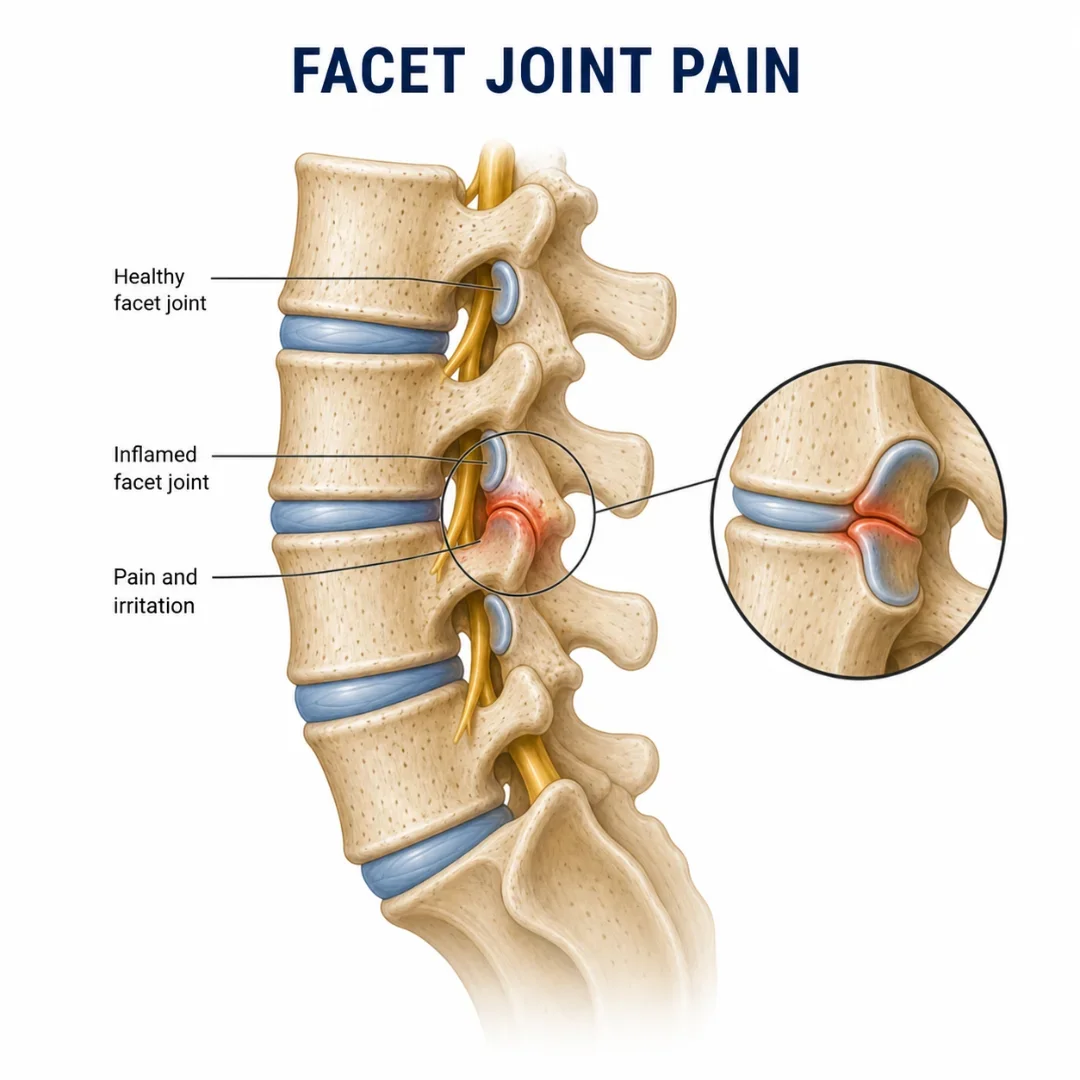
The facet joints, also called zygapophyseal joints, are the small paired joints at the back of each vertebra. Working alongside the intervertebral discs at the front of the spine, they guide and limit spinal movement, absorb load, and provide stability at each spinal segment. The most commonly affected levels in the lumbar spine are L4/L5 and L5/S1, largely because these levels carry the greatest mechanical load.
Like any synovial joint, the facet joints have cartilage surfaces and a fluid-filled capsule. They can become inflamed acutely from a sudden injury or awkward movement, or they can degrade gradually through osteoarthritis and cumulative overload. Degenerative disc disease often accelerates facet joint deterioration: as disc height reduces, the facet joints take on a greater proportion of spinal load and wear more rapidly. In many people, both processes are present simultaneously.
Facet joint pain, or facet joint syndrome as it is sometimes called, is estimated to account for up to thirty per cent of chronic lower back pain. Despite this, it remains underdiagnosed in general practice because it does not always appear clearly on standard MRI, and because its symptoms overlap with other spinal conditions that tend to receive more attention.
Recognising Facet Joint Pain: The Pattern That Matters
The character and pattern of your symptoms are the primary diagnostic tool. Facet joint pain has a recognisable clinical picture that distinguishes it from disc-related pain, even though the two are frequently confused.
Facet joint pain is typically a deep, aching pain localised to one side of the lower back, sometimes radiating into the buttock and posterior thigh. It does not usually travel below the knee, which is an important distinction from sciatica. It is characteristically worse when arching the back backwards or rotating, and better when bending slightly forward or sitting down. Prolonged standing and walking tend to aggravate it, whilst sitting provides relief, which is the opposite pattern to disc-related pain.
Morning stiffness is one of the most consistent features. Many patients describe waking with a back that feels locked or seized, taking twenty to thirty minutes of gentle movement before they can function normally. This pattern of pronounced morning stiffness in the lower back that gradually eases with activity is highly suggestive of facet joint involvement and is one of the first things we ask about in assessment.
When both facet joints at a spinal level are affected, pain can be felt across the lower back rather than on one side. Episodes are often intermittent, with periods of relative comfort between flare-ups, though without proper treatment these episodes tend to become more frequent and more severe over time.

Why Facet Joint Pain Is So Often Confused With Disc Pain or Sciatica
This is the most important clinical distinction in lower back pain assessment, and the one most often missed in non-specialist settings.
Both facet joint pain and disc-related pain are sources of lower back pain that can refer into the buttock and thigh. Both can be associated with stiffness and with symptoms that are worse after a period of inactivity. However, the directional preferences are opposite. Disc-related pain is typically worse with bending forward, sitting, and sustained flexion. Facet joint pain is typically worse with extension, rotation, and prolonged standing. Applying flexion-based exercises to a facet joint problem, which is what generic back pain programmes frequently do, loads the exact structures causing the pain and explains why so many people make no progress despite completing their exercise programmes conscientiously.
True sciatica, caused by nerve root compression from a disc herniation, produces shooting or burning pain that travels down the leg in a defined pattern, usually below the knee and often into the foot. Facet joint pain can refer into the buttock and back of the thigh, and if a nearby nerve root becomes irritated, sharper leg symptoms are possible. But the pattern is different: it does not follow the clear dermatomal distribution of nerve root sciatica, and the neural tension tests that reproduce true sciatica are typically negative in facet joint pain. Making this distinction correctly is what determines whether your treatment works.
Why Your Facet Joint Pain Has Not Got Better
You have been doing the wrong exercises
Generic back pain exercise programmes are frequently flexion-based: knees to chest, lumbar flexion stretches, curl-ups. For a disc problem, these may be appropriate. For facet joint pain, they are counterproductive. The facet joints are unloaded in flexion and compressed in extension, which means the extension-aggravated pain of facet joint syndrome requires extension-avoiding strategies in the early stages, not the flexion bias that tends to be handed out by default. This is not a minor detail: it is the most common reason people with facet joint pain fail to progress with standard physiotherapy.
Underlying load has not been addressed
Facet joint pain recurs when the factors loading the joints abnormally have not been identified or changed. Poor posture, a hyperlordotic lumbar stance, weakness in the deep stabilising muscles of the lumbar spine, and extension-biased sport or occupational habits all continue to stress the facet joints between sessions. Treating the pain without addressing these factors produces temporary relief and reliable recurrence. We assess and address the full picture, not just the symptomatic joint.
The diagnosis was never properly established
Facet joint pain does not always show convincingly on MRI. Clinical examination, specifically assessing which movements reproduce the pain and which relieve it, is more diagnostically informative than imaging in most cases. If the assessment was brief or the imaging was inconclusive, the diagnosis may simply have been 'back pain', and a non-specific diagnosis produces a non-specific treatment plan. We carry out a thorough, structured examination to establish precisely which structure is responsible before any treatment begins.
Our Approach to Facet Joint Pain Treatment
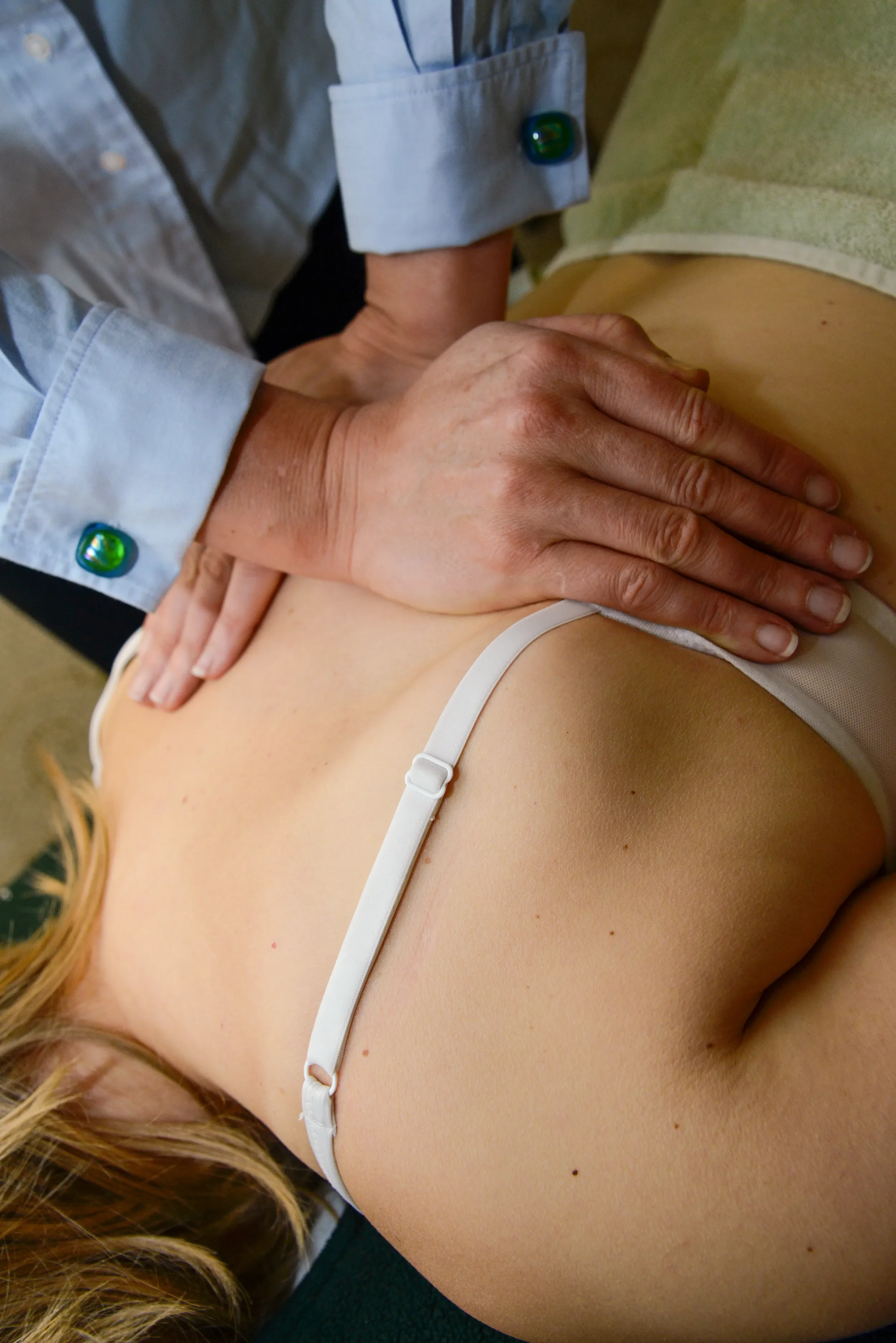
Your first appointment lasts an hour. We take a detailed history, assess your spinal movement and the directional pattern of your symptoms, examine the facet joints themselves and the surrounding musculature, and establish which level or levels are primarily involved. We also assess your posture, your habitual movement patterns, your sport or occupation, and any contributing factors that may be maintaining the problem.
Treatment combines manual therapy directed at the affected joints to restore normal movement and reduce stiffness, alongside a specific rehabilitation programme. The exercise component is directionally informed: we will not give you exercises that load the painful structures. Instead we progressively restore lumbar stability, correct postural habits, and rebuild the movement capacity that facet joint pain tends to erode.
For patients whose pain is occupationally driven by desk work or sustained sitting, our clinic provides formal DSE and ergonomic assessments to address the workstation environment directly. For those whose facet joint pain is sport-related, we focus on the specific movement patterns and loading demands of your sport and build return-to-activity progressions accordingly. Golf, tennis, rugby, and gymnastics all involve repeated lumbar extension and rotation that can maintain facet joint irritation if sport-specific loading is not managed carefully.
When We Recommend a Facet Joint Injection
Facet joint injections are not a first-line treatment, but for some patients they are the intervention that makes rehabilitation possible. When pain is severe enough to prevent meaningful engagement with physiotherapy, or when the condition has been present for a long time and the joint is significantly inflamed, a corticosteroid injection delivered under imaging guidance into the affected joint can provide substantial pain relief and the window needed for exercise and manual therapy to take hold.
The injection reduces the inflammatory response within the joint capsule. It does not address the underlying joint degeneration or the mechanical factors that have been loading the joint. This is why physiotherapy before and after an injection consistently produces better outcomes than the injection alone. We have established referral relationships with experienced musculoskeletal injection specialists in London and will recommend this pathway when we believe it is clinically appropriate and arrange it promptly.

Our Experience
Between our team, we have worked at Olympic Games, Commonwealth Games and World Games, and with professional rugby including the Barbarians. Facet joint pain is particularly prevalent in contact and rotational sports, and our experience with athletes in rugby, judo, tennis, golf, and overhead sport gives us a specific understanding of the sport-related loading patterns that drive facet joint problems and the rehabilitation progressions needed to return to them safely.
We treat patients across the full spectrum, from competitive athletes managing lumbar loads, to City professionals whose desk environment and commute are driving a pattern of chronic lower back stiffness, to people in their fifties and sixties dealing with facet joint arthritis that has never been properly diagnosed or addressed. The clinical approach is the same: establish precisely what is driving the problem, target treatment specifically at that, and address the contributing factors so that it does not simply return.
Frequently Asked Questions
Here are answers to some of the common questions we receive regarding facet joint pain and treatment at Physio Remedies.
-
The directional pattern is the most useful guide. Disc-related pain is typically worse sitting and bending forward, and better walking or standing. Facet joint pain is typically worse arching backwards and prolonged standing, and better when you sit or bend slightly forward. Morning stiffness that eases with movement is more characteristic of facet joint involvement. That said, the two conditions can coexist, and a thorough clinical assessment is more reliable than self-diagnosis. If you have leg symptoms travelling below the knee, that raises the possibility of nerve root involvement from a disc herniation and needs careful assessment to distinguish.
-
Pronounced morning stiffness that takes time to ease with movement is a hallmark of facet joint irritation. The joints stiffen during the relative immobility of sleep, and the initial stiffness and discomfort you feel getting out of bed and moving in the morning reflects that inflammatory response in the joint capsule. It typically eases as you warm up because movement encourages fluid circulation and reduces joint stiffness. If your morning stiffness is lasting more than thirty to forty-five minutes and is not easing with gentle activity, this warrants assessment.
-
Yes, though the character is different from true sciatica. Facet joint pain typically refers into the buttock and back of the thigh, and rarely travels past the knee. If a nearby nerve root becomes irritated as a result of joint degeneration or inflammation, sharper or more distal leg symptoms are possible. However, the clear dermatomal pattern, the foot symptoms, and the positive neural tension tests that characterise nerve root sciatica are usually absent. If you have significant leg symptoms, particularly below the knee, we will assess carefully for nerve root involvement alongside the facet joints.
-
The honest answer is that it depends on your specific presentation, which is why generic exercise sheets often fail for this condition. In the acute phase, exercises that avoid end-range extension and rotation are usually most appropriate, combined with gentle mobilisation in comfortable ranges. As pain settles, deep lumbar stabilisation exercises, hip strengthening, and progressive return to normal movement become central. What consistently does not help, and often makes things worse, is sustained lumbar flexion stretching or the extension-based exercises sometimes given for general back pain. We will prescribe a programme specific to your directional pattern and stage of recovery.
-
Acute facet joint pain from a specific injury or flare-up often settles substantially within four to eight weeks with appropriate treatment. Chronic facet joint pain or facet joint arthritis that has been present for months or years takes longer, typically three to six months of consistent physiotherapy to achieve meaningful, sustained improvement. The key variable is whether the contributing factors have been properly identified and addressed. People who are treated for the episode but not for the underlying cause will improve and then relapse, often repeatedly.
-
Not necessarily as a starting point. Facet joint pain is primarily a clinical diagnosis made on the basis of symptom pattern and physical examination, and MRI does not always show facet joint changes clearly even when they are the source of significant pain. If the clinical picture is complex, if symptoms are not responding as expected, or if we want to rule out other spinal pathology before recommending an injection, we will arrange imaging. If you already have scan results, bring them and we will interpret them in the context of our examination findings.
-
Surgery for facet joint pain is rarely necessary and is reserved for cases where joint degeneration is severe, there is associated spinal instability or nerve root compression from arthritic joint hypertrophy, and all conservative measures have genuinely failed. The vast majority of facet joint pain responds well to physiotherapy and, where needed, injection therapy. We will be direct with you about whether we believe conservative management is sufficient in your case.
-
We accept Bupa, AXA, and Cigna International. Our initial assessment is £190 for one hour. Please contact us to confirm your cover before your appointment.
Book Your Facet Joint Assessment in Mayfair, London
If lower back stiffness, facet joint pain, or back pain that is worse arching backwards is affecting your work, sleep, sport, or daily life, book an assessment at Physio Remedies in the Lansdowne Club, Mayfair. We are a short walk from Green Park and Berkeley Square.
If you prefer to reach us directly: