You just ran a marathon — that's extraordinary. Now your body needs time to rebuild. This guide walks you through exactly what to do (and what to avoid) in the weeks ahead so you come back stronger.
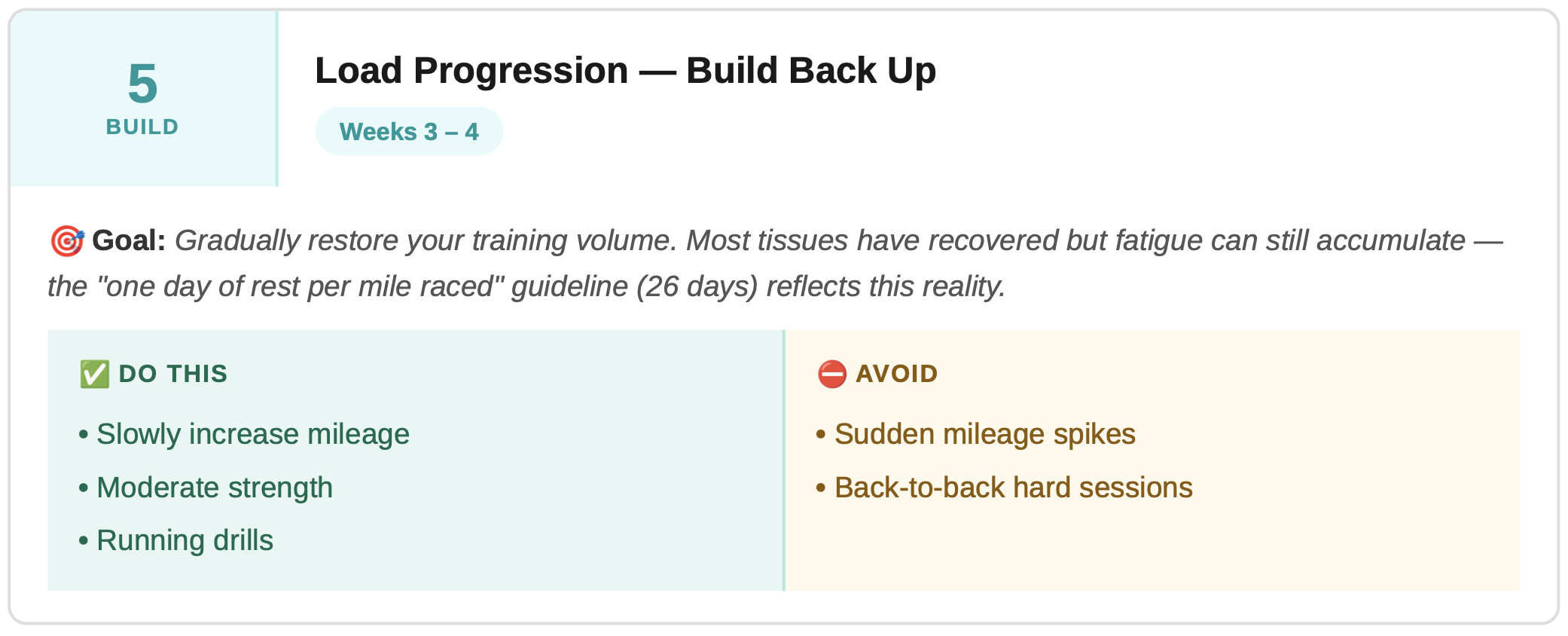
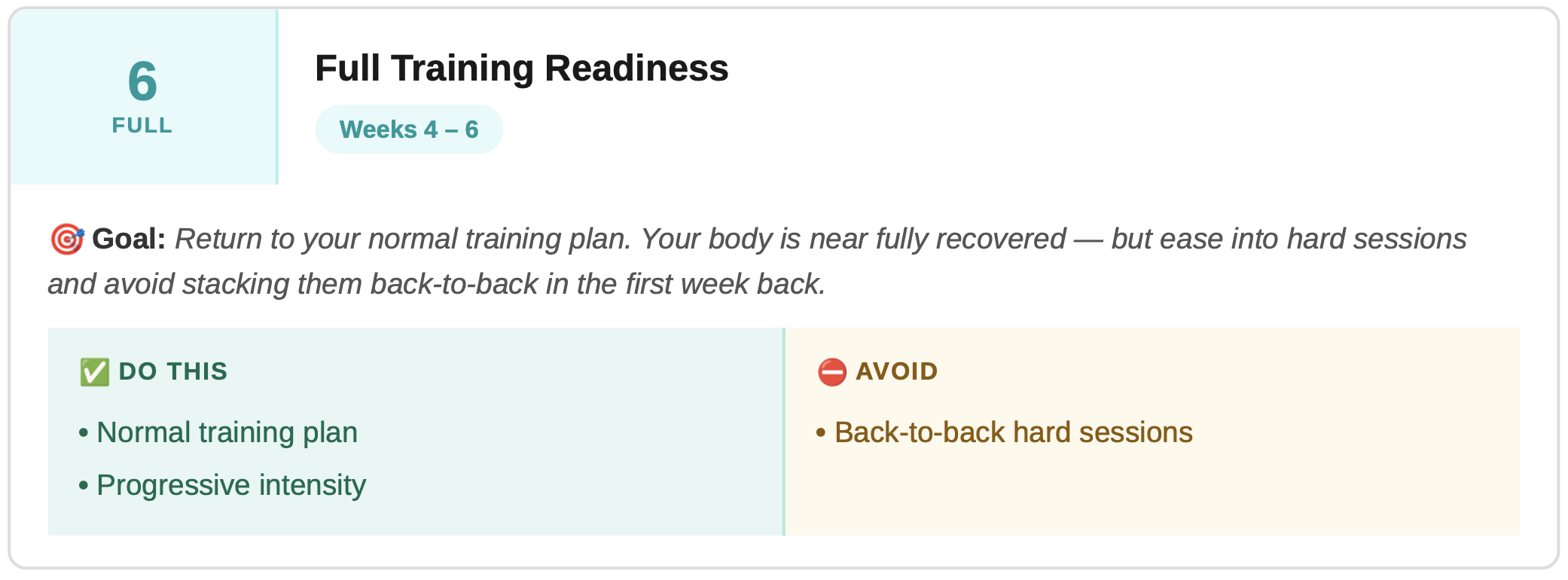
Even when soreness fades, your body is still repairing at a deeper level — research shows inflammation markers remain elevated for up to 8 days, and muscle damage markers for up to 6 days in average recreational runners. Rushing back too soon is the most common cause of post-marathon injury. This 6-phase plan gives your body the time it genuinely needs — typically 4–6 weeks before returning to full training.
🔬 Evidence-reviewed guide Cross-checked against current sports medicine research including Bernat-Adell et al. (2021, J Strength Cond Res, n=86 runners), Moreno-Pérez et al. (2020, J Athl Train), Wiewelhove et al. (2018, PLoS ONE), Peltonen et al. (2012), and Wang et al. (2025, PMC).
Your 6-Phase Recovery Plan
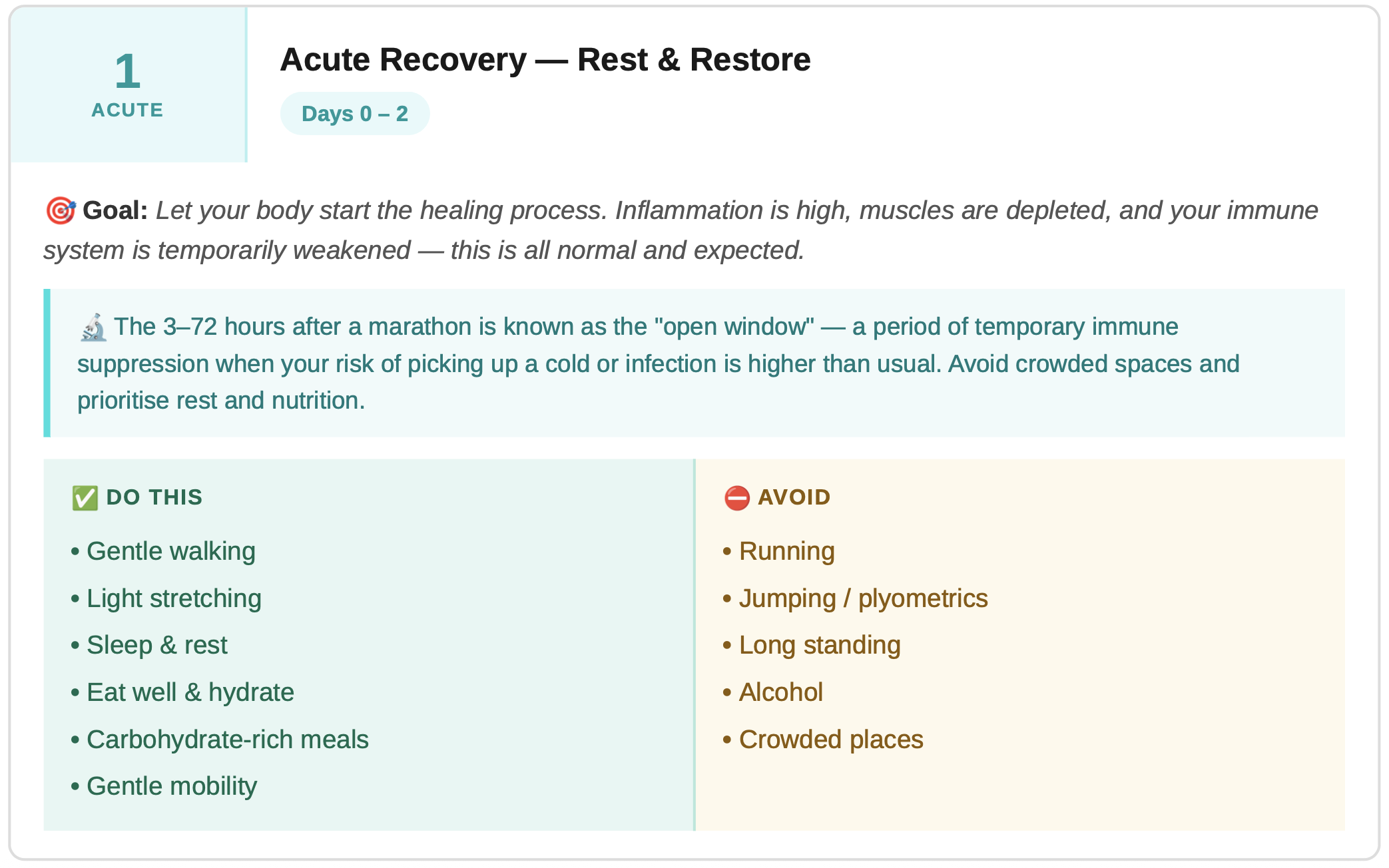
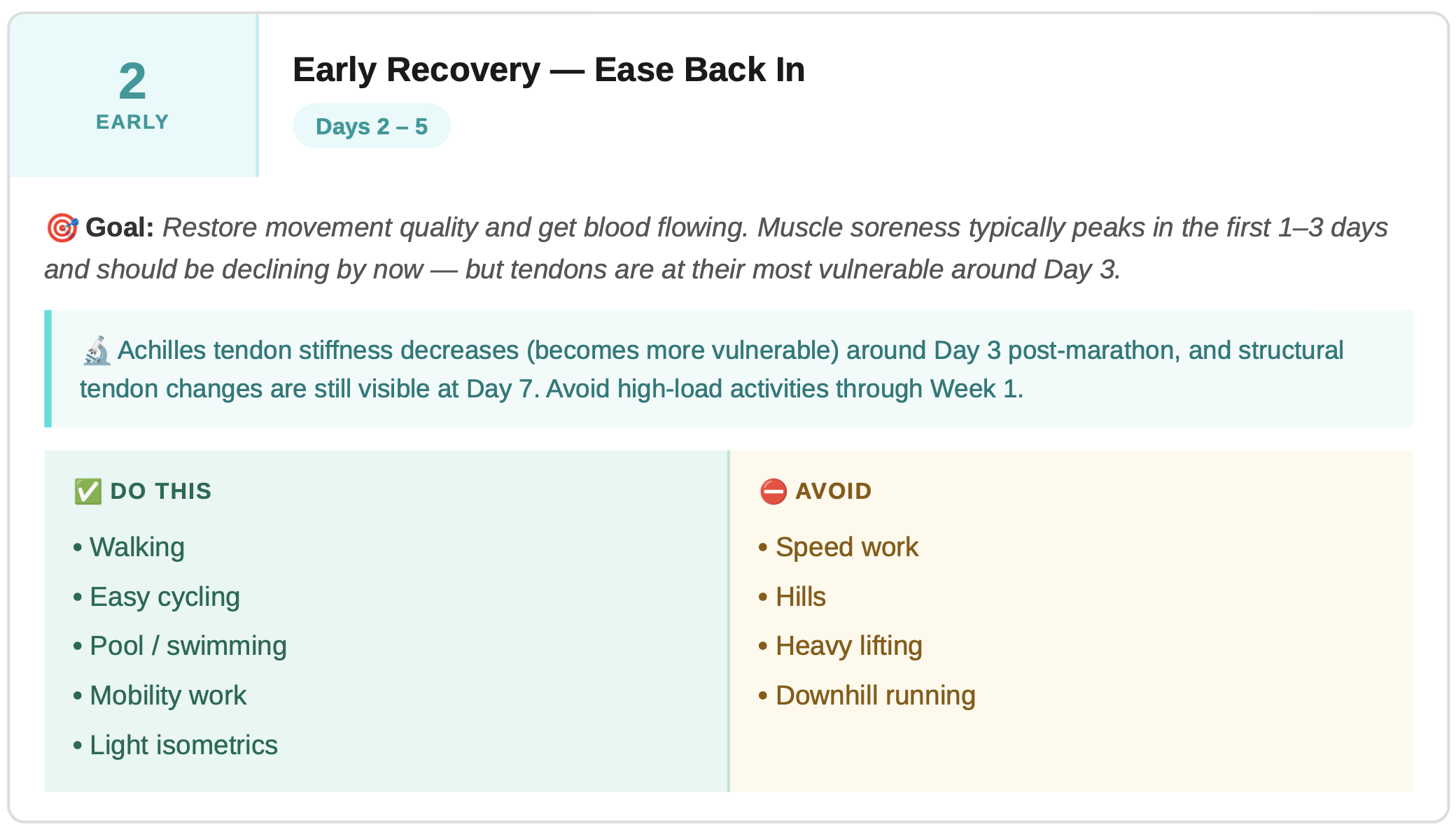
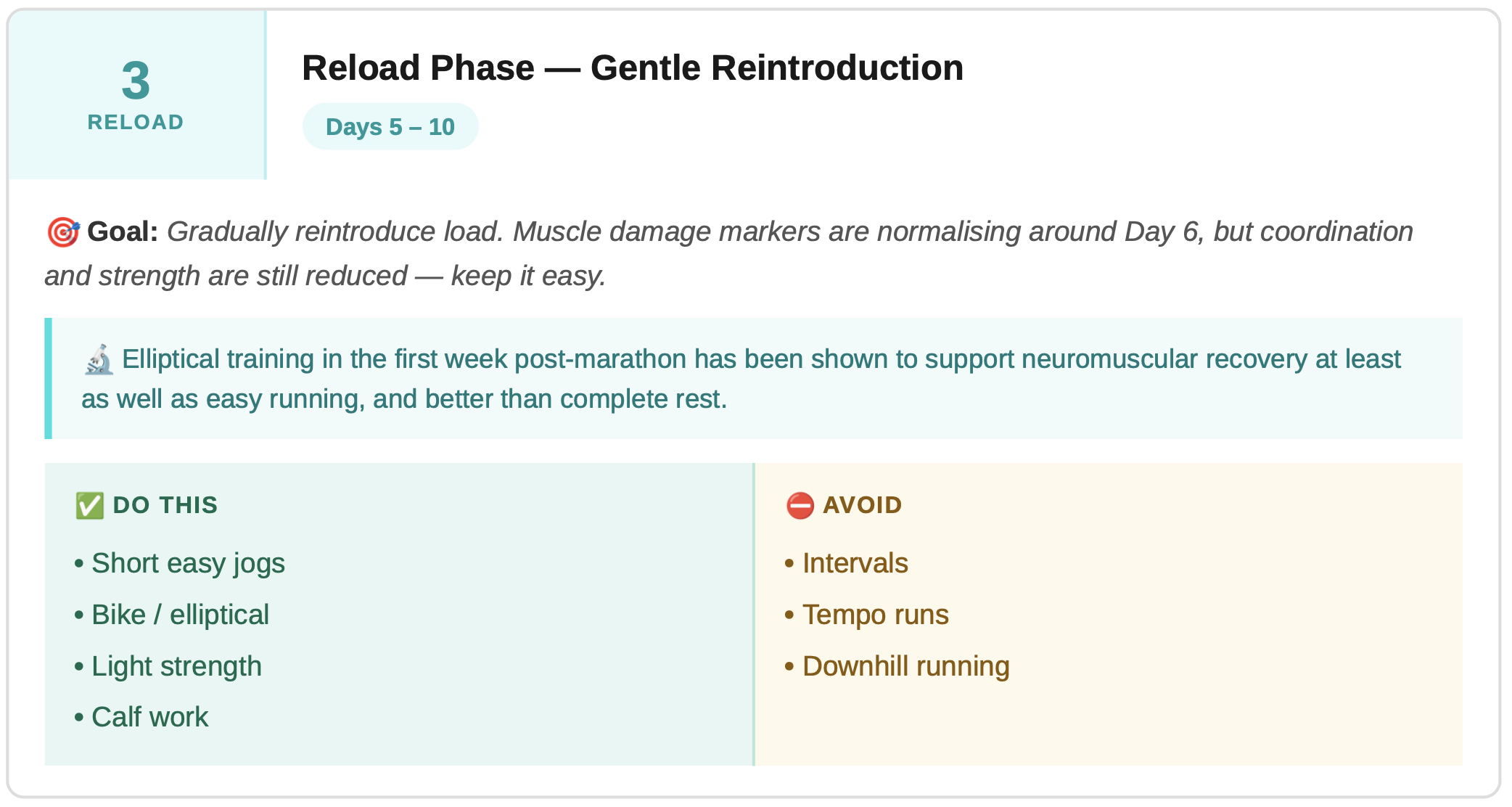
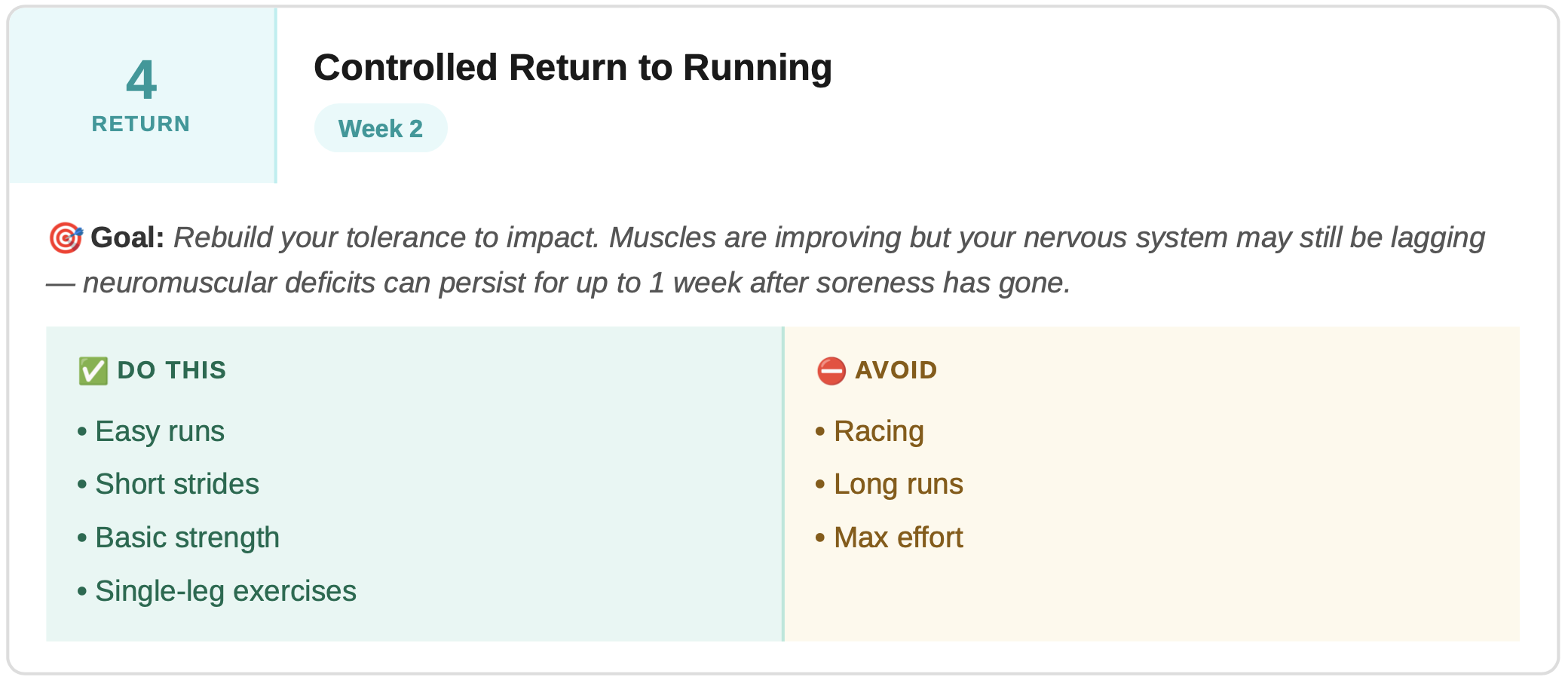
⏱️ Why You May Feel Fine But Still Need Rest
After a marathon, your body goes through a lot of internal repair work — most of which you simply cannot feel. Research shows that even when soreness fades and you feel back to normal, your muscles, joints, and immune system are still recovering behind the scenes. Here's a simple way to think about it:
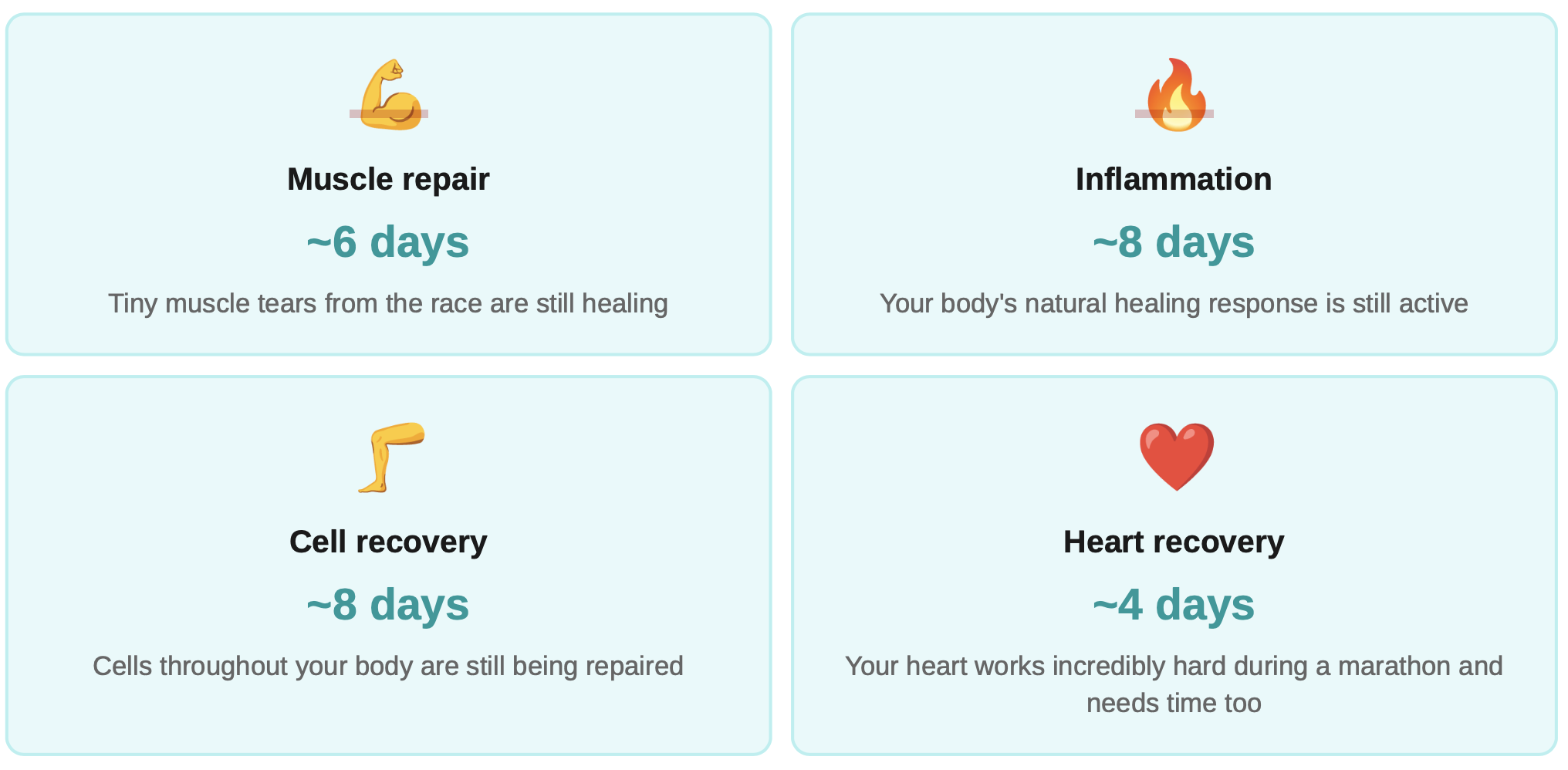
The key message: "Feeling fine" after a few days is a great sign — but it doesn't mean your body has finished recovering. Returning to hard training too soon is the most common reason runners pick up injuries after a marathon. Trust the process and follow the phases above.
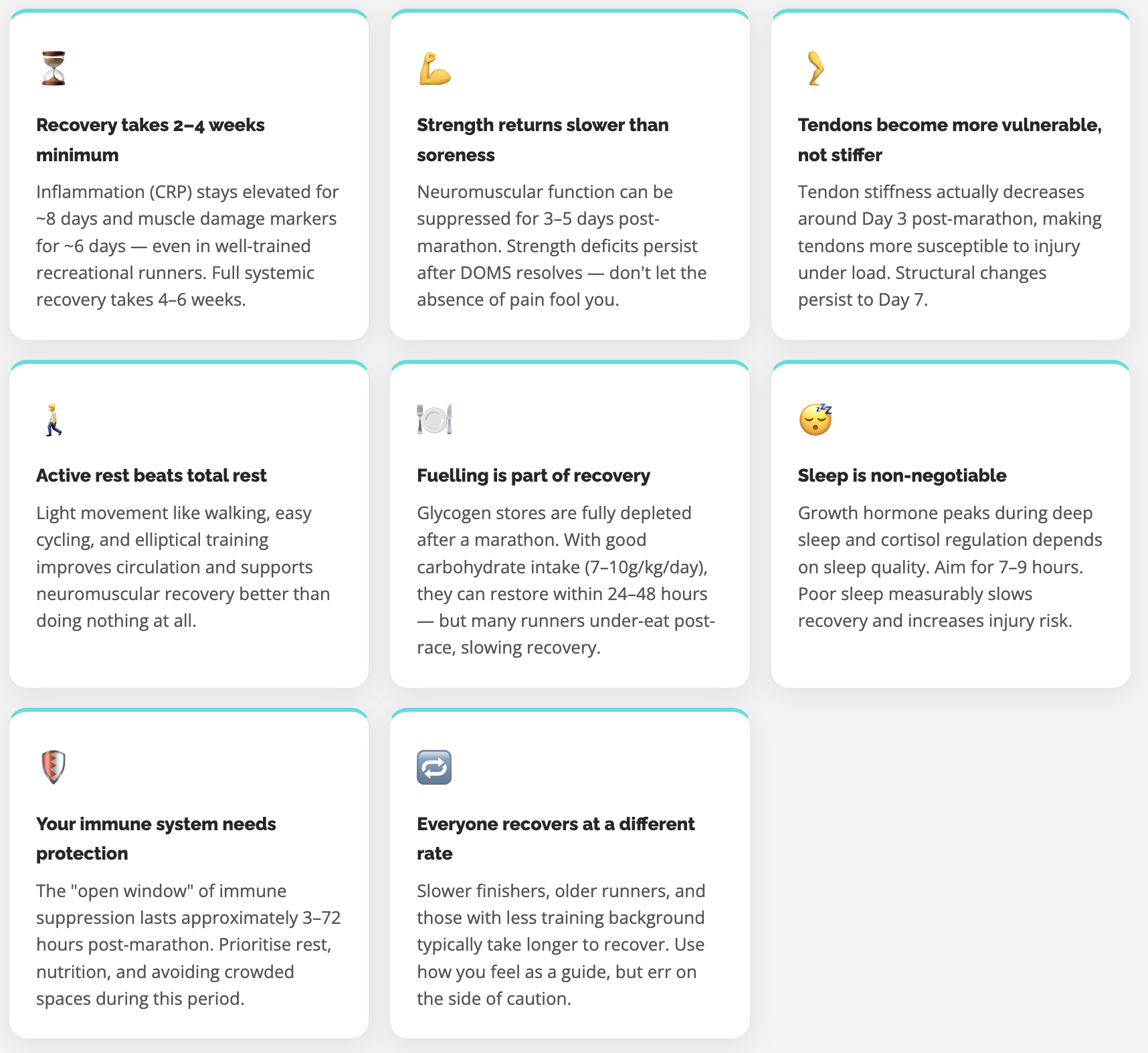
💡 Key Recovery Principles
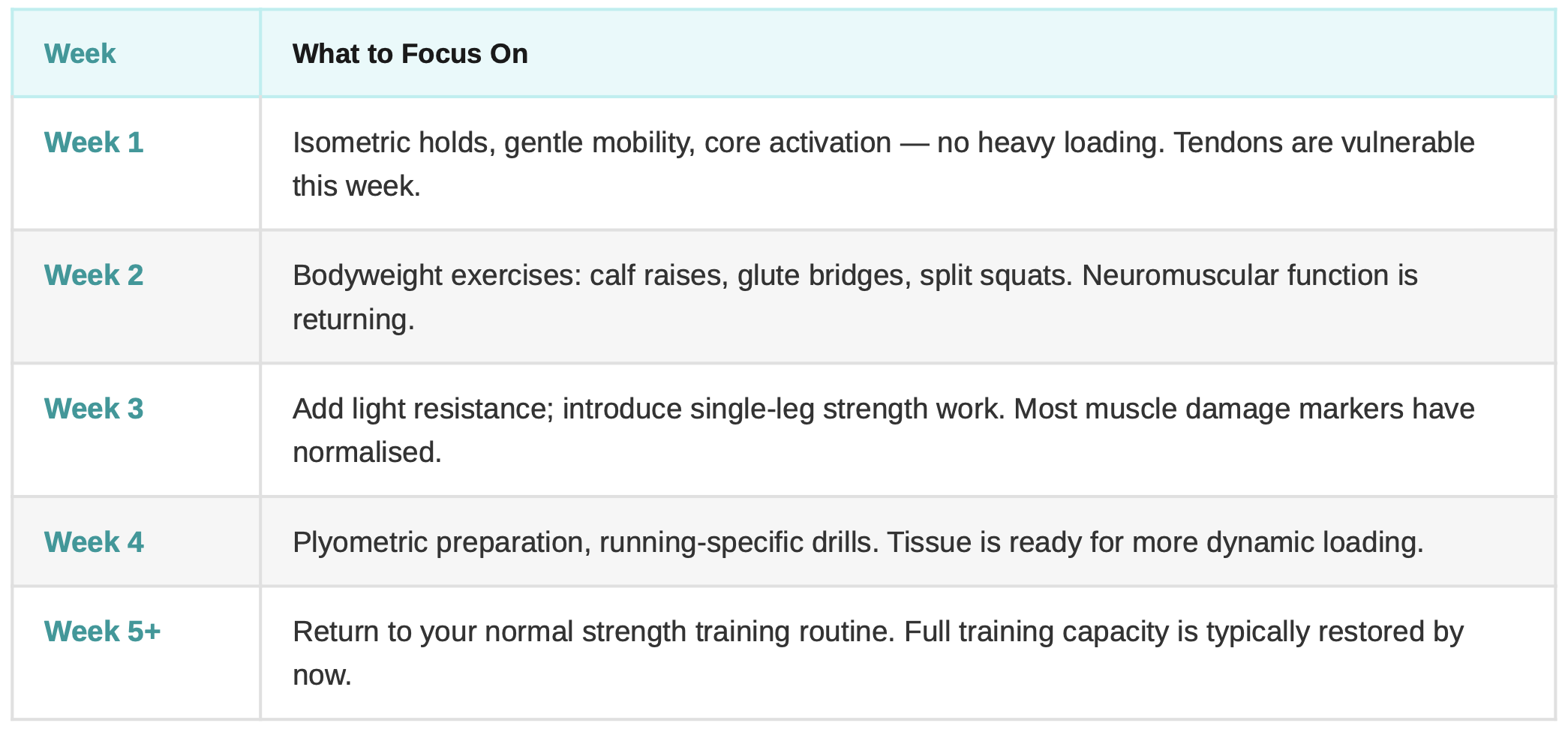
🏋️ Strength Training Week by Week
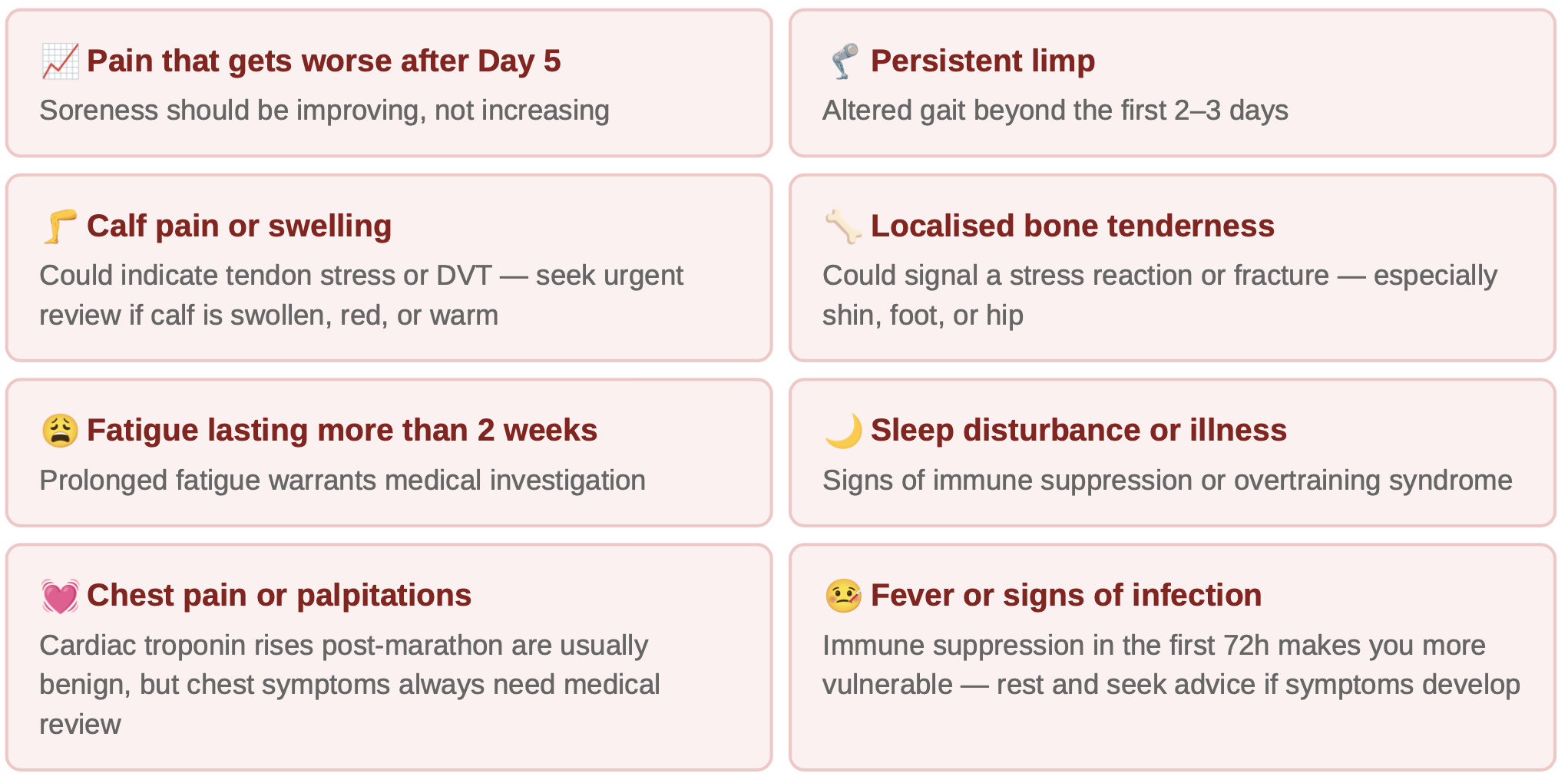
🚨 Warning Signs — Slow Down Your Recovery
If you experience any of the following, pause your recovery programme and consult a healthcare professional. These signs suggest your body needs more time — or that something needs to be assessed promptly.
Here is a rewritten version with the same information, just worded differently:
Ready to recover smarter? Whether you need post-race recovery, sports massage, a running assessment, or a plan to stay injury-free ahead of your next event, our physiotherapy team is ready to help.
Booking a sports massage with Emily? Use code MARATHON10 at the time of booking for 10% off your session — available until 6 May only.
Get in touch to arrange an appointment or speak to us about your recovery: 📧 info@physioremedies.com 📞 020 3012 1222 Or book directly via our contact and booking page.