Finding more mental breathing space with Physio Remedies in Mayfair
You have finished work, put your phone down and climbed into bed, but your mind is still working through tomorrow’s to-do list. Or perhaps you notice stress through tight shoulders, a clenched jaw or breathing that feels rushed and unsettled.
Stress can affect both body and mind. At Physio Remedies, we help patients explore practical ways to manage the physical effects, including breathing assessments and breathwork with physiotherapist Phil Harris. Sarah Lawson has also been using Nurosym at home and shares what she has noticed over the past four months.
What is breathwork
Breathwork means deliberately working with your breathing patterns. Depending on your needs, this can involve noticing your breathing at rest, practising a more comfortable rhythm or learning how to manage breathing during activity.
Breathing is automatic, but we can also influence it consciously. That makes breathing exercises an accessible skill to practise during a busy day or as part of an evening routine. The NHS recommends gentle breathing exercises for stress and emphasises regular practice without forcing the breath.
The aim is not to take the biggest possible breath. It is to understand how you breathe and develop a comfortable approach suited to your symptoms, health and activity levels.
Breathwork with Phil Harris
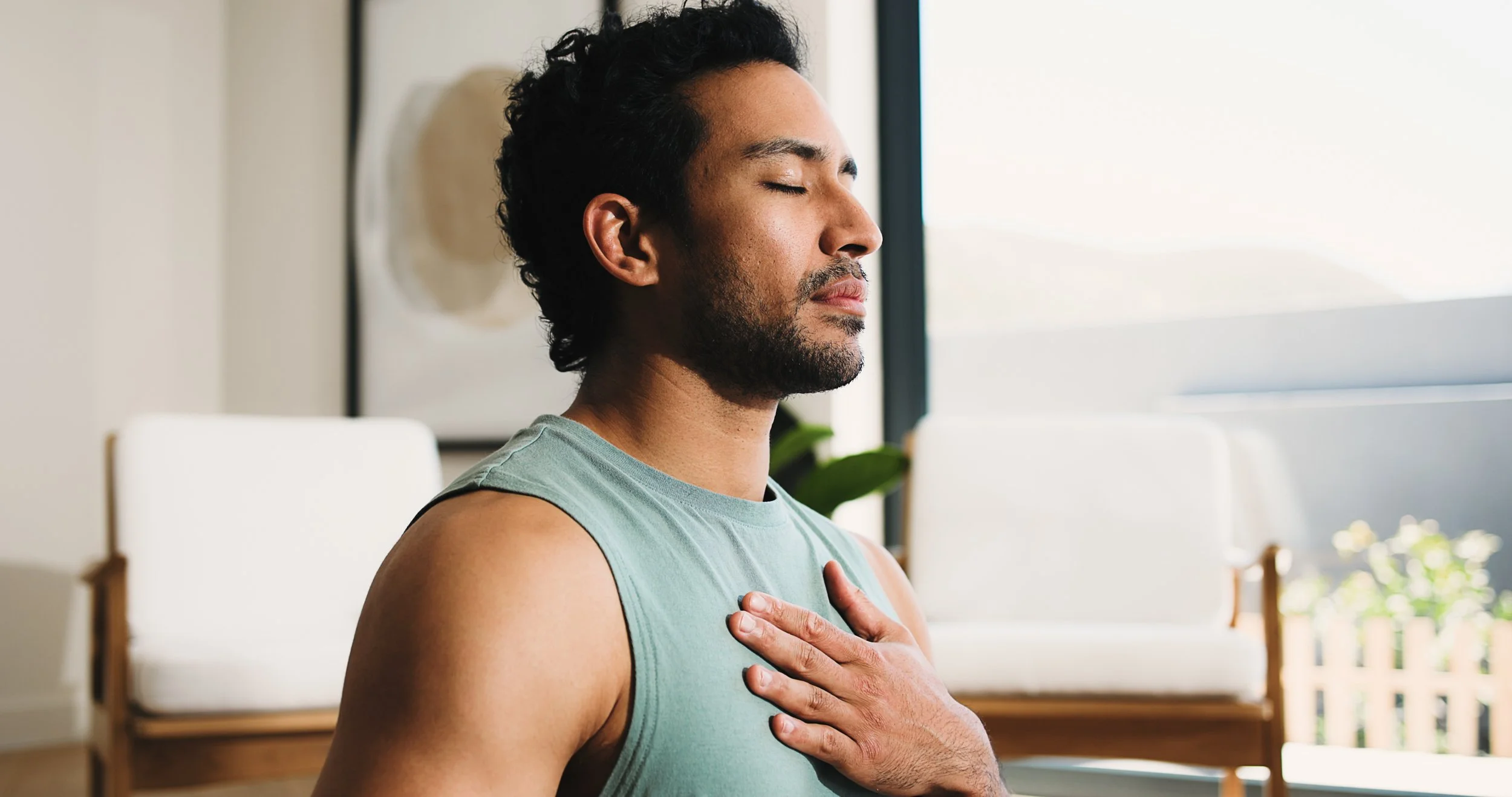
Phil is an experienced physiotherapist and Oxygen Advantage Advanced Instructor. He qualified in 1999, gained his Master’s degree in 2014 and has worked across public and private healthcare and elite sport, including the Olympics, World Championships and Commonwealth Games.
His interest in breathing extends to anxiety, sleep, pain, recovery and physical performance. As a keen ultra runner, he also brings personal experience of using breathing techniques in everyday life and sport.
The benefit of seeing a physiotherapist with additional breathwork training is the opportunity to consider your breathing alongside your symptoms and physical demands. You might be seeking help with feeling tense and unsettled, or want to explore how breathing fits into your recovery or sporting goals.
A breathing assessment with Phil gives you an opportunity to discuss your concerns, assess your breathing patterns and practise techniques with guidance. The focus is on skills you can continue using outside the treatment room.

A gentle place to start
Set aside five minutes somewhere comfortable. Sit with your back supported and allow your shoulders to relax. Breathe gently and regularly, letting the breath move into your abdomen as comfortably as it can, without forcing it. The NHS suggests gently counting up to five as you breathe in and again as you breathe out, if that helps. There is no need to reach five if it feels uncomfortable.
Avoid straining or trying to draw in very large breaths. Stop if you feel dizzy or unwell. If you are unsure how to practise, or your breathing symptoms persist, seek individual assessment rather than pushing through.
For personalised breathwork treatment at Physio Remedies, please book with Phil Harris.
Book a breathwork session with Phil →
Where Nurosym fits in
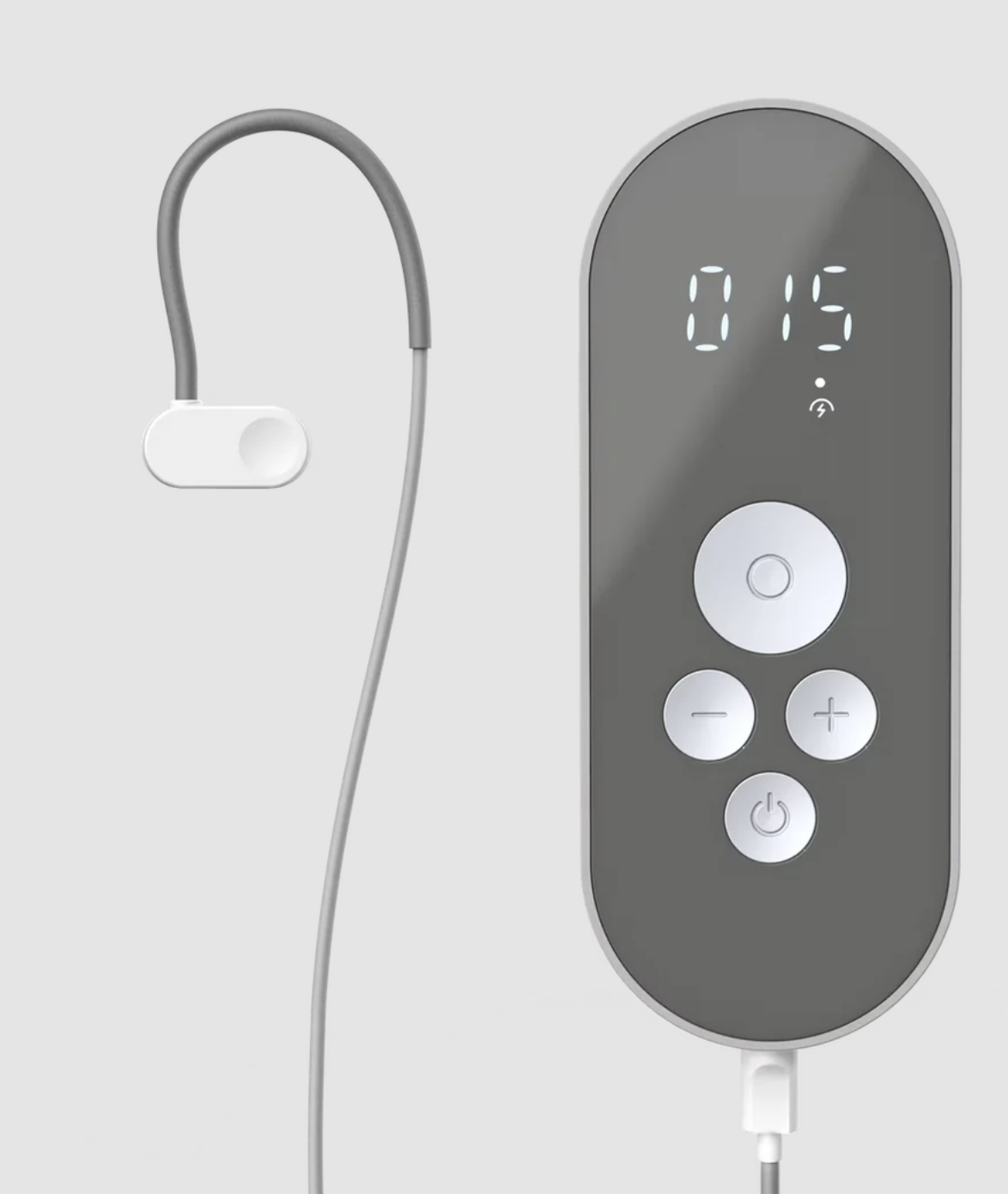
Alongside breathing practice, some people are interested in approaches that use electrical stimulation. Nurosym is a non-invasive device with an earpiece that targets a branch of the vagus nerve at the outer ear. This is called transcutaneous auricular vagus nerve stimulation, or taVNS.
The vagus nerve is part of the communication network between the brain and body and is involved in functions including heart rate and digestion. Researchers are investigating whether stimulating this pathway can influence symptoms and physiological measures associated with nervous system regulation.
Breathwork develops a skill you can practise yourself; Nurosym delivers electrical stimulation. They may each form part of an individual’s wider routine, but the studies discussed below do not establish that combining them produces additional benefits.
Sarah’s experience after four months
“I’ve been using Nurosym for over four months now, usually for 30–40 minutes each evening before bed, while I relax, read or watch television. I started using it to help optimise my sleep, alongside my wider efforts to keep inflammation down, gut health and have noticed improvements in my sleep and heart rate variability, or HRV.
“The biggest difference I’ve noticed is feeling calmer and less caught up in worry. Rather than lying in bed mentally working through everything I need to do the next day, I find it easier to let those thoughts settle. It feels as though I have a little more mental breathing space.
“For me, the changes developed over weeks rather than days. Alongside breathwork, it has become a valuable part of how I manage the demands of running a business and looking after my own health. This is my personal experience, and everyone’s response will be different.”
Sarah’s evening routine describes her own use, rather than a treatment schedule for everyone. Her interest in inflammation is a personal health goal; the improvements she reports here relate to her sleep, HRV and sense of calm.
What the Nurosym research tells us
Nurosym’s website draws on studies using Parasym technology. These include physiological experiments and clinical trials in different groups of people. The findings need to be read alongside the study population, comparison group and treatment schedule.
HRV: This measures variation in the time between heartbeats. A 2022 Parasym study included a 14-person crossover comparison of active and sham stimulation. Several HRV measures increased with active stimulation. This supports a short-term effect on those measurements, rather than proving a lasting improvement in stress or sleep.
Anxiety and stress: A 2025 randomised trial involving 70 adults found greater improvements in anxiety symptoms and perceived stress with active stimulation in the early treatment groups, but not in the later groups. Participants were asked to use stimulation for four hours daily over two weeks, a substantially different schedule from Sarah’s routine.
Sleep: A pilot study of 24 women with Long COVID reported improvements in sleep and anxiety after 10 days, maintained at one-month follow-up. It had no control group. A separate randomised sleep study involving 68 adults found improvements during treatment, but these were not significantly greater than in the control groups. The sleep findings are therefore promising in some studies and mixed overall.
These results help explain the interest in Nurosym while leaving questions about who benefits most and the best treatment schedule. A change in HRV alone does not show that anxiety has improved or inflammation has fallen.
Taking the next step
For a breathing assessment or breathwork treatment, book with Phil Harris. He can help you explore your breathing patterns and develop practical techniques to use day to day.
For Nurosym enquiries, Sarah would be happy to discuss her experience and whether the device might be suitable for you. As a registered Nurosym practitioner, she can also provide details of our clinic code and current patient offers. Nurosym offers a 30-day money-back guarantee, subject to its return terms. [8]
In Nov Nurosym are offering a 20% discount via our clinic code. See the main newsletter for more details .
If anxiety or sleep difficulties are persistent or affecting daily life, speak to your GP as well. Breathwork and Nurosym can be discussed as possible additions to an appropriate care plan.
Contact Sarah at sarah@physioremedies.com for Nurosym enquiries. Charlie, our clinic manager, can help arrange a chat with Sarah or a breathwork appointment with Phil on 020 3012 1222.