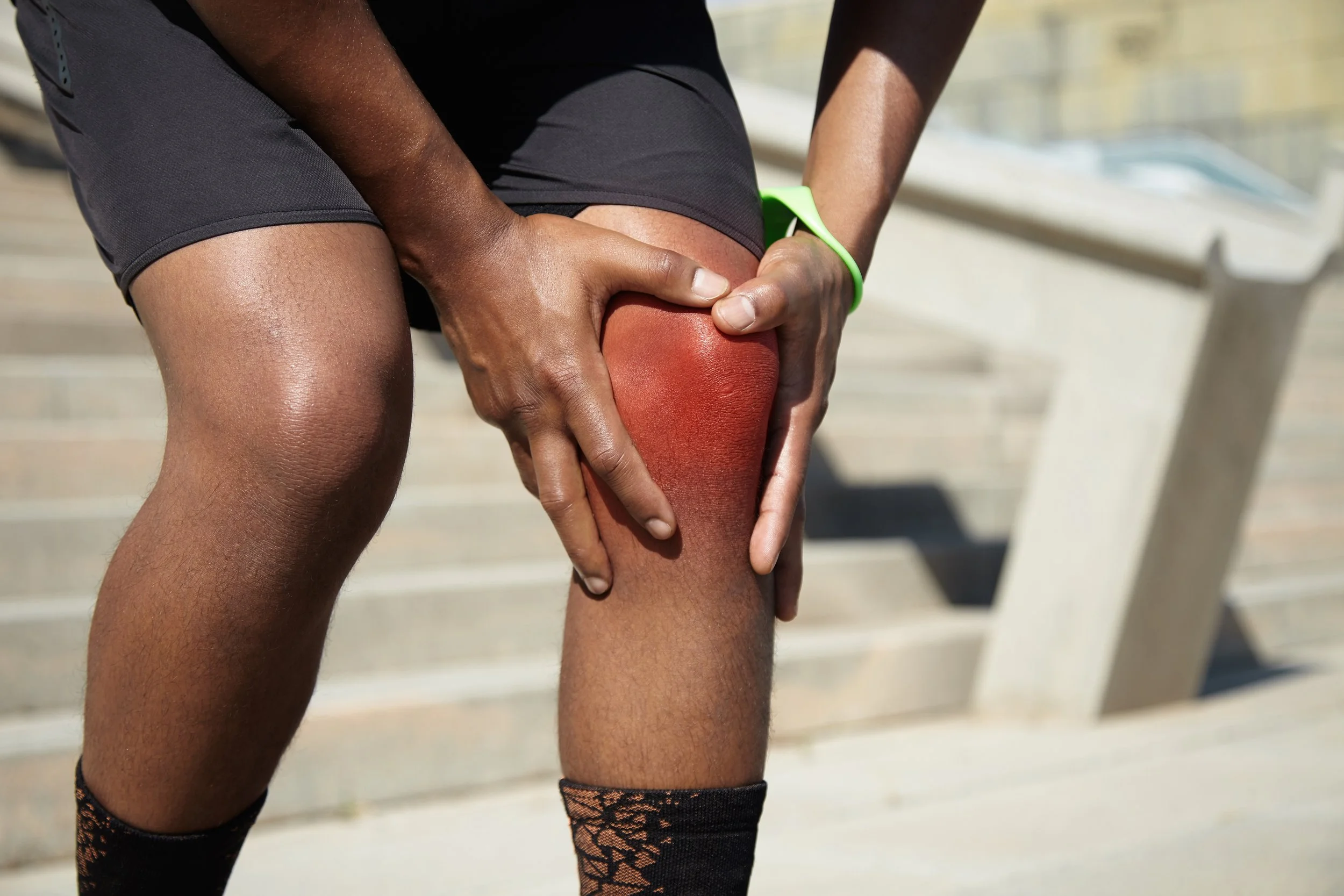
Anterior knee pain, commonly known as Patellofemoral Pain (PFP), is an umbrella term for pain experienced at the front of the knee and around the kneecap (patella). It is one of the most frequent complaints among runners and active individuals. This guide provides a concise overview of the condition, its causes, and our specialist approach to treatment.
Key Characteristics and Symptoms
Location: Pain is typically felt behind, beneath, or around the kneecap.
Aggravating Activities: Symptoms are often provoked by load-bearing activities that involve knee flexion, such as:
◦ Ascending or descending stairs.
◦ Squatting or kneeling.
◦ Walking uphill or running.
◦ Sitting for prolonged periods with bent knees (the "cinema sign").
Crepitus: You may experience cracking, popping, or grinding sounds in the knee.
Important Note: Crepitus is a normal physiological phenomenon. It does not correlate with joint damage or the severity of pathology, and should not be a reason to avoid physical activity.
Common Causes and Risk Factors
PFP is rarely caused by a single structural issue. Instead, it arises from a combination of factors that overload the patellofemoral joint or adjacent soft tissues:
Muscle Weakness and Poor Control: Weakness in the gluteal muscles (Gluteus Medius and Maximus) can lead to poor control of the hip and femur, causing the knee to drop inward during movement.
Quadriceps Dysfunction: Delayed firing or weakness of the quadriceps muscles can alter how the patella tracks within its groove.
Biomechanical Factors: Issues such as over-pronation of the foot, restricted ankle mobility, or structural alignments (like femoral anteversion).
Training Errors: A sudden increase in training volume, intensity, or a change in running surface.
Hoffa’s Fat Pad Impingement: The infrapatellar fat pad, located behind the patellar tendon, is highly sensitive. It can become pinched or inflamed due to hyper-extension, trauma, or poor patellar tracking, mimicking or coexisting with PFP.
Our Specialist Treatment Approach
At Physio Remedies, we recognise that time is of the essence for our professional clientele. We utilize a highly targeted, evidence-based approach to address the root causes of your knee pain, ensuring a swift and sustainable return to your active lifestyle.
1. Comprehensive Biomechanical Assessment
We look beyond the knee, evaluating your entire lower limb kinetic chain—from foot pronation to hip and pelvic stability—to identify your specific "shopping bag" of risk factors.
2. Targeted Strengthening and Endurance
Gluteal Rehabilitation:
Specific exercises to enhance the endurance and strength of the hip abductors and external rotators, preventing unwanted inward knee movement.
Quadriceps Optimization:
Carefully prescribed, pain-free quadriceps strengthening to improve patellar stability and increase the surface area of load distribution in the joint.
Load Management and Education:
We provide structured guidance on modifying your current activities to settle irritable tissues (such as an inflamed fat pad) while safely progressing your training volume.
Symptom Relief Modalities:
We may utilize taping techniques to offload sensitive structures (like the fat pad or patella), soft tissue release for tight musculature (calves, IT band), and advise on appropriate footwear or orthotics.